Free Car Check Before Buying: Step-By-Step UK Reg Guide Today
Protect yourself with a free car check before buying. Learn how to verify MOT history, check for mileage clocking, and spot red flags using official UK data.

Free Car Check Before Buying: Step-By-Step UK Reg Guide Today
Buying a used car without checking its history first is a gamble, and not the fun kind. Outstanding finance, hidden write-offs, dodgy mileage readings, or even a stolen flag can turn what looks like a bargain into a costly nightmare. A free car check before buying gives you the facts you need to walk away from a bad deal or move forward with confidence. Every used car buyer in the UK should treat this as a non-negotiable step.
At Vehiclepedia, we pull data from official sources like the DVLA and UK police databases to give you a clear picture of any vehicle's history, starting with a free registration plate lookup that takes seconds.
This guide walks you through exactly how to run a free car check step by step, what each result means, and how to spot the warning signs that sellers hope you'll miss. By the end, you'll know precisely what to look for before handing over your money.
What you can check for free before you view a car
You don't need to spend a penny to uncover some of the most critical facts about a used car. A free car check before buying lets you verify key information using just the vehicle registration number before you waste time travelling to view it. This means you arrive at any viewing already knowing whether the car has passed its MOTs, how the mileage stacks up, and whether the tax is in order.
If a car fails even the basic free checks, walk away before you arrange a viewing.
MOT history and mileage
The UK government's official MOT history checker gives you free access to a car's full MOT records, including every test date, pass or fail result, mileage reading at each test, and any advisory notes. This is genuinely useful because mileage readings across multiple MOT certificates let you spot a clocked or tampered odometer straight away. For example, if a car shows 60,000 miles today but recorded 75,000 miles at its last MOT three years ago, that is a clear red flag worth acting on.
Road tax status
Checking whether a vehicle is currently taxed is free and takes under a minute via the DVLA's online service. An untaxed car is not necessarily a dealbreaker, but it can signal that the owner has left it sitting unused or has avoided registration duties. Your check should also cover the SORN status, as a car declared off the road cannot legally be driven to you for a test drive.
Basic vehicle details
A free registration lookup gives you the make, model, colour, engine size, and year of manufacture straight from DVLA records. Cross-reference these details against what the seller has told you. Any mismatch between the advertised specs and the official DVLA record is a warning sign worth following up before you commit to anything further.
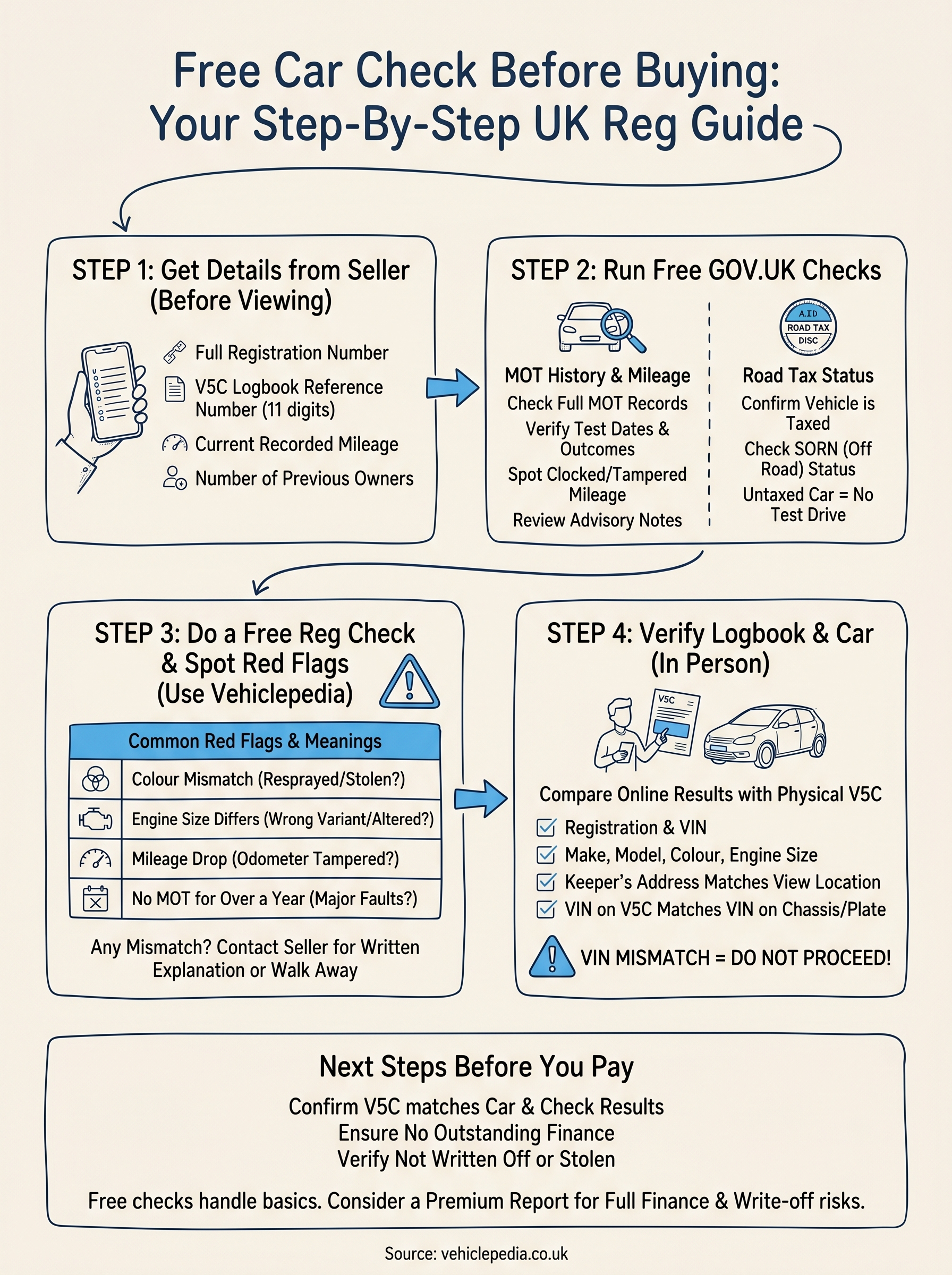
Step 1. Get the right details from the seller
Before you run a free car check before buying, you need the correct information from the seller. The two most important pieces are the full registration number and the V5C logbook reference number. Do not accept vague answers or promises that you will see the paperwork at the viewing. Ask directly, in writing if possible, so you have a clear record of what the seller told you.
If a seller refuses to share the registration number before you visit, treat that as a reason to stop the conversation.
What to request before you agree to view
Contact the seller and ask for the following details before you commit to any trip:
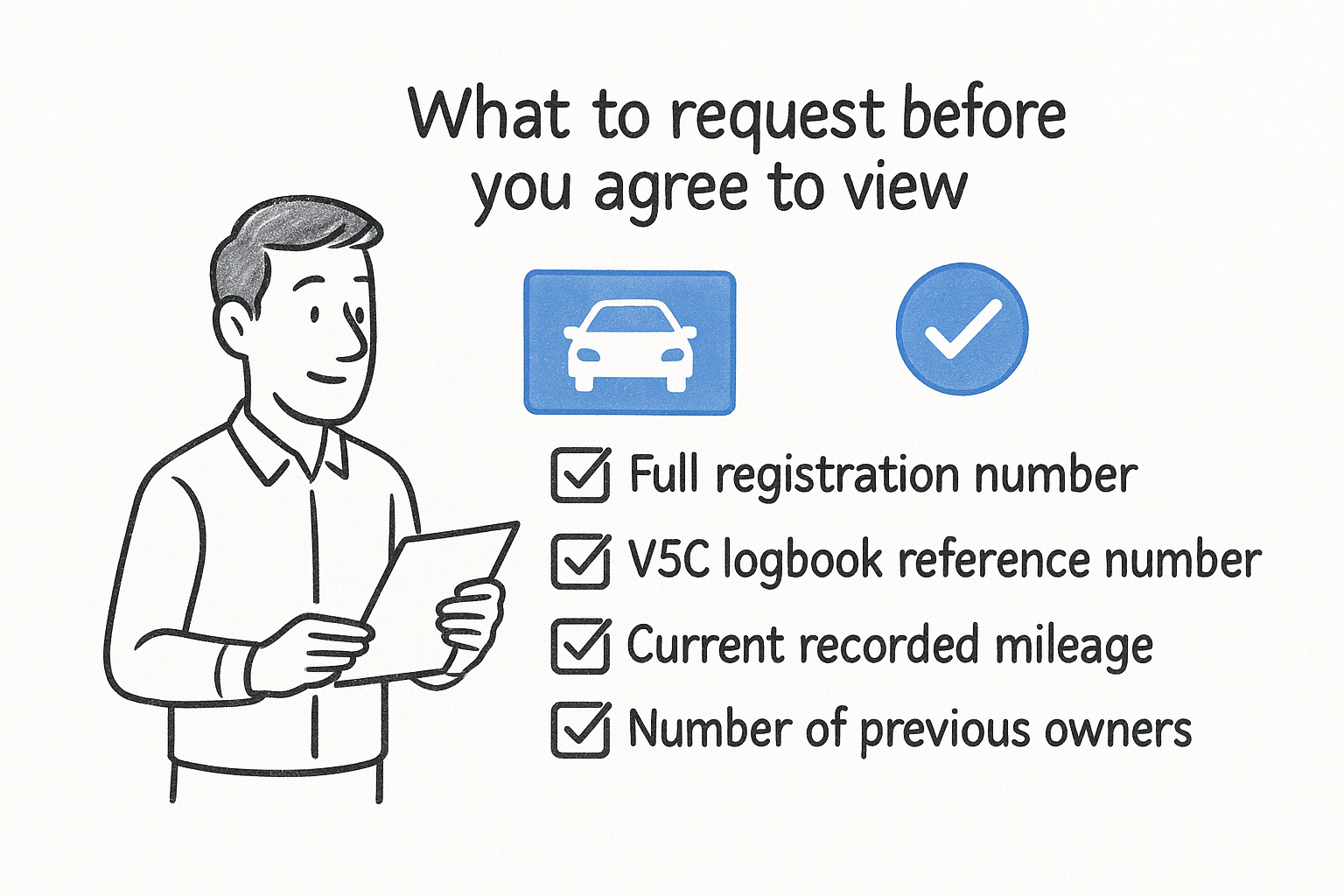
- Full vehicle registration number (exactly as shown on the number plates)
- V5C logbook reference number (the 11-digit number printed at the top right of the document)
- Current recorded mileage (so you can compare it against the official MOT history)
- Number of previous owners as stated on the V5C
Once you have the registration number, you can cross-check every detail the seller gives you against official DVLA records. Any figure that does not match what the seller has told you is worth challenging before you waste time travelling to a viewing.
Step 2. Run the free GOV.UK checks in minutes
Once you have the registration number, run the official GOV.UK vehicle enquiry straight away. These government tools give you verified data at no cost and form a core part of any free car check before buying. You do not need to create an account or hand over payment details to access them.
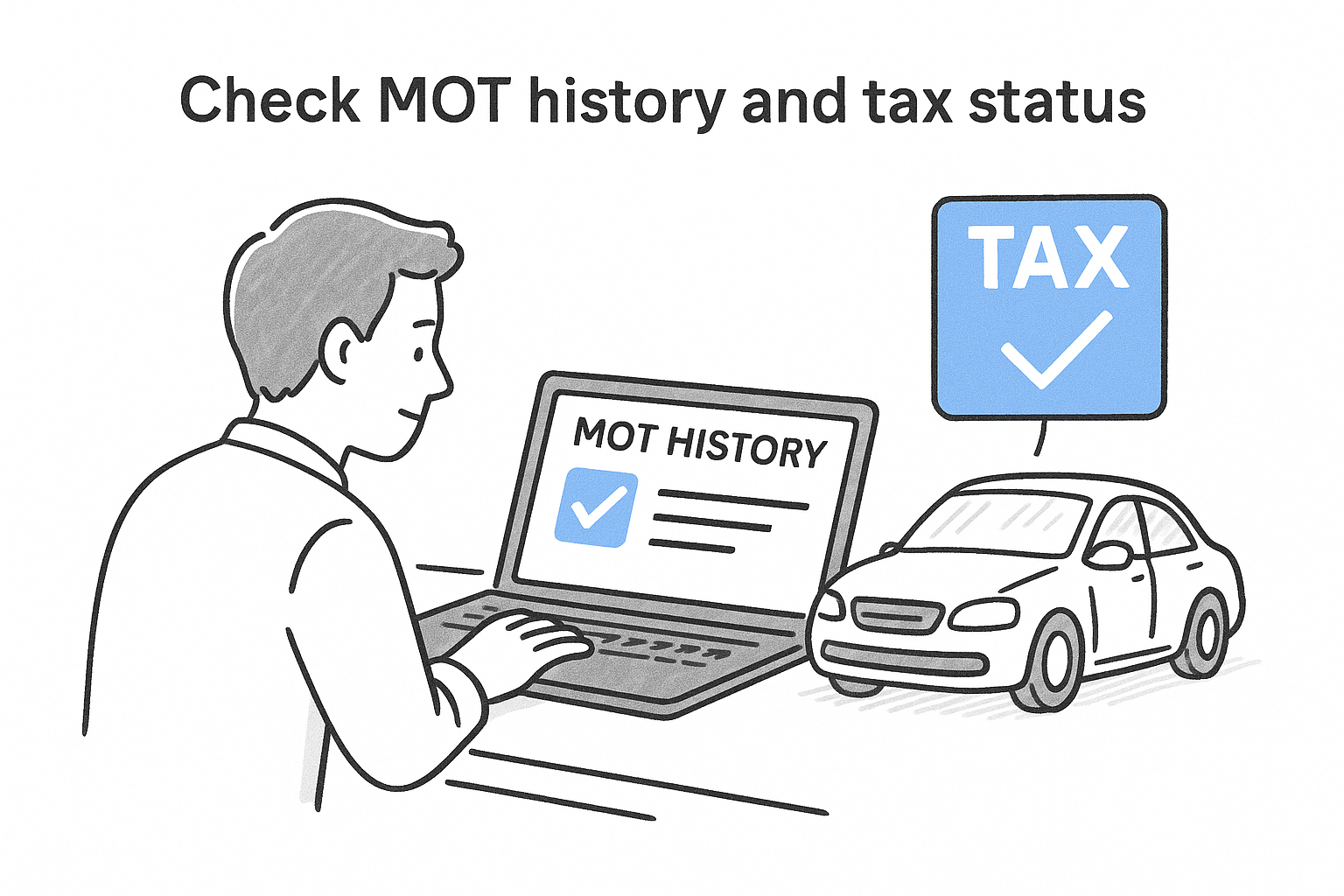
Check MOT history and tax status
Head to the GOV.UK MOT history service and enter the registration number to pull up the full MOT record instantly. The results show every test date, pass or fail outcome, recorded mileage at each test, and any advisory notes the tester flagged. At the same time, use the DVLA vehicle enquiry service to confirm the current tax status and whether a SORN has been declared on the vehicle.
A car with a valid MOT but a declared SORN cannot legally be driven on public roads, so the seller would need to tax it before any test drive.
Use this checklist when reviewing the GOV.UK results:
- MOT expiry date: confirm it is currently valid or calculate how soon renewal is due
- Mileage progression: check each recorded figure increases logically year on year
- Tax status: verify the car is taxed, and find out why if it is not
- SORN flag: note whether the vehicle has been declared off the road recently
Step 3. Do a free reg check and spot red flags fast
A dedicated free reg check goes further than the GOV.UK tools alone. Vehiclepedia's free car check before buying pulls DVLA data to confirm the make, model, colour, fuel type, and engine size in seconds, letting you cross-reference every detail the seller has provided before you commit to travelling anywhere.
Common red flags to watch for
Once your results load, compare them against the seller's listing. Certain mismatches stand out immediately and should stop you proceeding without a clear explanation.
| Red flag | What it could mean |
|---|---|
| Colour mismatch | Car may have been resprayed to hide damage or disguise a stolen vehicle |
| Engine size differs | Wrong variant listed, or specs have been altered |
| Mileage drop between MOTs | Odometer has likely been tampered with |
| No MOT for over a year | Car may have been off the road due to serious mechanical faults |
Any single red flag is enough reason to pause and ask the seller for a written explanation before you arrange a viewing.
What to do when something does not match
Do not dismiss a discrepancy as a typo. Contact the seller directly and ask them to explain the mismatch in writing. If the seller becomes evasive or their explanation does not hold up, treat it as a firm reason to walk away from the deal entirely.
Step 4. Verify the log book and the car in person
Once your free car check before buying confirms the basics, the in-person viewing is where you close any remaining gaps. Bring your printed or saved check results with you and compare them directly against the physical V5C logbook the seller hands over.
What to check on the V5C
The V5C holds key details that must match both the car itself and your online results. Check the registration number, VIN (Vehicle Identification Number), make, model, colour, and engine size against what you see in front of you. The VIN should also appear stamped into the chassis or on a plate inside the engine bay.
If the VIN on the car does not match the one on the V5C, do not proceed with the purchase under any circumstances.
Use this checklist during the viewing:
- Confirm the registered keeper's address matches the location where you are viewing the car
- Check the number of previous owners listed against what the seller told you earlier
- Verify the date of first registration matches the year shown in your reg check results
Any gap between what you found online and what you see in person needs a clear, documented answer before you move forward.
Next steps before you pay
Running a free car check before buying costs you nothing but a few minutes, and it gives you real leverage in any negotiation. If the checks come back clean, you can move forward with far more confidence. If they flag a problem, you have concrete evidence to challenge the seller or simply walk away without losing a penny.
Before you hand over any money, confirm three things: the V5C matches the car and your online results, there is no outstanding finance, and the vehicle has not been written off or flagged as stolen. The free checks covered in this guide handle the basics well, but certain risks such as hidden finance or insurance write-offs require a premium report to surface fully.
Start your check now at Vehiclepedia's free car history lookup and get the facts on any UK registered vehicle before you commit to a purchase.