How To Verify A Car Is Not Stolen In The UK Before You Buy
Avoid buying a stolen vehicle in the UK. Learn how to verify a car is not stolen by checking VINs, V5C logbooks, and official police records before you buy.

How To Verify A Car Is Not Stolen In The UK Before You Buy
Buying a stolen car, even unknowingly, can cost you the vehicle, your money, and a lot of stress. Under UK law, a stolen vehicle must be returned to its rightful owner, which means you'd lose both the car and whatever you paid for it. That's why knowing how to verify a car is not stolen before handing over any cash is one of the smartest steps you can take as a buyer.
The good news is that checking a car's stolen status isn't complicated. There are official databases, free tools, and warning signs you can use to protect yourself. The key is knowing where to look and what to look for, which is exactly what this guide covers.
At Vehiclepedia, we help UK car buyers run detailed vehicle history checks using data from the DVLA, police databases, and insurance registers. Below, we'll walk you through every method available to confirm a vehicle hasn't been reported stolen, from free checks you can do right now to premium searches that dig deeper into a car's past.
What you need before you start
Before you can run any checks, you need to gather a few basic details about the vehicle. The most important is the vehicle registration number (also called the VRM or number plate). With just that, you can run free checks against DVLA records, MOT history, and more. Having the VIN (Vehicle Identification Number) ready also helps, especially when you move into premium stolen vehicle searches.
The details to gather before you check
You can collect most of this information before you even meet the seller in person. Ask for the registration plate upfront and request a photo of the V5C logbook (the vehicle registration certificate) so you can cross-reference names and addresses later. If the seller refuses to share either detail before a viewing, treat that refusal as your first warning sign.
If a seller won't share the registration number before you view the car, that alone is a reason to be cautious.
Here is a quick checklist of what to have ready before you start:
| What you need | Why it matters |
|---|---|
| Vehicle registration number (VRM) | Required for all online checks |
| VIN / chassis number | Used in detailed stolen vehicle searches |
| Seller's full name and address | To cross-check against V5C details |
| V5C reference number | Verifies the logbook is genuine |
| Budget for checks | Premium reports typically cost under £10 |
Why preparation saves you time
Knowing how to verify a car is not stolen starts well before you open any website or visit any database. Sellers who are upfront about registration details and logbook information are generally far easier to trust. Running your checks with the correct details in hand also means you won't waste time searching the wrong vehicle or acting on incomplete records.
Step 1. Confirm DVLA, MOT, tax and recall details
The first step in learning how to verify a car is not stolen is to confirm the vehicle's basic records match what the seller has told you. The DVLA's free vehicle enquiry service at gov.uk lets you check the make, colour, engine size, and tax status using just the registration number. Mismatches between what the seller claims and what DVLA records show are a strong indicator that something is wrong.
Check MOT history and outstanding recalls
Using the DVSA's free MOT history checker at gov.uk, you can see a full timeline of every MOT test, including advisory notes and failure reasons. This tells you whether the car has been regularly maintained and flags serious safety concerns. You can also use the DVSA recall checker to confirm whether any outstanding manufacturer safety work has been completed. Run both checks before you arrange a viewing, not after.
If the MOT history shows large gaps or the recorded mileage appears to go backwards between tests, treat the vehicle as high risk until the seller provides a clear explanation.
These checks cost nothing and take less than five minutes. Completing them early gives you solid, verified data to take with you when you meet the seller in person.
Step 2. Check stolen status and outstanding finance
Once you've confirmed the DVLA and MOT records look clean, the next step in how to verify a car is not stolen is to check the vehicle directly against stolen vehicle and finance databases. These searches go beyond free government tools and pull from records that DVLA lookups simply don't include.
Run a stolen vehicle and finance check
A premium vehicle history report from a service like Vehiclepedia searches the UK Police Database to flag whether a car has been reported stolen, and cross-references it against the HPII (Hire Purchase Information) register to confirm whether any outstanding finance is attached to it. If a car has an active finance agreement, the finance company legally owns it, and you could lose the vehicle even if you buy it in good faith.
A car that passes a free DVLA check can still be stolen or under active finance, so this step is not optional.
Here is what a premium check covers at this stage:
| Check | What it confirms |
|---|---|
| Police Database | Whether the car has been reported stolen |
| Finance register | Whether outstanding loans are tied to the vehicle |
| Write-off categories | Whether the car has been declared a total loss |
Step 3. Verify the car, VIN and V5C in person
Online checks tell you a great deal, but knowing how to verify a car is not stolen also requires a physical inspection. Criminals who sell stolen vehicles often use cloned plates, meaning the registration matches a legitimate car while the underlying vehicle is something else entirely. Checking the VIN and V5C in person closes that gap.
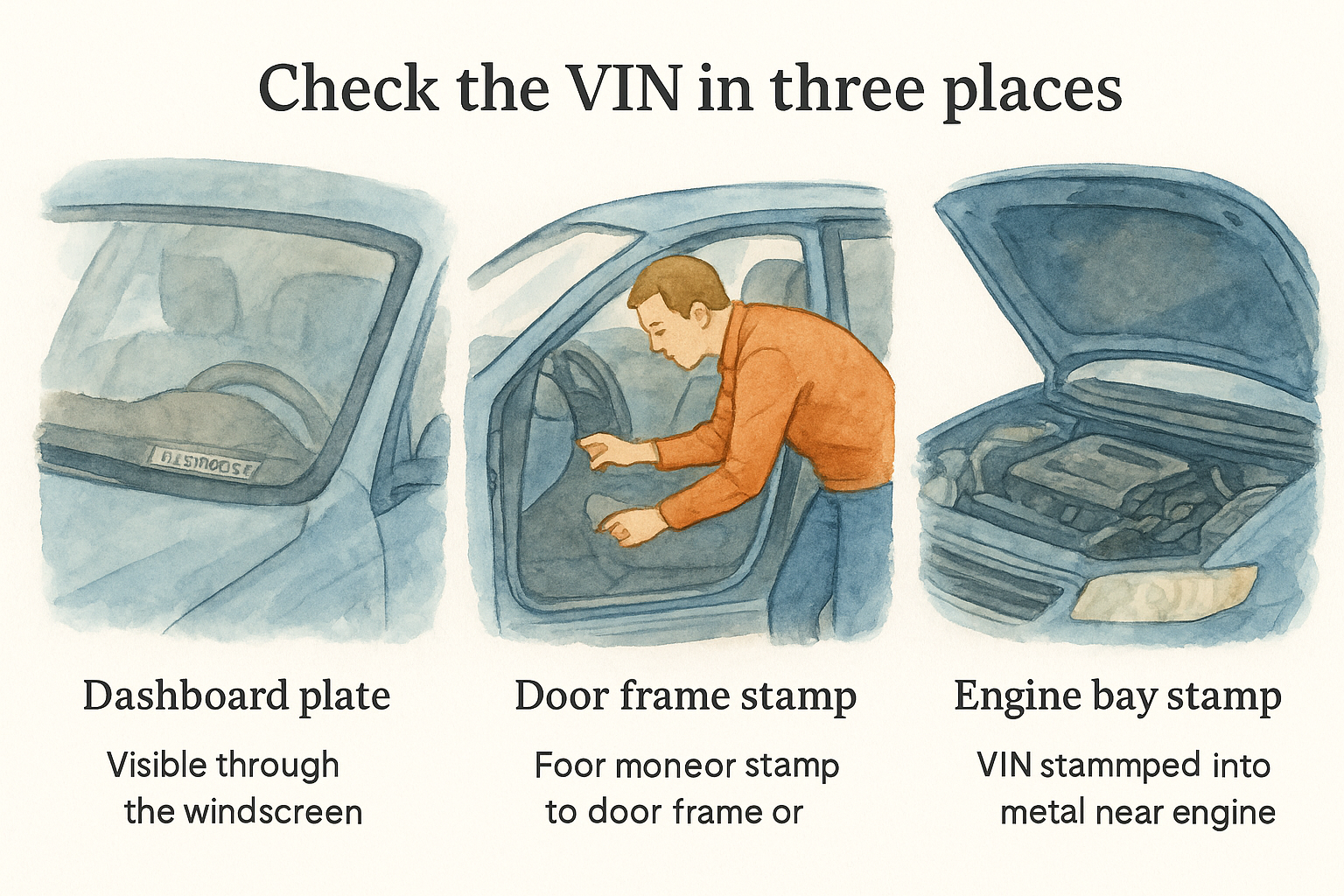
Check the VIN in three places
The VIN (Vehicle Identification Number) is a 17-character code stamped into the car itself. You need to find it in at least three locations and confirm all three match exactly. Any discrepancy points to tampering.
| Where to look | Location on the car |
|---|---|
| Dashboard plate | Visible through the windscreen on the driver's side |
| Door frame stamp | Inside the driver's door frame or B-pillar |
| Engine bay stamp | Pressed directly into the metal near the engine |
Inspect the V5C logbook
The V5C document should feel like official DVLA paper, not a printed copy. Check that the seller's name and address on the logbook match the details they gave you when arranging the viewing. Also confirm the registration number, make, and colour listed in the document match the car sitting in front of you.
If any VIN location shows signs of grinding, re-stamping, or fresh paint around the number, walk away immediately.
Step 4. Walk away fast if you spot red flags
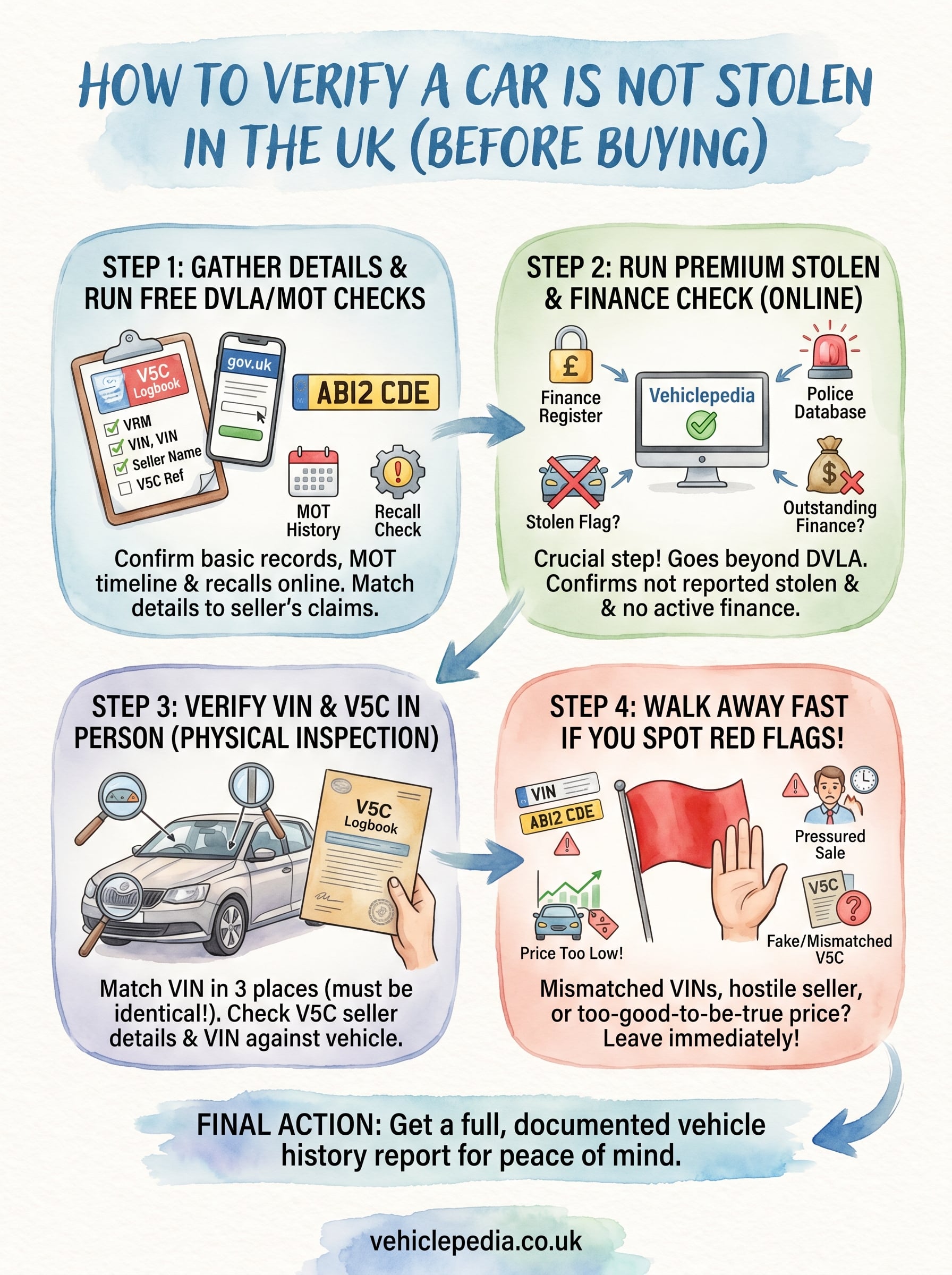
Knowing how to verify a car is not stolen means recognising when the evidence points in one clear direction. Sometimes a single red flag justifies leaving. If multiple warning signs appear together, do not try to negotiate your way past them. No used car is worth the legal and financial risk of buying a stolen vehicle, regardless of how attractive the asking price looks.
The red flags that demand you leave immediately
Some problems are fixable and some are not. The warning signs below indicate a vehicle has a seriously compromised history, and each one deserves the same response: leave the viewing and do not pay a deposit.
| Red flag | What it suggests |
|---|---|
| VIN numbers don't match across locations | The car may be cloned or rung |
| Seller pressures you to decide on the spot | They want to stop you running checks |
| V5C name doesn't match the seller | The logbook may be fraudulent |
| Price is far below market value | A common method used to move stolen vehicles quickly |
| Seller can't explain MOT history gaps | The vehicle's background may be deliberately hidden |
If something about the sale feels off, that instinct is worth acting on.
Sellers who become hostile or evasive when you ask basic questions about the vehicle's history are showing you exactly why those questions matter. You have every right to take time and verify the details before committing to anything.
Next steps before you pay
You now have a clear process for how to verify a car is not stolen, from gathering the registration details at home to walking away when the warning signs stack up. Before you hand over any money, confirm that every check in this guide has returned a clean result: DVLA records match, MOT history is consistent, the stolen vehicle search is clear, the VIN matches in all three locations, and the V5C details align with the seller.
Run a full vehicle history report through Vehiclepedia to get a complete, documented picture of the vehicle before any cash changes hands. The report pulls from official UK sources, including the Police Database, HPII finance register, and insurance records, and costs less than a tank of fuel. That small investment gives you written proof of the car's history and the legal protection that comes with our £30,000 data guarantee.