ULEZ Reg Checker: How to Check Your Number Plate in 4 Steps
Use a ULEZ reg checker in four steps: pick the right zone, enter your number plate, read the result and work out whether you owe a daily charge.

ULEZ Reg Checker: How to Check Your Number Plate in 4 Steps
To use a ULEZ reg checker, enter your number plate into the official Transport for London (TfL) vehicle checker, pick the right country of registration, and read the result. It tells you whether your car, van or motorbike is compliant. Only non-compliant vehicles pay the daily ULEZ charge, which is £12.50 for cars at the time of writing. Low Emission Zones (LEZ) and clean air zones outside London have their own checkers, and you should use the one that matches where you drive.
The problem is that the rules are not simple. Compliance depends on the Euro emissions standard your engine meets, not on how clean the car feels or how low its CO2 figure is. A diesel registered in 2014 can fail while a petrol car from 2008 passes. Zones differ by city, and some drivers also wonder whether their car needs AdBlue, which no reg checker answers. A wrong guess costs a penalty charge notice.
This guide takes you through the check in four steps: gather your details, run the right checker, read and sanity-check the result, then work out what you owe and how to reduce it. It also covers CO2 and emissions lookups by registration and where AdBlue fits in.
What a ULEZ reg checker tells you
A ULEZ reg checker takes your number plate, looks up the vehicle in DVLA records and compares its emissions standard with the zone's limits. The answer is compliant or not compliant, and for non-compliant vehicles it shows the charge that applies.
What the checker looks at
The tool uses your vehicle's type, fuel and Euro standard, not your mileage, service history or CO2 output. TfL's own tool also checks the Congestion Charge, the LEZ and the Blackwall and Silvertown tunnels charge in one go. It bases results only on emissions standard and vehicle type, so any discount or exemption you hold shows up in your London Road User Charging account instead.
A ULEZ check answers one question: does this engine meet the Euro standard for its fuel type?
Which standards count as compliant
The ULEZ now covers all London boroughs, and it runs every day of the year except Christmas Day. These are the standards the checker applies. The registration dates are a guide only, because the Euro standard of the individual vehicle decides the result.
| Vehicle | Minimum standard | Usually registered |
|---|---|---|
| Petrol car or van | Euro 4 | From about January 2006 |
| Diesel car or van | Euro 6 | From about September 2015 |
| Motorbike or moped | Euro 3 | Varies by model |
| Petrol hybrid | Euro 4 | Follows the petrol engine |
| Diesel hybrid | Euro 6 | Follows the diesel engine |
| Fully electric | Zero emission | Compliant |
Step 1. Collect your plate and vehicle details
Before you open a checker, have your exact number plate, the fuel type and the country where the vehicle is registered to hand. Ten seconds of preparation prevents most wrong results.
What to have ready
Use this short list:
- The number plate as shown on the V5C logbook, not a private plate you plan to fit later.
- The fuel type: petrol, diesel, hybrid or electric.
- The vehicle type: car, van, motorbike or moped.
- The country of registration. TfL warns that picking the wrong one risks a penalty.
- The zones you will drive through, and on which days.
Why the plate matters when you are buying
If you are checking a car you have not bought yet, run the plate from the advert, then confirm it against the V5C when you view the car. A cloned or mismatched plate gives you a result for the wrong vehicle. Check that the make, model and colour from the lookup match what is in front of you before you trust a compliant result.
Check the plate against the car on the driveway, because a ULEZ result only applies to the vehicle behind that plate.
Step 2. Run the checker for the right zone
Use the official checker for each zone you plan to drive in. A third-party ULEZ reg checker can be a quick pre-check, but only the official tools carry the authority that matters if a charge is disputed.
Pick the official checker
| Zone | Where to check | What to know |
|---|---|---|
| London ULEZ, LEZ, Congestion Charge | TfL Check your vehicle | One lookup covers several London charges |
| English clean air zones | GOV.UK Drive in a clean air zone | Charges depend on the zone class, and many target older vans, lorries, buses and taxis |
| Scottish Low Emission Zones | The Scottish Government vehicle emissions checker | Checks UK-registered vehicles only |
The London LEZ mainly affects heavier diesel vehicles such as lorries and coaches, so most car drivers only need the ULEZ answer.
Enter the plate and read the first screen
Follow these steps on the checker:
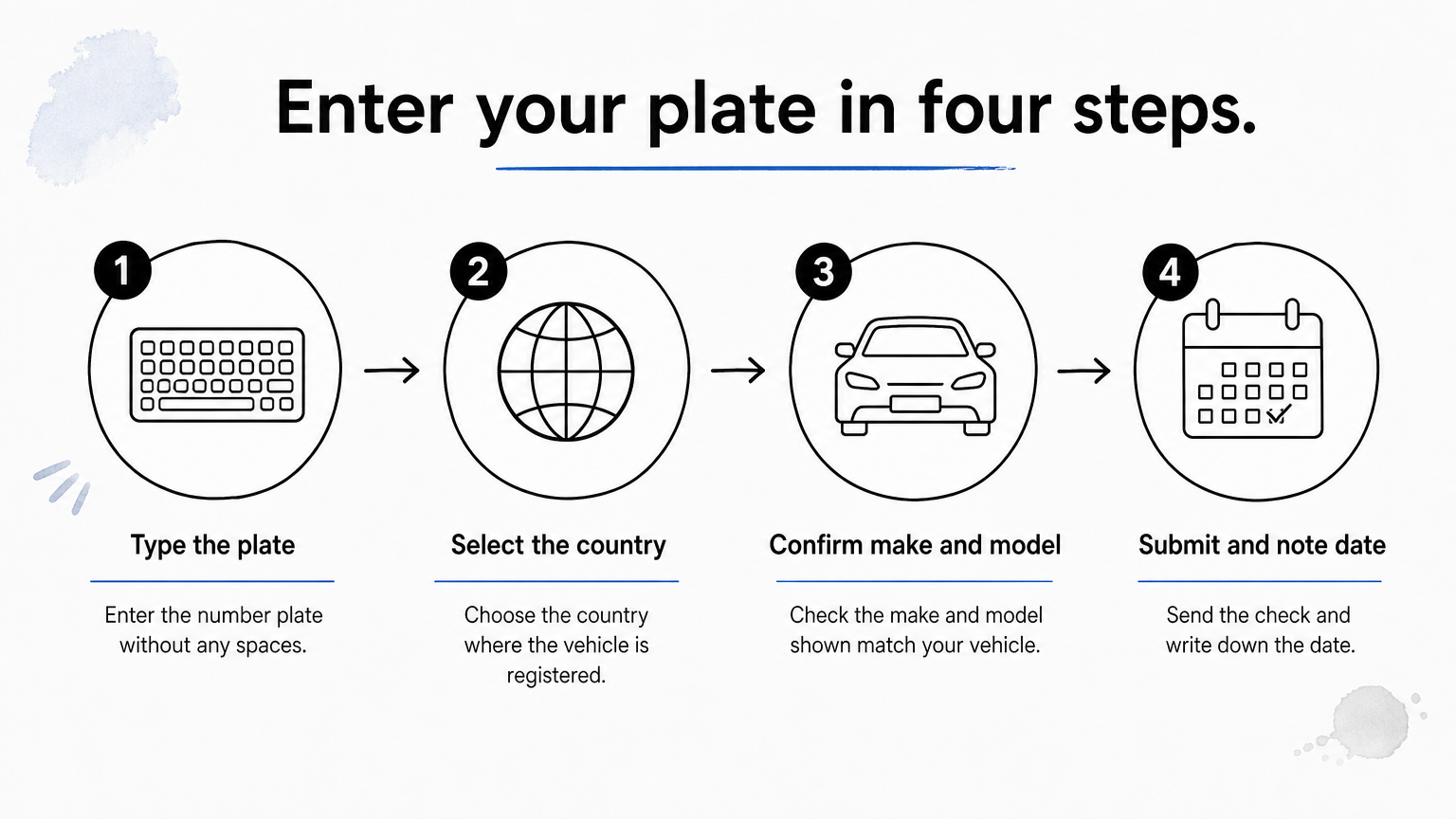
- Type the plate without spaces.
- Select the country of registration.
- Confirm the make and model shown match your vehicle.
- Submit and note the date you checked.
If the make or colour is wrong, stop and recheck the plate. Never pay or ignore a charge based on a result for another vehicle.
Match the make and model on screen to your vehicle before you read any result.
Step 3. Read the result and test it
A compliant result means you pay nothing for that zone. A non-compliant result means a daily charge applies each time you drive in it. Read the answer for each zone separately, because a car can pass the ULEZ and still be charged elsewhere.
Read compliant and non-compliant results
Treat the official result as final for that date. If it says non-compliant but you think the car should pass, the usual causes are a diesel below Euro 6 or a petrol car below Euro 4. A Certificate of Conformity from the manufacturer can prove the standard in a genuine dispute.
Cross-check emissions and CO2 by reg
Emissions lookups by registration give you supporting evidence. Vehiclepedia's free check shows registration date, make and model, engine size and CO2 emissions, which helps you judge whether the age and engine fit the table above. CO2 is not the ULEZ test. It matters for tax bands and the Congestion Charge Cleaner Vehicle Discount, not for ULEZ compliance. If you are buying, the premium report adds finance, police and write-off checks, so you learn whether the car is safe to buy as well as safe to drive.
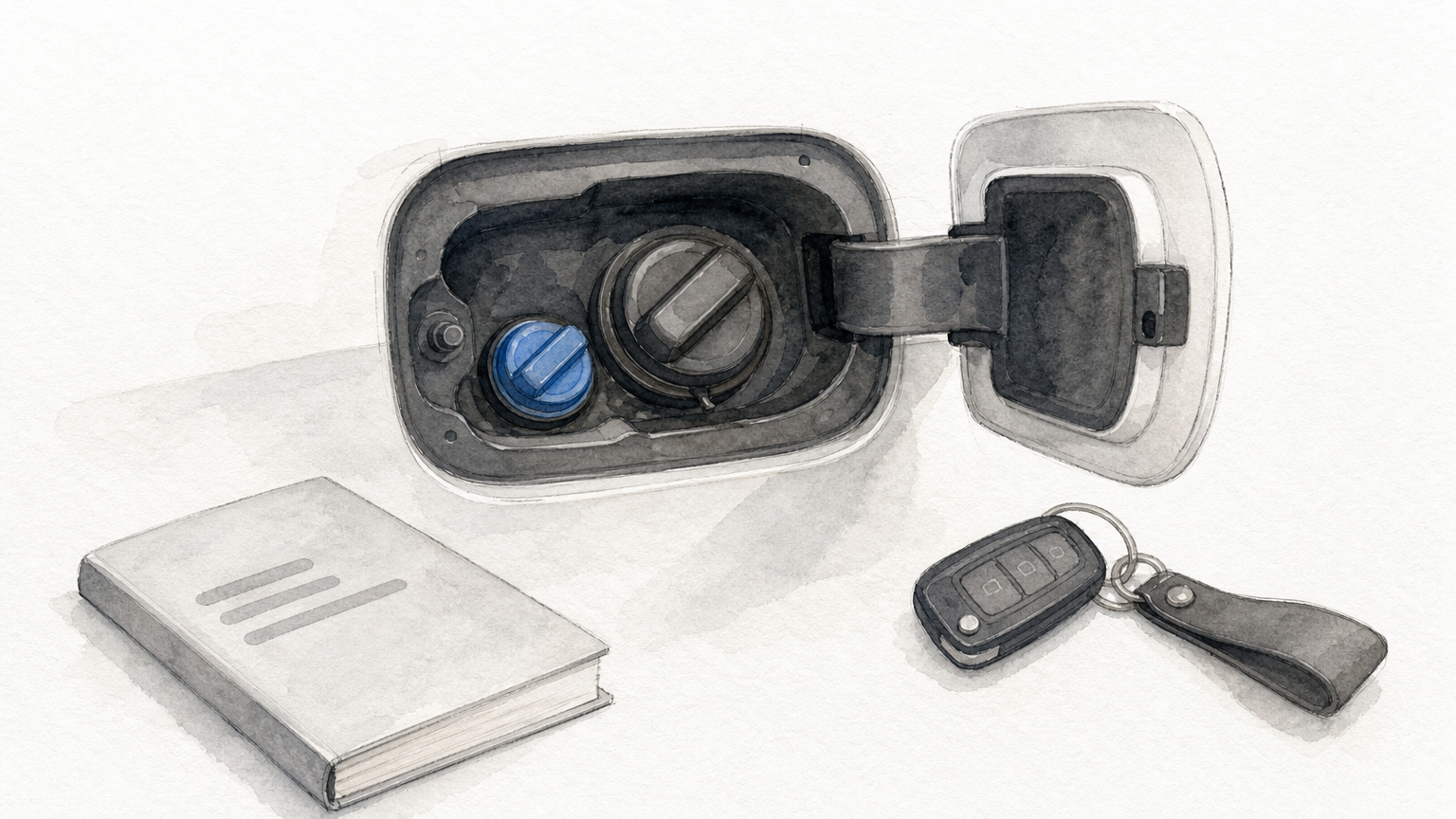
AdBlue is a different question. Many Euro 6 diesels use it, but no government reg checker confirms it. Look in the owner's handbook, for a blue filler cap beside the fuel filler, or ask the manufacturer.
A low CO2 figure does not make a car ULEZ compliant, because the Euro standard decides it.
Step 4. Work out what you owe and act
If the checker says non-compliant, you owe the daily charge for each day you drive in the zone, and it adds up fast. Decide before you travel whether to pay, avoid the zone or change the vehicle.
Pay the daily charge
A non-compliant car pays £12.50 per day in the ULEZ. A worked example: a diesel car registered in 2014 is usually Euro 5, so it fails. If you drive into London on 5 days a month, that is 5 × £12.50 = £62.50 a month, or £750 over a year. Pay promptly, because unpaid charges lead to an automatic penalty charge notice.
Reduce or avoid the charge
Some vehicles are exempt, including some built before 1 January 1973 or with the historic tax class, and certain specialist machinery. If you live in Greater London, ask TfL whether you qualify for the scrappage scheme, which has offered up to £2,000 for a car and £1,000 for a motorbike to eligible households. Rules and eligibility change, so confirm them on TfL's site. Buyers should also factor the charge into the price of a non-compliant car.
Add up the yearly charge before you buy or keep a non-compliant car, then decide.
Check before you drive in
A ULEZ reg checker takes under a minute. Gather your plate and fuel type, run the official checker for each zone, read the result against the Euro standard, and cost the charge if you fail. Use CO2 and age data as supporting evidence, not as the test.
If you are buying a used car, compliance is only one risk. Finance, a stolen marker or a write-off history can cost far more than a daily charge. See exactly what a full check covers in the Vehiclepedia sample report before you commit to a car.