Check Car Specs by Reg: What You Can Find Out for Free
Check car specs with reg in seconds using DVLA data, verify engine, BHP, fuel type and tax band free before you view or buy a used car.
Check Car Specs by Reg: What You Can Find Out for Free
Buying a used car without knowing its real specification is a gamble. The seller tells you it's a 1.6 diesel with 110 BHP, but is that actually true? You can check car specs with reg in seconds, and it costs nothing to do it properly. All you need is the registration plate and a couple of minutes before you view the car or hand over any money.
A reg-based spec check pulls data straight from official DVLA records, so you get the factory-accurate details rather than whatever's written in the advert. That means engine size, BHP, fuel type, gearbox, CO2 emissions, and physical dimensions, all matched to that exact vehicle. It's the fastest way to verify a car's specification before you commit to a viewing or a deposit.
This article walks through exactly what a free spec check by registration reveals, why it matters when you're comparing cars or checking a seller's claims, and how it fits alongside the fuller vehicle history data Vehiclepedia provides for buyers doing their homework.
Why checking your car's specs by reg matters
Misrepresented specifications cost buyers real money every year, and it's rarely a one-off mistake. A private seller might genuinely believe their car has the higher-spec engine, or they might be repeating whatever the previous owner told them. Either way, you're the one who ends up overpaying or discovering the truth after the sale. A car spec check by registration removes that guesswork entirely because it pulls straight from DVLA records rather than a seller's memory.
Sellers get the details wrong more often than you'd expect
Advert descriptions get engine sizes, trim levels, and fuel types wrong surprisingly often, sometimes by accident and sometimes deliberately to make a car sound more desirable. A 1.4 petrol listed as a 1.6, or a base-model trim described as the mid-range version with extras it never had, both change what the car is actually worth. Running a check car spec from reg before you view the vehicle means you walk in already knowing the facts, not the sales pitch.
Never take a seller's word for a car's spec when you can verify it in seconds for free.
Specs decide what you should actually pay
Engine size, BHP, and trim level are the biggest drivers of a car's resale value, more than colour or optional extras most of the time. Two identical-looking cars from the same year can be worth hundreds of pounds apart once you factor in the real engine variant and power output. If you're comparing several cars before deciding which to view, a quick check car spec by reg on each one lets you compare like for like instead of guessing from photos and adverts.
Specs affect tax, insurance, and running costs
CO2 emissions and engine size feed directly into your road tax band and fuel economy, and you can see the road tax cost by reg before you buy, while insurers use the exact spec, including BHP and body type, to price your premium. Get this wrong before you buy and you could be budgeting for a cheap runaround while actually driving something that costs considerably more to tax and insure each year. Details worth confirming before you commit include:
- Engine size and cylinder count
- BHP and torque figures
- Fuel type and transmission
- CO2 emissions banding
- Kerb weight and dimensions
Getting these confirmed against the registration plate, rather than trusting the advert, protects your budget long before you're stood on a driveway negotiating a price.
How to check car specs using a registration number
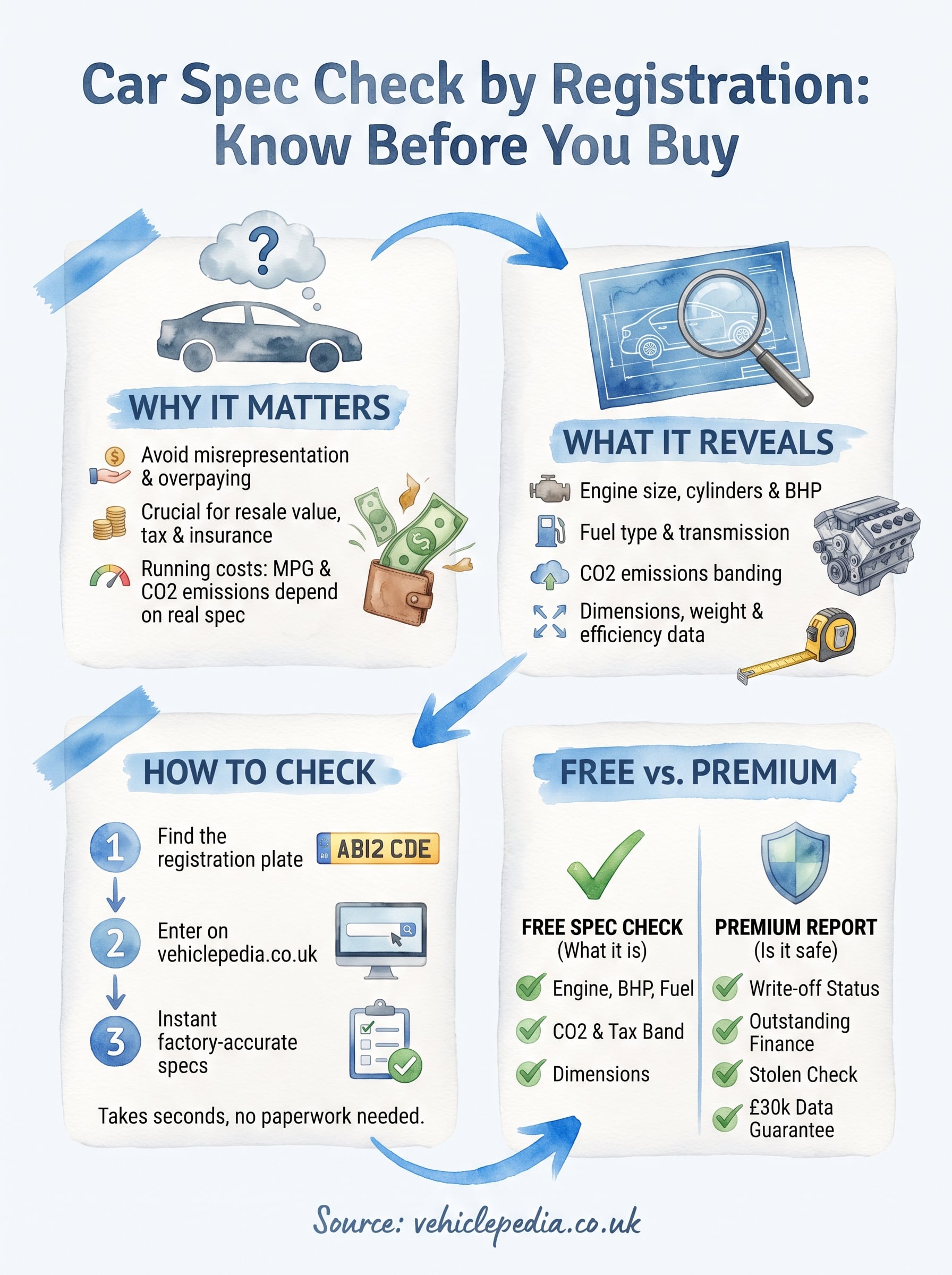
Running a reg check car specs search takes less time than reading through a car advert twice. You don't need any paperwork, account setup, or technical knowledge, just the registration plate and an internet connection. Here's the process from start to finish:
- Find the registration plate on the car itself, the advert listing, or ask the seller directly if you haven't seen it in person yet.
- Go to Vehiclepedia's free DVLA vehicle check and enter the reg into the lookup box.
- Run the search and wait a few seconds while it pulls data from DVLA records.
- Review the results, which show the factory specification tied to that exact vehicle.
- Cross-check what you see against the seller's description before arranging a viewing.
A proper spec check by reg takes under a minute and can save you from a costly mistake.
What you need before you start
Almost nothing. Unlike a full history check, a basic check car specs by reg doesn't require the car's mileage, VIN, or any documents from the seller, which is why you can check a car reg for free in seconds. The registration plate alone is enough to pull the manufacturer's original specification, because that's tied to the vehicle at the point of registration and stored on official databases ever since.
Why timing matters here
Make this check before you arrange a viewing, not after. Sellers sometimes tweak wording once they realise a buyer is checking details closely, and turning up already informed puts you in a stronger position to negotiate or walk away. Plenty of buyers skip this step and only think to check a car spec from the reg once something feels off during the viewing itself, by which point they've already spent time and possibly travelled to see a car that doesn't match its description.
What details a car spec check reveals
A registration-based lookup gives you far more than just the engine size. When you check car specifications by reg, you get the full factory build sheet for that exact vehicle, covering performance, dimensions, and efficiency figures all matched to the VIN behind the plate. This is the same data DVLA holds on file, not an estimate based on the model name.
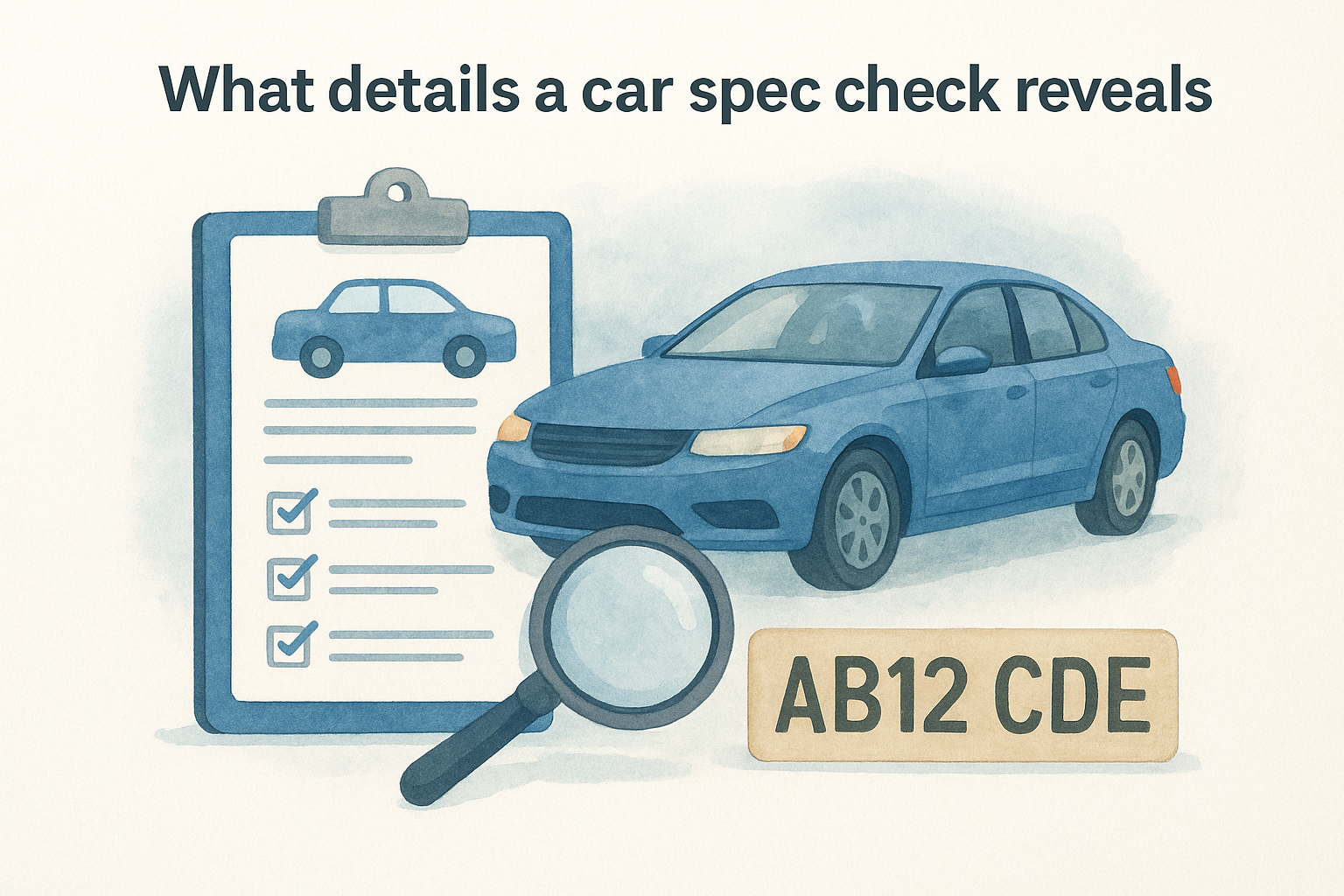
The registration plate unlocks the exact factory build sheet, not a guess based on the model name.
Engine and performance figures
Expect to see engine size in litres, cylinder count, brake horsepower and power output, torque, and the transmission type, whether that's manual, automatic, or a specific gearbox variant. Fuel type shows here too, including whether the car is petrol, diesel, hybrid, or electric, which matters hugely if a seller has listed the wrong variant by mistake or on purpose.
Dimensions, weight, and efficiency data
Beyond performance, a car dimensions check reveals kerb weight, gross vehicle weight, length, width, and height, all useful if you're checking the car fits your garage or towing needs. CO2 emissions and MPG and fuel economy figures also appear, giving you a realistic sense of running costs before you've even seen the car in person.
| Detail | Why it matters |
|---|---|
| Engine size and cylinders | Confirms the real variant, not the advert's claim |
| BHP and torque | Affects insurance pricing and resale value |
| Fuel type | Diesel, petrol, hybrid, or electric confirmed |
| CO2 emissions | Determines your road tax band |
| Dimensions and weight | Useful for garage fit, towing, and parking |
Gathering all this from one search saves you chasing separate sources, and it means every figure ties directly back to that specific registration rather than a generic model brochure.
Free car spec checks vs premium reports
A free car spec check by reg gives you the factory specification, but it won't tell you whether that car has been in a serious accident, still has finance owing, or was reported stolen. That's the gap premium reports fill. Vehiclepedia's free check answers "what is this car," while the premium report answers "is this car safe to buy." Knowing the difference before you view a car saves you paying for data you don't need, or worse, skipping data you do.
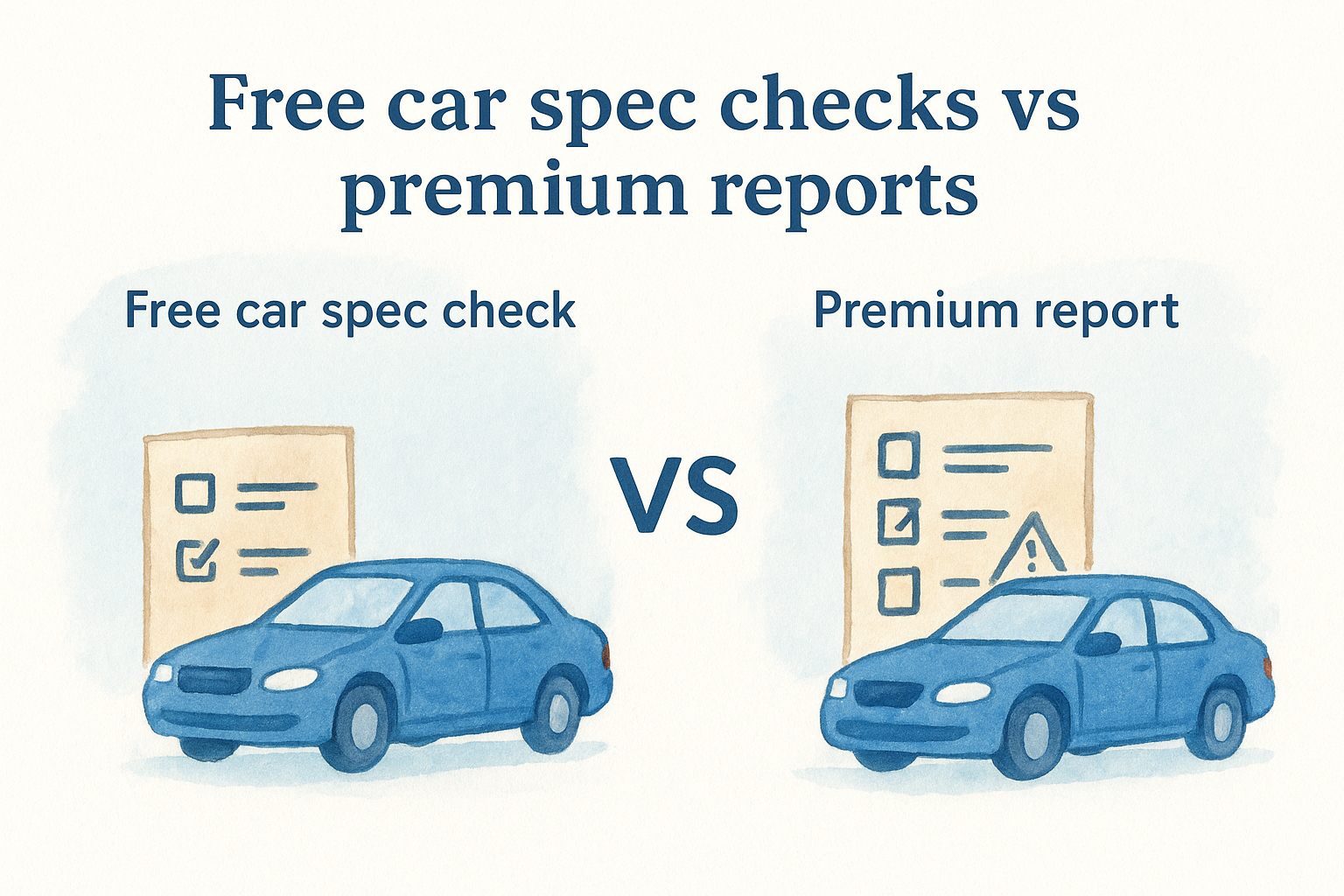
A free spec check tells you what the car is. A premium report tells you whether it's safe to buy.
What the free check covers
Running a car spec reg check at no cost gets you engine size, BHP, fuel type, transmission, CO2 emissions, and dimensions, everything covered in the previous section. It's enough to catch a misdescribed advert or compare two cars side by side. For straightforward due diligence before a viewing, this is usually all you need.
What premium reports add on top
A premium report builds on the free spec data with checks that carry real financial and legal risk if ignored. Vehiclepedia's premium vehicle history check adds write-off status, outstanding finance, and a stolen vehicle check against the police database, backed by a £30,000 data guarantee for non-trade buyers.
| Feature | Free spec check | Premium report |
|---|---|---|
| Engine, BHP, fuel type | Yes | Yes |
| CO2 and tax band | Yes | Yes |
| Written-off status | No | Yes |
| Outstanding finance | No | Yes |
| Stolen vehicle check | No | Yes |
| £30,000 data guarantee | No | Yes |
If you're buying privately or spending more than a few hundred pounds, the premium report earns what a full check costs through the risks it rules out, not just the specs it confirms.
Know your car before you buy
A registration plate holds more truth than any advert ever will. Running a check car specs with reg before you view a vehicle takes under a minute and costs nothing, yet it stops you paying for an engine size or trim level that doesn't actually exist. Buyers who skip this step rely entirely on the seller's word, and that's a poor position to negotiate from once you're stood on a driveway.
Combine the free spec check with a full history report when real money is on the line, especially for private sales where finance, write-offs, or theft could be hiding behind a clean-looking listing. Curious what that fuller picture looks like before you pay for one? Have a look at an example vehicle history report and see exactly what gets checked alongside the specs.