What Is A Cat S Car? Meaning, UK Rules, And Buying Tips
Understand what is a cat s car, how structural damage impacts resale value, and the UK rules for buying safely. Learn about repairs, MOTs, and insurance.
What Is A Cat S Car? Meaning, UK Rules, And Buying Tips
If you've been browsing used car listings, you've probably spotted vehicles marked as "Cat S" selling for well below market value. Sounds tempting, but before you reach for your wallet, you need to understand exactly what a Cat S car is and what that label means for your money, your safety, and your insurance premiums. Cat S stands for Category S, a UK insurance write-off classification given to vehicles that have sustained structural damage.
That doesn't automatically make every Cat S car a bad buy. Some are professionally repaired and perfectly roadworthy, while others are disasters held together with filler and false promises. The difference between a bargain and a money pit comes down to knowing what to look for, and having the right information before you commit. This is where a vehicle history check through Vehiclepedia can save you thousands, by flagging write-off status, outstanding finance, and other red flags using official DVLA and insurance data.
In this guide, we'll break down the Cat S classification, explain how it differs from other write-off categories, cover the UK rules around buying and selling these vehicles, and give you practical tips to protect yourself if you decide one is worth the risk.
Why Cat S status matters for used car buyers
When you're searching for a used car, Cat S status affects nearly every financial decision you'll make around that vehicle. The classification doesn't just describe past damage - it has real, lasting consequences for the price you pay, the insurance terms you can access, and the money you'll recover when you eventually sell. Understanding what is a Cat S car and why that label follows a vehicle permanently is essential before you hand over any money.
The impact on resale value
A Cat S marker stays on a vehicle's history record permanently. Even after professional repairs, the car's market value drops significantly compared to an equivalent model with a clean history. Most private buyers and dealers factor in a discount of around 20 to 40 percent to reflect the ongoing uncertainty about repair quality and the reduced demand for write-off category vehicles.
A Cat S car will almost always sell for less than a comparable clean-title vehicle, regardless of how well it has been repaired.
That discount looks appealing when you're buying, but it becomes a serious issue when you want to sell. You're legally required to disclose the Cat S status to any future buyer, which limits your pool of interested parties and keeps resale prices suppressed throughout the vehicle's life. The saving you made upfront often erodes considerably when it's time to move on.
Insurance complications
Insuring a Cat S vehicle is more complicated than insuring a standard car. Not all insurers will offer cover for these vehicles, and those that do typically charge higher premiums to reflect the perceived elevated risk. Some insurers also restrict what they'll pay in a total loss settlement, basing their offer on the Cat S market value rather than the equivalent clean-title price - which could leave you significantly out of pocket.
You must be upfront with your insurer about the vehicle's write-off history before you take out a policy. Failing to disclose the Cat S status could invalidate your cover entirely, leaving you fully exposed if you need to make a claim. Always confirm your cover terms in writing before completing any purchase, and get quotes from multiple insurers to compare what's actually on offer.
What buyers miss when they skip a history check
Many buyers spot a lower price tag and assume the saving is straightforward. What they often miss is that a Cat S write-off isn't always prominently disclosed in a listing. Some private sellers downplay the category, and others omit it entirely, whether through ignorance or deliberate intent to shift a problem vehicle quickly.
Running a vehicle history check before you buy is the most reliable way to confirm write-off status alongside other potential issues like outstanding finance or mileage irregularities. Official data sourced from the DVLA and insurance registers gives you a factual picture of what you're actually buying, not just what the seller chooses to tell you. Skipping this step is one of the most expensive mistakes used car buyers make, and it's entirely avoidable.
What structural damage means for a Cat S car
Part of understanding what is a Cat S car is knowing exactly what structural damage implies. When an insurer applies the Cat S classification, they're confirming that the vehicle's structural framework was compromised in the incident - not just the panels, glass, or interior. That distinction matters, because structural components are the parts of the car specifically engineered to keep you safe in a collision.
Which components count as structural
Structural damage refers to harm caused to the parts of a vehicle that form its core safety framework. This includes the chassis, floor pan, A-pillars, B-pillars, C-pillars, sill sections, and crumple zones - components designed to absorb and redirect impact energy during a crash. When these areas are bent, twisted, or fractured, the vehicle's ability to protect occupants in a future incident is reduced until repairs restore them to manufacturer specification.
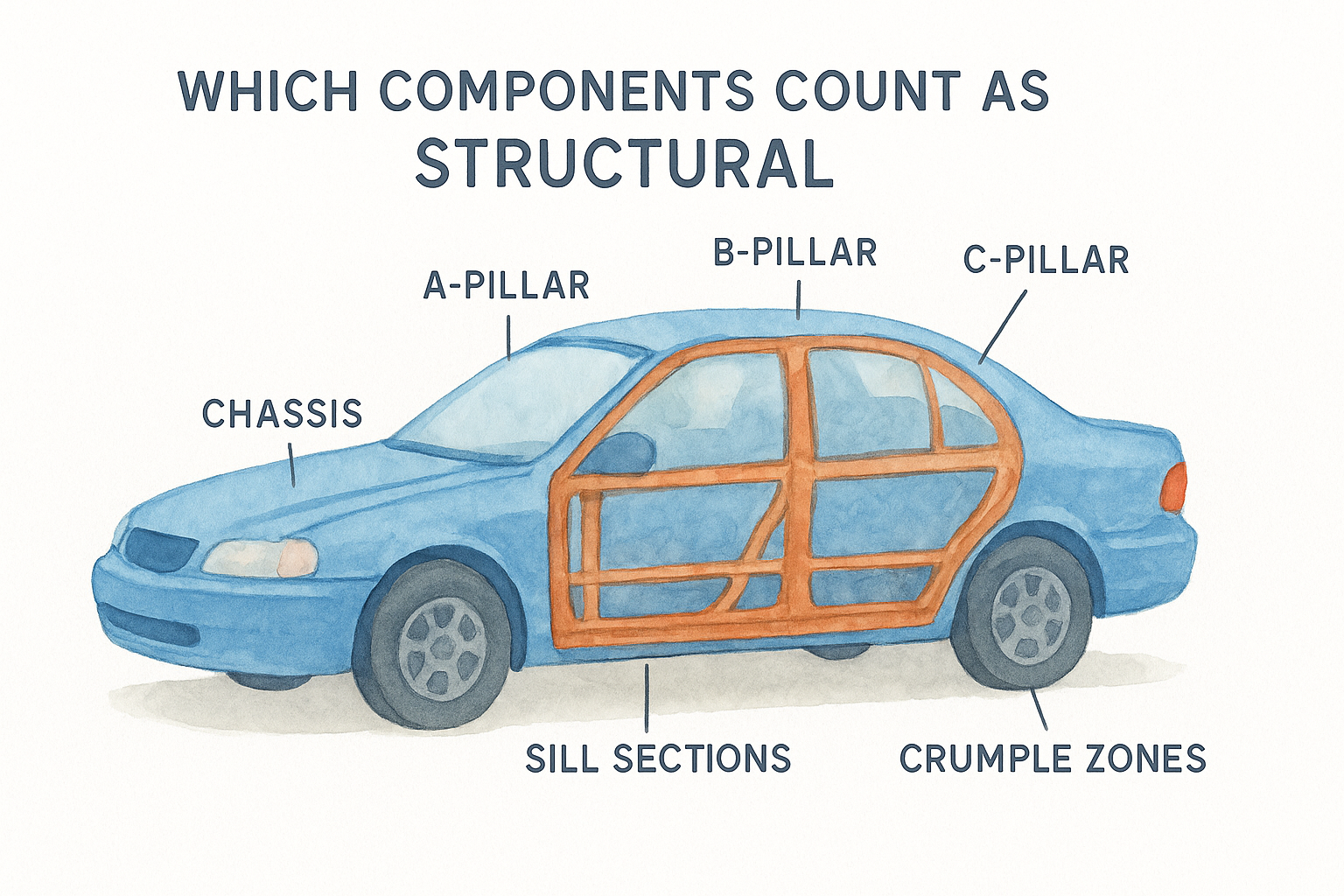
Structural damage affects the parts of a car built specifically to protect you in a collision, which is why repair quality is critical, not just cosmetic appearance.
These components can't be corrected with filler or a panel beater alone. Proper structural repair requires specialist equipment including jig rigs and laser measurement systems to pull and reshape the bodyshell back within precise tolerances. Without that level of accuracy, the car may appear completely normal but behave unpredictably in a future crash.
Why repair quality determines everything
Not every Cat S car returns to the road in a compromised state. A professional repair carried out by a qualified bodyshop can restore structural integrity fully, and the vehicle can pass a new MOT once the work is complete. The issue is that repair quality is invisible to the naked eye, which means you cannot assess it simply by looking at the car in a driveway.
When you're evaluating a Cat S vehicle, ask for the full repair documentation including receipts, the repairer's name, and any assessment reports. A seller with nothing to hide will provide this without hesitation. Missing or vague paperwork around the structural repair is a clear warning sign you should not ignore.
Cat S vs Cat N and other write-off categories
The UK uses a four-category write-off system introduced by the Association of British Insurers in 2017, replacing the older A, B, C, and D classifications. Knowing where each category sits helps you quickly assess severity when evaluating a used car listing, and it gives important context to understanding what is a Cat S car within the broader landscape of insurance write-offs.
The difference between Cat S and Cat N
Cat S and Cat N are the two categories covering vehicles that can legally return to the road after repair. The critical distinction is the type of damage involved. Cat S means structural damage, as covered in the previous section. Cat N - which stands for Category N, or non-structural - covers vehicles where the damage was limited to non-structural components such as bumpers, lights, airbags, electronics, or interior parts.
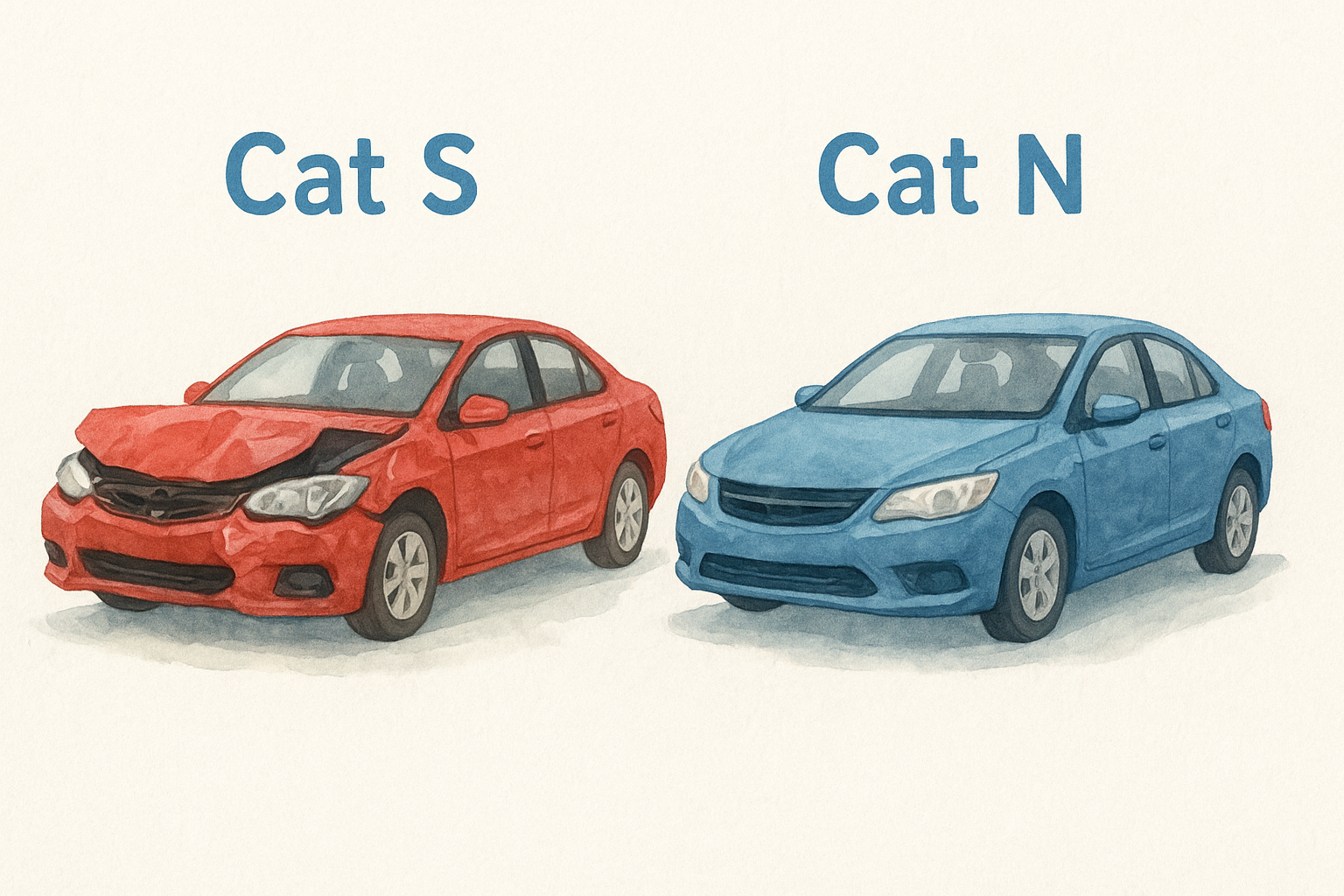
Cat N sounds less serious than Cat S, but a poorly repaired Cat N car with unresolved airbag or safety system faults can be just as dangerous as a badly repaired structural repair.
Both categories carry a permanent marker on the vehicle's history, and both require full disclosure to any future buyer. Neither category automatically means the car is unsafe, but both demand the same level of scrutiny from you before purchase.
Cat A, Cat B, and the older categories
Cat A and Cat B represent the most severe write-offs. A Cat A vehicle must be crushed entirely - no parts can be reused and the car can never return to the road under any circumstances. Cat B means the bodyshell must also be destroyed, although some salvageable parts can be stripped before crushing.
You may also encounter older listings that reference Category C or Category D, the previous classifications used before 2017. Cat C broadly mapped to Cat S, covering structural damage, while Cat D covered lighter non-structural damage similar to today's Cat N. If a vehicle carries one of these older designations, the same principles apply: check the repair history, confirm the damage type, and verify the work was completed properly.
UK rules: DVLA, MOT and telling buyers
If you're trying to understand what is a Cat S car from a legal standpoint, the rules are clear in three specific areas: how the vehicle must be re-registered, what roadworthiness checks apply, and what you're legally required to tell a future buyer. Ignoring any of these exposes you to financial and legal risk.
Re-registering with the DVLA
Before a Cat S vehicle can return to public roads, the owner must notify the DVLA and re-register the vehicle as a repaired write-off. This creates a permanent record on the vehicle's registration history, meaning the Cat S marker follows the car regardless of how many times it changes hands. You can find the relevant guidance on how to register a rebuilt vehicle on the GOV.UK website, which covers the exact documentation required to complete the process correctly.
Failing to re-register a repaired Cat S vehicle before driving it on public roads means you're operating an unregistered vehicle, which carries serious legal consequences.
Passing a new MOT
A Cat S car must pass a fresh MOT before it can legally be driven on the road after repairs are completed. This MOT is not a guarantee that all structural repairs meet manufacturer specification, since MOT testers check roadworthiness at a point in time rather than certifying the full quality of bodyshell reconstruction. For this reason, a current MOT certificate alone is not sufficient evidence that a Cat S car has been repaired to a proper standard.
Your legal duty to disclose
If you own a Cat S vehicle and decide to sell it, you are legally required to tell any prospective buyer about the write-off category before the sale completes. Selling a Cat S car without disclosing its status can constitute misrepresentation under the Consumer Rights Act 2015, which gives the buyer grounds to unwind the transaction and claim compensation. This obligation applies whether you sell privately or through a dealer, and it applies every single time the vehicle changes hands.
How to check and buy a Cat S car safely
Buying a Cat S car doesn't have to be risky if you approach it systematically. Every smart used car purchase starts with a vehicle history check, which confirms write-off status, outstanding finance, mileage discrepancies, and stolen vehicle flags before you waste time viewing the car in person. Understanding what is a cat s car is only half the battle; the other half is gathering verified data before you commit.
Run a vehicle history check before anything else
A reliable vehicle history check pulls official data from the DVLA and insurance registers, giving you a factual record of the vehicle's write-off category, previous ownership, and current finance status. Vehiclepedia's free registration check lets you confirm Cat S status and other key details instantly, while the premium report adds outstanding finance checks and stolen vehicle verification via the UK Police Database.
Running a history check before you view a car saves you from wasting time and money on a vehicle with hidden problems.
Before you visit the car, make sure you've confirmed the following:
- Write-off category and date of incident
- Current MOT status and full MOT history
- Outstanding finance or loans registered against the vehicle
- Stolen vehicle status via the police database
- Number of previous owners
Inspect the repair documentation in person
Once you're satisfied with the history data, ask the seller for full written evidence of the structural repairs. This means receipts from the bodyshop, the name and address of the repairer, and any assessment reports produced before and after the work. A reputable repair centre will have provided this documentation as standard, so a seller who cannot produce it is a seller you should walk away from.
Arrange an independent inspection from a qualified mechanic or structural repair specialist before you finalise the purchase. This typically costs between £150 and £250 and is money well spent. The inspector can assess whether the structural repair meets an acceptable standard and flag any signs of rushed or incomplete work that a basic test drive would never reveal.
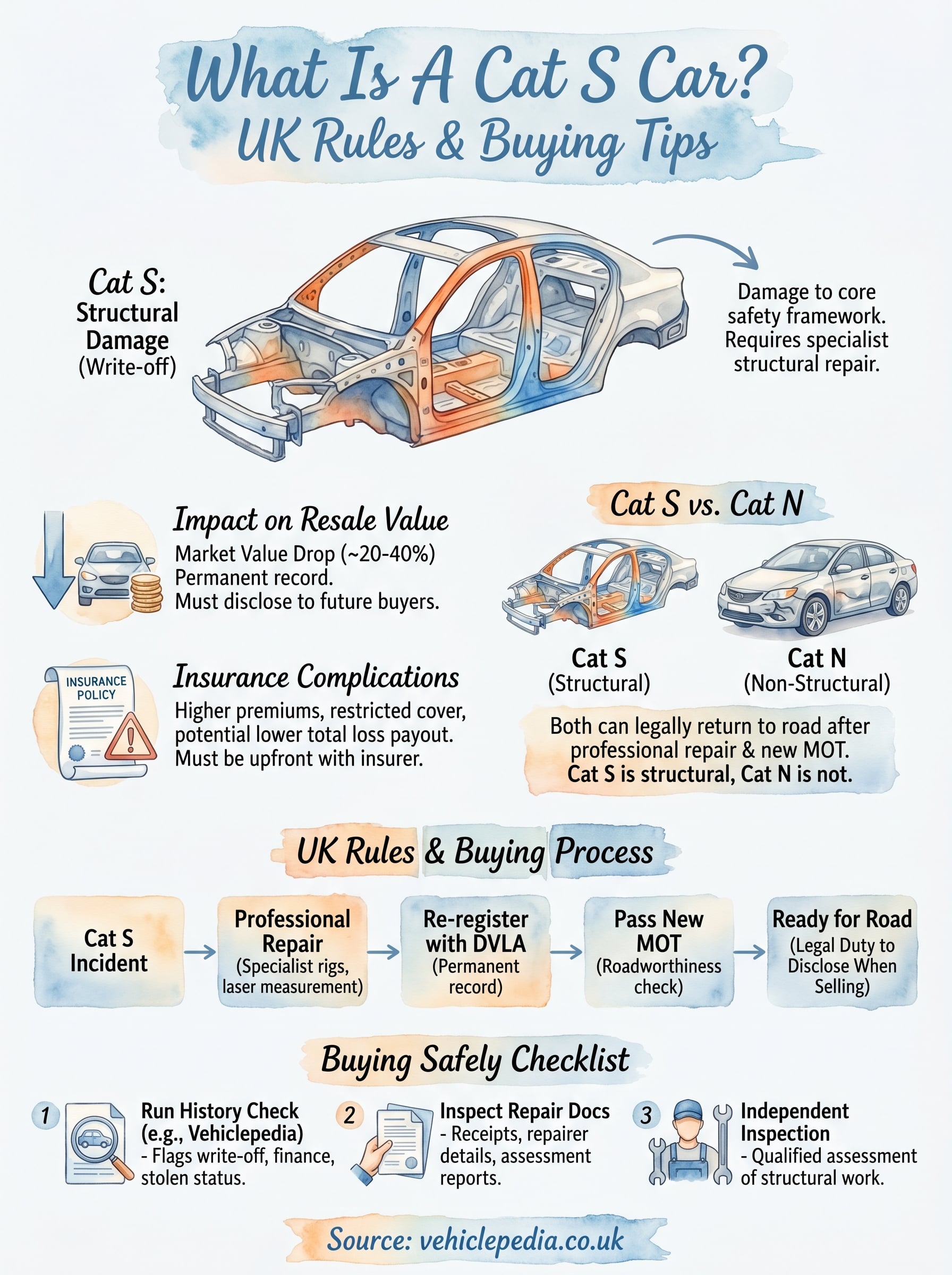
Key Takeaways
A Cat S car is a vehicle that has sustained structural damage severe enough for an insurer to write it off, but one that can legally return to the road after proper repairs. Understanding what is a Cat S car means recognising that the category marker stays on the vehicle's record permanently, affecting resale value, insurance costs, and your legal obligations as a seller.
Not every Cat S car is worth avoiding. A professionally repaired example with full documentation can offer genuine value at a lower price point. The key is never skipping a vehicle history check, always demanding repair paperwork, and arranging an independent inspection before you hand over money.
Before you view any used car, run a free registration check on Vehiclepedia to confirm write-off status and surface other hidden issues. For complete protection, the premium vehicle history report adds finance checks and stolen vehicle verification, giving you the full picture before you commit.