Can You Check Who Owns A Car By Number Plate? UK Guide
Can you check who owns a car? Learn the legal way to request DVLA keeper details via the V888 form, how GDPR affects your search, and what data is public.
Can You Check Who Owns A Car By Number Plate? UK Guide
Maybe you've spotted a car parked across your driveway, or you're about to buy a used motor and something feels off. Either way, you're probably wondering: can you check who owns a car by its number plate? The short answer is yes, but not directly, and not without going through the right channels.
In the UK, vehicle keeper details are protected by data privacy laws, so you can't simply type a registration into a website and get someone's name and address. The DVLA does hold this information, but they'll only release it under specific, justified circumstances. There are strict rules around who can request these details and why.
This guide breaks down exactly how the process works, what you're legally entitled to find out, and where the boundaries sit. We'll also cover what information you can access freely, like MOT history, tax status, and registration details, through tools like Vehiclepedia's free car check, which pulls data straight from official UK sources including the DVLA.
What you can and can't learn from a number plate
A UK number plate ties a vehicle to an official record held by the Driver and Vehicle Licensing Agency. That record contains quite a lot of useful data, but it is split into two categories: publicly accessible information and protected personal data. Understanding this split tells you exactly where you stand before you start any kind of search.
What a number plate search reveals for free
Running a free check on a registration plate gives you access to a solid range of vehicle information without needing to justify your reasons or go through any formal process. This is the data that official services and tools like Vehiclepedia pull directly from DVLA records.
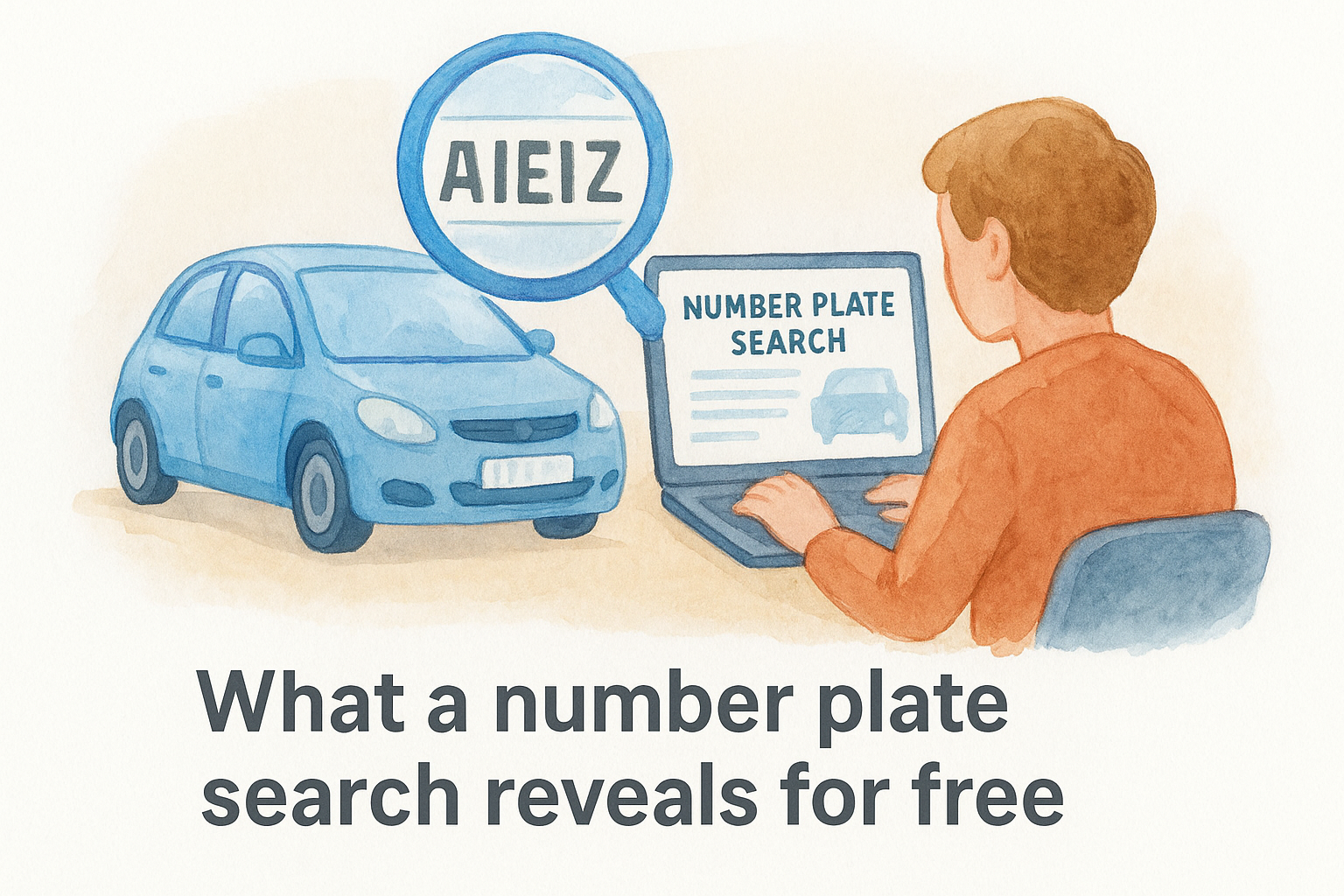
Here is what you can typically find:
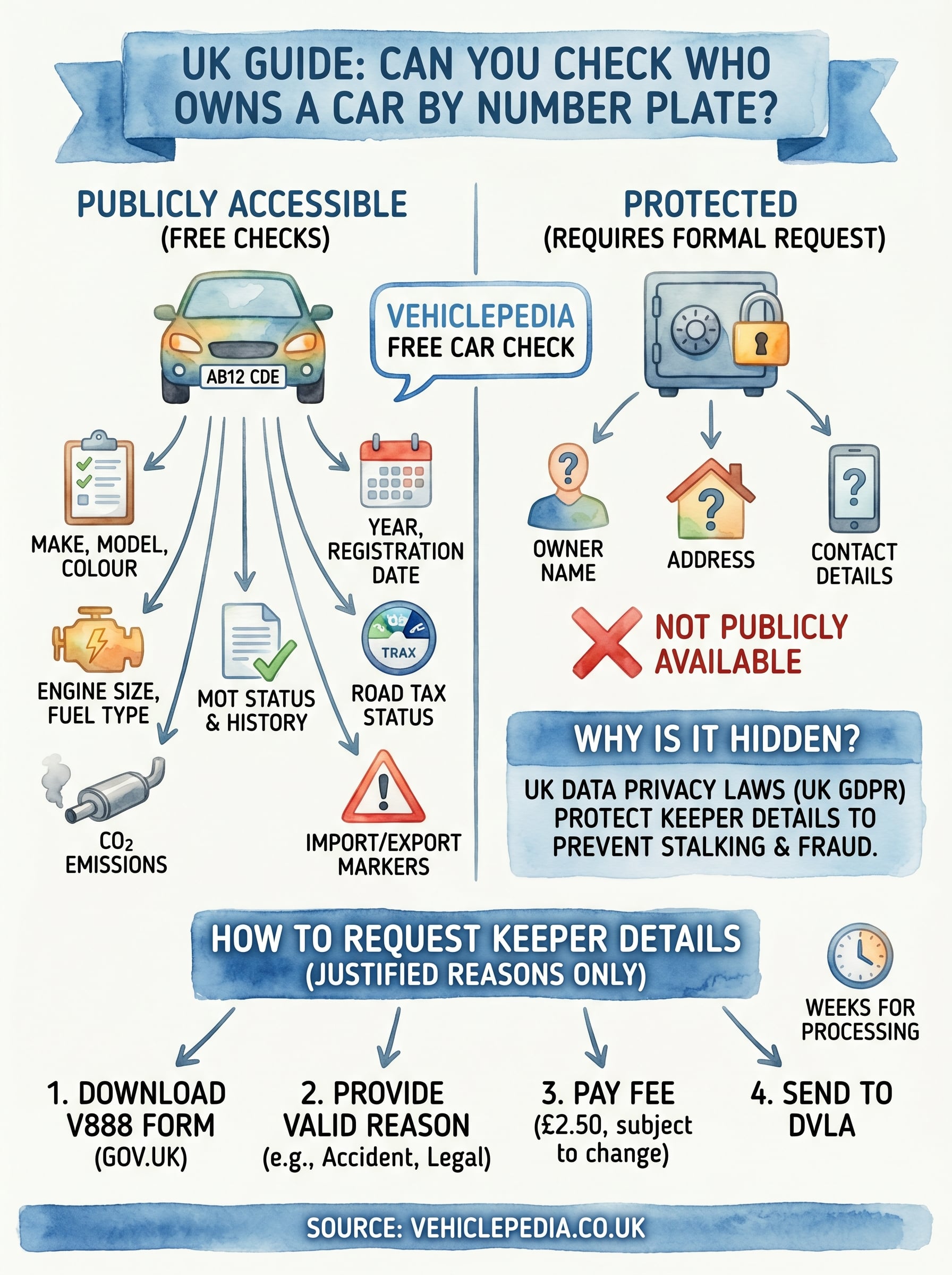
- Make, model, and colour of the vehicle
- Year of manufacture and date of first registration
- Engine size and fuel type
- MOT status, expiry date, and full MOT history including failures and advisories
- Road tax (Vehicle Excise Duty) status and the date it expires
- CO2 emissions and fuel efficiency figures
- Import or export markers on the vehicle's record
- Write-off category (available on premium checks)
- Outstanding finance registered against the vehicle (available on premium checks)
If you're asking "can you check who owns a car" through a simple plate search, the answer is no - personal keeper details are not part of any publicly available dataset.
This information is genuinely useful if you're buying a used car, verifying a vehicle's condition, or checking whether a car is roadworthy. You get factual, DVLA-sourced data without needing anyone's permission.
What stays hidden and why
The registered keeper's name, address, and personal contact details are not accessible through any public-facing database. The UK's data protection framework, governed by the UK General Data Protection Regulation (UK GDPR) and the Data Protection Act 2018, treats this information as personal data. Releasing it without a lawful basis would be a breach of those laws, which is why no legitimate website can hand it over on request.
This protection exists for good reason. Exposing keeper details publicly would create serious risks around stalking, harassment, and fraud. The DVLA operates a formal application process for situations where there is a genuine, justified need to identify a registered keeper. Private individuals, businesses, and organisations can apply through that route, but they must explain exactly why they need the information. We cover that process in detail in the steps further down this guide.
Registered keeper vs legal owner in the UK
The distinction between registered keeper and legal owner trips up a lot of people. When you want to know whether you can check who owns a car, you first need to understand which of these two things you are actually looking for, because they are not always the same person and they carry different legal implications.
The registered keeper
The registered keeper is the person named on the V5C logbook (the vehicle registration certificate) and is the individual the DVLA contacts about road tax, MOT enforcement, and penalty charge notices. Being the registered keeper does not automatically mean you own the vehicle. On a finance agreement, you can be the registered keeper while the finance company retains legal ownership of the car until you make the final payment.
The legal owner
The legal owner is whoever holds the legal title to the vehicle. In a straightforward private sale, the buyer becomes both keeper and owner at the same time. With finance products like Personal Contract Purchase (PCP) or hire purchase, the finance provider owns the car throughout the agreement. This is why running a finance check before you buy is so important, since the legal owner in that scenario would never appear on any logbook.
If a seller cannot confirm both their keeper status and legal ownership, treat that as a clear warning before handing over any money.
The DVLA's records identify the registered keeper, not the legal owner. So even if you go through the formal DVLA application process and receive keeper details, that person may not own the vehicle outright. Always verify both aspects when purchasing a used car, particularly if there is any sign that outstanding finance could be attached to the registration.
Step 1. Run free official checks first
Before you contact the DVLA or pursue any formal process, run a free vehicle history check using the registration number. This step gives you a large amount of verified, DVLA-sourced data within seconds and often answers the question you are actually trying to solve, even if you still cannot check who owns a car by name through this route alone.
What a free check covers
A free registration check pulls together everything the DVLA and DVSA hold on that vehicle publicly. You get MOT history and current status, road tax validity, make, model, colour, engine size, fuel type, and first registration date. If the vehicle has been imported, exported, or had a colour change, that shows up too.
Running a free check first saves you time and can reveal issues significant enough that you never need to go any further.
Here is a breakdown of the key data points and what each one tells you:
| Data point | What it tells you |
|---|---|
| MOT status | Whether the car is currently roadworthy and legal to drive |
| MOT history | Previous failures and advisories that reveal recurring faults |
| Road tax status | Whether VED is paid and currently valid |
| Registration date | Confirms the car's age matches what the seller claims |
| Import/export markers | Flags vehicles brought in from abroad |
How to run the check
Enter the registration plate into Vehiclepedia's free car check exactly as it appears on the vehicle. Results load in seconds and are drawn directly from official UK databases. Cross-reference the make, model, and colour against what you see in the seller's listing or in person. Any mismatch between the plate record and the physical vehicle is a serious warning sign that warrants stopping before any money changes hands.
Step 2. Request keeper details from DVLA
If your free check raises a serious concern and you genuinely need to know who the registered keeper is, you can apply to the DVLA directly using the V888 form ("Request for information about a vehicle and its registered keeper"). This is the only legitimate way to ask whether you can check who owns a car through official UK channels when you have a justified reason.
Who qualifies to make a request
The DVLA does not release keeper details to anyone who asks. You must demonstrate a valid reason for needing the information. Accepted reasons include being involved in a road traffic accident with that vehicle, pursuing a civil matter such as an unpaid debt linked to the vehicle, or enforcing a legal interest. The DVLA assesses each request individually and will refuse applications that lack a clear justification.
If your reason is simply curiosity about who owns a car, the DVLA will reject your application.
How to submit the V888 application
Submitting the form is straightforward once you have your reason documented clearly. Follow these steps:
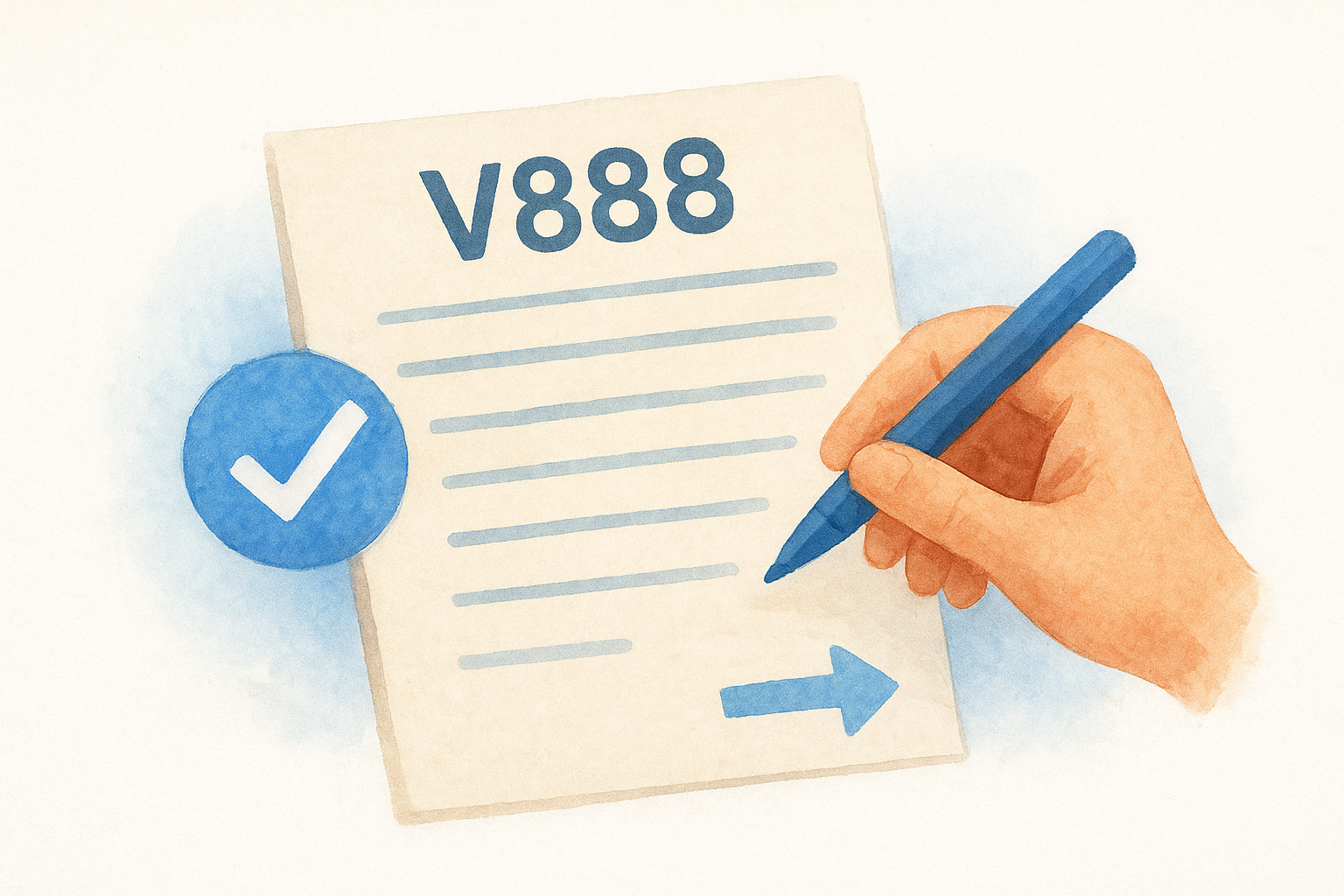
- Download the V888 form from the GOV.UK website at gov.uk
- Fill in the full registration number of the vehicle and your personal or business details
- State your reason for the request in the relevant section, being as specific as possible
- Include any supporting evidence such as a police report number or court reference
- Pay the £2.50 fee (correct as of publication) by cheque or postal order made payable to DVLA
- Post the completed form to DVLA, Swansea, SA99 1ZZ
Processing typically takes several weeks, so this route suits formal or legal situations rather than urgent queries.
Step 3. Use the right route for your situation
The route you take depends entirely on why you need the information and what you plan to do with it. Running the wrong process wastes time and, in the case of the DVLA application, costs money without any guarantee of a result. Match your situation to the correct approach below before taking any further action.
If you are buying a used car
Start with a free vehicle history check to pull MOT status, tax records, and registration data instantly. If that check raises concerns, upgrade to a premium report to cover outstanding finance and write-off categories. Asking whether you can check who owns a car by name rarely solves the real problem here. Verifying the vehicle's full history is what actually protects your money.
Cross-reference these details against what the seller tells you:
- Registered colour, make, and model match the physical car
- MOT history shows no recurring serious faults or patterns of failure
- No outstanding finance or stolen markers recorded
If someone damaged your property or vehicle
Write down the full registration number immediately and photograph any damage as evidence. You have a genuine legal justification to request keeper details through the V888 form, and providing solid supporting evidence strengthens your application considerably. Include a clear written account of the incident with dates, times, and witness details if available.
The more documented your evidence, the more likely the DVLA is to approve your request.
If you are involved in a legal or civil matter
Solicitors and debt recovery firms can submit V888 requests on your behalf and typically carry more weight during the DVLA review process. Reference any court orders or formal legal documents directly in your application. Attach copies where possible, since the DVLA prioritises requests tied to active legal proceedings and will process those ahead of less substantiated applications.
Final checks before you act
The question "can you check who owns a car" has a clear answer: you can find out who the registered keeper is, but only through the right process and with a justified reason. Before you contact the DVLA or take any formal action, confirm that you have the full registration number recorded accurately and that your reason for the request genuinely meets the DVLA's accepted criteria. Weak or vague applications get rejected, and you will not get the fee back.
Run a free vehicle history check first if you have not done so already. In many cases, the data from that check resolves your concern without needing keeper details at all. If you are buying a used car, review the MOT history, verify the registration matches the physical vehicle, and check for outstanding finance before you commit to anything. For a full picture of what a premium report includes, view our sample vehicle history report before you decide.