Check Reg to See If Caught Speeding: What Actually Works
Can you check reg to see if caught speeding? Not directly. Learn the 14-day notice rule, how to verify a letter and your options if one arrives.
Check Reg to See If Caught Speeding: What Actually Works
You cannot check a reg to see if you were caught speeding. No public database links a registration number to camera detections, so no website, DVLA service or police helpline can confirm it on the spot. What works is watching for a Notice of Intended Prosecution, which the registered keeper normally receives within 14 days, and then replying within the deadlines printed on it.
The uncertainty is the real problem. Many modern cameras give no flash. Average speed cameras track you over a distance, mobile vans appear for a day, and smart motorways monitor continuously. You drive on, wonder whether you crept over the limit, and search for a reg lookup that promises an answer. Some sites suggest they have one, but none can show you police case data.
This guide takes four steps: work out whether you could have been recorded, watch for the notice, check it against your vehicle's details, and respond correctly. Vehiclepedia is a UK vehicle history check service, so we also show where a registration check does help, and where it does not.
Why a reg check cannot show a speeding offence
A registration lookup draws on vehicle records, and a speeding detection is a police case record. The two are not connected in any public service, so the answer to "have I been caught?" arrives by post, not by search.
What the records actually contain
DVLA records cover tax status, make, model, colour and registration details. DVSA records cover MOT history. A speeding case sits with the police force and the prosecuting authority. Even the government's view your driving licence service only lists endorsements already on your licence. It does not show a case that is still pending.
No public service links a registration number to a speed camera detection, so the answer arrives by post.
What a reg check is still good for
Be sceptical of any site that claims to look up speeding offences by reg. A free Vehiclepedia check shows MOT and tax status, registration details and colour history, all of which help you later when you need to confirm that a notice matches your car. We cover that in Step 3.
Step 1. Think back to where you may have been caught
Start by deciding whether a camera could plausibly have recorded you. Write down the road, the time and the speed limit while your memory is fresh. You will need these details if a notice arrives.
Know which cameras leave no flash
Do not rely on a flash as proof either way. These are the setups that often give no sign:
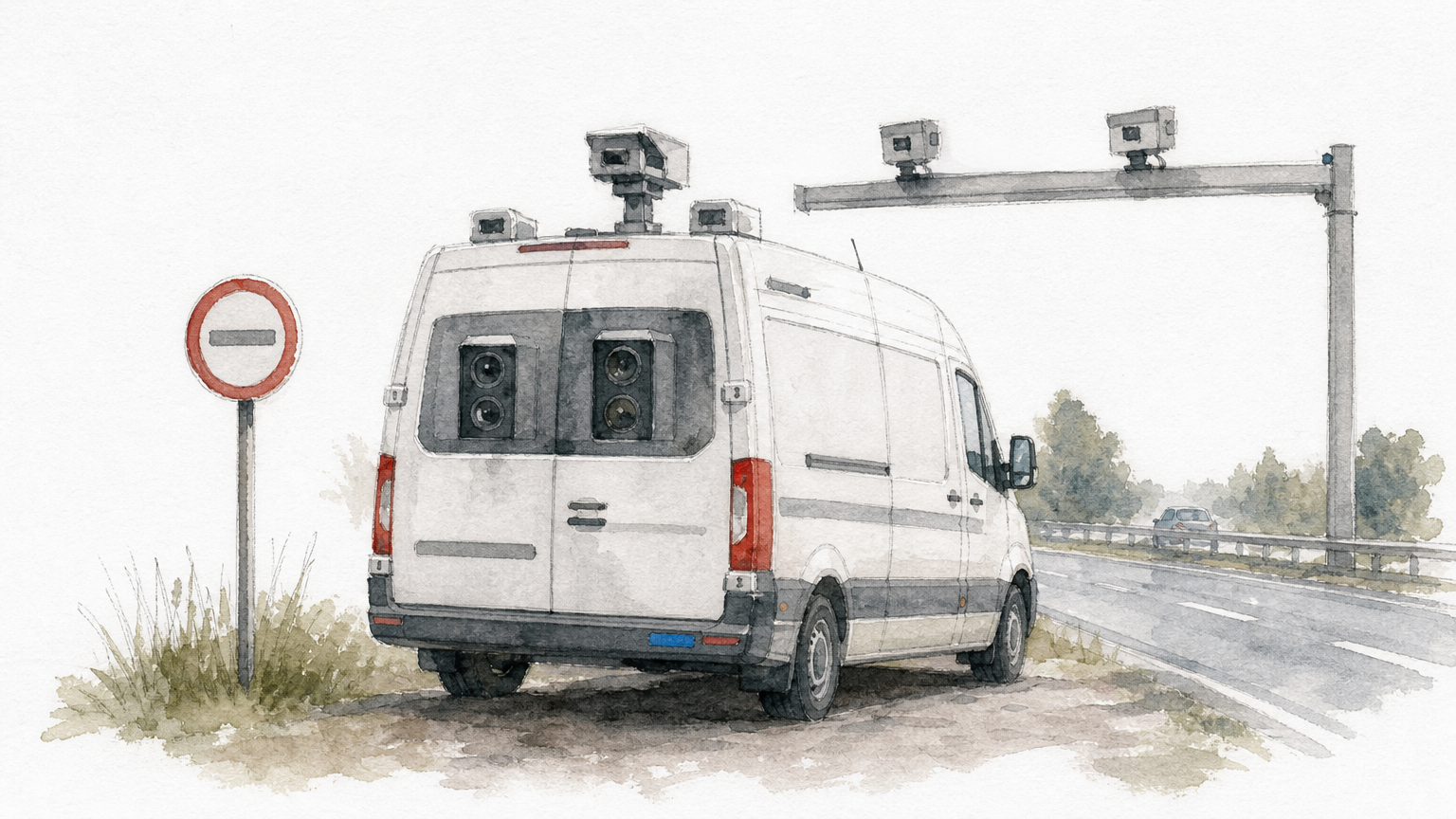
- Average speed cameras record you at two points and calculate your speed over the distance between them.
- Mobile camera vans can be parked at the roadside for a few hours and gone by evening.
- Smart motorway systems operate continuously.
How far over the limit counts
Any speed over the limit is an offence, but forces do not act on every case. National police guidance suggests enforcement from the limit plus 10% plus 2 mph. On a 30 mph road that is 35 mph. On a 70 mph road it is 79 mph. This is guidance, not a legal allowance. Each force sets its own policy, so it can differ by area, and you can be prosecuted below the threshold.
Treat the 10% plus 2 mph figure as guidance, never as permission.
Step 2. Watch for the notice for 14 days
The registered keeper is the person who gets the letter, so your job in the next two weeks is to make sure it can reach you. If a camera recorded your vehicle, the keeper is sent a Notice of Intended Prosecution within 14 days, usually with a Section 172 notice.
Make sure the letter can find you
Police send the notice to the address DVLA holds for the keeper. If you have moved, update your vehicle's registration record with DVLA now. A letter sent to an old address does not make the offence go away. It only means you hear about it late.
What no letter after 14 days means
If nothing arrives within 14 days, it generally suggests no further action is being taken. Allow a few extra days for postal delays before you relax. Your licence record will only show points once a penalty has actually been applied, so an empty record in this period proves nothing.
A clean licence record in week one proves nothing, because points only appear after a penalty is applied.
Step 3. Check the notice against your vehicle
If a letter arrives, confirm that it is genuine and describes your car before you do anything else. Errors do happen, and so do scams.
Compare the details line by line
Check the registration, make, model, colour, date, time and location. Then run your plate through a free Vehiclepedia check and compare the make, model and colour on the report with the notice. Be wary of unexpected texts or emails demanding payment. Contact the force named on the notice using contact details you found yourself.
When the notice does not fit your situation
Several situations call for a written explanation in your reply:
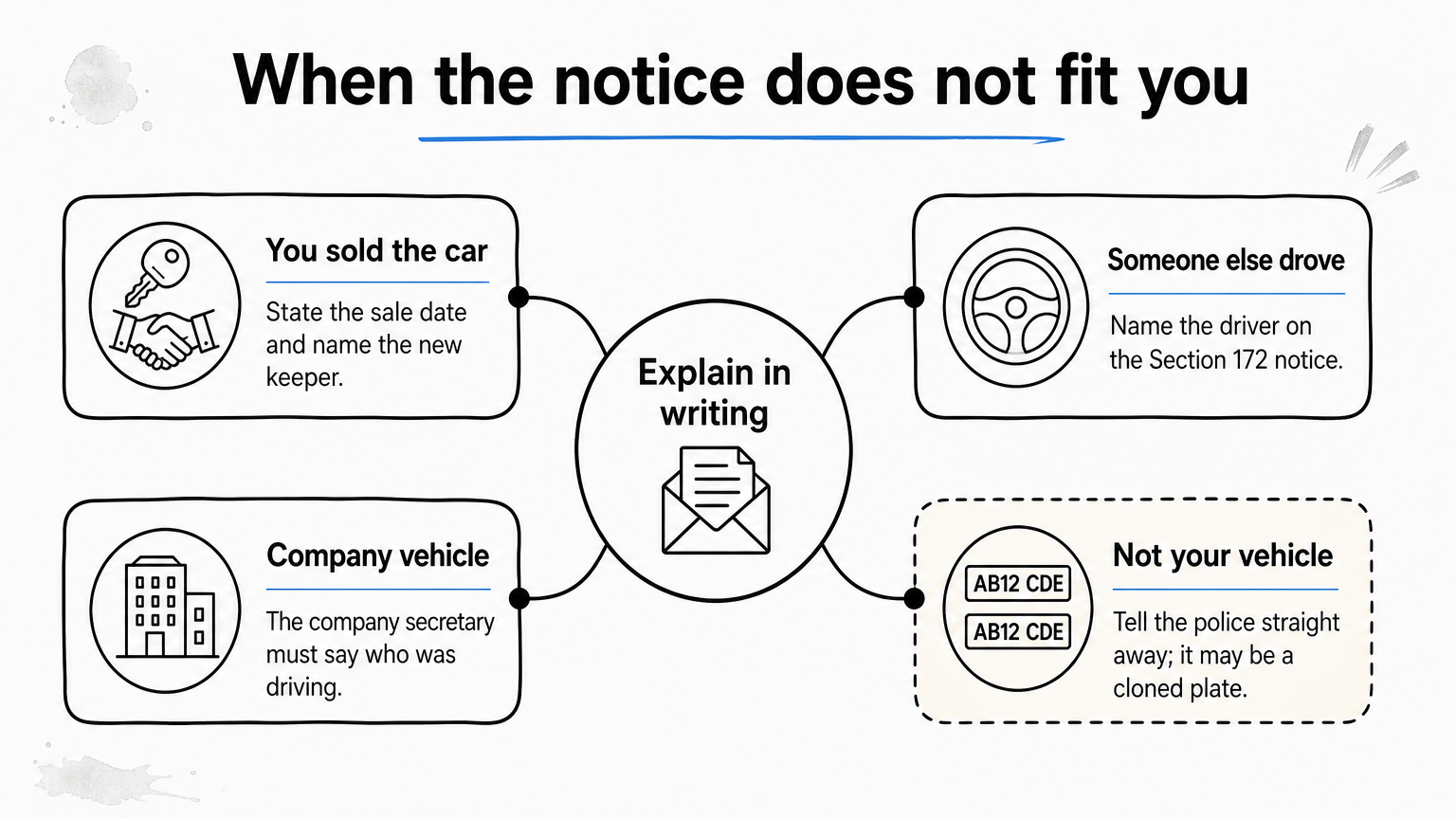
- You sold the car. State that you no longer own it, when you sold it and who the new keeper is.
- Someone else was driving. The Section 172 notice lets you name them.
- It is a company vehicle. The company, through its company secretary, must say who was driving.
- The vehicle pictured is not yours. Tell the police straight away, as it may be a cloned plate.
Verify every detail on the notice before you respond, because a mismatch changes your reply.
Step 4. Respond within the deadlines
You must return the Section 172 notice within 28 days, telling the police who was driving. That is the one deadline you cannot miss. After you reply, you will be sent a fixed penalty notice, an offer of a speed awareness course, or a letter telling you to go to court.
Choose your outcome
| Outcome | What it means |
|---|---|
| Pay the fixed penalty notice | £100 fine and 3 points. The endorsement code stays on your licence for 4 years. |
| Speed awareness course | Offered only if the police consider it appropriate and you have not done one in the past 3 years. |
| Plead not guilty | Court decides. The fine is usually a percentage of weekly income, up to £1,000 (£2,500 on a motorway). Disqualification is possible. |
| Ignore the Section 172 notice | The case can go to the Magistrates' Court, with six mandatory points and a fine of up to £1,000. |
Count your points before you pay
Points matter because 12 or more within 3 years can mean disqualification. A driver with 6 points who takes a 3-point speeding penalty moves to 9. A second offence within the same 3 years would reach 12. New drivers face a tougher limit. Within 2 years of passing the test, 6 points means your licence is revoked. The official speeding penalties page sets out each route in full.
The cheapest mistake to avoid is ignoring the Section 172 notice, because it turns 3 points into 6.
What to do now
You cannot check a reg to see if you were caught speeding, so the practical routine is simple. Note where you may have been recorded, keep your keeper address current, watch the post for 14 days, verify any notice against your vehicle, and answer within 28 days.
A registration check will not reveal a speeding case. It will confirm your vehicle's details and the same data you rely on when you buy or sell a car. To see what a full report covers, view a sample premium report.