DVLA Registered Keeper: What It Means and How to Change It
DVLA registered keeper explained: how it differs from the owner, how to change it when you sell or buy, and how to check the transfer went through.
DVLA Registered Keeper: What It Means and How to Change It
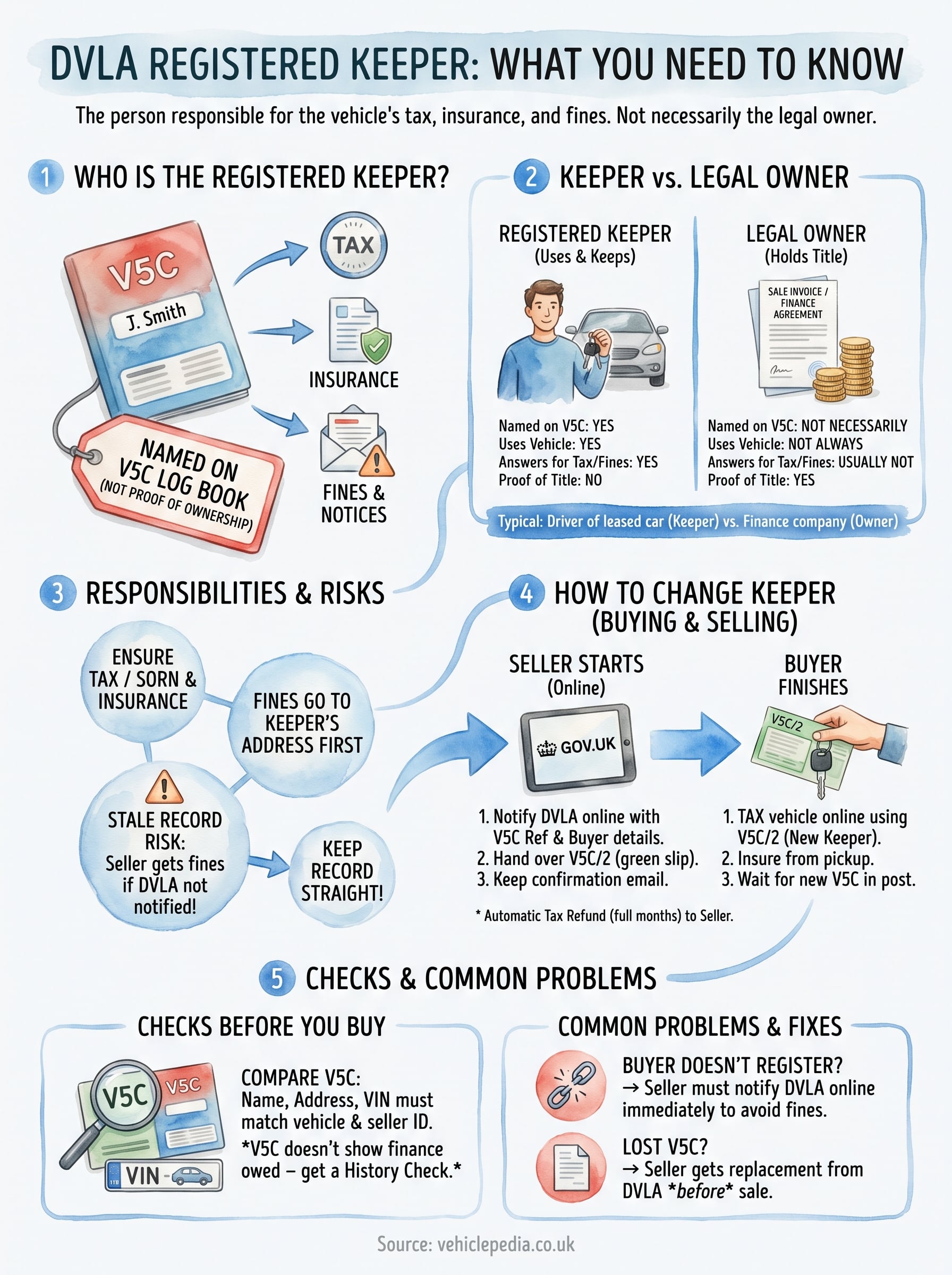
A DVLA registered keeper is the person or organisation that DVLA records as responsible for a vehicle. Their name and address appear on the V5C log book, and they answer for the vehicle's tax, insurance and any fines. The registered keeper is not always the legal owner, and the V5C is not proof of ownership.
Used car sales often go wrong at this point. A seller assumes the handshake ends their duties. A buyer assumes the car is theirs because they have paid. Meanwhile DVLA's record still names the old keeper, so parking and speeding notices land at the wrong address.
This guide explains why the keeper matters, how to change the registered keeper when a car is sold or bought, and how to check that a transfer has gone through. At Vehiclepedia we run vehicle history checks every day, including ownership history, so we see what a messy handover looks like in the data.
Why the registered keeper matters
The registered keeper matters because DVLA, councils, parking firms and the police treat that person as the one responsible for the vehicle. If the record is wrong, the wrong person gets the bill, the notice or the questions.
Keeper versus legal owner
The keeper is the person who keeps and uses the vehicle. The owner is whoever holds legal title to it. On most privately owned cars these are the same person, but they can differ. A car on finance, a lease car or a company car often has one party as the owner and another as the keeper.
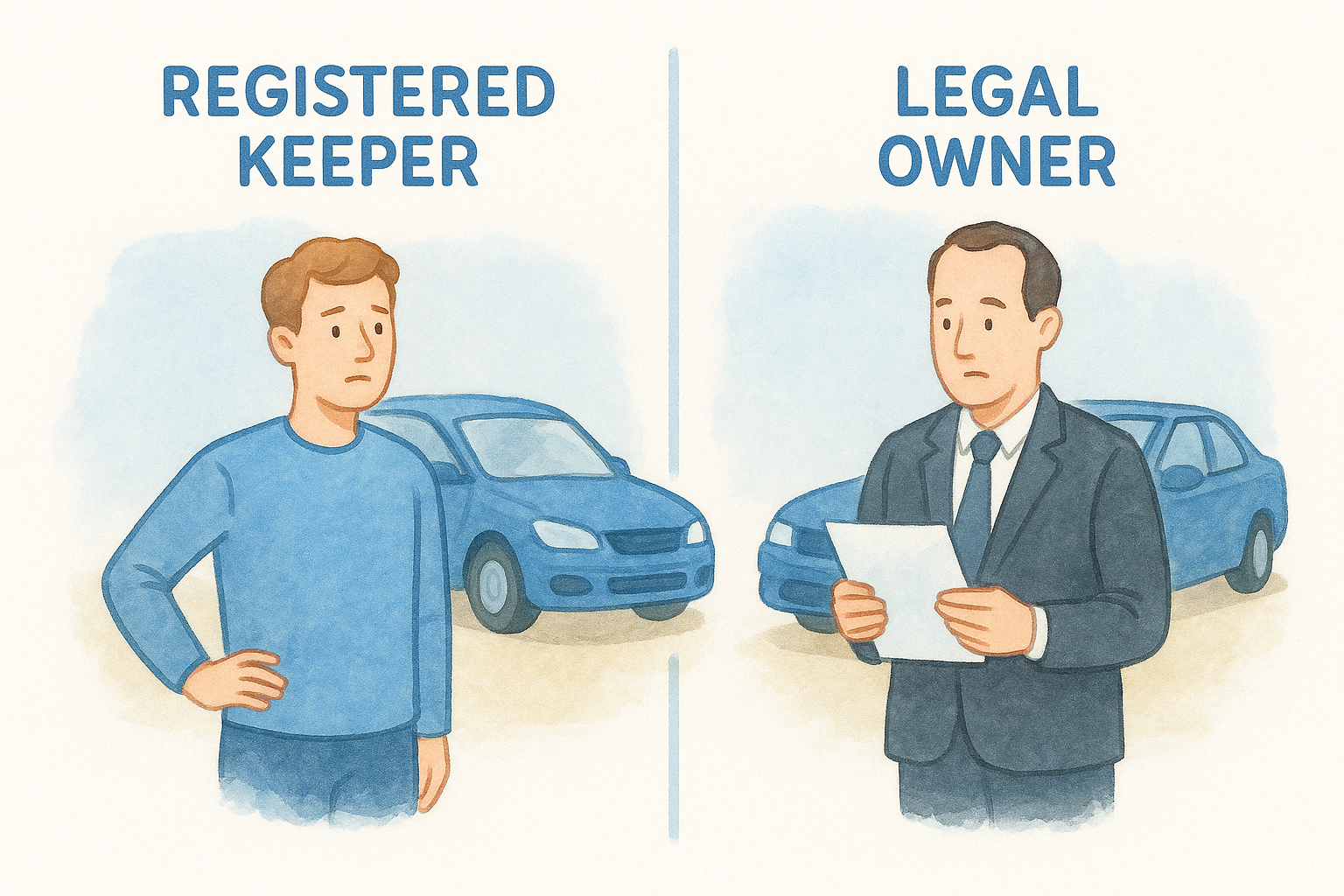
| Registered keeper | Legal owner | |
|---|---|---|
| Named on the V5C | Yes | Not necessarily |
| Uses and keeps the vehicle | Yes | Not always |
| Proof of title | No | Sale invoice, finance paperwork |
| Typical example | Driver of a leased car | Finance or leasing company |
| Answers for tax and fines | Yes | Usually not |
What the keeper is responsible for
The keeper must make sure the vehicle is taxed, insured or declared off the road with a SORN. Penalty notices for parking, speeding and similar offences go to the keeper's address first. If someone else was driving, the keeper must name them.
That is why a stale record is risky. If you sold a car months ago and DVLA still lists you, the fines are addressed to you.
The registered keeper is the person DVLA will chase, whether or not they own the car.
How to change the registered keeper when you sell or buy
You change the registered keeper by telling DVLA about the sale, and the quickest route is the GOV.UK service for selling, transferring or buying a vehicle. The seller starts it. The buyer finishes the job by taxing and insuring the car.
Steps for the seller
You need the 11-digit document reference number from your V5C. Then follow these steps:
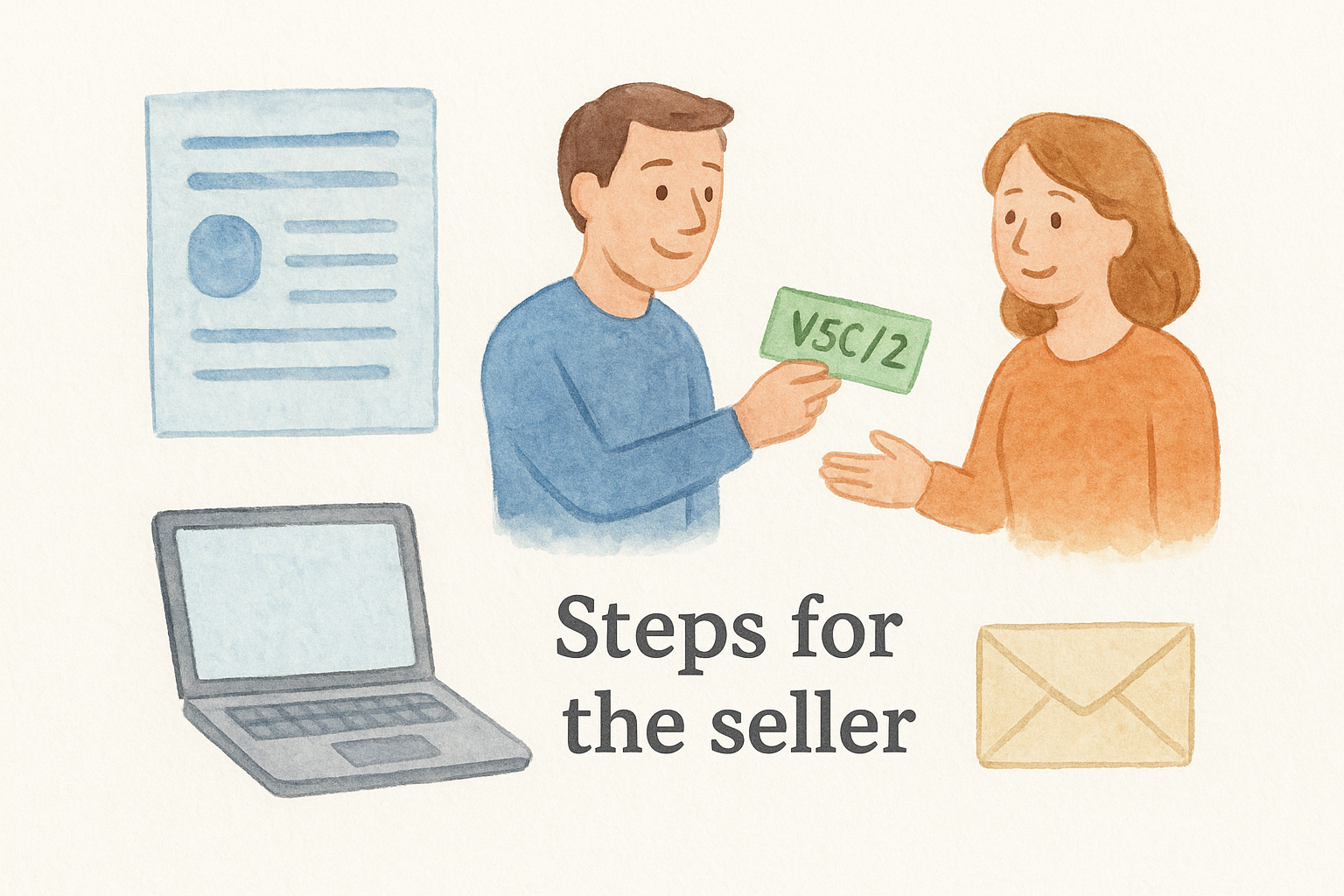
- Open the GOV.UK service and say you have sold the vehicle privately.
- Enter the 11-digit reference number from the V5C.
- Give the buyer's full name (not initials) and address.
- Hand the green "new keeper" slip (V5C/2) to the buyer.
- Keep the confirmation email.
DVLA then cancels your vehicle tax and refunds any full remaining months automatically. Any Direct Debit is cancelled too. Check that the address on your V5C is current, because the refund goes there.
Steps for the buyer
Vehicle tax does not transfer with the car. As the buyer, you must tax the vehicle in your own name before you drive it away. The V5C/2 slip lets you do that online straight away. You also need your own insurance in place from the moment you take the keys.
Your new V5C is then posted to you. That document is the official record that you are the new registered keeper, so do not bin the green slip until it arrives.
Selling to a trader or auction
If you sell to a motor trader or garage, they can tell DVLA for you with your consent. Auctioneers count as motor traders. You stay legally responsible until DVLA's record changes, so ask for written confirmation that the trader has done it.
How to check a transfer of car ownership
To check a transfer of car ownership, compare the V5C with the seller before you pay, then confirm afterwards that DVLA's record and your paperwork both show the new keeper. Both checks are quick.
Checks before you buy
Ask to see the V5C and compare it carefully. The name and address should match the seller's ID and the place where you view the car. The registration number, make and VIN on the document should match the vehicle. Be wary if the seller has no V5C or offers a reason to skip it.
Remember that the V5C shows the keeper, not the owner. It cannot tell you whether finance is owed on the car. A vehicle history check covers what the log book cannot: ownership history, plate and colour changes, and write-off, stolen and finance markers on premium reports.
A V5C proves who keeps the car. It does not prove who owns it.
Checks after the sale
Sellers should look for DVLA's confirmation email and keep it with the date, the buyer's details and a signed receipt. Buyers should wait for a new V5C in their own name. If it does not arrive within a few weeks, contact DVLA.
You can also run the registration through a history check to see how many previous keepers the car has had. Our sample report shows how ownership history is laid out. DVLA will release keeper details to third parties only for a reasonable cause, using form V888, such as a parking dispute or an insurance claim.
Common keeper problems and how to fix them
Most keeper problems come down to a buyer who never registers the car, a missing V5C, or a record that was not updated on time. Each one has a straightforward fix if you act quickly.
The new keeper has not registered the car
You do not need to wait for the buyer. As the seller, you can tell DVLA yourself online, and that is what takes your name off the record. Do it on the day of the sale. Failing to notify DVLA can lead to a fine of up to £1,000, and you may be chased for fines issued after the handover.
If a notice reaches you for a car you no longer keep, send the sale date, the buyer's details and your DVLA confirmation to the issuer.
The V5C is lost or the dealer kept it
Without the V5C you lack the 11-digit number needed for the online service. A seller who has lost it should apply to DVLA for a replacement before the sale. If a dealer took your log book, ask them to confirm in writing that they have informed DVLA.
Protect that 11-digit number as you would a card number. Do not photograph or share it, because it unlocks DVLA's online services for your vehicle.
Keep the keeper record straight
The registered keeper is the person DVLA holds responsible for a car, and that is not the same as the owner. Sellers should tell DVLA the moment the car goes, and buyers should tax the car and wait for their own V5C. Everyone should keep proof of the date.
If you are about to buy, check the paperwork against the car and check the history behind it. To see what ownership history and the premium checks look like, open our example report and compare it with the car you are considering.