How to Check if a Car Is Stolen for Free
Learn how to run a free car check stolen tools offer, verify your V5C logbook, and spot warning signs before you view or pay a deposit.

How to Check if a Car Is Stolen for Free
You've found a car online, the price looks good, and the seller seems genuine enough. But something nags at you: what if it's stolen? Buying a stolen vehicle in the UK means you lose the car and your money, since ownership never legally transfers to you. Running a free car check stolen search before you hand over any cash is the single best way to protect yourself, and it takes less than a minute.
Here's the direct answer: you can't get a fully verified stolen car check free from the Police National Computer without a formal request, but you can spot the warning signs and run genuine free and low-cost checks that flag stolen markers, outstanding finance, and mismatched details long before you view the car.
This guide walks you through exactly how to check if a car is stolen for free, what a registration plate lookup can and can't tell you, and when it's worth paying for a full stolen vehicle check that pulls directly from police and insurance databases. We'll also cover the red flags experienced buyers watch for during viewings, so you're never relying on data alone.
Why checking for a stolen car matters before you buy
Buying a stolen car isn't just bad luck, it's a legal dead end. Under UK law, nemo dat quod non habet (nobody can give what they don't own) means a stolen vehicle never legally becomes yours, no matter how much you paid or how convincing the paperwork looked. The police can seize the car the moment it's flagged, and you're left chasing a seller who's usually vanished, which is why a check for a reported stolen vehicle is worth running first. That's why a free car stolen check should happen before you even arrange a viewing, not after you've paid a deposit.
The financial risk is real
Thousands of UK vehicles are reported stolen every year, and a good number get cloned with a legitimate car's identity to slip past casual checks. You could be looking at a written-off wreck, a ringed vehicle, or a genuine stolen car wearing someone else's plates. Running a check if vehicle is stolen search costs nothing and takes seconds, yet it can save you thousands of pounds and months of legal hassle.
A five-minute check beats a five-year legal fight over a car you never actually owned.
Insurance and finance complications
Stolen cars often carry hidden finance agreements too, since criminals sometimes buy vehicles on credit and disappear before making repayments, so it pays to check if finance is still owed on a car. If the car's stolen or still owed money, your insurer won't pay out if it's later reclaimed, leaving you with no car and no compensation.
| Risk | Consequence for buyer |
|---|---|
| Stolen vehicle | Car seized, no compensation |
| Cloned plates | Ownership disputes, police involvement |
| Outstanding finance | Lender can repossess the car |
| Written-off history | Safety risks, insurance refusal |
Getting into the habit of checking before every purchase, private sale or dealer, protects your money and your peace of mind.
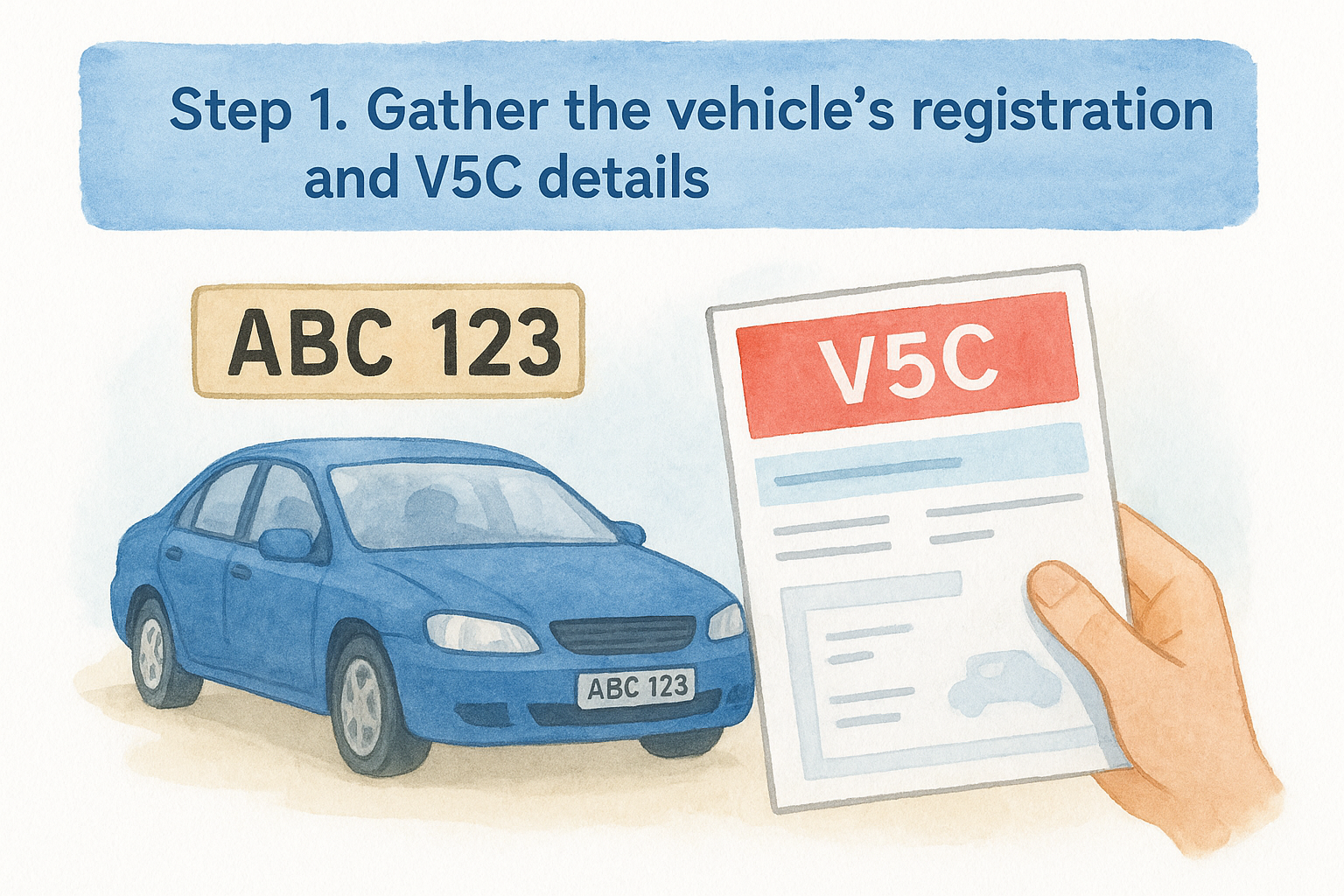
Step 1. Gather the vehicle's registration and V5C details
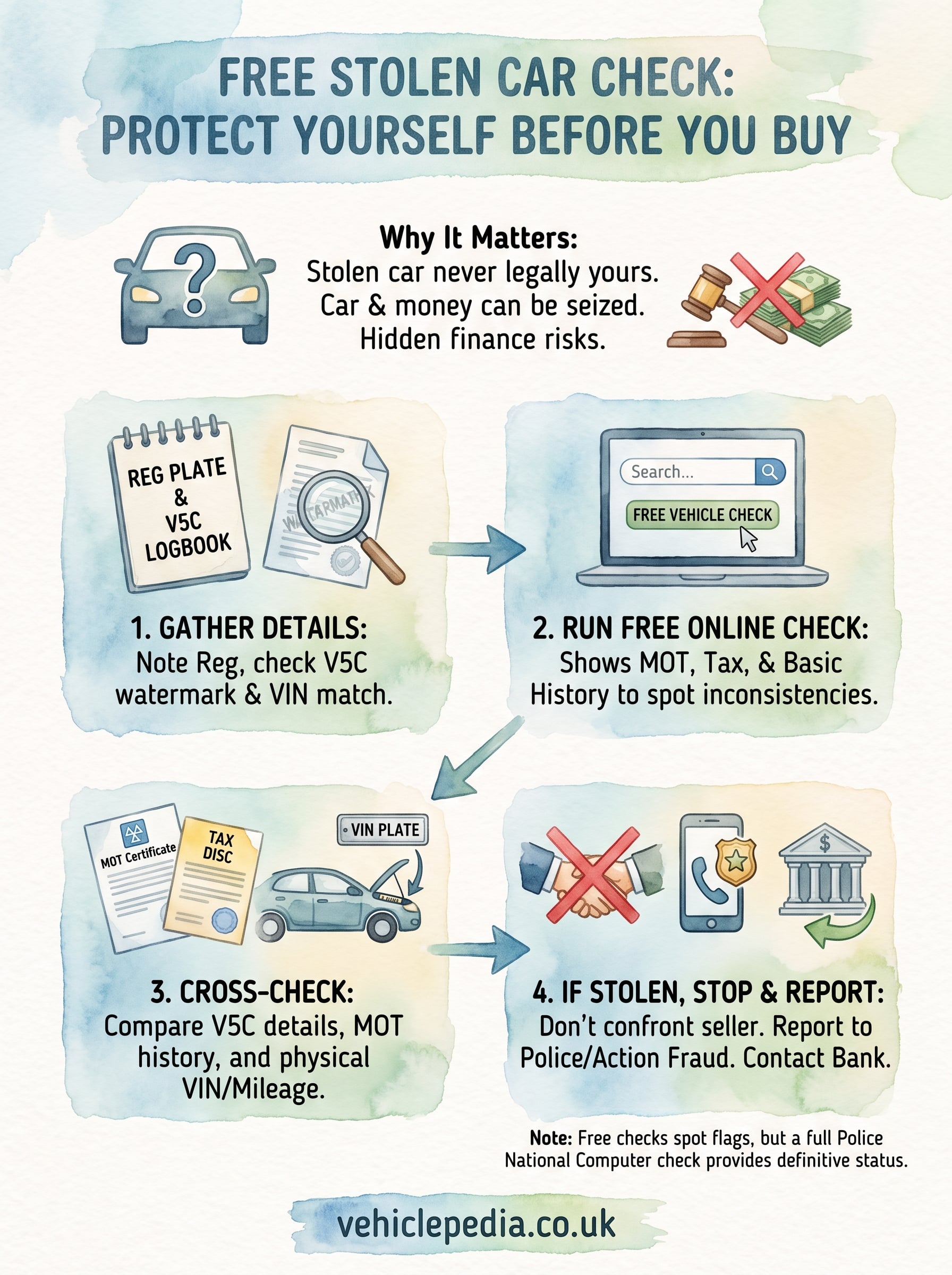
Before you run any free car check stolen search, get the basics right in front of you. You need the exact number plate, written down or photographed, since a single wrong character sends you down the wrong rabbit hole. Ask the seller for the V5C logbook too, and check the paper matches the car parked in front of you, not a description over the phone, since what the logbook actually proves is worth understanding before you look at it.
What to check on the V5C
Look closely at the document itself before trusting a word the seller says.
- Watermark and DVLA barcode: genuine V5Cs carry a visible watermark and a barcode in the top left corner.
- Document reference number: this 11-digit number is needed for most online checks.
- Registered keeper's name and address: match it against the seller's ID if you're meeting in person.
- Vehicle Identification Number (VIN): match the VIN on the logbook to the car by checking it against the number stamped on the chassis, usually under the bonnet or driver's door sill.
If the paperwork doesn't match the metal, walk away before you waste another minute.
Double-checking these details takes two minutes and stops you running a check if vehicle is stolen search on the wrong car entirely.
Step 2. Run a free stolen car check online
Now enter the registration into a free vehicle check tool and see what surfaces. Vehiclepedia's free car check pulls DVLA data instantly, showing MOT status, tax status, and basic history without asking for payment details. This is your first real car check stolen free step, and it takes under a minute once you've got the plate typed in correctly, the same routine covered in our step-by-step guide to checking a car by reg before buying.
What the free check shows you
A genuine free lookup gives you enough to spot obvious problems straight away.
- Registration match: confirms the make, model and colour against what's parked outside.
- MOT and tax status: a car taxed and MOTed under a different keeper's name than the seller claims is a red flag.
- Basic history flags: some free tools surface high-level markers worth investigating further.
Free checks won't confirm stolen status outright, but they'll tell you if something doesn't add up.
Why the free check has limits
Stolen markers sit on the Police National Computer, and no free public tool has direct access to that database. That's exactly why a proper police stolen vehicle check using PNC data matters, which we'll cover shortly.
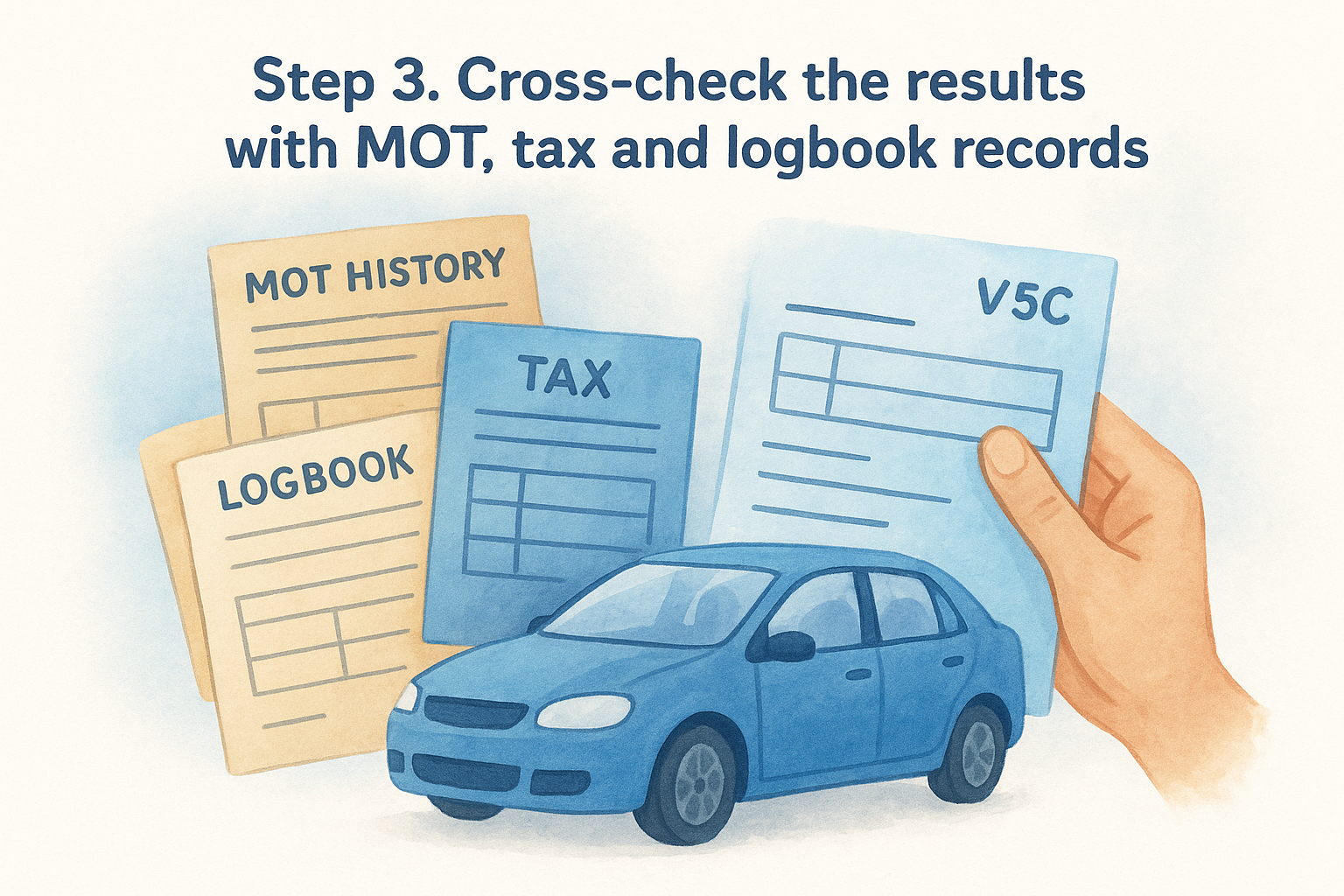
Step 3. Cross-check the results with MOT, tax and logbook records
Once you've run your free stolen car check, put the results side by side with the MOT history, tax status, and the V5C in your hand. Mismatches here often reveal a stolen car check free search's biggest limitation: it flags data inconsistencies rather than confirming theft directly, so you need to connect the dots yourself.
Comparing MOT and tax records
Check the MOT test history for the mileage recorded at each test, or run a free check on whether the mileage is genuine. A sudden drop in mileage, or a gap of several years between tests, suggests the car's history doesn't match what's showing on the road today.
- Mileage consistency: mileage should only ever climb between MOT tests.
- Keeper changes: frequent changes in a short period can signal a vehicle passing through unofficial hands.
- Tax gaps: an untaxed period followed by sudden re-taxation under a new name is worth questioning.
Numbers that don't climb steadily are numbers worth asking hard questions about.
Matching the logbook to the car
Compare the VIN, engine number, and colour on the V5C against the physical vehicle. Any discrepancy here, especially around the VIN plate, is a stronger signal than any free car stolen check alone can give you.
Step 4. Know what to do if a car shows as stolen
Stop everything the moment your free car check if stolen search or a paid stolen vehicle check flags a match. Don't confront the seller, don't hand over any money, and don't arrange to view the car in person. Criminals selling stolen vehicles can turn aggressive when challenged, so your safety comes first.
Report it properly
Contact Action Fraud or your local police on 101 with the registration, seller's details, and a screenshot of the check result. Give them everything you've got, since this helps them trace the vehicle and, sometimes, recover it for its rightful owner.
Report first, walk away second, never approach a seller over a stolen car flag.
Protect yourself going forward
Keep a record of every message, advert, and phone number connected to the seller. If you've already paid a deposit, contact your bank immediately to attempt a chargeback or transfer reversal. Report the advert to the platform it appeared on too, whether that's a classified site or a dealer's listing, so other buyers don't fall into the same trap. A check car stolen free result showing a match is rare, but acting fast when it happens matters more than anything else you do that day.
Staying safe when buying a used car
Running a free car check stolen search is the first habit any sensible buyer should build, but it's only part of the picture. Combine it with a physical inspection of the V5C, a look at MOT and tax history, and your own eyes on the VIN plate, and you've closed off most of the ways a dodgy seller tries to catch you out. Genuine sellers won't mind you taking these steps, and if they push back or rush you, treat that as its own red flag.
Stolen vehicles rely on buyers skipping the boring checks. Don't be that buyer. For anything more serious, a full stolen vehicle check covering police and finance databases gives you real certainty rather than just warning signs. See what a full stolen and finance check costs and exactly what a comprehensive report reveals before you commit to a purchase you can't undo.