VIN Number On Logbook: Where To Find It And Verify On Car
Find the vin number on logbook in Section D.5 and learn how to verify it on the car. Protect yourself from cloning and fraud with these simple checks.

VIN Number On Logbook: Where To Find It And Verify On Car
Every V5C logbook contains a critical piece of information that many buyers overlook: the VIN number on logbook. This 17-character code is the vehicle's fingerprint, unique to every car ever manufactured, and checking it properly is one of the most reliable ways to spot fraud before handing over your money.
The problem is, not everyone knows where to find it on the document, or more importantly, how to cross-reference it with the VIN stamped on the actual vehicle. Mismatched VINs can signal cloned cars, stolen vehicles, or dodgy history. It's exactly the kind of detail that separates a confident purchase from a costly mistake. At Vehiclepedia, we help UK buyers verify vehicle details through official sources like the DVLA, so you can check a car's background before committing.
This guide shows you exactly where the VIN sits on a V5C logbook, where to find it on the car itself, and how to cross-check both to make sure everything lines up. We'll also cover what to do if something doesn't match and when a deeper vehicle history check is worth running.
What the VIN is and why it appears on the V5C
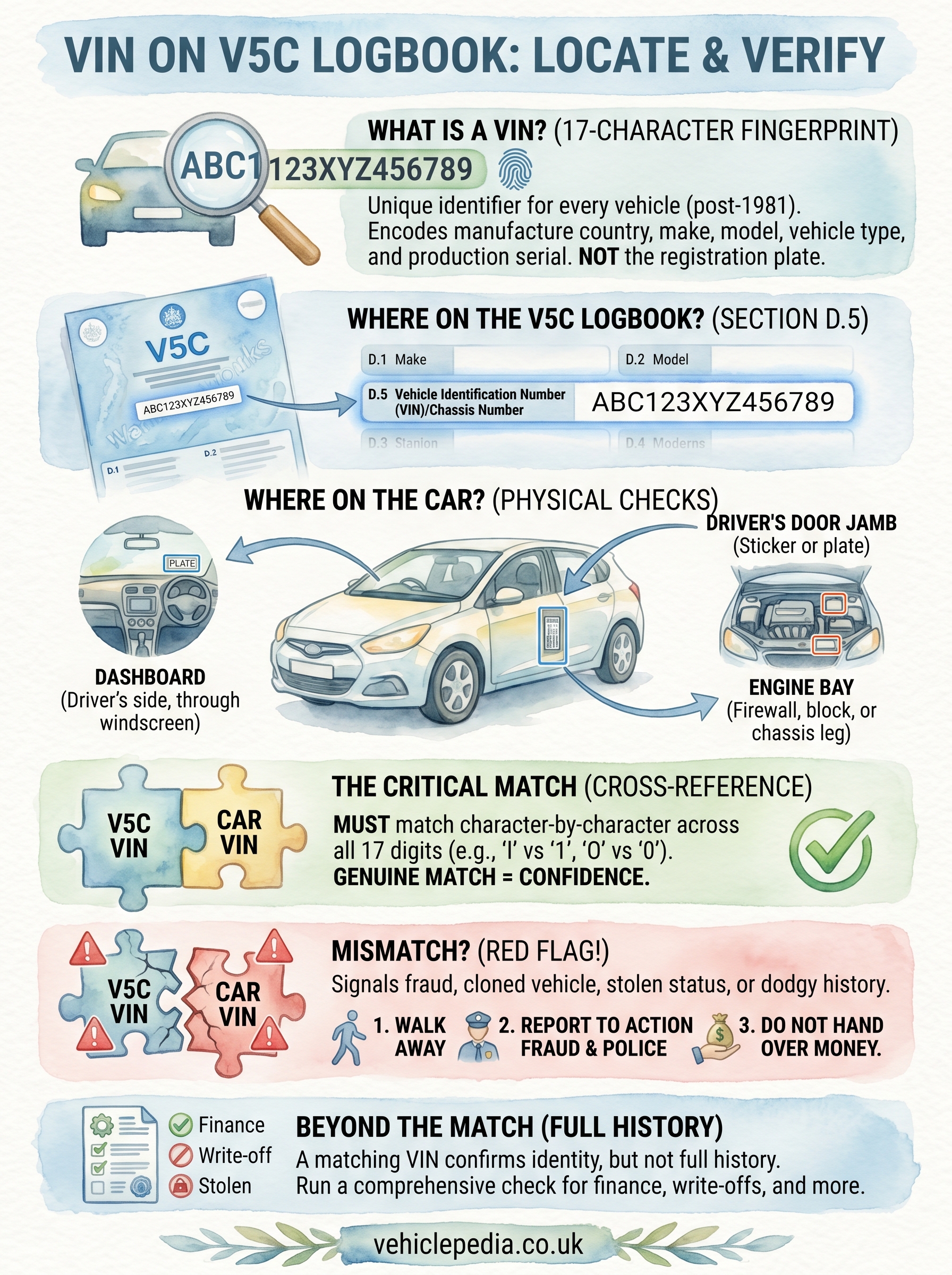
The Vehicle Identification Number (VIN) is a 17-character code assigned to every car manufactured after 1981. No two vehicles share the same VIN, which makes it the most reliable identifier a car has. It contains encoded information about the country of manufacture, the make, the model, the vehicle type, and a unique production sequence number. Think of it as a car's birth certificate, permanently tied to that specific vehicle from the moment it left the factory.
What the 17 characters actually mean
Each position in the VIN carries a specific meaning. The first three characters form the World Manufacturer Identifier (WMI), which tells you where the car was made and who built it. Characters four through nine make up the Vehicle Descriptor Section, covering things like the body style, engine type, and restraint systems. The final eight characters form the Vehicle Indicator Section, which includes a check digit and the unique production serial number that separates your car from every other vehicle of the same make and model.
A VIN is not the same as a registration plate. Plates can be transferred between vehicles or changed entirely, but the VIN stays fixed to the car for its entire life.
Why the DVLA records it on the V5C
The DVLA includes the VIN on the V5C logbook because the logbook is an official record of the vehicle, not the owner. When the DVLA registers a car, it links the VIN to the registration mark, the keeper details, and the vehicle's technical specifications. This creates a traceable paper trail that authorities, insurers, and buyers can use to verify the car's identity. If the VIN on the logbook doesn't match the VIN physically stamped on the car, the document and the vehicle don't correspond, which is a serious red flag in any transaction. That's why confirming the vin number on logbook against the car itself is a non-negotiable step before you buy.
Where to find the VIN on your V5C logbook
The V5C logbook follows a standardised layout set by the DVLA, which makes locating the VIN straightforward once you know what to look for. The current version of the V5C has a blue cover with a watermark, and the vehicle details appear in the first main section of the document. That is where you need to look.
The exact field on the V5C
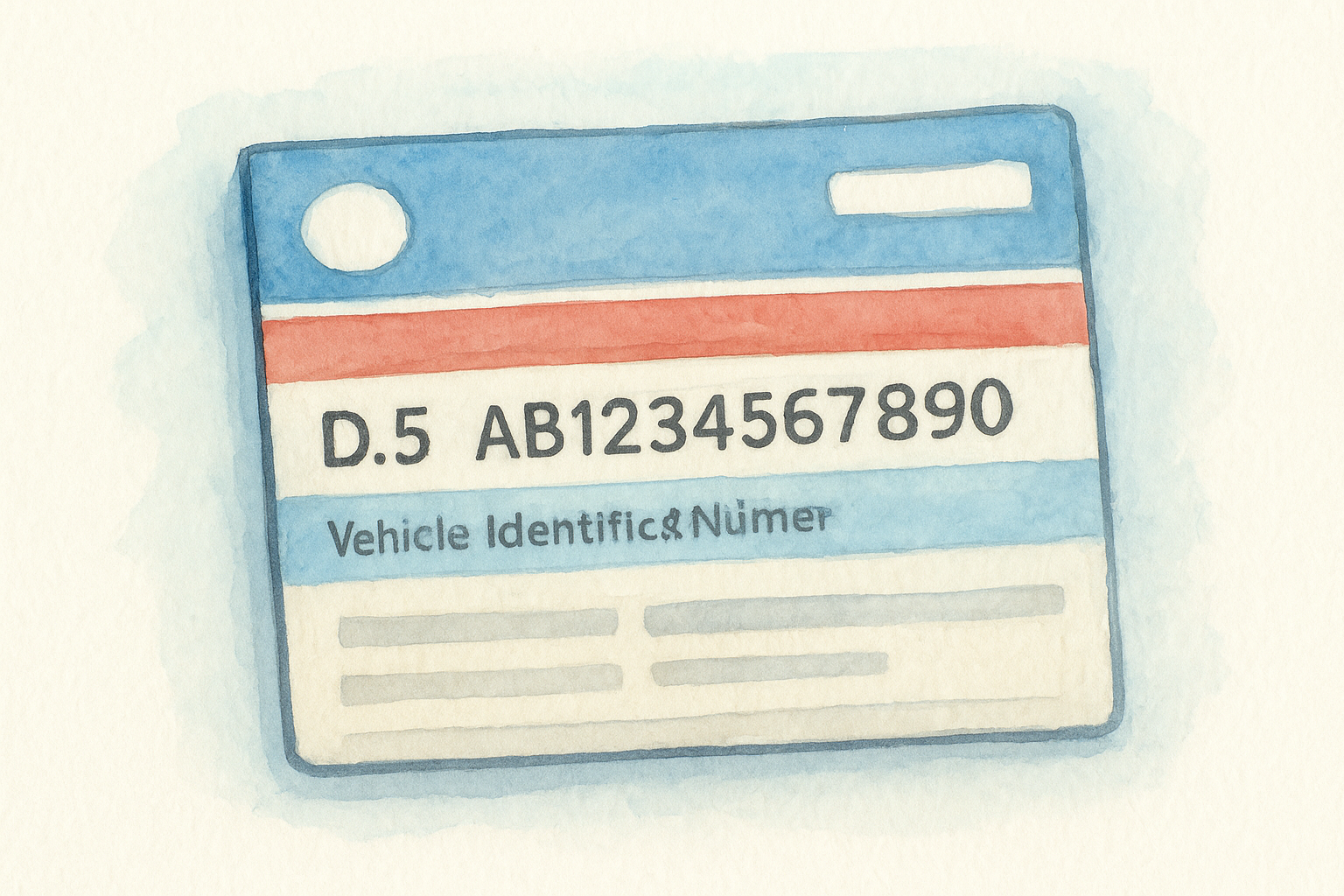
Your vin number on logbook appears in Section D.5, labelled "Vehicle Identification Number (VIN)/Chassis Number." This sits within the vehicle details block near the top of the document, alongside other key fields including:
- Make (D.1)
- Model (D.2)
- Engine capacity
- Colour
- Registration mark
The DVLA records a chassis number in the same field for vehicles that predate the modern VIN format. For any car manufactured after 1981, you will see the full 17-character alphanumeric code here. Write it down or photograph it before you inspect the physical vehicle, so you have a clear and accurate reference to check against when you look at the car itself.
Always verify the VIN on an original V5C rather than a photocopy, as fraudsters sometimes alter details on copied documents before presenting them to buyers.
How to match the VIN on the car
Once you have the vin number on logbook noted down, you need to find the same code stamped or etched onto the vehicle itself. Manufacturers fix the VIN in several locations, and checking more than one of them gives you a stronger level of confidence before you commit to buying.
Where manufacturers stamp the VIN
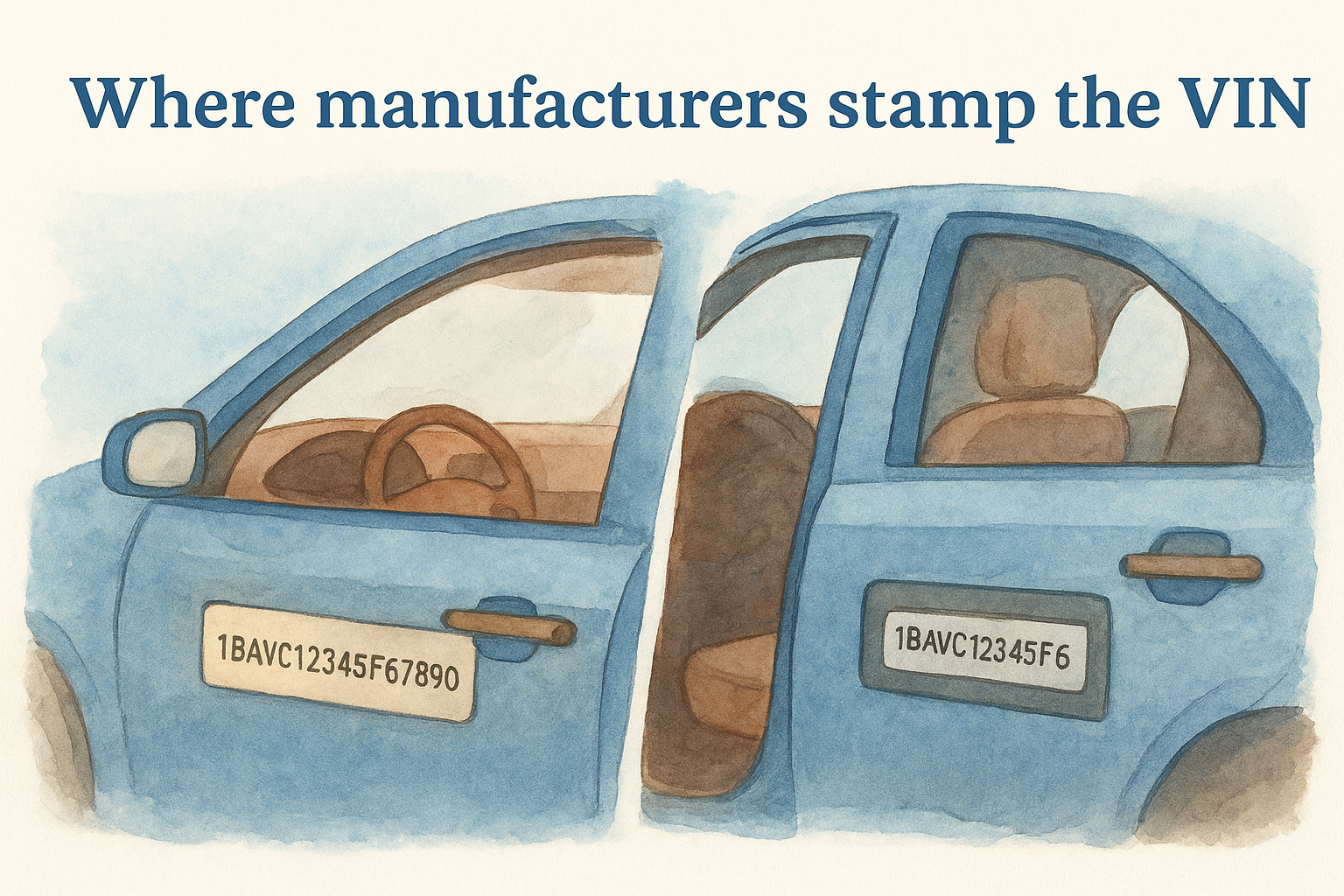
The most common location is the VIN plate on the dashboard, visible through the windscreen on the driver's side. You can read it from outside the car without opening the door. A second location is the driver's door jamb or B-pillar, where a sticker or stamped plate often carries the VIN alongside other manufacturer data.
Here are the main places to check:
- Dashboard (driver's side, visible through the windscreen)
- Driver's door jamb or B-pillar
- Engine block or engine bay firewall
- Chassis leg or floor pan (older vehicles)
- Spare wheel well
If the VIN plate on the dashboard looks like it has been tampered with or re-attached, treat that as a serious warning sign and walk away.
How to compare the codes accurately
Line up the code on the car against your written record character by character. Pay close attention to letters and numbers that look similar, such as O and 0, or I and 1. A genuine match must be exact across all 17 characters with no discrepancies whatsoever.
What to do if the VIN is missing or doesn't match
Finding a discrepancy between the vin number on logbook and the code stamped on the car is not a situation you should try to explain away. A mismatch is a direct signal that something is wrong with the vehicle, the document, or both. Do not hand over any money until you have a clear and verified explanation.
If the VINs don't match
Walk away from the sale immediately and report your findings. A mismatched VIN is one of the clearest indicators of a cloned or stolen vehicle, where a criminal has fitted plates and paperwork from a legitimate car onto a stolen one. You should contact Action Fraud (the UK's national fraud reporting centre) and inform the seller's local police force. Do not give the seller an opportunity to explain it away with a vague story.
If a seller pressures you to overlook a VIN mismatch or offers a significant discount to compensate, that is a further warning sign, not a resolution.
If the VIN is missing entirely
A missing or obscured VIN is also a serious concern. Legitimate vehicles always carry a VIN in at least one fixed location. Check the dashboard plate, the door jamb, and the engine bay. If all locations are blank or show signs of tampering, contact the DVLA directly to query the vehicle's status before taking any further steps.
Related VIN questions people ask in the UK
Beyond finding the vin number on logbook and checking it against the car, buyers in the UK often have a few follow-up questions. Here are the most common ones answered clearly.
Can I check a VIN for free in the UK?
You can run a free basic vehicle check using the registration number through the DVLA's online service, which confirms tax and MOT status. For a deeper history check that covers finance, write-offs, and stolen vehicle status, a premium report from a provider like Vehiclepedia gives you far more protection before you buy.
A free DVLA check confirms the car exists on record, but it does not tell you whether the vehicle has been written off, cloned, or has outstanding finance against it.
Is the VIN the same as the chassis number?
For vehicles manufactured after 1981, yes. The chassis number is the older term, and the VIN replaced it as a standardised 17-character format under international regulations. On your V5C, the DVLA records both under the same field (D.5), so you will see the VIN listed there regardless of which term was used when the car was built.
Can a VIN tell me if a car has been in an accident?
The VIN itself does not store accident data, but running the VIN through a vehicle history check links it to insurance records, which can reveal whether the car was declared a write-off or involved in a significant insurance claim.
Next steps
Checking the vin number on logbook against the physical car takes less than five minutes, and it is one of the most effective checks you can carry out before you buy. If the codes match across all 17 characters, you have cleared one of the most important hurdles in verifying a vehicle's identity.
That said, a matching VIN confirms identity but does not reveal everything about a car's past. A vehicle can have outstanding finance, a hidden write-off history, or a stolen vehicle flag that only shows up through a full history check. These are the risks that cost buyers the most when they go undetected.
Before you commit to any used car purchase, run a comprehensive vehicle history check to see the full picture. Vehiclepedia pulls data from official UK sources so you know exactly what you are buying. View a sample premium report to see what a full check covers before you run your own.