How To Tell If A Car Has Been Clocked In The UK: Checklist
Avoid buying a car with fake mileage. Learn how to tell if a car has been clocked by checking MOT records, service history, and physical wear and tear.
How To Tell If A Car Has Been Clocked In The UK: Checklist
Car clocking remains one of the most common scams in the UK used car market, with estimates suggesting that up to 2.5 million vehicles on British roads may have false mileage readings. If you're wondering how to tell if a car has been clocked, you're already asking the right question, because a wound-back odometer can hide serious wear, inflate a car's value by thousands of pounds, and leave you stuck with unexpected repair bills.
The good news? Clocked cars almost always leave behind clues. From inconsistent service records to unusual wear patterns, there are practical checks you can carry out yourself before handing over any money. Paired with a vehicle history check through a service like Vehiclepedia, which pulls data from official sources including the DVLA, you can cross-reference reported mileage readings and spot discrepancies fast.
This guide gives you a step-by-step checklist to identify a clocked car before you buy. We'll cover the physical signs to look for, the documents to scrutinise, and the digital tools that can flag mileage inconsistencies so you can make a confident, informed purchase.
What car clocking is and why it matters in the UK
Car clocking is the deliberate act of winding back or tampering with a vehicle's odometer to show a lower mileage reading than the car has actually covered. The name comes from the old mechanical "clock-style" speedometer dials that fraudsters would physically spin backwards. Today, with digital instrument clusters, the process is carried out using specialised software that rewrites stored mileage data, making it far harder to detect without knowing exactly what to look for.
Why sellers clock cars
The motive is purely financial. Mileage is one of the single biggest factors that determines a used car's price in the UK. A vehicle showing 30,000 miles can be worth several thousand pounds more than the identical model showing 80,000 miles. By manipulating the odometer, a seller can charge a premium price for a high-mileage car while concealing the mechanical wear and stress the vehicle has genuinely accumulated. The profit from a single clocked sale can run into thousands of pounds, which is why the practice persists despite being illegal.
A clocked car might look like a bargain, but you could be paying a top-tier price for a vehicle that needs expensive repairs within months of purchase.
The legal position in the UK
Clocking a car is a criminal offence under the Consumer Protection from Unfair Trading Regulations 2008. A seller who knowingly misrepresents mileage faces prosecution, fines, and even imprisonment. Despite this, the practice remains widespread across private and trade sales. Knowing how to tell if a car has been clocked before you commit is your most effective protection, because recovering money after a fraudulent sale through the courts is a slow and uncertain process.
The consequences for buyers go beyond the inflated purchase price. You inherit a vehicle that may need new brakes, suspension parts, or engine work far earlier than the odometer suggests, and safety-critical components can fail without warning if the car's true service intervals were never honoured.
Step 1. Check the MOT mileage trail online
Every MOT test carried out in the UK since 2005 records the vehicle's mileage at the point of inspection. This creates a dated, timestamped trail stored on the DVSA database that is accessible to anyone for free. If you want to know how to tell if a car has been clocked, this is the fastest and most reliable first check you can run before you even arrange to view the vehicle in person.
A mileage figure that drops or stalls between MOT tests is one of the clearest signals that a car has been clocked.
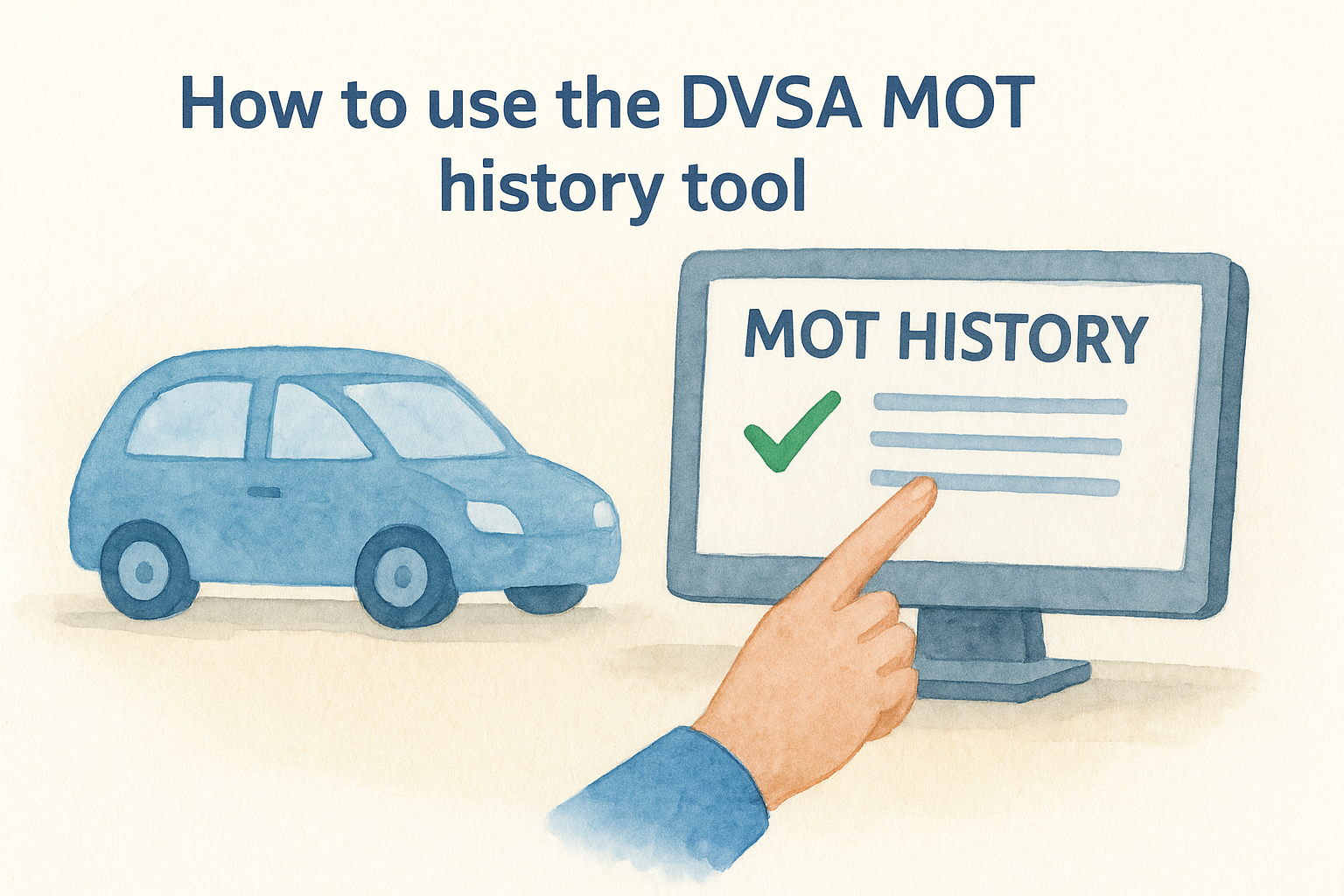
How to use the DVSA MOT history tool
Visit the official DVSA MOT history service at gov.uk/check-mot-history and enter the car's registration number. The results display every recorded MOT test, including the mileage logged at each test date. Work through the list chronologically and look for the following:
- Mileage that decreases between tests
- Mileage that remains suspiciously flat over a 12-month period
- Large, unexplained gaps in the test history
If the car shows 30,000 miles today but recorded 52,000 miles at an MOT three years ago, walk away immediately. Cross-reference these figures against the seller's claimed mileage to confirm whether the numbers stack up, and treat any inconsistency as a serious red flag before you agree to a price.
Step 2. Audit the paperwork and service history
The paperwork a seller provides gives you a paper trail that should align with what the odometer shows. A full service history with dated stamps, receipts, and garage records is one of the best ways to confirm a vehicle's true mileage, and inconsistencies between documents are a reliable indicator of clocking.
What to look for in the service book
Ask the seller to hand over the original service book, not a photocopy. Check every stamp and entry chronologically, noting the mileage recorded at each service interval. Look out for:
- Stamps that show mileage going backwards or staying flat across multiple years
- Handwritten corrections or suspicious gaps between services
- Dealer stamps that do not match the car's supposed ownership region
- Receipts for parts, such as tyres or brakes, that suggest far higher mileage than the odometer reads
Cross-check with MOT records
Compare the service book mileage against the MOT history you pulled in Step 1. The two sources should tell the same story. Knowing how to tell if a car has been clocked often comes down to spotting the small detail where one record contradicts another.
If a garage stamped the service book at 75,000 miles but the current odometer reads 60,000, that car has almost certainly been clocked.
Step 3. Spot wear that does not match the mileage
A car's interior and mechanical components wear at a predictable rate, and knowing how to tell if a car has been clocked often comes down to trusting what you see rather than what the odometer displays. Physical wear cannot be reset by a laptop, which makes a close visual inspection one of the most reliable checks you can carry out during a viewing.
Interior wear points to check
Steering wheels, gear knobs, and driver's seat bolsters all deteriorate in proportion to the miles driven. On a genuine 30,000-mile car, these surfaces should show minimal wear. Check each of the following during your viewing:
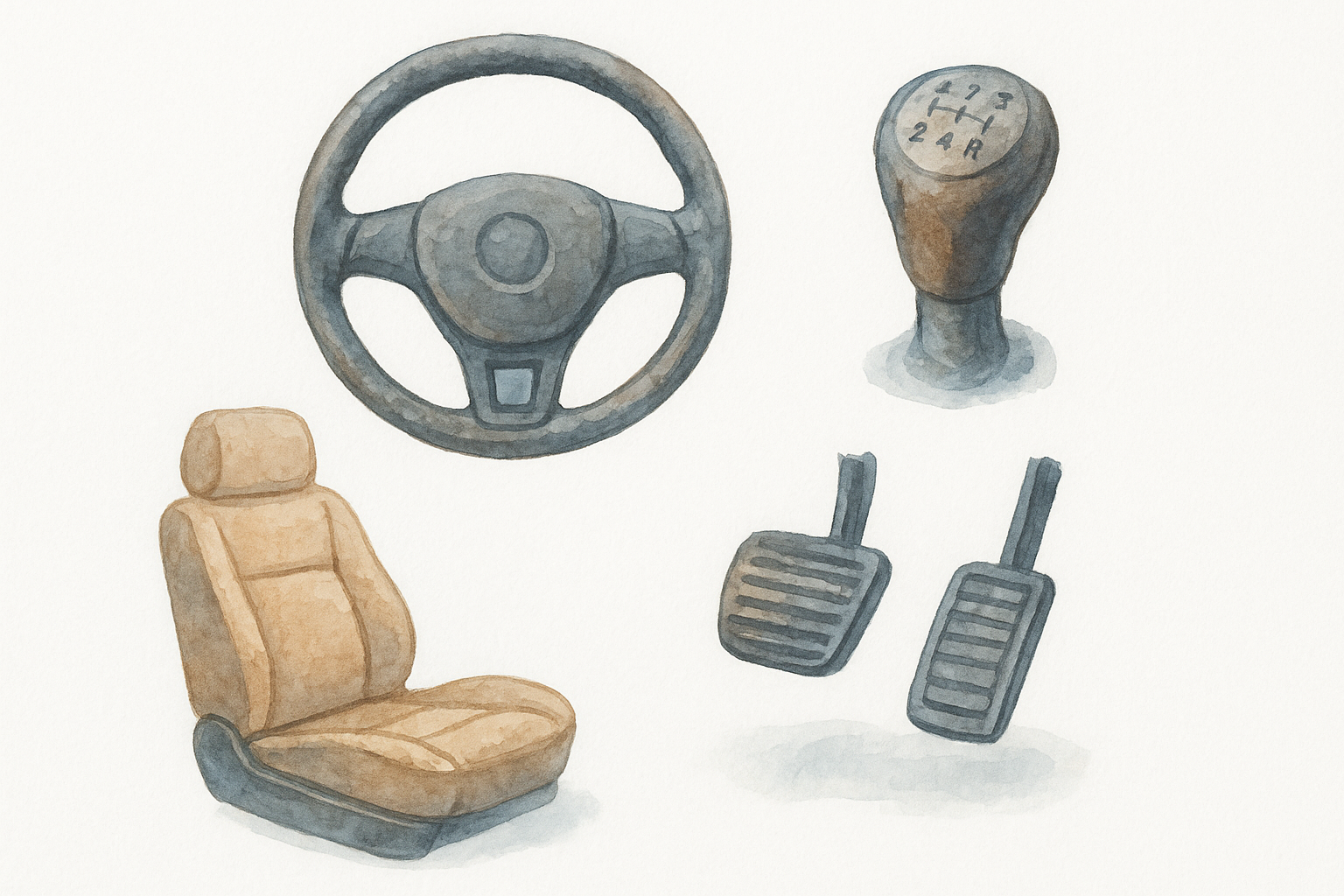
- Steering wheel rim: smooth patches or cracking indicate heavy use
- Gear knob: worn lettering or a shiny surface suggests significant mileage
- Driver's seat: a sagging cushion or cracked bolster points to years of regular use
- Pedal rubbers: heavily worn or recently replaced pedals on a supposed low-mileage car are a clear warning sign
If the pedals look almost new but the seat is worn through, someone has likely replaced them to disguise the car's true history.
Under the bonnet and mechanical tells
Inspect the engine bay for grime, oil seepage, and deteriorating hoses consistent with high mileage. A genuinely low-mileage car should have relatively clean hose surfaces and firm engine mounts. Deeply grooved brake discs or significant corrosion on a car claiming under 40,000 miles is another strong indicator worth raising directly with the seller before you discuss price.
Step 4. Verify mileage with diagnostics and checks
Physical inspection and paperwork can take you a long way, but two additional checks give you objective, data-backed confirmation. Modern vehicles store mileage data in multiple electronic control units (ECUs) across the car, and a diagnostic scan can reveal whether those figures align with what the dashboard shows.
Run an OBD diagnostic scan
Ask a trusted mechanic to plug an OBD-II reader into the car's diagnostic port, located under the dashboard on the driver's side. The scan pulls mileage data stored in separate ECUs, including the airbag module, ABS unit, and gearbox controller. If any of these figures differ significantly from the odometer reading, you are looking at a strong indicator that the car has been clocked. Many independent garages will run a basic scan for a small fee, and the investment is well worth it on any car over £5,000.
If three ECUs all report 90,000 miles but the dashboard reads 45,000, no paperwork will explain that gap away.
Cross-reference with a vehicle history check
Running a vehicle history check is the final step in knowing how to tell if a car has been clocked. Services that source data directly from the DVLA can flag mileage anomalies recorded against the registration, giving you an independent data point that no seller can tamper with before your viewing.
Quick recap and next step
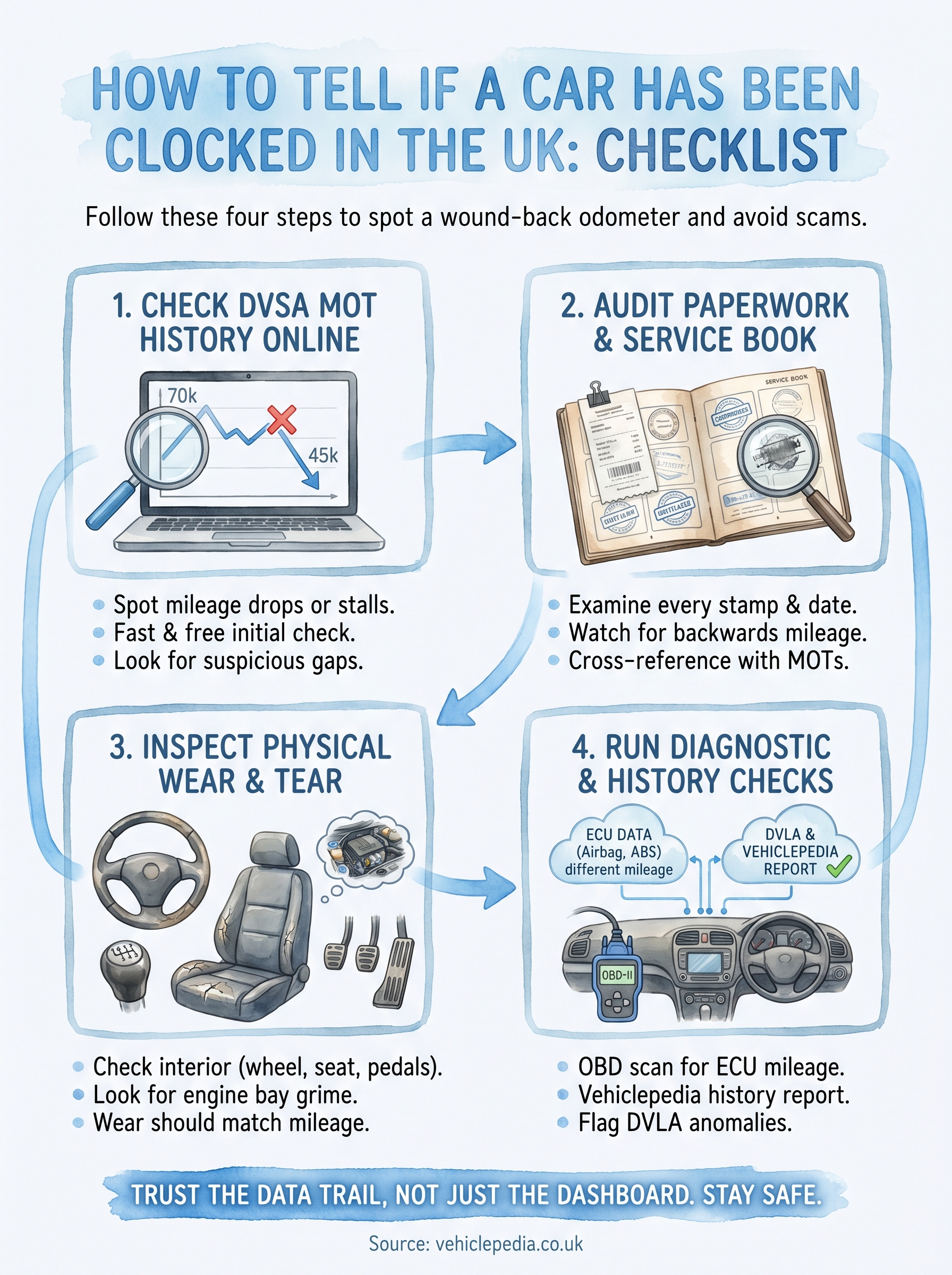
Knowing how to tell if a car has been clocked comes down to checking multiple sources and letting them confirm each other. Run the DVSA MOT history first to spot any mileage drops across test dates. Then audit the service book against those records, inspect physical wear on the steering wheel, seat, and pedals, and finally run an OBD diagnostic scan to compare ECU-stored mileage figures against the dashboard reading. If any single check raises a red flag, treat it seriously and walk away rather than negotiate around it.
Before you commit to any purchase, a vehicle history check gives you an independent data layer that no seller can alter. Vehiclepedia pulls data directly from official sources including the DVLA, so you can spot recorded mileage anomalies in seconds. View a sample Vehiclepedia report and see exactly what data you get before your next viewing.