Vehicle Mileage Check UK: Verify History And Spot Clocking
Use a free mileage checker to read MOT history since 2005, calculate yearly miles, spot clocking red flags and know what to do if figures look wrong.

Vehicle Mileage Check UK: Verify History And Spot Clocking
Mileage fraud, commonly known as "clocking", remains one of the most widespread scams in the UK used car market. Estimates suggest that hundreds of thousands of clocked vehicles are sold each year, costing buyers millions in inflated prices and unexpected repair bills. A vehicle mileage check UK buyers can run before handing over any cash is one of the simplest ways to protect yourself.
The good news is that every MOT test recorded since 2005 includes an odometer reading, creating a traceable mileage history for most vehicles on UK roads. By cross-referencing these records, you can quickly spot inconsistencies that suggest a car's mileage has been wound back or tampered with.
This guide walks you through exactly how to check a vehicle's mileage history, what red flags to look for, and how tools like Vehiclepedia's registration plate lookup can help you verify the data before you commit to a purchase. Whether you're buying privately or from a dealer, these steps will help you buy with confidence.
What a UK mileage check can and can't show
A vehicle mileage check UK buyers run online works by pulling official MOT test records from the DVSA database. Every time a vehicle passes or fails an MOT, the tester records the odometer reading. Because this data is stored centrally and tied to the vehicle's registration number, it builds a timeline you can check in minutes. In practice, a mileage checker simply lays those readings out in date order, so you can check the mileage on a car online using nothing more than its reg.
What a mileage check reveals
The MOT history gives you a year-by-year snapshot of the odometer at each test date. From that data, you can calculate how many miles the car covered between tests, compare those figures against average UK annual mileage (roughly 7,000 to 10,000 miles), and flag any point where the reading drops or stays suspiciously flat. You can also see the test dates, pass or fail outcomes, and any advisories or failures recorded by the tester.
A single mileage reading means very little on its own. The real value comes from comparing readings across multiple MOT tests to build a reliable picture over time.
Here is a quick summary of what the records reveal:
- Recorded mileage at each MOT test since 2005
- The gap in miles between consecutive tests
- Any obvious drops in the odometer figure
- Long gaps between tests where mileage goes unverified
What a mileage check won't tell you
The MOT history has real limits you need to understand before relying on it entirely. It only captures mileage at annual test intervals, so a car that was clocked between two tests can still show a plausible-looking jump. Records also cannot confirm mileage for vehicles exempt from MOT, such as those under three years old or certain historic vehicles. Private imports may carry incomplete or missing entries if earlier MOTs were conducted abroad. Vehicles tested in Northern Ireland are held on a separate system, so a Great Britain lookup can show gaps for them.
Step 1. Get the MOT mileage history by reg
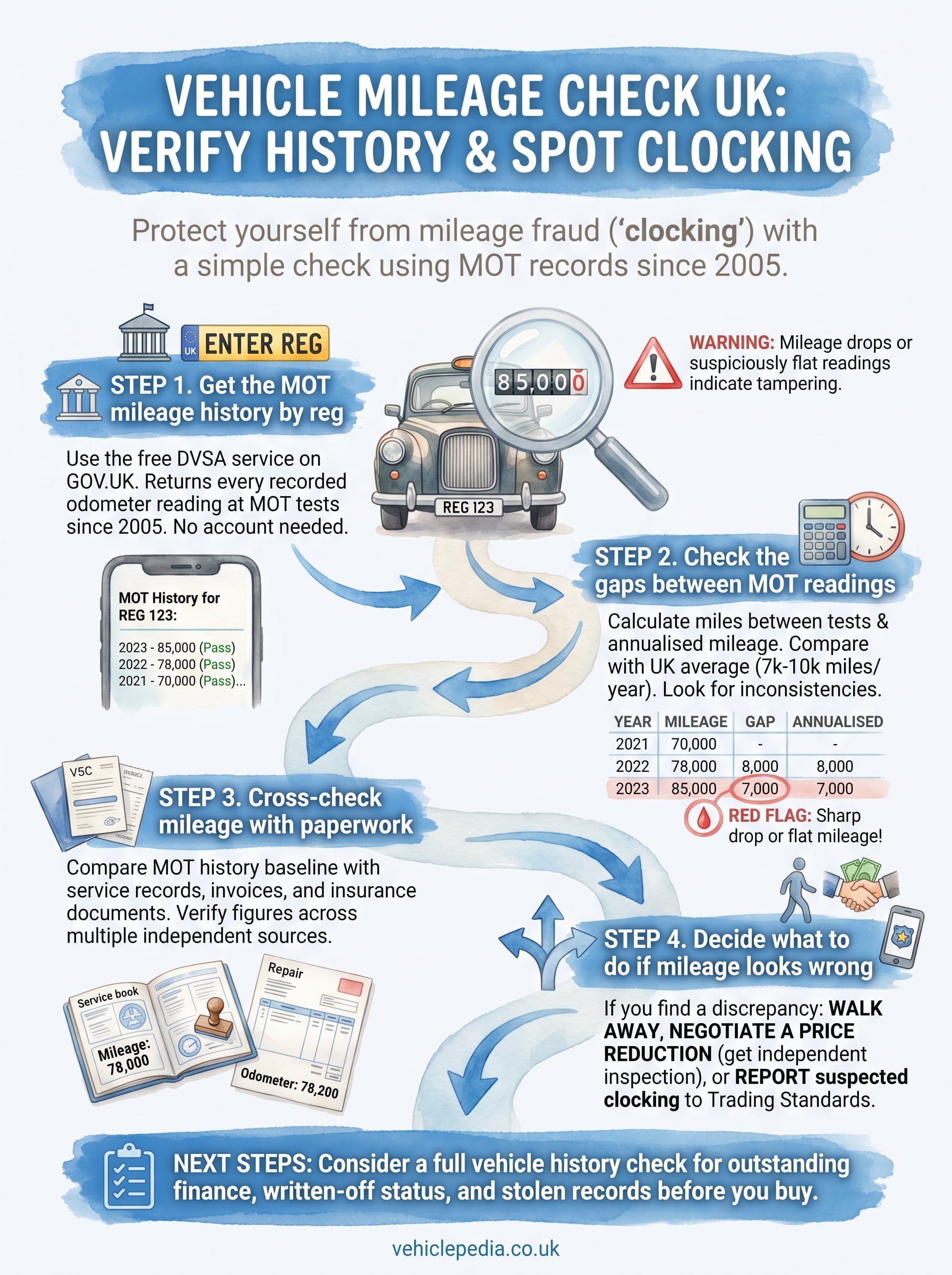
The fastest way to pull a vehicle's mileage history is to enter its registration number into the DVSA's free MOT history service on GOV.UK. This tool is completely free, takes under a minute, and returns every MOT test recorded since 2005, including the odometer reading logged at each test date. You do not need to create an account or pay anything to access it.
The registration number is the only piece of information you need to retrieve the full MOT history, so have it ready before you start.
What the results show you
Once you enter the registration, the service returns a reverse chronological list of MOT tests, each showing a mileage figure, a pass or fail result, and any tester advisories or failure notes. For a vehicle mileage check UK buyers want to use practically, this list is your starting point for identifying anomalies.
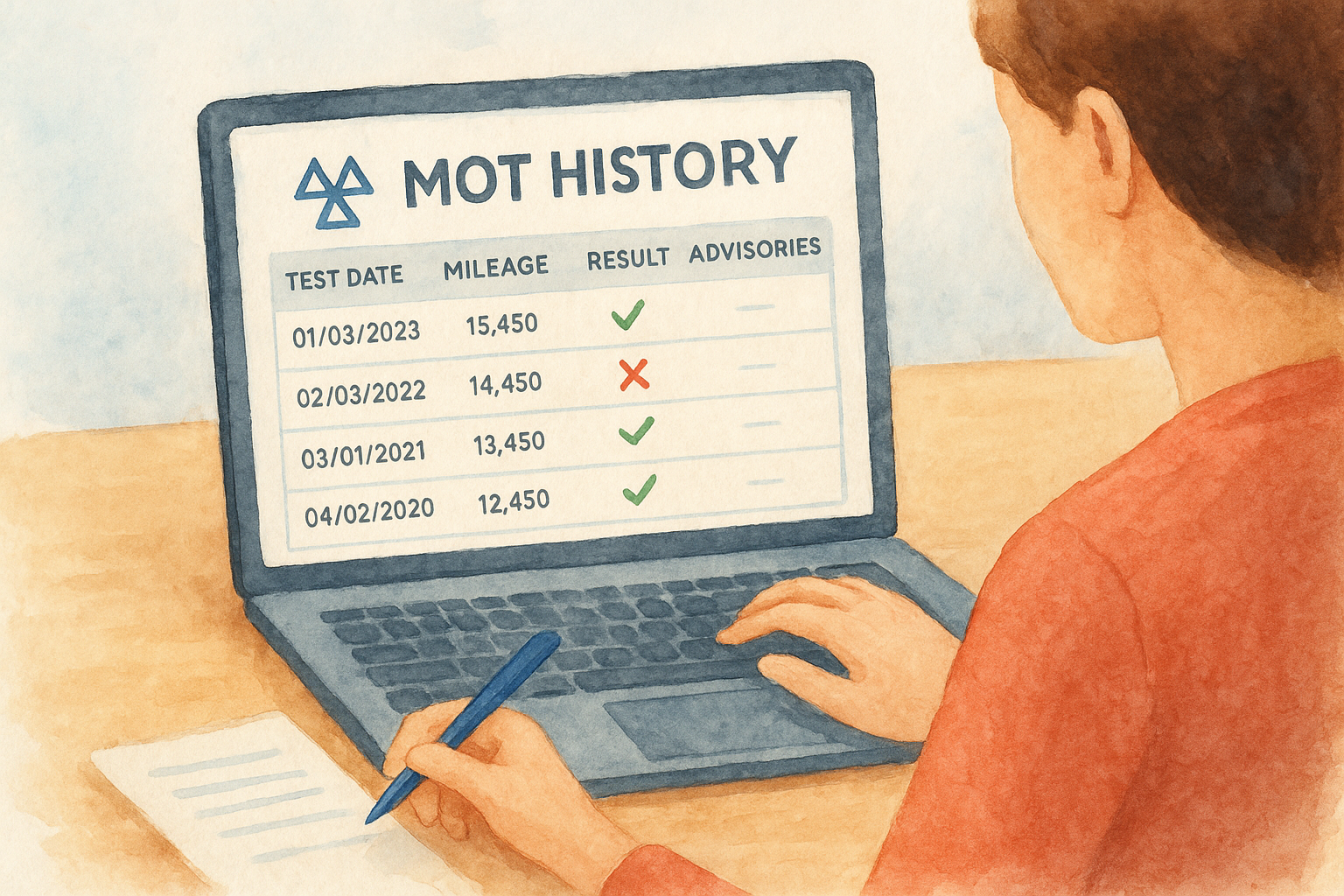
Here is what each test entry typically contains:
| Field | What it tells you |
|---|---|
| Test date | When the MOT was carried out |
| Mileage recorded | Odometer reading at the time of test |
| Result | Pass, fail, or aborted |
| Advisories / failures | Issues flagged by the tester |
Run this check before viewing the car in person, not after. Having the mileage timeline ready means you can compare the figures against what the seller states in the advert.
Step 2. Check the gaps between MOT readings
Once you have the MOT history open, work through the mileage figures in order from oldest to newest. For each consecutive pair of entries, subtract the earlier reading from the later one and note how many months passed between tests. This gives you a comparable figure across different periods so you can identify anything that stands out.
A mileage drop between two consecutive MOT tests is the clearest sign of clocking you will find in a public database.
How to calculate annualised mileage
Divide the miles covered between two tests by the number of months, then multiply by 12. This produces an annualised mileage figure you can compare directly to the UK average of 7,000 to 10,000 miles per year. Run this calculation for every gap in the history, not just the most recent one.
Here is a quick example using three test entries:
| Test year | Mileage | Miles since last test | Annualised |
|---|---|---|---|
| 2021 | 45,000 | - | - |
| 2022 | 53,500 | 8,500 | 8,500 |
| 2023 | 54,200 | 700 | 700 |
The sharp drop to 700 miles in 2023 is an immediate red flag, and this is exactly the kind of inconsistency a thorough vehicle mileage check UK buyers run will surface quickly.
Step 3. Cross-check mileage with paperwork
The MOT history gives you a strong baseline, but paperwork can confirm or contradict those figures. Before viewing the car, ask the seller to have all available documents ready so you can compare recorded mileage figures across multiple independent sources.
If a seller cannot produce any supporting paperwork, treat that as a significant warning sign regardless of what the MOT history shows.
Documents to gather before the viewing
Any document generated at a specific date that records the odometer can verify the mileage timeline you built in Step 2. The more sources you cross-reference, the harder it becomes for a fraudulent reading to go undetected. Gather as many of the following as possible:
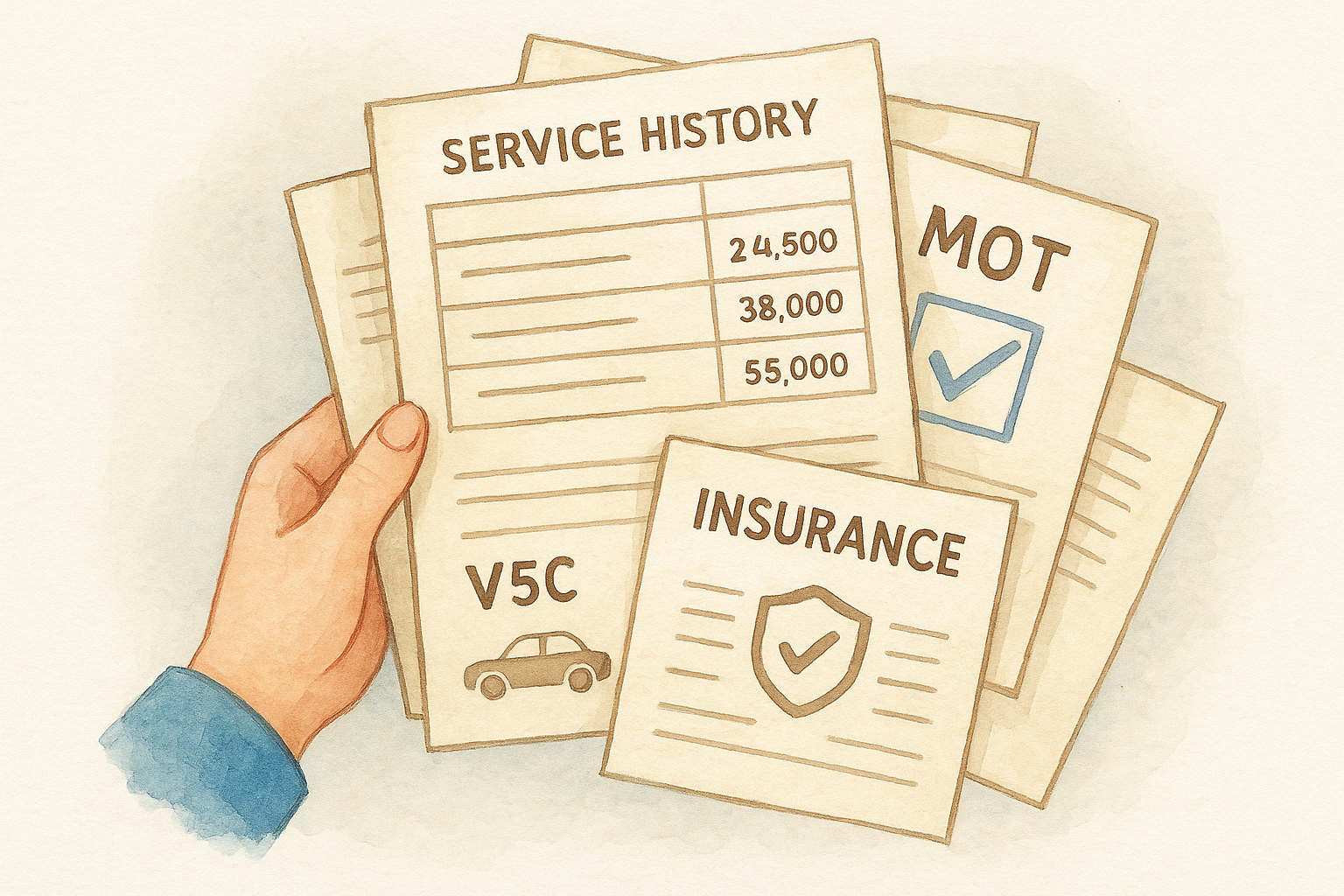
- Service history (stamped book or digital records with mileage at each service)
- Previous MOT certificates (physical copies that match DVSA records)
- V5C logbook (registration date confirms vehicle age against expected mileage)
- Insurance documents (annual mileage declarations often appear here)
- Repair invoices (garage receipts typically note the odometer reading)
How to compare the figures
Run a vehicle mileage check UK buyers find practical by placing your MOT mileage table beside each document's recorded figure. Check that every dated entry falls within a plausible range for that point in the car's life. A single figure out of sequence across multiple documents is a strong indicator the odometer has been altered.
Step 4. Decide what to do if mileage looks wrong
If your vehicle mileage check UK investigation surfaces a drop, an implausible gap, or contradictions between the MOT history and paperwork, you have three realistic options: walk away, negotiate a price reduction, or report the seller. Which path makes sense depends on how strong the evidence is and how committed you are to that specific vehicle.
Never accept a seller's verbal explanation for a mileage discrepancy without independent verification from a third-party mechanic or written confirmation.
Walk away or negotiate on price
A confirmed mileage inconsistency significantly affects the car's true value, because higher real mileage means more wear on the engine, gearbox, and suspension components. If you still want the vehicle, use the inflated mileage figure as direct leverage to negotiate a lower price that reflects its actual condition.
- Obtain an inspection from a qualified mechanic before agreeing to anything
- Get any agreed price reduction in writing before exchanging money
- Ask the seller to clarify the discrepancy in writing so you have a record
Report suspected clocking
Mileage fraud is a criminal offence under the Digital Markets, Competition and Consumers Act 2024, which replaced the Consumer Protection from Unfair Trading Regulations 2008 in April 2025. If you suspect a seller has deliberately altered the odometer, report it to Trading Standards via the Citizens Advice consumer helpline on 0808 223 1133.
Next steps
Running a vehicle mileage check UK buyers complete before any viewing takes less than ten minutes and can save you from paying over the odds for a car that has covered far more miles than the seller claims. Start with the free MOT history on GOV.UK, build your mileage table, cross-check it against every piece of paperwork available, and treat any inconsistency as a reason to ask harder questions.
For a more complete picture before you hand over any money, a full vehicle history check goes beyond mileage. It covers outstanding finance, written-off status, stolen vehicle records, and ownership history in a single report. Knowing all of that upfront puts you in a much stronger position when negotiating the price or deciding whether to walk away entirely.
Run your registration now and view a sample premium vehicle report to see exactly what a full check covers before you commit.