Is My Car Insured? How to Check for Free in the UK
Learn how to check is my car insured check free dvla using askMID and GOV.UK, plus what to do if the result shows no cover.
Is My Car Insured? How to Check for Free in the UK
You've spotted a car for sale, or you're double-checking your own policy, and you want a straight answer: is the vehicle actually insured right now. Plenty of people type is my car insured check free dvla into Google expecting the DVLA to hold this data, but insurance isn't their remit. The Motor Insurers' Bureau runs the database that matters, and getting an answer costs nothing.
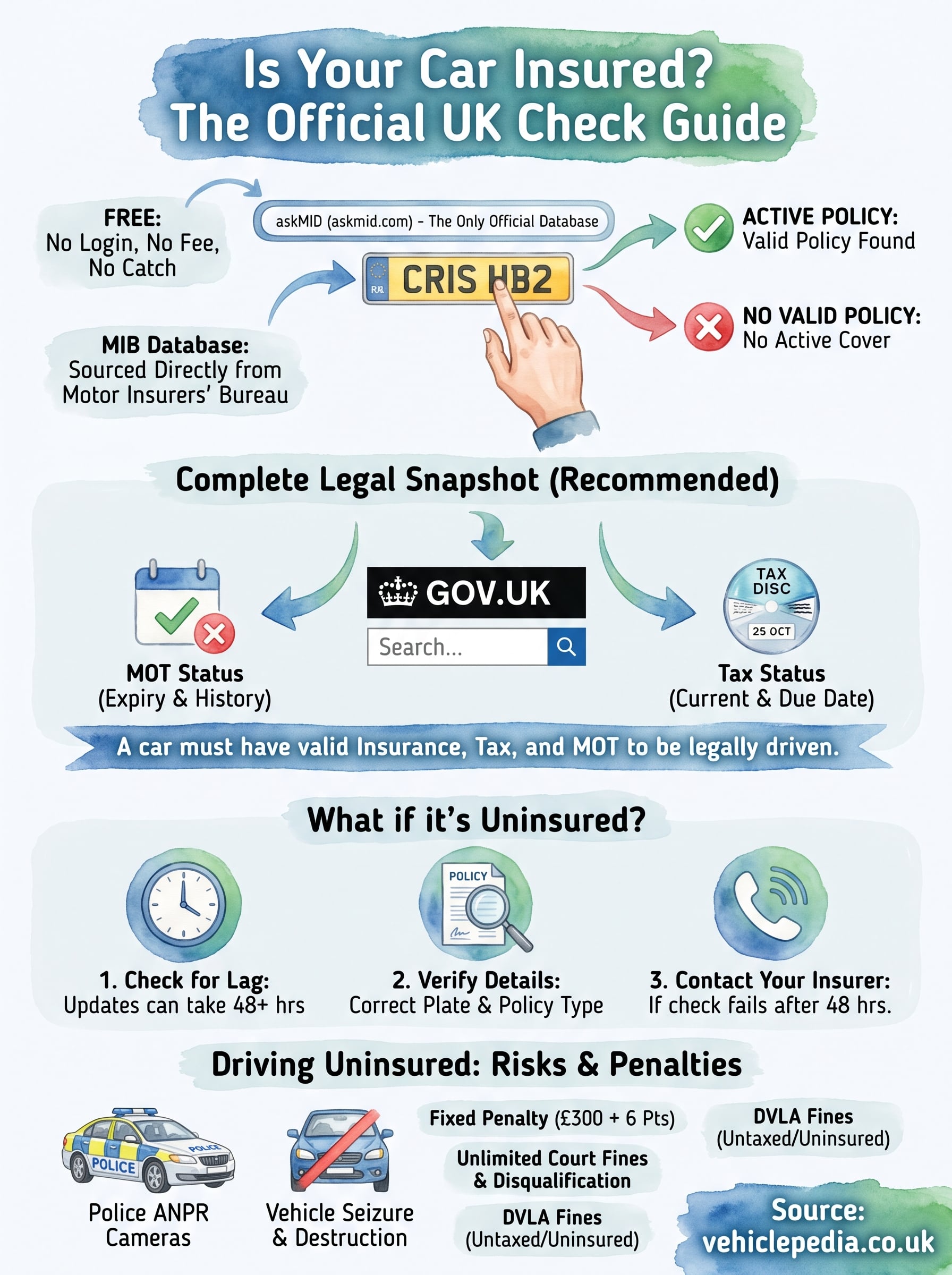
The quickest route is askMID, the free public-facing tool built from the Motor Insurance Database that every UK insurer feeds into. Enter a registration number and you'll see whether a valid policy is active at that moment, no login, no fee, no catch. It won't show you who the policyholder is or the exact cover level, but for confirming basic insurance status it's the official, trusted source.
In this guide, we'll walk you through exactly how to run a free car insurance check using askMID, what the results actually mean, and what to do if a car shows up as uninsured. We'll also cover how this fits alongside a full vehicle history check, so you're not just confirming insurance but also spotting write-offs, finance, or theft records before you hand over any money.
What you need before checking your car's insurance
Before you run any check, gather a couple of basics so you don't waste time on a false result. Vehiclepedia sees plenty of buyers who mistype a plate or check the wrong site entirely, then assume a car is uninsured when it's actually their own error. Getting this right takes thirty seconds and saves you from a wrong conclusion.
The registration number, entered correctly
You need the vehicle's registration number (the number plate), typed exactly as it appears, no spaces missing or added incorrectly. UK plates follow a standard format, and most checking tools are strict about it. If you're viewing a car in person, photograph the plate so you're not relying on memory. If you're buying privately, ask the seller for it before you arrange a viewing, that way you can run a free insurance check on car details before you even leave the house.
Knowing where to actually check
This is where most people go wrong. Searching for a car insurance check uk free tool often surfaces third-party sites that scrape or resell data, sometimes charging for information that's free elsewhere. Stick to official sources:
- askMID (askmid.com), run by the Motor Insurers' Bureau, for insurance status
- GOV.UK for MOT and tax status
- Your own insurer's app or portal, if you're checking your own policy
The only insurance database that matters in the UK is the Motor Insurance Database, so any check that isn't pulling from it isn't worth your time.
A few minutes, no account needed
You don't need to register, log in, or hand over payment details to check basic insurance status. If a site asks for a card number before showing you anything, close the tab. Legitimate checks like askMID are genuinely free because insurers are required to submit policy data to the database; the tool exists as a public safeguard, not a revenue stream. Set aside five minutes, have the plate ready, and you'll have your answer before your tea's gone cold.
Step 1. Check your car insurance status with askMID
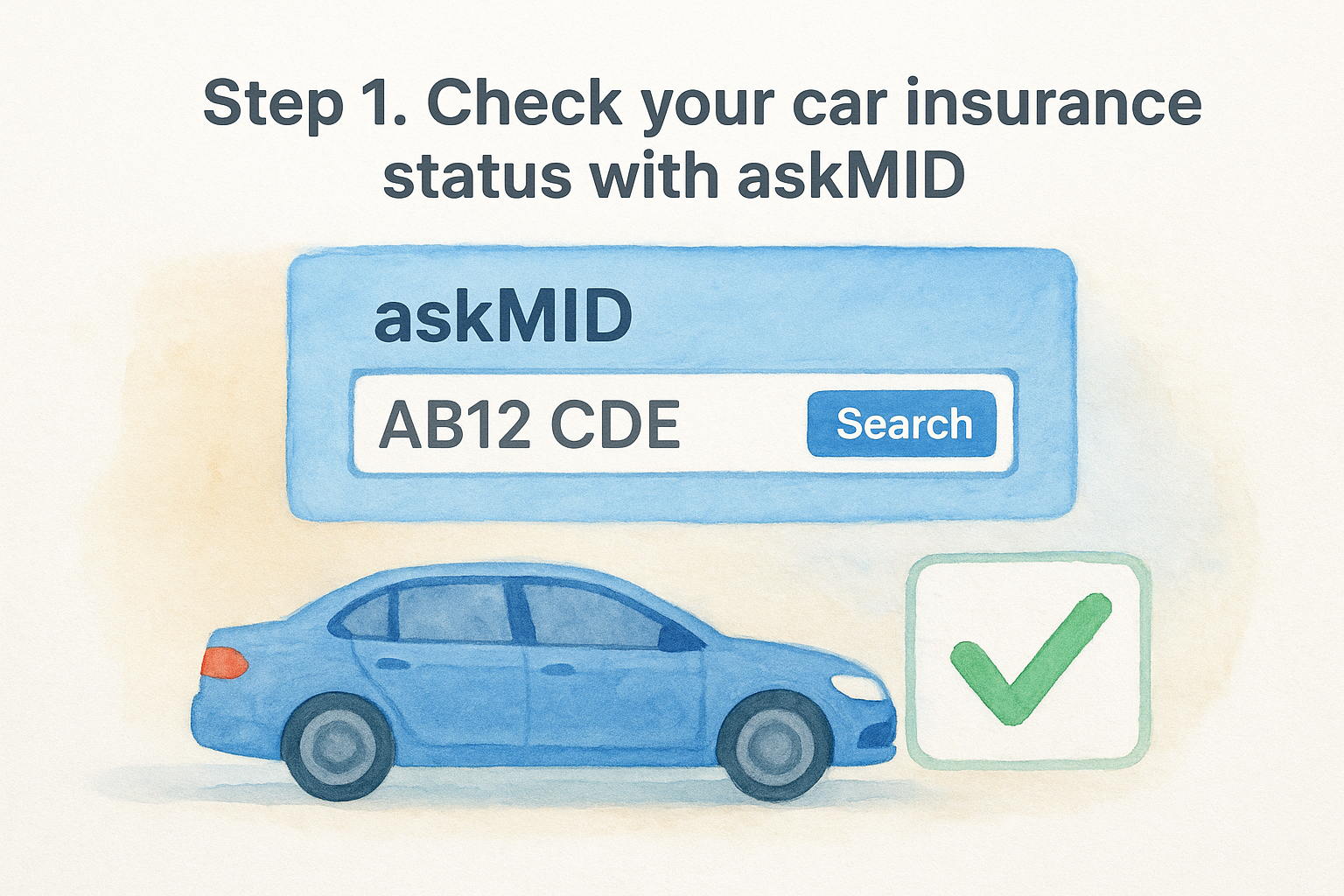
Open askmid.com and you'll land on a simple search box, no clutter, no upsell. This is the actual front door to the Motor Insurance Database, and it's the tool most people mean when they search check my car insurance free. Type the registration number in exactly as it appears on the plate, hit search, and the result appears in seconds.
Reading the result screen
The tool gives you one of two answers: a valid policy is currently recorded against that plate, or no matching policy was found. That's it, there's no grey area shown on screen. You won't see the insurer's name, the policyholder, or the level of cover, askMID deliberately withholds that detail to protect drivers' privacy. If you need proof for a specific transaction, such as buying a car or reporting an accident, you can request a formal Certificate of Insurance confirmation through MIB directly rather than relying on the free lookup alone.
A green result means a policy exists right now, nothing more, nothing less, and that's exactly the information most buyers need.
Why the result can lag reality
Here's the catch that trips people up when running a car check free insurance search: insurers update the database regularly, but not always instantly. A policy bought minutes ago might not show yet, and a cancelled policy can occasionally linger for a short window before it drops off. If a result looks wrong, especially right after a sale or cancellation, wait a day and check again before assuming the data itself is faulty. For anything time-sensitive, like completing a car purchase today, treat askMID as strong evidence, not a legal guarantee.
Step 2. Double-check tax and MOT status on GOV.UK
Insurance is only half the legal picture, so once askMID gives you an answer, head straight to GOV.UK to check tax and MOT status on the same registration. A car can show a valid policy and still be off the road legally if the tax has lapsed or the MOT expired last month. This step takes under a minute and rounds out your free car insurance check uk into something closer to a full legal snapshot.
Running the free MOT and tax checker
Go to the GOV.UK vehicle enquiry service and enter the same plate. You'll get three things back instantly:
- Current tax status and the date it's due
- MOT expiry date and pass/fail history going back years
- Basic vehicle details like make, colour, and engine size, useful for spotting a mismatch with what you're being shown
What the results tell you about risk
Mismatches here are a red flag worth taking seriously. A car with no MOT can't legally have valid insurance cover for driving on public roads, even if askMID shows a policy exists, because most policies require a valid MOT as a condition of cover.
Insurance, tax, and MOT are three separate checks, and a car needs all three current to be legally driven, not just one.
If you're buying, cross-reference these dates against what the seller told you. Sellers sometimes genuinely don't realise their MOT lapsed, but it's still your job to catch it before you hand over cash.
Step 3. Know what to do if your car shows as uninsured
Getting a "no policy found" result feels alarming, but don't panic before you've ruled out the ordinary explanations. Uninsured results are often just timing issues rather than genuine gaps in cover, so work through the obvious causes first before assuming the worst.
Checking for simple explanations first
Start by confirming you typed the plate correctly, then check whether the policy was bought or renewed in the last 48 hours, since database updates can lag. If you're checking your own car, log into your insurer's app directly and compare what it shows against the askMID result. Mismatches here usually mean your insurer hasn't submitted the update yet, not that you've somehow lost cover.
If askMID shows no policy and your own insurer confirms one is active, trust your insurer and give the database a day to catch up.
Contacting your insurer directly
If the gap persists beyond 48 hours, call your insurer and ask them to confirm your policy has been correctly submitted to the Motor Insurance Database. This isn't a favour, insurers are legally required to keep MID records accurate, and a genuine gap could leave you exposed if you're stopped or involved in an incident.
What to do when buying a used car
If you're checking someone else's car before buying, an uninsured result is a legitimate reason to pause the sale. Ask the seller to confirm cover directly, and don't hand over money or drive the car until you've seen proof, since driving it yourself without your own policy in place is illegal regardless of what the seller claims.
What happens if you drive without insurance
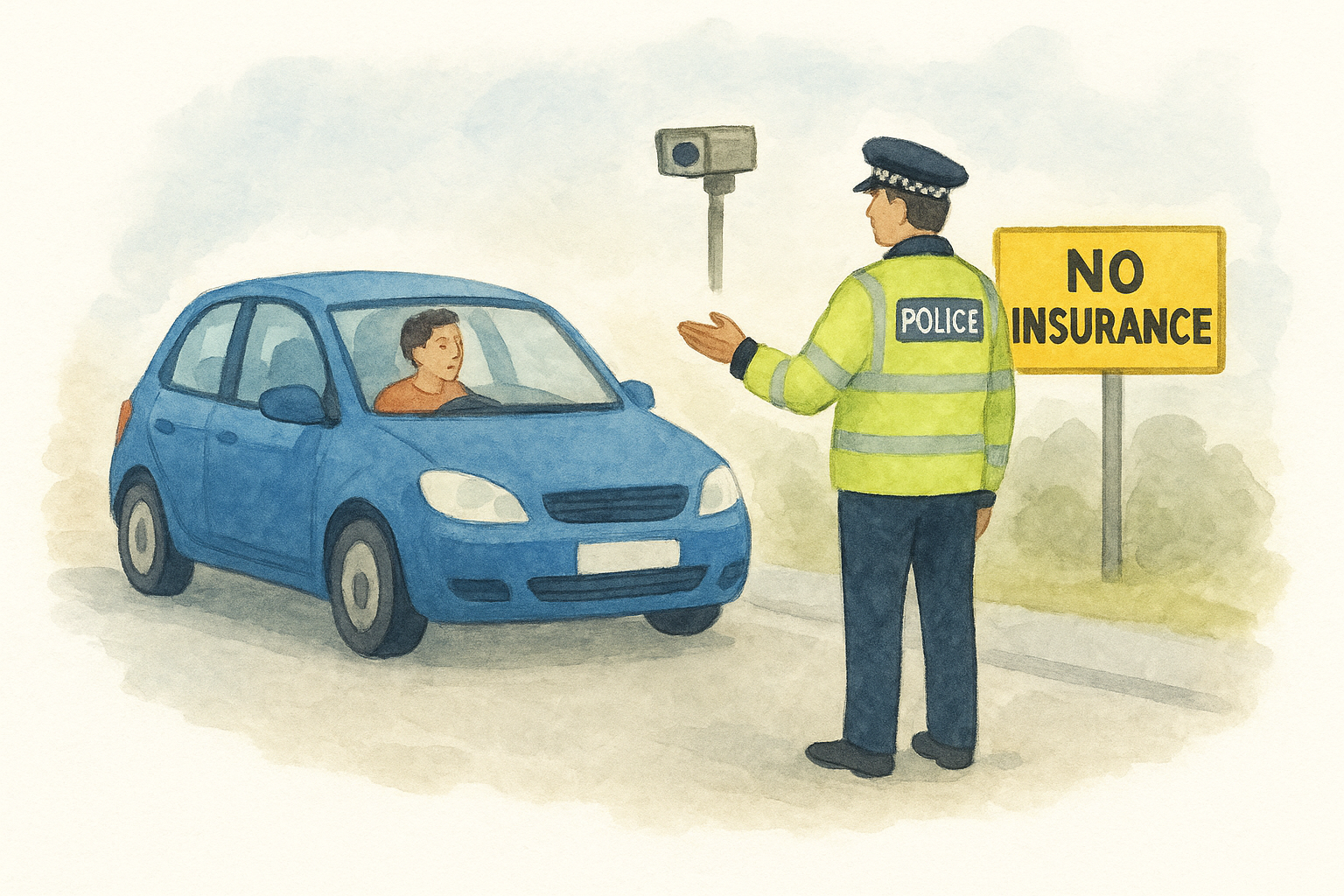
Driving uninsured in the UK isn't a minor slip you can shrug off, it's a criminal offence even if you never have an accident. Police use Automatic Number Plate Recognition cameras linked directly to the Motor Insurance Database, so an uninsured car can get flagged the moment it passes a camera, no accident or stop required. DVLA and police enforcement work together here: DVLA handles the paperwork side through Continuous Insurance Enforcement, while police stop and seize vehicles on the road.
The penalties you're risking
Enforcement isn't gentle, and the numbers add up fast:
- A fixed penalty of £300 and 6 penalty points for driving without insurance
- Court prosecution can bring an unlimited fine and disqualification
- Police can seize and destroy the vehicle on the spot
- DVLA fines of up to £100 for a car that's simply sitting untaxed and uninsured, even if it's not being driven
Driving without insurance can mean an unlimited fine, points on your licence, and your car crushed, not just a warning letter.
Why this matters beyond the fine
Getting caught uninsured follows you for years. Insurers see it when you next apply for cover, and premiums climb sharply once a conviction shows on your record. Registering a change of vehicle ownership promptly also matters here, since a previous owner's cancelled policy showing against a car you now own can cause exactly this kind of confusion at a checkpoint. Some drivers assume a short gap between policies is harmless because they're "only driving to the garage", but the law doesn't recognise that excuse, and neither does an ANPR camera. Full guidance on the offence and penalties sits on GOV.UK.
Staying legal and covered on UK roads
Checking whether a car is insured takes minutes, not a DVLA account or a subscription. askMID answers the core question for free, GOV.UK fills in tax and MOT, and together they give you a legal snapshot most buyers never bother to run. Skip that step and you're trusting a stranger's word on a decision worth thousands of pounds.
Insurance status is only one piece of the picture, though. It won't tell you if a car's been written off, still has finance owing, or was reported stolen, and those gaps cost people real money every year. A full vehicle history check covers all of it in one report, sourced from the same official databases we've mentioned throughout this guide. Before you commit to any used car, see exactly what that looks like with a sample report, then decide if the full picture is worth the peace of mind.