Used Car Checklist: How To Check A Car Before Buying
Learn how to check a car before buying with our expert checklist. Spot hidden faults, verify V5C records, and avoid scams to make a safe purchase.
Used Car Checklist: How To Check A Car Before Buying
Buying a used car without doing your homework is one of the quickest ways to waste thousands of pounds. Clocked mileage, hidden finance, undisclosed write-offs, these aren't rare edge cases. They happen every single day across the UK. Knowing how to check a car before buying can be the difference between a smart purchase and an expensive regret. The good news? Most of these risks are completely avoidable if you follow a structured process.
This guide covers everything you need to inspect, verify, and confirm before handing over any money. From online history checks to hands-on mechanical inspections, we'll walk you through a complete used car checklist that leaves nothing to chance. You'll know exactly what to look for, what questions to ask, and when to walk away.
At Vehiclepedia, we help UK car buyers access detailed vehicle history data, including MOT records, tax status, write-off markers, and more, sourced directly from the DVLA and other official databases. Whether you start with our free registration lookup or go deeper with a premium report, you'll have the facts you need before you commit to a purchase. Let's get into it.
Why checks matter in the UK used-car market
The UK used-car market is one of the largest in Europe, with roughly 7 million second-hand vehicles changing hands every year. That volume creates significant opportunity for fraud, mistakes, and deliberate misrepresentation. Cars with outstanding finance, clocked mileage, or Category S and Category N write-off markers regularly appear on platforms like AutoTrader and Facebook Marketplace, often with no visible sign of anything wrong. Understanding how to check a car before buying is not optional; it's the most important step between you and a very costly mistake.
The scale of the problem in numbers
Data from UK vehicle history providers consistently shows that a significant proportion of cars checked have at least one serious issue hiding in their past. Outstanding finance is the most frequently found problem, with some estimates suggesting it affects roughly one in three vehicles checked. When you buy a car with outstanding finance, the lender has the legal right to repossess it, even though you paid for the vehicle in good faith. Clocked mileage and write-off markers are also widespread, particularly on cars that were involved in insurance claims and then resold quickly.
If you buy a car with outstanding finance and the previous owner defaults on their loan, the finance company can legally reclaim the vehicle from you, leaving you out of pocket with no car.
Here is a summary of the most common issues uncovered during UK vehicle history checks:
| Issue | What it means | Risk to you |
|---|---|---|
| Outstanding finance | A loan is secured against the car | Lender can repossess the vehicle |
| Write-off marker (Cat S/N) | Car was declared a total loss by an insurer | Structural or hidden safety concerns |
| Clocked mileage | Odometer has been wound back fraudulently | Higher repair costs, inflated price paid |
| Stolen vehicle | Car appears on the police database | Vehicle can be seized; you lose your money |
| Plate change | Registration was altered | May be hiding a negative history |
What you risk by skipping the checks
Skipping checks doesn't just risk a bad purchase. It can leave you legally and financially exposed in ways that are extremely difficult to undo once you have signed anything or transferred money. If a car is found to be stolen, police can seize it on the spot, and you will lose both the vehicle and every penny you paid for it. If the car carries a write-off marker and was inadequately repaired, you could be driving something that no longer meets UK road safety standards, which creates serious liability in the event of an accident.
Your position as a private buyer matters enormously here. The Consumer Rights Act provides significantly stronger protections when you buy from a registered dealer compared to a private seller. Under a private sale, the legal principle of "buyer beware" applies very heavily. That means the responsibility for verifying the car's history, condition, and legal status sits almost entirely with you before any money changes hands.
Why UK-specific checks are different
The UK has a well-developed infrastructure for checking vehicle records, and the DVLA holds detailed data on every registered vehicle in the country, including MOT history, tax status, and registration records. Other databases, including police records and insurance write-off registers, add further layers of protection that are not available in many other countries. This means UK buyers have access to some of the most comprehensive vehicle data in the world, but only if they actually use it before buying.
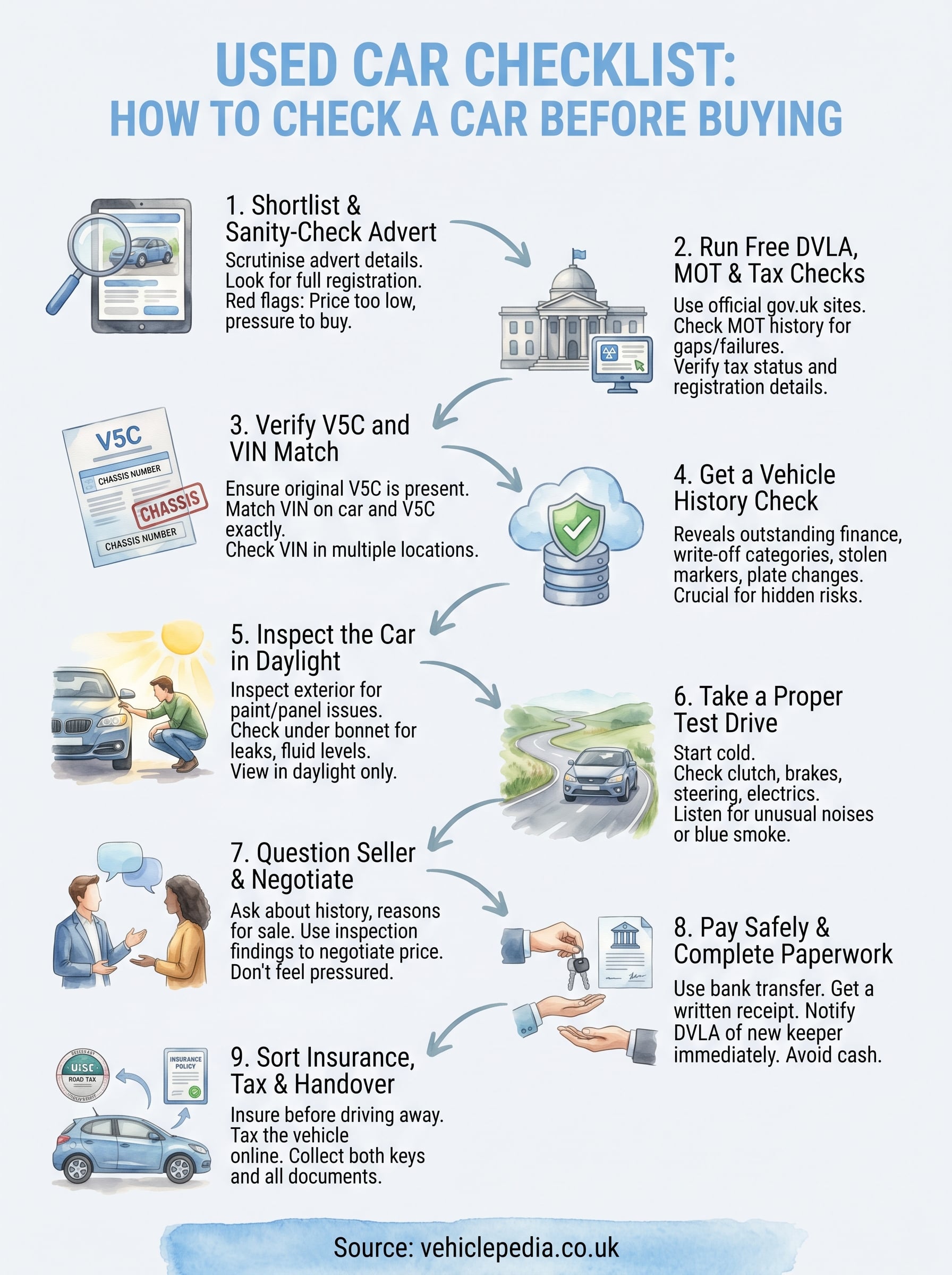
Step 1. Shortlist and sanity-check the advert
Before you contact any seller or arrange a viewing, spend time scrutinising the advert itself. A poorly written or suspicious listing can tell you a great deal about what you're walking into. This is the first practical step in knowing how to check a car before buying, and it costs you nothing but a few focused minutes.
What a good advert should include
A credible advert will give you enough detail to form a clear picture of the car without requiring you to ask basic questions. Look for the full registration plate, a stated mileage figure, the number of previous owners, and a clear explanation of why the car is being sold. Multiple high-quality photos taken in good daylight are a strong indicator that the seller has nothing to hide. If the images are blurry, taken at night, or show only the exterior, that's worth noting before you go any further.
Cross-reference the registration plate shown in the advert against the photos. The plate visible on the car in the images should match the one listed in the description exactly. If they differ, treat that as a serious concern and do not proceed without a clear explanation from the seller.
A mismatched registration plate in an advert is one of the clearest early signs of a cloned or fraudulently listed vehicle.
Advert red flags to watch for
Some patterns in used car listings should put you on alert immediately. A price that sits well below market rate for the make, model, age, and mileage is often the first sign something is wrong. Sellers who push for quick decisions, ask for deposits before a viewing, or refuse to provide a full registration number are also cause for serious concern.
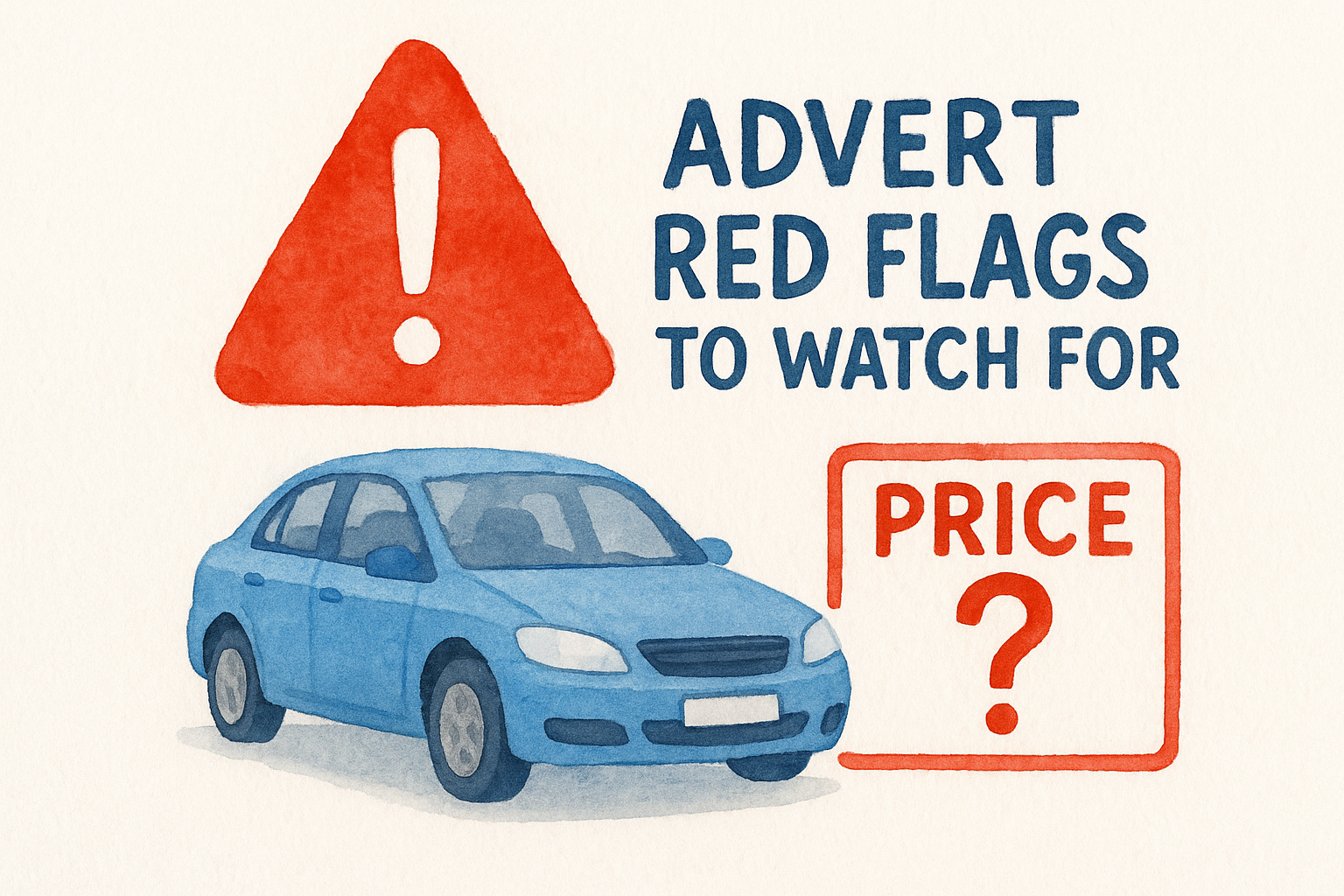
Here are the key warning signs to look for before you engage with any seller:
- Price is significantly below comparable listings for the same model and year
- No full registration plate given, or a deliberately blurred plate in photos
- Seller claims to be abroad or unable to show the car in person
- Generic or copied description that does not match the specific vehicle
- Only a mobile number provided, with no address for the viewing
- Pressure to pay a holding deposit before you have seen the car in person
Filtering out suspicious adverts at this stage saves you time and protects you from wasted journeys or, at worst, a scam that costs you real money.
Step 2. Run free DVLA, MOT and tax checks
The DVLA and DVSA make a significant amount of vehicle data available for free online, and you should use both before you arrange any viewing. Knowing how to check a car before buying starts with these official sources, because they give you verified, unaltered records that no seller can tamper with. All you need is the full registration number, which any legitimate seller will share with you immediately.
Check MOT history through the government website
The DVSA provides a free MOT history checker on the GOV.UK website that shows every recorded test result for vehicles registered in England, Scotland, and Wales. You can see pass and fail dates, the mileage recorded at each test, and the specific advisory notes or failure reasons logged by the testing station. This creates a detailed paper trail going back years.
You can access the free MOT history checker at: https://www.gov.uk/check-mot-history
When you review the results, focus on these four things:
- Mileage at each test: figures should increase consistently year on year
- Repeat failures: the same fault appearing across multiple tests suggests ongoing neglect
- Recent advisories: items flagged as advisories often become failures at the next test, meaning repair costs are coming
- Gaps in history: a gap longer than 12 months suggests the car was off the road or being driven untaxed
A drop in recorded mileage between two consecutive MOT tests is one of the clearest signs of a clocked vehicle, and the DVSA records make this visible in seconds.
Verify tax status and basic registration details
The DVLA runs a separate free vehicle enquiry service that shows the current tax status, MOT expiry date, engine size, fuel type, and date of first registration. This check takes under a minute and confirms whether the car is legally taxed and roadworthy at this moment.
Access this check at: https://www.gov.uk/get-vehicle-information-from-dvla
Cross-reference everything shown against what the seller has told you. If the seller describes the car as a 2020 model but the DVLA records show a 2018 first registration, that is a direct contradiction. Equally, if the tax has lapsed and the seller claims the car has been driven regularly, press them for a clear explanation before you go any further.
Step 3. Verify the V5C and VIN match
The V5C registration document is the closest thing a car has to official identity papers, and checking it carefully is one of the most critical parts of how to check a car before buying. The document should be present at the viewing, not "in the post" or "with a friend." If a seller cannot produce the original V5C on the day you inspect the car, treat that as a serious warning and do not hand over any money until you have seen it in person.
What to look for in the V5C
The V5C contains several fields you should cross-reference directly against the car in front of you. Start with the make, model, colour, and engine size. These should match exactly what is stated in the advert and what you can see. The number of previous registered keepers is also recorded here, which helps you assess how the car has been used and whether the seller's account of the car's history is plausible.
Check the document itself for signs of tampering. Genuine V5Cs are printed on watermarked paper with a holographic strip and carry a unique document reference number in the top right corner. Any signs of altered text, inconsistent fonts, or missing security features suggest the document may be fraudulent. You can verify the document reference number against the registration plate using the DVLA's free vehicle enquiry service at gov.uk to confirm they correspond correctly.
How to find and check the VIN
The VIN (Vehicle Identification Number) is a 17-character code stamped directly onto the car's chassis, typically visible at the base of the windscreen on the driver's side and on a plate inside the door jamb. Some manufacturers also stamp it into the engine bay. Check every location where the VIN appears and confirm the characters are identical across all of them.
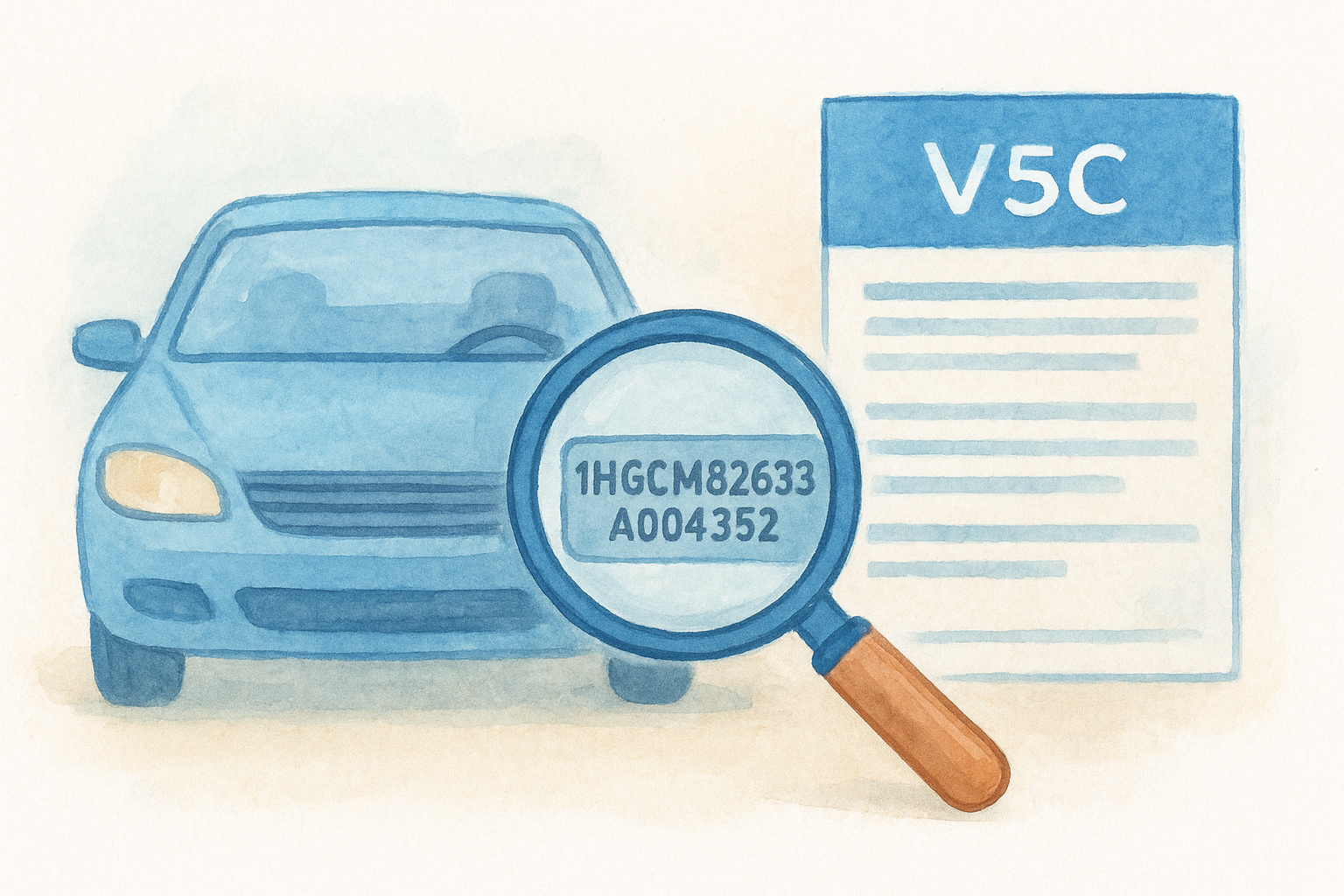
If the VINs found in different locations on the same car do not match, the car may have been rebuilt using parts from multiple vehicles, which carries serious safety and legal implications.
Compare the VIN on the car to the VIN recorded in the V5C. Both must be an exact character-for-character match with no scratches, re-stampings, or signs that any digits have been altered. A tampered or mismatched VIN is one of the strongest indicators of a stolen or rebuilt vehicle, and walking away immediately is the correct response if you find one.
Step 4. Get a vehicle history check for risks
The free DVLA and MOT checks give you a solid foundation, but they don't cover everything that can make a used car a serious financial liability. A full vehicle history check pulls together data from multiple sources, including insurance write-off registers, the UK Police Database, and finance registers, to give you a complete picture of what the car has been through. Knowing how to check a car before buying means understanding which risks fall outside government databases and using a check that specifically covers them.
What a full history check reveals
A vehicle history check goes well beyond what GOV.UK shows you for free. The most important data points it surfaces are outstanding finance, write-off categories, stolen vehicle markers, and plate change records. Each of these carries a direct financial or legal consequence that could affect your ownership from day one.
Here is a breakdown of what each finding means in practice:
| Finding | Source database | Direct risk to you |
|---|---|---|
| Outstanding finance | Finance industry register | Lender can repossess the car |
| Category S write-off | Insurance write-off register | Structural damage may remain |
| Category N write-off | Insurance write-off register | Non-structural damage, possible hidden faults |
| Stolen marker | UK Police Database | Vehicle can be seized immediately |
| Plate change | DVLA records | May be concealing a problematic history |
If a car shows an outstanding finance marker, do not proceed with the purchase until the seller provides written proof that the loan has been fully settled and cleared.
How to read and act on the results
Once you have the report in front of you, cross-reference every finding against what the seller has already told you. If the check reveals a previous write-off that the seller did not mention, that omission tells you something important about how they are approaching the sale. A seller who is straightforward about a write-off will usually disclose it voluntarily, provide documentation from the repair, and price the car to reflect it.
Compare the mileage recorded in the history report against the figure shown in the advert and what you can physically read on the odometer. Any discrepancy between these three sources is a clear signal to press the seller for an explanation before you go any further. Treat the report as a working reference document throughout the rest of your checks, not something you glance at once and set aside. Everything that follows, the physical inspection, the test drive, and the final negotiation, should be informed by what the report tells you.
Step 5. Inspect the car in daylight
A physical inspection is where online history checks and real-world evidence come together. Always arrange viewings in daylight, ideally on a dry day, and always at the seller's address. Never inspect a car in a car park, at night, or in the rain. Poor lighting and wet surfaces are the two conditions that hide paint defects, rust, and structural damage most effectively. If a seller pushes back on meeting at their home address, that alone is a reason to walk away.
Check the exterior systematically
Start at one corner and work around the entire vehicle methodically, crouching down to view the bodywork at a low angle. This angle catches rippling in the panels, mismatched paint, or shadow lines that indicate filler underneath the surface. Run your fingers along the bottom of each door, the sills, and the wheel arches, because rust almost always starts in these hidden edges before it becomes visible on flat surfaces.
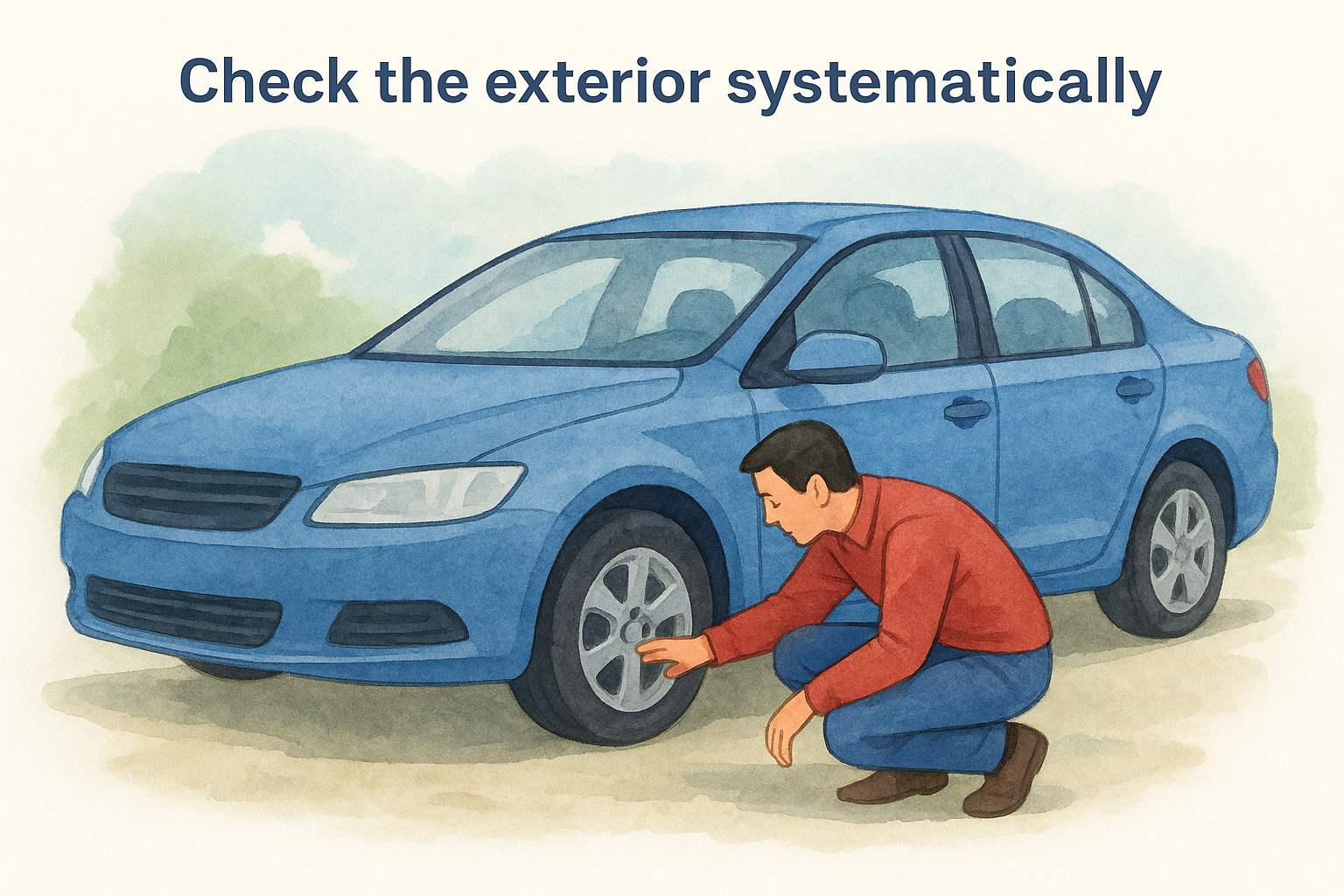
Open every door, the boot, and the bonnet, and check that all of them sit flush and close with a clean, solid shut. Uneven gaps between panels or doors that drop when you open them point to previous accident damage or substandard repair work. Pay particular attention to whether the paint shade matches across adjacent panels, as a slight difference in tone is a near-certain sign of a repaint following a collision.
A car that has been in a significant accident and properly repaired will still show this in the history report, so cross-reference any panel inconsistencies you find against what your vehicle history check already flagged.
Look inside and under the bonnet
Check the interior for wear that does not match the stated mileage. A steering wheel that is heavily worn smooth, heavily creased seat bolsters, or a driver's footwell carpet worn through on a supposedly low-mileage car suggest the odometer reading is not accurate. Look for signs of water ingress: a damp boot floor, mould on rubber seals, or fogged interior lights all indicate a leak.
Under the bonnet, look for oil on the engine casing, milky residue on the oil cap, and any visible cracks in rubber hoses. Milky oil is a serious warning sign that coolant and engine oil are mixing, which points to a blown head gasket. Check that fluid levels are at the correct marks and that the coolant is clean rather than rusty or discoloured.
Step 6. Take a proper test drive
The test drive is where mechanical problems that no history report can predict become obvious. A car can carry a clean record and still have worn brakes, a slipping clutch, or a suspension fault that makes it unsafe or expensive to own. Part of knowing how to check a car before buying is understanding that a thorough test drive is not negotiable, regardless of how clean the car looked on paper or during your physical inspection.
Prepare before you turn the key
Before you start the engine, sit in the driver's seat and confirm that all controls are where you expect them. Start the engine cold, because cold starts reveal problems that a warm engine can mask. Listen for rough idling, unusual ticking from the top of the engine, or smoke from the exhaust. Blue smoke points to burning oil, while white smoke that continues for more than a minute after start-up can indicate coolant entering the combustion chamber.
Check every electrical item before you leave the driveway: headlights, indicators, air conditioning, heated rear screen, and all windows. Faulty electrics are time-consuming and expensive to diagnose, so verify every switch works while the car is stationary.
What to assess on the road
Take the car on a route that includes both town driving and a faster road if the area allows it. Accelerate firmly and listen for hesitation, misfiring, or any unexpected noises under load. Change through every gear and pay attention to whether the gearbox shifts cleanly or drags between ratios.
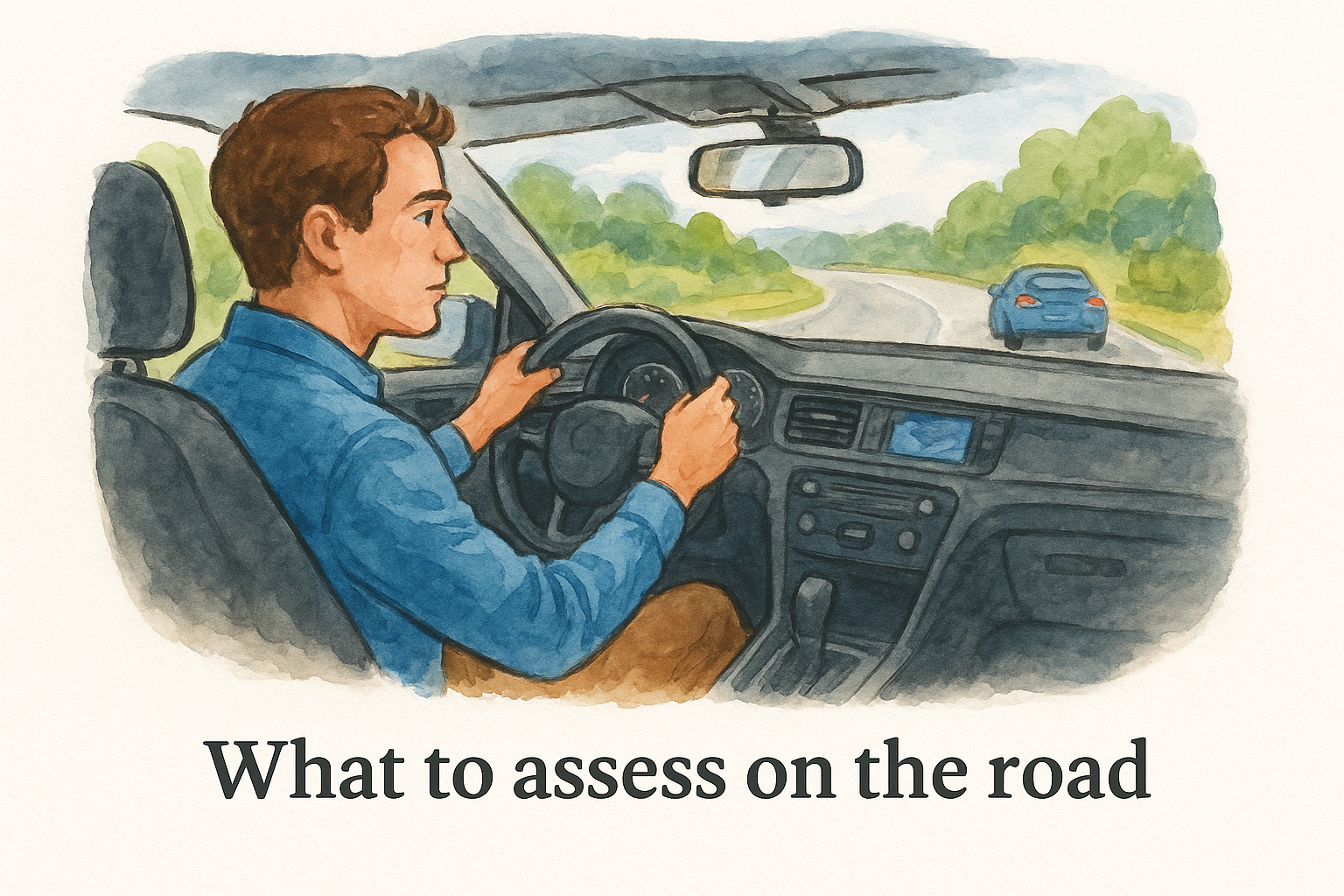
A clutch that bites very high or slips under firm acceleration is likely near the end of its life, and replacement costs can reach several hundred pounds on many common models.
Brake firmly at a safe opportunity and note whether the car pulls to one side or sends vibration back through the pedal, both of which suggest uneven wear or warped discs. On a quiet, straight road, briefly release the steering wheel and check that the car tracks straight without drifting, which can indicate wheel alignment or suspension issues. Any warning light that appears on the dashboard during the drive warrants a direct explanation from the seller before you go any further.
Use this checklist during the drive:
- Smooth acceleration through all gears with no hesitation or misfiring
- Clutch biting point feels normal rather than high or slipping
- Brakes pull the car up straight without vibration
- Steering feels direct with no excessive play or pulling
- No warning lights appear on the dashboard during the drive
Step 7. Question the seller and negotiate
The seller conversation is one of the most useful tools in the process of how to check a car before buying, and most buyers underuse it. By the time you reach this point, you have run your history check, inspected the car, and completed the test drive. You now hold more information than the seller may realise, and that shifts the balance of the conversation significantly in your favour.
Questions to ask the seller directly
Start by asking open questions rather than yes or no ones. "Why are you selling the car?" is the most important question you can ask, and you should listen carefully for hesitation or inconsistency in the answer. Follow up by asking how long the seller has owned the vehicle, whether they are the first registered keeper, and whether the car has ever been in an accident during their ownership.
If the seller's verbal answers contradict anything in your history check or V5C document, treat that contradiction as a reason to reconsider the purchase entirely.
Ask specifically about the service history. A full-service history adds real value and provides a paper trail you can verify. Request to see the physical service book or digital service records alongside any invoices for recent work such as tyres, brakes, or a cambelt replacement. These documents confirm that maintenance was done at the right intervals and give you a clearer picture of the car's overall condition.
Here are the key questions to work through with any seller:
- Why are you selling, and how long have you owned the car?
- Has the car ever been in a collision or had bodywork repairs?
- Is the service history complete, and can I see the physical records?
- Has any major mechanical work been carried out recently?
- Are there any known faults or items that need attention?
- Is there any outstanding finance on the vehicle?
How to negotiate using what your checks found
Use every finding from your inspection and history report as a negotiating point. A recent advisory note from an MOT test, a tyre that is close to the legal limit, or a service that is overdue all represent costs you will carry after purchase. Price these up and present them calmly to the seller as a basis for a reduced price, rather than framing them as accusations.
Do not feel pressured to accept the asking price simply because you have driven to see the car. Walk away if the seller refuses to move at all on a price that does not reflect the car's actual condition.
Step 8. Pay safely and complete the paperwork
Once you are satisfied with the car, the history check, and the negotiated price, how you hand over the money and document the sale matters just as much as every check you ran beforehand. Buyers lose thousands of pounds each year because they paid in ways that offer no protection and no means of recovery if something goes wrong after the keys change hands.
Choose a safe payment method
Bank transfer is the most secure option for private sales, because it creates a clear, traceable record that both parties can reference. Avoid cash entirely for anything above a nominal sum, and never pay using a wire transfer service, cryptocurrency, or gift cards, regardless of what reason the seller gives you. If a seller insists on any of these methods, treat it as a serious warning sign and walk away.
For dealer purchases, paying by credit card gives you additional legal protection under Section 75 of the Consumer Credit Act for transactions between £100 and £30,000. This means the card issuer shares equal liability with the dealer if the car is misrepresented or not delivered as agreed. Always confirm the payment amount with the seller before transferring anything, and do not pay a deposit until you have seen the car in person and are confident the sale is legitimate.
Never transfer money to a different account or name from the one you verified with the seller at the viewing, as this is a common tactic used in payment redirect fraud.
Complete the paperwork correctly
The paperwork step is where understanding how to check a car before buying pays off in a practical, legally binding way. At the point of sale, you need a written receipt that both parties sign, even in a private transaction. This receipt should include the date, the full purchase price, the registration number, the VIN, the mileage at sale, and the full names and addresses of both buyer and seller.
Use this template as a starting point for any private sale receipt:
Date of sale:
Vehicle registration:
VIN:
Odometer reading at sale:
Agreed sale price (£):
Seller full name:
Seller address:
Buyer full name:
Buyer address:
Seller signature:
Buyer signature:
Notify the DVLA of the change of ownership on the same day by completing the new keeper slip from the V5C and posting it, or by registering the change through the online service at gov.uk. Keep the larger portion of the V5C yourself until you receive the updated document in your name.
Step 9. Sort insurance, tax and handover
The final step in understanding how to check a car before buying is making sure everything is legally in place before you drive a single metre. You cannot legally drive an uninsured vehicle on a UK public road, and the handover moment is where buyers frequently rush and make avoidable mistakes. Sort this step carefully and you will leave with a car that is fully legal and properly documented from the first minute you own it.
Sort insurance before you drive away
You must have at least third-party insurance in place before you move the car, even if you are simply driving it from the seller's address to your home. Contact your insurer in advance to add the new vehicle to your policy, or arrange a new policy entirely. Most UK insurers allow you to do this by phone or through their app in under ten minutes, so there is no reason to leave this until you are already at the viewing.
Confirm the exact details you will need to provide your insurer before you go:
- Full registration number
- Make, model, and fuel type
- Year of manufacture and engine size
- Estimated annual mileage
- Where the car will be kept overnight (address and whether garaged or on a public road)
Sort insurance before you arrive at the viewing if you already know you are likely to buy, so that you can activate the policy immediately once the sale is confirmed.
Transfer tax and complete the handover
Road tax does not transfer between owners when a car is sold. The seller's tax ends the moment the vehicle changes hands, and you are responsible for taxing it from that point forward. You can tax the car immediately through the GOV.UK vehicle tax service at gov.uk/vehicle-tax using the 11-digit reference number from the new keeper slip of the V5C. This takes only a few minutes and you will receive confirmation instantly.
At the handover, collect every physical item that belongs with the car. Both sets of keys, the original V5C, the service book, and any receipts for recent work should all change hands at this point. Check that the number of keys matches what the seller described in the advert. Walk around the car one final time before you drive away, confirming that it matches the condition you agreed on during your inspection and negotiation.
A quick final check before you buy
Every step in this guide on how to check a car before buying builds toward one moment: making a purchase you can feel confident about. Before you hand over any money, run through the essentials one final time. Confirm the VIN matches the V5C, the history check shows no outstanding finance or write-off markers, and the price reflects anything you found during the inspection and test drive. If all of that lines up, you are in a strong position to proceed.
If anything still feels uncertain, walk away without hesitation. A genuine seller will give you time to think. The right car will always come along, and protecting yourself financially matters far more than closing a deal quickly. Start your checks today by running a free registration lookup on Vehiclepedia, and see exactly what the official records show before you commit to a viewing. You can also preview a full sample report to understand exactly what a premium check covers.