How to Do a Japanese Import Car History Check in the UK
Learn how to run a Japanese import car history check by combining UK DVLA records with auction sheets to spot mileage tampering and hidden damage.

How to Do a Japanese Import Car History Check in the UK
Buying a Japanese import feels like a gamble because the usual checks don't tell you much. A standard japanese import car history check through the DVLA will confirm the car is legally registered in the UK, but it won't reveal what happened before it left Japan, and that's where the real risks hide: rolled-back mileage, auction grades that hint at hidden damage, or flood exposure from typhoon-hit regions.
If you're trying to work out how to check a Japanese import before handing over your money, the answer involves combining UK-based checks with Japanese auction and export records. You need both sides of the story: what the DVLA knows since the car arrived, and what Japanese sources knew before it did.
This guide walks you through the practical steps: how to pull a UK vehicle history report, what a Japanese auction sheet actually tells you, and where to find export and mileage records that expose discrepancies. By the end, you'll know exactly which checks matter for an import and which ones are just noise.
Why Japanese imports need a special history check
Every import carries two histories: one recorded in Japan before export, and one that starts the moment the DVLA registers it in the UK. A standard japanese import car history check run through British databases only picks up the second half of that story. Whatever happened at auction in Osaka, Nagoya, or Yokohama, including grading, mileage, and prior accident repairs, sits in a separate record system that UK checks simply don't query.
A different data trail
Japan's vehicle auction houses and export agents keep detailed condition reports, but these aren't linked to DVLA records or shared automatically with UK buyers. That gap is exactly where dodgy imports slip through: a car with a rolled-back odometer or flood damage from a typhoon-affected region can pass a UK MOT and still hide a troubled past.
A clean DVLA record on an import tells you nothing about what happened before the car left Japan.
Risks that are unique to imports
Specific problems crop up with Japanese imports far more often than with UK-bought cars:
- Mileage discrepancies between the Japanese auction sheet and the UK odometer reading
- Auction grading that flags accident repair or panel replacement using coded shorthand
- Flood or typhoon damage from regions prone to seasonal flooding
- Chassis number mismatches between export paperwork and the V5C
- Missing service history from the vehicle's time in Japan
Combining these two data sources, UK and Japanese, gives you a fuller picture than either check alone. Skipping the Japanese side means you're only checking half the car's life, and that's the half least likely to contain the problems you actually need to know about.
Step 1. Check the UK record with the registration or VIN
Start with the basics before you chase Japanese paperwork. Run the car's registration plate through a UK vehicle history check to confirm it's legally registered, see its MOT history, and check for outstanding recalls. This won't tell you anything about the car's life before import, but it establishes a baseline you'll need later when cross-checking mileage and chassis details.
What to look for in the UK report
Pull up a free check on Vehiclepedia and note these details:
- First UK registration date, which should roughly match the export date on Japanese paperwork
- MOT mileage history, your first line of defence against a rolled-back odometer
- VIN or chassis number as recorded by the DVLA
- Import status flag, confirming the car is logged as a grey import rather than an official UK-market model
If the DVLA record and the Japanese export paperwork don't line up on dates or mileage, treat that as a red flag, not a coincidence.
Write these figures down. You'll need them in the next step to compare against the auction sheet and export certificate, where the real gaps in an import's story usually show up.
Step 2. Order a Japanese auction sheet and export certificate
Once you've got your UK baseline, chase down the paperwork that only exists in Japan. The auction sheet is a condition report written by the inspector at the Japanese auction house before the car sold, and the export certificate confirms the deregistration date and chassis number when it left the country. Neither document arrives automatically with a UK import, so you'll need to request them through the exporter, a specialist import history service, or the auction house archive directly.
Where to request the documents
- Ask the exporter or dealer who sold the car for the original auction sheet, most keep digital copies on file
- Search by chassis number through a Japanese auction data lookup service if the exporter can't provide one
- Request the export certificate from the shipping agent, it should list the deregistration date in Japan
Without the auction sheet, you're relying entirely on the seller's word for what happened before the car left Japan.
Getting a proper japanese import car history check means chasing these two documents down before you compare anything else.
Step 3. Verify the mileage across all sources
With the UK report and Japanese paperwork in hand, line up every mileage figure you've got. Mileage discrepancies are the single most common problem with Japanese imports, and they're easy to catch once you know where to look. Compare the auction sheet reading, the export certificate figure, and the DVLA's MOT history side by side, and any gap larger than a few hundred miles deserves an explanation before you go any further.
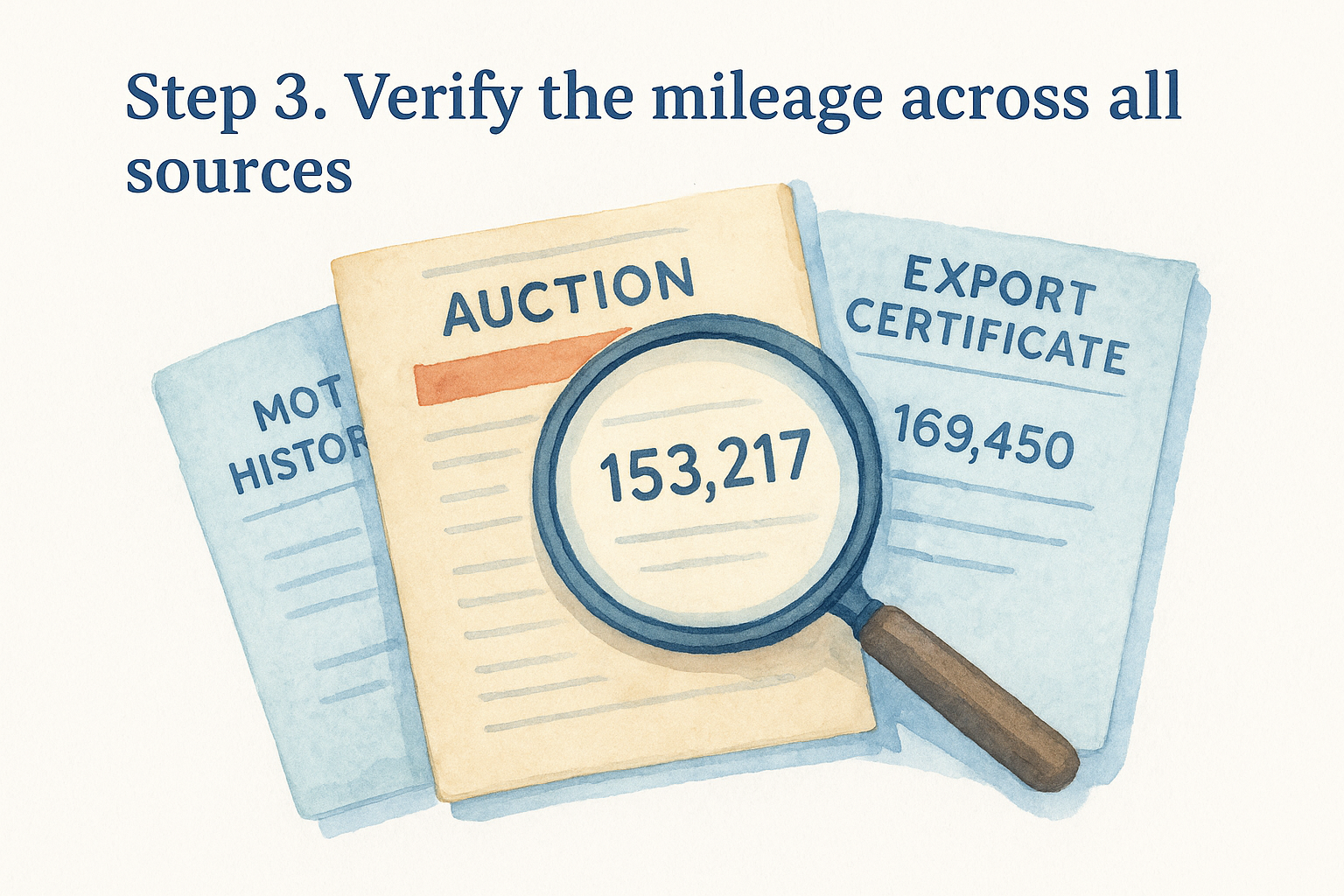
Cross-check these three figures
- Auction sheet mileage, recorded at the point of sale in Japan
- Export certificate mileage, logged when the car was deregistered
- First UK MOT mileage, your earliest DVLA-recorded reading
If the auction figure is lower than the export figure, someone drove the car between sale and shipping, which is normal. If the UK figure is lower than either Japanese record, that's the red flag.
A car that's gained miles since arriving in the UK is fine. One that's lost miles is lying to you.
Once the numbers agree, you're ready to check what the auction sheet says about the car's condition.
Step 4. Decode the auction sheet grading and damage codes
Once the mileage checks out, turn back to the auction sheet and read the overall grade, usually a number from 1 to 6 printed in the top corner. Anything graded 4 or above is generally sound, while a 3 or lower means the inspector flagged corrosion, poor panel fit, or heavy repair work. Grade R or RA is worse still, it marks a car that's had structural accident repair, whatever the condition looks like in photos.
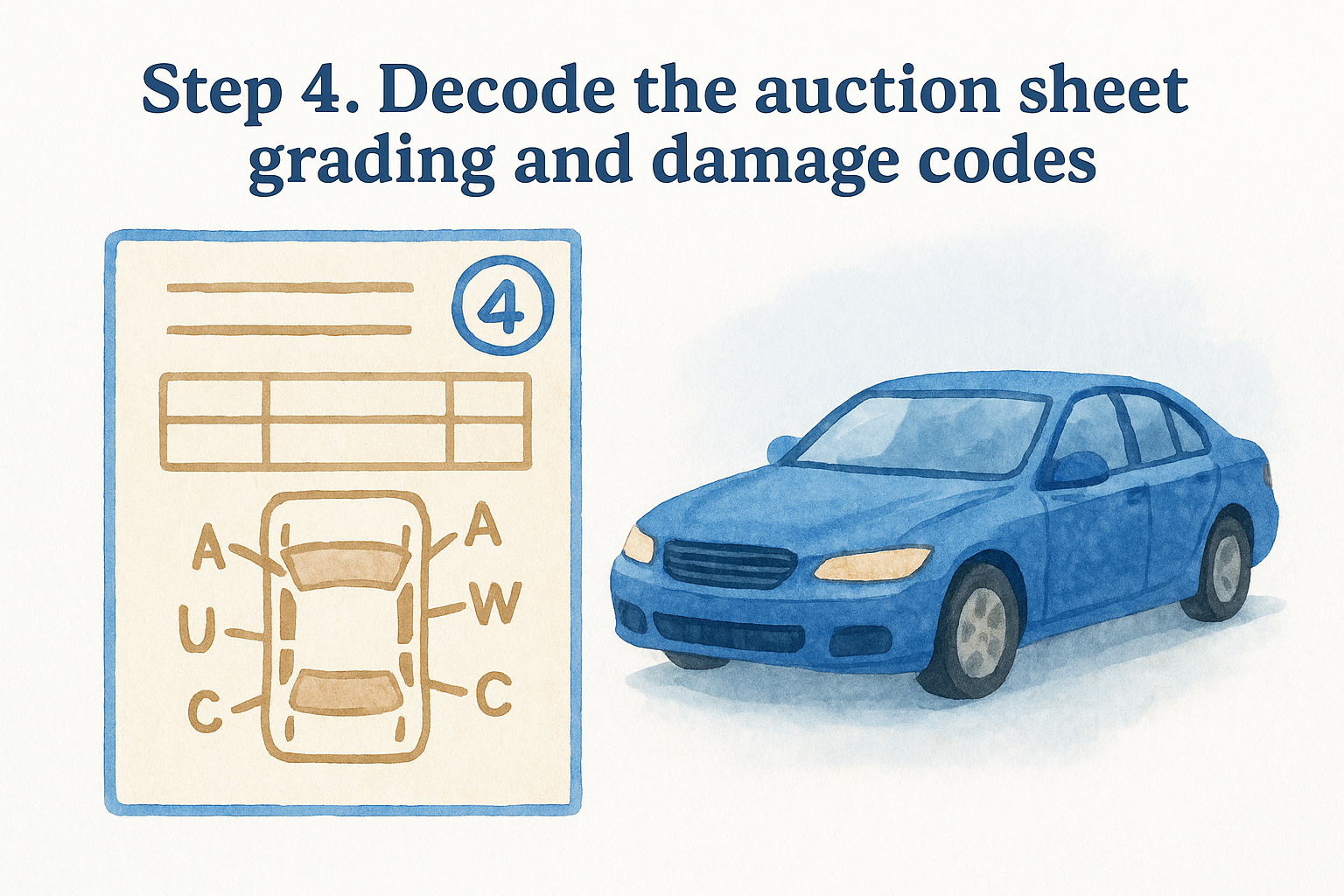
Reading the damage diagram
Below the grade sits a simple car outline covered in shorthand codes marking specific panel damage:
- A for scratches, U for dents, W for wave damage from a poor repair
- X or a shaded panel for a replaced or repainted part
- C for corrosion, often a sign the car sat in a flood-prone region
A high overall grade means little if the damage diagram shows a replaced chassis rail underneath it.
Cross-check against the physical car
Ask the seller for high-resolution photos matching the auction sheet date, and compare panel gaps and paint texture against the coded damage. If the car's been resprayed since import, mismatched codes are your only real evidence of what's hiding underneath.
Buying with confidence
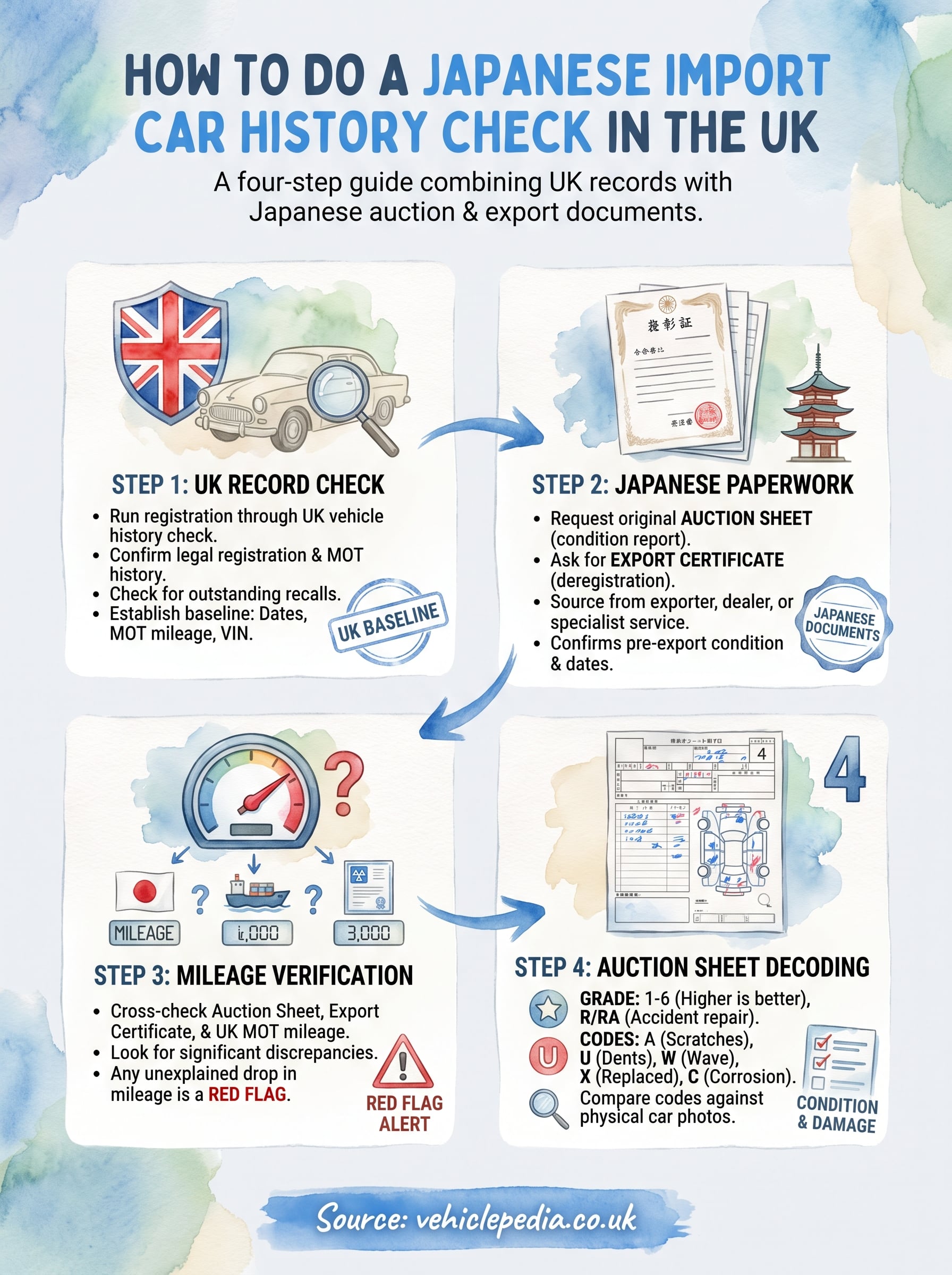
Getting a proper japanese import car history check isn't complicated once you know the four steps: pull the UK record, chase the auction sheet and export certificate, verify mileage across every source, and read the damage codes properly. Skip any one of these and you're buying blind on the half of the car's life that carries the most risk.
None of this takes long, but it does take discipline. Sellers rarely volunteer auction sheets or explain mismatched mileage unprompted, so the burden falls on you to ask the right questions and check the paperwork against itself. A car that passes every one of these checks is a car worth trusting.
Start with the free DVLA-based check to build your baseline, then work through the Japanese paperwork before you commit. If you want to see exactly what a full report covers before paying for one, take a look at our sample report first.