MPG Checker by Reg: How to Check a Car's Fuel Economy
Use our MPG checker by reg to get official manufacturer fuel economy figures, spot inflated seller claims and budget real running costs before you buy.
MPG Checker by Reg: How to Check a Car's Fuel Economy
Filling up twice as often as you expected is a rubbish way to find out a car's true fuel economy. If you're weighing up a used car or just want honest numbers for the one on your drive, a mpg checker by reg gives you the manufacturer's official figures in seconds, no guesswork, no rounding up by an optimistic seller.
All you need is the registration plate. Enter it into a free fuel economy check by reg and you get the car's official combined, urban, and extra-urban mpg figures straight from DVLA-linked data, the same records used to calculate road tax and emissions ratings. It's quicker than digging through old brochures or trusting a listing that quietly skips the fuel costs.
This guide walks you through exactly how these checkers work, what the mpg figures actually mean in real-world driving, and how to use that information alongside everything a history report on a registration plate shows before you commit to buying. Whether you're comparing two cars or checking your own, you'll know what you're really paying to keep it moving.
Why checking your car's MPG by reg matters
Fuel is the biggest ongoing cost of owning a car, bigger than insurance, bigger than servicing, and often bigger than the car itself over a few years of ownership. Running costs hinge almost entirely on fuel economy, so getting an accurate figure before you buy protects your budget for years, not just the first tank. A mpg checker by reg pulls that figure straight from official records rather than a seller's memory or a decade-old brochure, which matters because the gap between a genuine 45mpg and an optimistic "up to 50mpg" claim adds up to hundreds of pounds a year.
Spotting inflated claims before you buy
Sellers, especially private ones, often quote the best-case figure they remember rather than what the car actually returns on a normal commute. Checking the reg against official records gives you the manufacturer's tested figures for that exact model, engine, and trim, not a rounded-up guess picked from memory. This matters most with older diesels and larger petrol engines, where the gap between claimed and real economy tends to be widest.
A five-minute reg check can save you hundreds of pounds a year in fuel you didn't budget for.
Comparing cars on equal terms
Two cars can look identical on a listing site and still cost very differently to run. A 1.6-litre diesel estate and a 2.0-litre petrol equivalent might carry similar price tags but rack up very different fuel bills over three years of ownership. Looking up official fuel consumption for each registration lets you compare like for like, using the same testing standard for both, rather than trusting whatever figure happens to sit in the advert.
Budgeting for the real cost of ownership
Beyond the sticker price, fuel economy feeds directly into your monthly running budget alongside road tax band and CO2 emissions, insurance, and MOT costs. Understanding a car's true mpg figures lets you work out a realistic weekly fuel spend based on your actual mileage, rather than hoping for the best once you've already handed over the money. Doing this before you commit, ideally alongside a full vehicle history check for write-offs, finance, and mileage discrepancies, means you walk into ownership with your eyes open instead of discovering the real cost at the pump three weeks later.
Ultimately, these checks turn a guessing game into an informed decision, which is exactly the point of pulling official fuel economy data by reg in the first place.
How to check a car's MPG by reg
Starting your search takes less time than filling in a finance application. You just need the registration plate, either your own or the one from a listing you're considering, and access to a UK vehicle history site that pulls DVLA-linked fuel data. No V5C, no service book, no phoning the dealer to ask awkward questions.
The lookup process
Running a check follows the same pattern wherever you do it:
- Type the registration into the search box on a free car check tool, such as Vehiclepedia's car history check.
- Wait a few seconds while it matches the plate to DVLA records.
- Scroll to the fuel economy section of the report.
- Note the combined, urban, and extra-urban figures, plus the engine size and fuel type they apply to, which are part of the wider car specs you can look up from a plate.
One reg number, one search, and you've got the manufacturer's tested mpg figures without leaving your sofa.
Reading what the report gives you
Once the results load, you'll typically see a breakdown similar to this:
| Figure | What it tells you |
|---|---|
| Combined mpg | Average across mixed driving, the headline number most buyers compare |
| Urban mpg | Stop-start city driving, usually the lowest figure |
| Extra-urban mpg | Motorway and A-road driving, usually the highest figure |
| CO2 emissions | Feeds directly into road tax banding |
Getting these numbers alongside the car's tax band and MOT status, advisories and test history gives you a fuller picture than the mpg figure on its own. A car that looks cheap to tax but drinks fuel in town driving isn't necessarily the bargain it first appears, so it's worth reading the full spread of figures rather than fixating on the combined number alone.
What affects real-world MPG versus official figures
Official mpg figures come from a standardised lab test called the WLTP cycle, run under controlled conditions with a specific driving pattern, temperature, and tyre pressure. Real roads don't work like that, which is why the number on your mpg checker by reg report rarely matches what you see on the dashboard after a few tanks. The test gives you a fair comparison between models, not a promise of what you'll actually get.
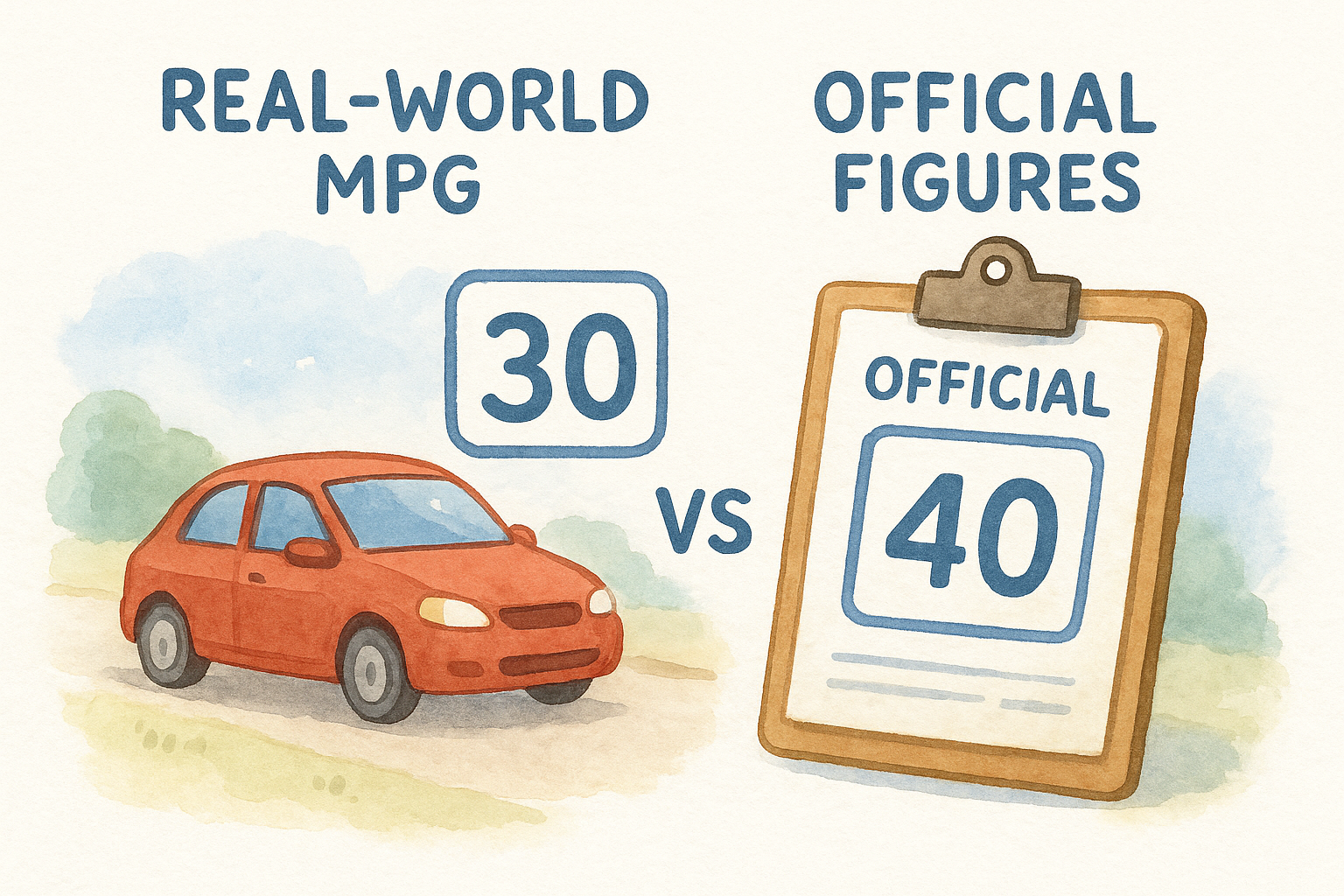
Why lab tests differ from real roads
WLTP testing removes almost every variable that affects fuel use in daily driving: no traffic, no hills, no headwind, no aircon running full blast in August. Real-world fuel economy typically comes in 10 to 20% below the official combined figure, sometimes more for short journeys where the engine never fully warms up. You can read more about how the test works on the Department for Transport's fuel consumption guidance.
The official figure tells you how the car compares to others, not what you'll pay at the pump.
What actually moves the needle day to day
A handful of factors explain most of the gap between the sticker figure and your actual mileage:
- Driving style, harsh acceleration and heavy braking burn noticeably more fuel than smooth, anticipatory driving.
- Journey type, short urban hops never let the engine reach an efficient operating temperature.
- Load and aerodynamics, roof boxes, bike racks, and a full boot all drag mpg down.
- Tyre pressure and condition, underinflated tyres increase rolling resistance and cut economy.
- Weather, cold starts and headwinds both push consumption up.
Understanding these factors means you won't be disappointed when the number on the pump doesn't match the number on the report, and you can adjust your habits to close the gap yourself.
Simple ways to improve your car's fuel economy
Knowing your official mpg figures is only half the job. The other half is closing the gap between that number and what you actually see at the pump, and most of that gap comes down to habits you can change this week rather than expensive upgrades. A few small adjustments to how you drive and maintain the car can claw back a meaningful chunk of the fuel economy you're paying for but not getting.
Drive with the engine in mind
Smooth inputs beat heavy ones every time. Easing off the accelerator, reading the road ahead, and avoiding unnecessary braking all reduce the fuel your engine burns per mile.
- Pull away gently rather than flooring it from a standstill.
- Anticipate traffic lights and roundabouts instead of braking late.
- Stick closer to 50 to 60mph on faster roads where possible, since fuel use climbs sharply above that.
- Cut unnecessary idling, particularly on cold mornings.
Smoother driving alone can close a big chunk of the gap between the official figure and what you actually see at the pump.
Keep the basics maintained
Regular upkeep matters just as much as driving style, and it's easier to forget. Checking tyre pressures monthly, clearing out unused roof racks, and keeping up with servicing all help the engine run as efficiently as the manufacturer intended.
- Check tyre pressure against the manufacturer's recommended figure, not just "looks fine."
- Remove roof boxes and bike racks when you're not using them.
- Keep up with air filter and oil changes on schedule.
- Avoid carrying unnecessary weight in the boot.
Together, these habits won't turn a thirsty engine into an economical one overnight, but they'll narrow the gap between the number on your mpg checker by reg report and the number your fuel gauge actually shows you week to week.
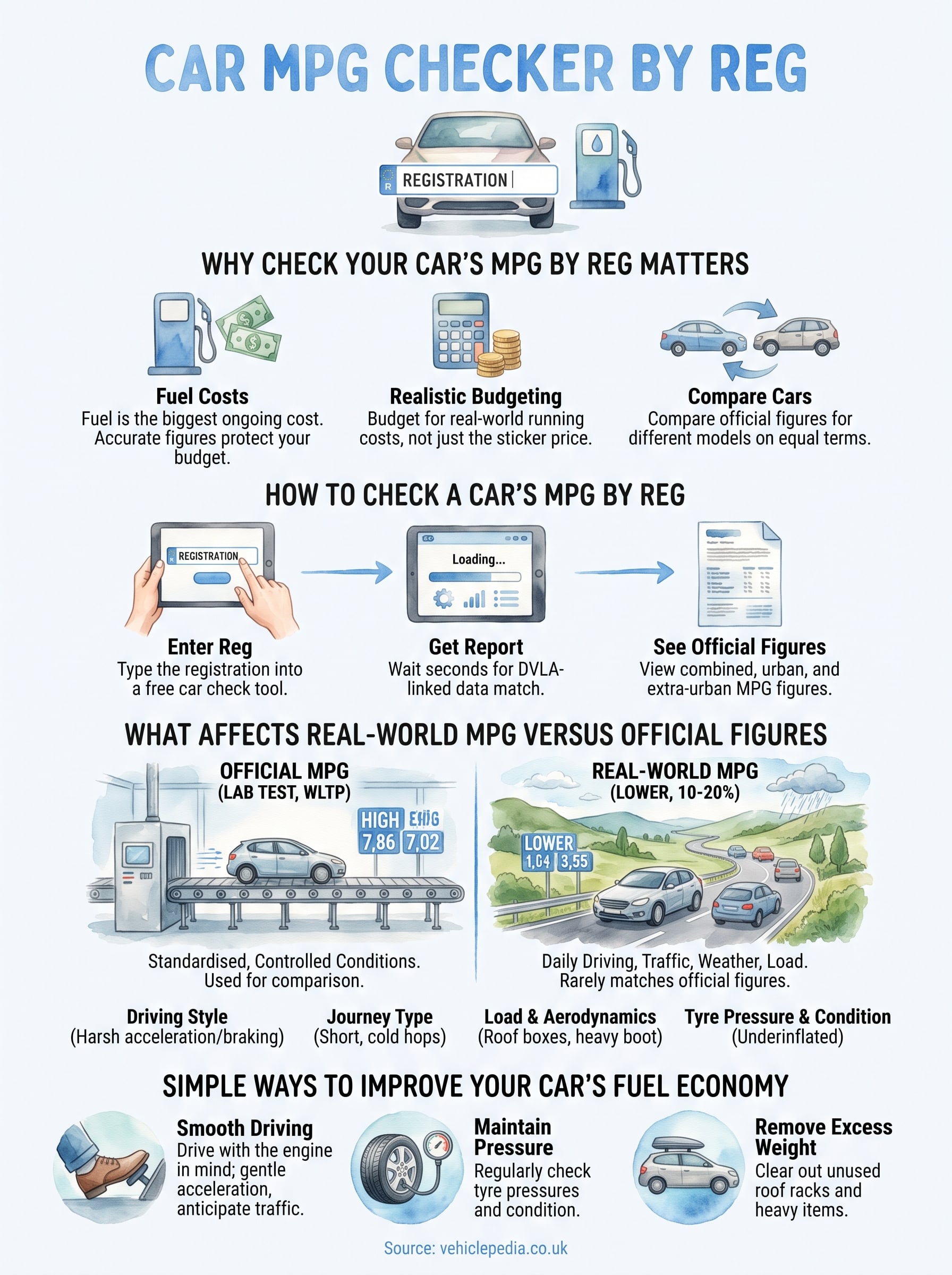
Making fuel economy part of your car decision
Fuel economy shouldn't be an afterthought you discover three weeks after buying. Running a mpg checker by reg before you commit gives you the manufacturer's tested figures in seconds, and pairing that with a full history check covers write-offs, finance, and mileage discrepancies too. Together, they tell you what a car will actually cost to own, not just what it costs to buy.
Smart buyers treat both checks as standard practice, the same way they'd check the MOT history or ask about service records. A car that looks cheap on the forecourt can still drain your wallet at the pump if you skip this step. Before you hand over a deposit, run the reg through a proper check and see exactly what you're taking on. Curious what a full report actually includes? See a full example report showing mpg, tax and history data before you run your own.