Vehicle History Check: What It Is and What It Reveals
Find out what is a vehicle history check, how it exposes hidden finance, theft or write-offs, and why it protects buyers before they pay a deposit.
Vehicle History Check: What It Is and What It Reveals
Buying a used car without checking its background is a gamble. The seller might not mention that the car was written off after a flood, still has finance owed on it, or was reported stolen last year. A vehicle history check pulls together records from official sources so you can spot these problems before you hand over any money.
In short, it's a report that runs a car's number plate against DVLA data, police records, and insurance registers to reveal its true past. It shows you the MOT history, mileage records, past owners, and whether the vehicle has been imported, exported, or had its colour changed. Premium checks go further, flagging write-offs, outstanding finance, and stolen vehicle alerts, the exact issues that turn a bargain into a nightmare.
This guide walks through exactly what a vehicle history check covers, how the process works in practice, and how to run one on any UK-registered car using nothing more than the registration plate. By the end, you'll know precisely what to look for before you buy.
Why a vehicle history check matters when buying a car
Every year, thousands of UK buyers discover too late that the car they've just bought has hidden problems. Some find out their new pride and joy was written off in a flood. Others learn there's still £8,000 owed on it from the previous owner's finance agreement. A vehicle history check exists precisely to stop you joining that list, because sellers aren't always honest, and sometimes they don't even know their own car's full backstory.
The money you could lose
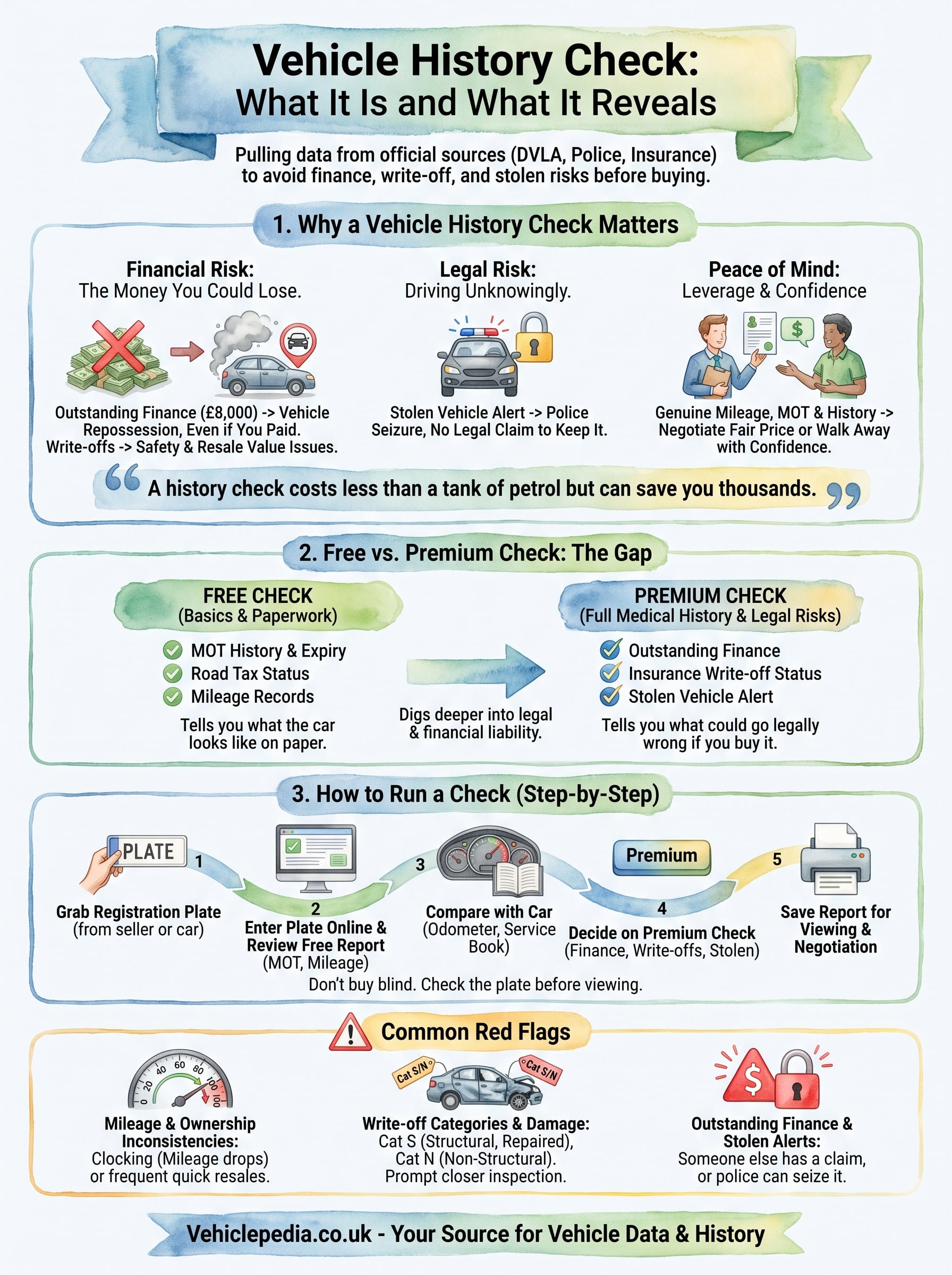
Outstanding finance is one of the biggest traps for private buyers. If a car still has a loan against it and the seller defaults, the finance company can legally repossess the vehicle from you, even if you paid in full and had no idea about the debt. A £4,000 second-hand car can turn into a £4,000 loss overnight. Insurance write-offs carry a similar sting: a car repaired after a Category S or N accident might look fine but could have structural issues that affect its safety and resale value.
A history check costs less than a tank of petrol but can save you thousands in hidden debt or repair bills.
The legal risk of driving unknowingly
Stolen vehicles get resold on the used market more often than most buyers realise. If you unknowingly buy a stolen car, the police can seize it, and you'll have no legal claim to keep it, no matter how much you paid. Checking a car against police records through a proper vehicle history check protects you from that scenario entirely, and it takes seconds rather than weeks of regret.
Peace of mind beyond the paperwork
Beyond the financial and legal risks, a history check gives you leverage. Knowing a car's genuine mileage, MOT record, and ownership history means you can negotiate a fairer price or walk away with confidence if the numbers don't add up. Data from the DVLA confirms registration, tax, and MOT status, giving you facts to work from rather than a seller's word alone.
How to run a vehicle history check step by step
Running a vehicle history check takes less time than filling up at the petrol station. All you need is the car's registration plate and a few minutes to read through the results before you commit to a viewing or a purchase.
What you need before you start
Grab the registration plate from the seller's listing, or better yet, check it against the plate on the actual car once you arrive. Mismatched plates or a seller reluctant to share the registration number early on are both worth noting before you go any further.
The steps to follow
- Go to a trusted checker site, such as Vehiclepedia, and enter the registration plate into the search box.
- Review the free report first. It covers MOT history, tax status, mileage records, and import or export status.
- Compare the mileage shown against the odometer reading and any service book entries the seller provides.
- Decide whether you need a premium check. If the car's age, price, or your gut feeling suggests risk, pay for the full report covering finance, write-offs, and stolen vehicle records.
- Save or print the report so you have it on hand during the viewing or negotiation.
Sticking to this order matters. Skipping straight to viewing a car without checking its plate first means you're negotiating blind, when a two-minute search could have told you exactly what you're dealing with.
What a full report reveals that a free check won't
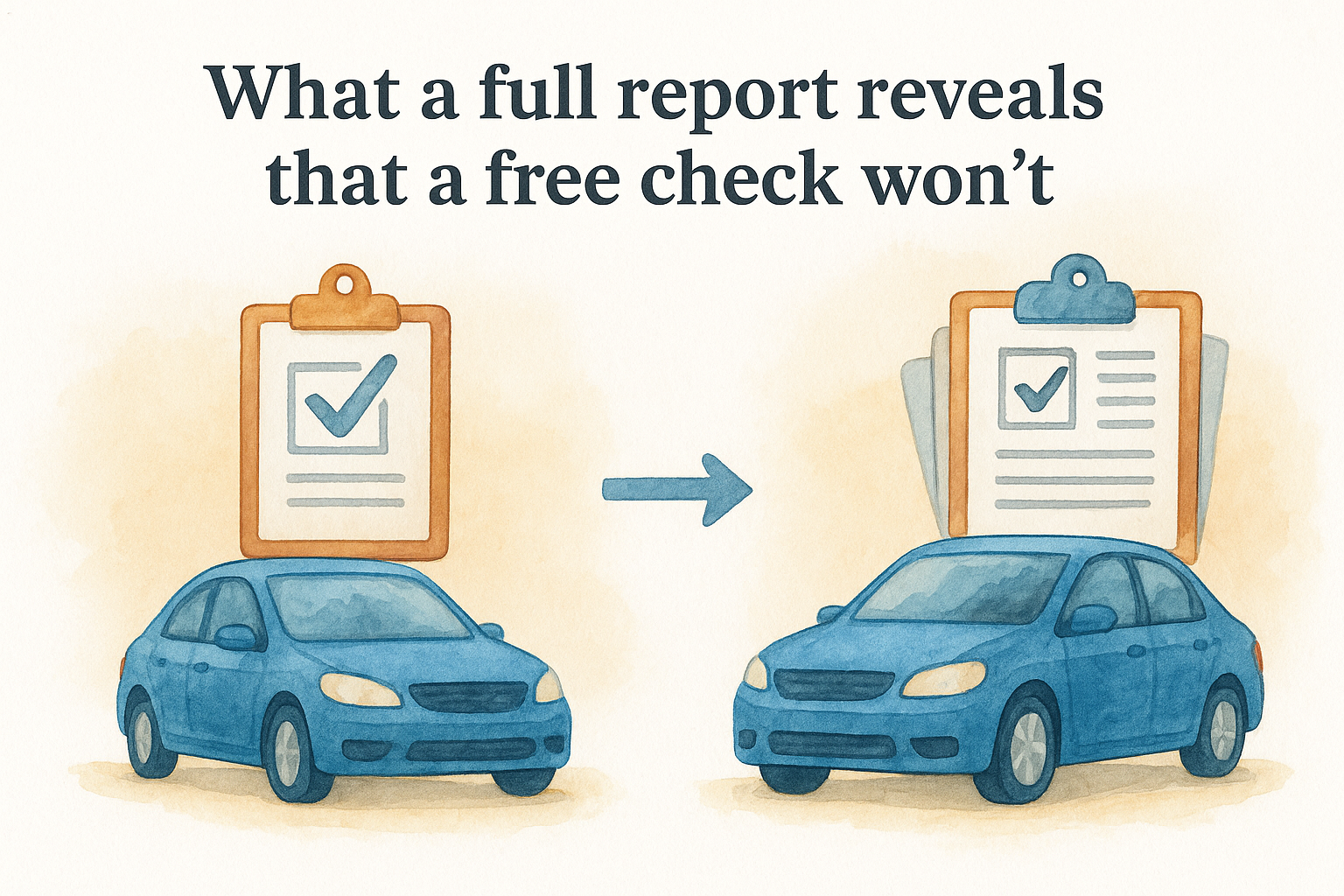
A free check gives you the basics, but it stops short of the details that actually protect your wallet. A premium vehicle history check digs into finance records, insurance write-off databases, and the police stolen vehicle register, three areas no free tool can legally access. This is where the real risk assessment happens, not in the MOT dates or tax status you already checked for free.
The gap between free and premium
Think of the free report as a health check and the premium report as the full medical history. One tells you the car passed its MOT last month; the other tells you whether it was rebuilt after a serious crash. The table below shows the difference clearly.
| Information | Free check | Premium check |
|---|---|---|
| MOT history and expiry | Yes | Yes |
| Road tax status | Yes | Yes |
| Mileage records | Yes | Yes |
| Outstanding finance | No | Yes |
| Insurance write-off status | No | Yes |
| Stolen vehicle alert | No | Yes |
Free checks tell you what the car looks like on paper. Premium checks tell you what could go legally wrong if you buy it.
Why the extra detail matters
Buying a car with hidden finance or a Category S write-off history isn't just disappointing, it's a legal and financial liability that follows the vehicle, not the seller. Vehiclepedia's premium reports pull straight from DVLA, insurance registers, and police databases, backed by a £30,000 data guarantee, so you're not relying on guesswork when thousands of pounds are on the line.
Common red flags and what they mean for you
Once you've run a vehicle history check, you need to know how to read it. A report full of data means nothing if you don't understand which entries should make you walk away and which are simply quirks of a car's past. Here are the warning signs worth taking seriously.
Mileage and ownership inconsistencies
A mileage drop between MOT records is a classic sign of clocking, where someone winds back the odometer to make a car look less worn. Frequent changes of ownership in a short space of time can also mean the car has passed through trade hands quickly, often because previous buyers spotted a problem and offloaded it fast.
Write-off categories and structural damage
Category S means the car suffered structural damage but was repaired; Category N means non-structural damage. Either one should prompt a closer inspection, ideally by a mechanic, before you pay a deposit.
A red flag isn't always a dealbreaker, but it's always a reason to ask more questions before you pay.
Outstanding finance and stolen alerts
- Outstanding finance: means someone else has a legal claim on the car, even after you've paid for it.
- Stolen vehicle alert: means police can seize the car with no compensation to you.
- Import records: aren't dangerous alone, but they can affect parts availability and insurance costs.
Treat any of these as a prompt to dig deeper, not necessarily to abandon the purchase outright.
Buying with confidence
A vehicle history check turns guesswork into evidence. You now know what the free report covers, why the premium version matters, and which red flags deserve a second look before you hand over any cash. That knowledge is worth more than any seller's reassurance, because it comes from the DVLA, police records, and insurance registers rather than a conversation in a car park.
Don't buy blind. Before you view a car, check the plate. Before you pay a deposit, weigh up whether the price and your instincts justify a full report. The few minutes it takes could save you thousands in hidden finance, repair costs, or a car that isn't even legally yours to keep.
If you want to see exactly what a full report looks like before you commit, take a look at a sample premium report and judge for yourself whether it's worth the peace of mind.