Best Time to Buy a Used Car: Depreciation Curve Explained
Best time to buy a used car depreciation explained: why 3 to 5 years is the sweet spot, what each age costs you and how to check a car.

Best Time to Buy a Used Car: Depreciation Curve Explained
Depreciation is the value a car loses between the day it is sold new and the day you buy it. The best time to buy a used car is after the steepest part of that loss has happened to someone else. For most buyers that means a car aged three to five years. By then the first owner has absorbed the heaviest drop, yet the car is usually still modern, serviced and reliable.
Age only tells you where a car sits on the curve. It does not tell you whether this particular car has been clocked, written off or is still owned by a finance company. That is where a vehicle history check earns its place, and it is why Vehiclepedia, a UK vehicle history check service, covers this topic.
This guide explains why the age you buy at matters so much and how to choose the right age band for your budget. It then shows how to confirm a specific car's history, and covers the cases where bending the three-to-five-year rule makes sense.
Why the age you buy at decides what you lose
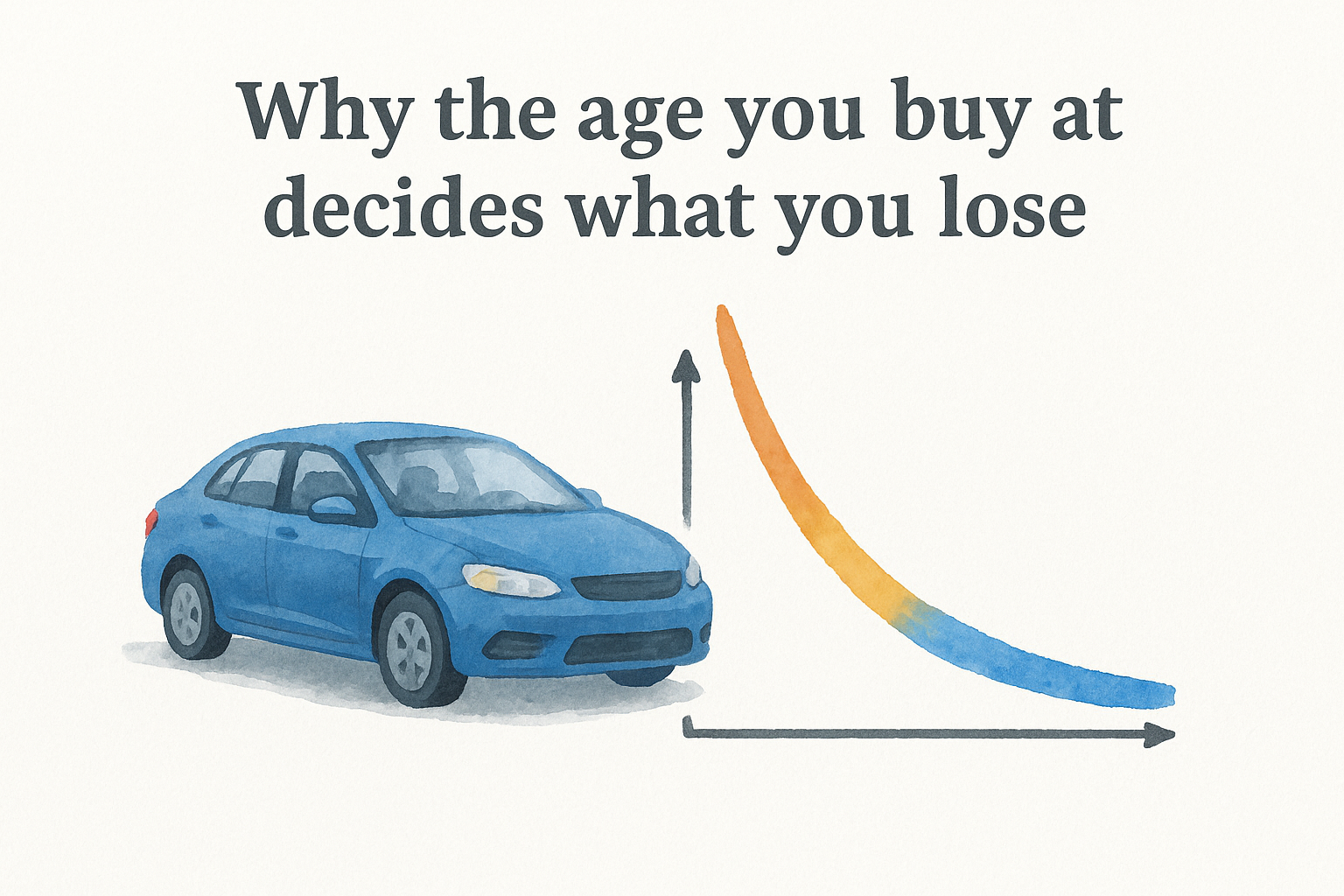
The age you buy at decides how much depreciation you pay, because cars lose value fastest in their first years and far more slowly later. Buy early and you fund the steep drop. Buy later and the previous owner already has.
How steep the early drop is
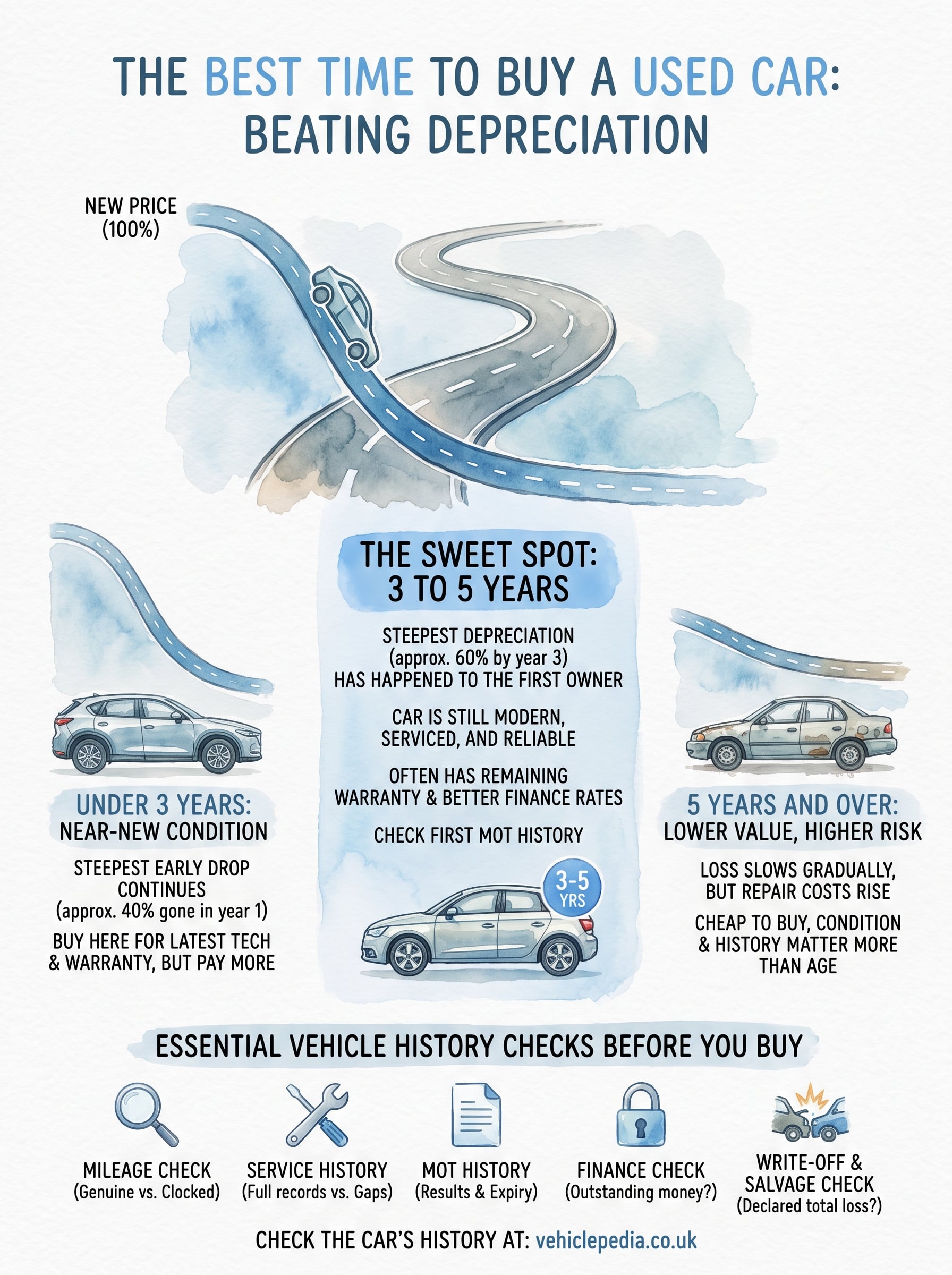
Typical figures put the first year at around 40% of the new price lost, and roughly 60% gone by the end of year three. Take a car that cost £10,000 new. After three years it is worth about £4,000, so the first owner lost £6,000. If you buy it then, you start from £4,000 and most of the loss is behind you. On a £50,000 car the same pattern means about £30,000 gone by year three.
Treat these as averages. Some sources put the three-year loss nearer 30 to 40% for popular models, so the exact figure depends on the model, mileage and condition.
The steepest part of the curve is the first three years, and buying after it means someone else paid for it.
Why the loss slows down
A car becomes a used car the moment it leaves the showroom, and buyers see a previous owner on the paperwork. A newer model may arrive, any warranty runs down, and the owner starts paying for MOTs, servicing and repairs. Those pressures hit hardest early. Later, the car has little value left to lose, so each extra year costs less.
The curve by age
| Age | How much value is lost | What it means for a buyer |
|---|---|---|
| Under 1 year | Steepest drop, around 40% in year one | Worst point to buy for value |
| 1 to 3 years | Heavy losses continue, around 60% by year three | Good only if you want near-new condition |
| 3 to 5 years | Loss eases noticeably | Best balance of price and reliability |
| 5 to 10 years | Loss slows gradually | Cheap to buy, but repair costs rise |
| 10 years and over | Little value left to lose | Condition and history matter more than age |
How to choose the best age for your budget
Aim for a car that is three to five years old first, then move older only if your budget demands it. Most sources give a two-to-five-year window, and some stretch it to six, but three to five is the safest middle.
Why three to five years works
At this age the steepest depreciation is behind the car, so you pay a fraction of the new price for something that still has modern safety kit and technology. Many cars this age still carry part of the manufacturer's warranty, which cuts the risk of a big repair bill. Finance rates on younger used cars are also often better than on older ones.
Remember that a car's first MOT is due when it turns three. A three-year-old car has either just passed or is about to face that test, so look at its MOT history before you commit.
Three to five years is where the price drop has mostly happened but the wear has not yet arrived.
What to inspect at each age
Each age band carries its own risks, so adjust your checks to match.
| Age | Inspect first |
|---|---|
| 2 to 3 years | Full service records, any remaining warranty, minimal wear |
| 3 to 5 years | Proof of routine servicing, tyres, brakes and battery condition |
| 5 to 7 years | Suspension and brake wear, interior condition, warranty expiry |
| 7 to 10 years | Rust, fluid leaks, documented repairs, known model weak points |
| 10+ years | Engine and transmission history, body damage, model reliability |
A simple way to decide
- Set your total budget, including insurance, tax and a repair fund.
- Search three-to-five-year-old cars in your price range first.
- If nothing fits, move to five to seven years and budget more for servicing.
- Compare mileage against age. Low mileage for the age usually means less wear, though motorway miles are kinder than stop-start town driving.
- Narrow to two or three cars, then check each one's history before you view it.
How to check that a car really sits where its age suggests
A car's age is only a label, so confirm it with records before you pay. Mileage, service history and MOT results show how hard the car has worked, and finance and write-off checks show whether it is safe to buy at all.
Mileage, service history and MOT
A four-year-old car with a clocked odometer is really an older, more worn car priced as a younger one. A genuine mileage check compares the recorded mileage against official records and flags discrepancies. Our free check also shows the MOT history, including results and expiry date.
Our free service history lookup adds the date and mileage of every recorded service for brands such as Audi, BMW, Mercedes-Benz, Ford, Volkswagen and Kia. Gaps between services, or mileage that jumps oddly, are worth questioning with the seller.
Finance, write-offs and the asking price
A car can look like a bargain for its age because it is not what it seems. A finance check on the car shows whether money is still owed on it, which matters because the car may belong to the lender. A write-off check by registration shows whether an insurer has declared the car a total loss, and a salvage check shows whether it later turned up at a salvage auction.
Once the car is clear, a valuation check from the registration number helps you judge whether the asking price fits its age and condition. Our data comes from official sources: DVLA for vehicle details, DVSA for MOT history, and Experian and the MIAFTR insurance database for finance and write-off records.
A price that looks low for the age is a reason to check the history, not a reason to hurry.
When to break the three-to-five-year rule
Bend the rule when your priorities differ from pure value. A nearly new car, a well-kept older car or a model that holds its value can each beat the standard sweet spot for the right buyer.
Nearly new cars at two to three years
If you want current technology, an almost unworn interior and a stronger chance of warranty cover, two to three years is a reasonable compromise. You still skip the worst of the drop, which is year one. You pay more than for a five-year-old car, though, and you will lose a larger share of that price when you sell.
Older cars and slow-depreciating models
A well-maintained ten-year-old car can be a better buy than a newer one that has been neglected. Service history matters more than the registration year, but older cars usually need more maintenance and repairs, so keep a repair budget.
Models differ too. Brands such as Mercedes, Porsche and Land Rover are known for low depreciation, and models such as the BMW 4 Series and Audi A5 hold stronger resale values than less desirable cars. They cost more upfront, so you are paying a premium to lose less later.
Buy after the drop, then check the car
The best time to buy a used car, in depreciation terms, is when the steep early losses are behind it. For most buyers that is three to five years old, with two to three years for near-new condition and five years or more when the budget is tight. Whatever the age, mileage, service records, finance status and write-off history decide whether the car is a good buy.
Before you pay a deposit, run the registration through a history check. You can browse a sample of the premium report to know exactly what you will get before you decide.