Car History Check: What It Is and How to Run One
Learn how to run a car history check with just a reg number, what free vs premium reports reveal, and how to spot risks before buying.
Car History Check: What It Is and How to Run One
You've found a car online, the price looks fair, and the seller seems genuine. But you don't actually know what's happened to that vehicle before it landed on this listing. Has it been in a serious accident? Is it still under finance from a previous owner? A car history check answers exactly these questions using the registration number, pulling official records in seconds rather than leaving you to guess based on a seller's word.
Running a history check car buyers rely on means feeding the reg plate into a system that queries the DVLA, police databases, and insurance registers all at once. You get back MOT status, mileage records, road tax standing, ownership changes, and flags for anything serious like a stolen marker or outstanding loan. It takes less time than a test drive and costs nothing for the basics.
This article walks through what a proper car check history actually includes, the difference between free and premium reports, and exactly how to run one on any UK vehicle before you hand over money or sign a logbook.
Why a car history check matters before buying or selling
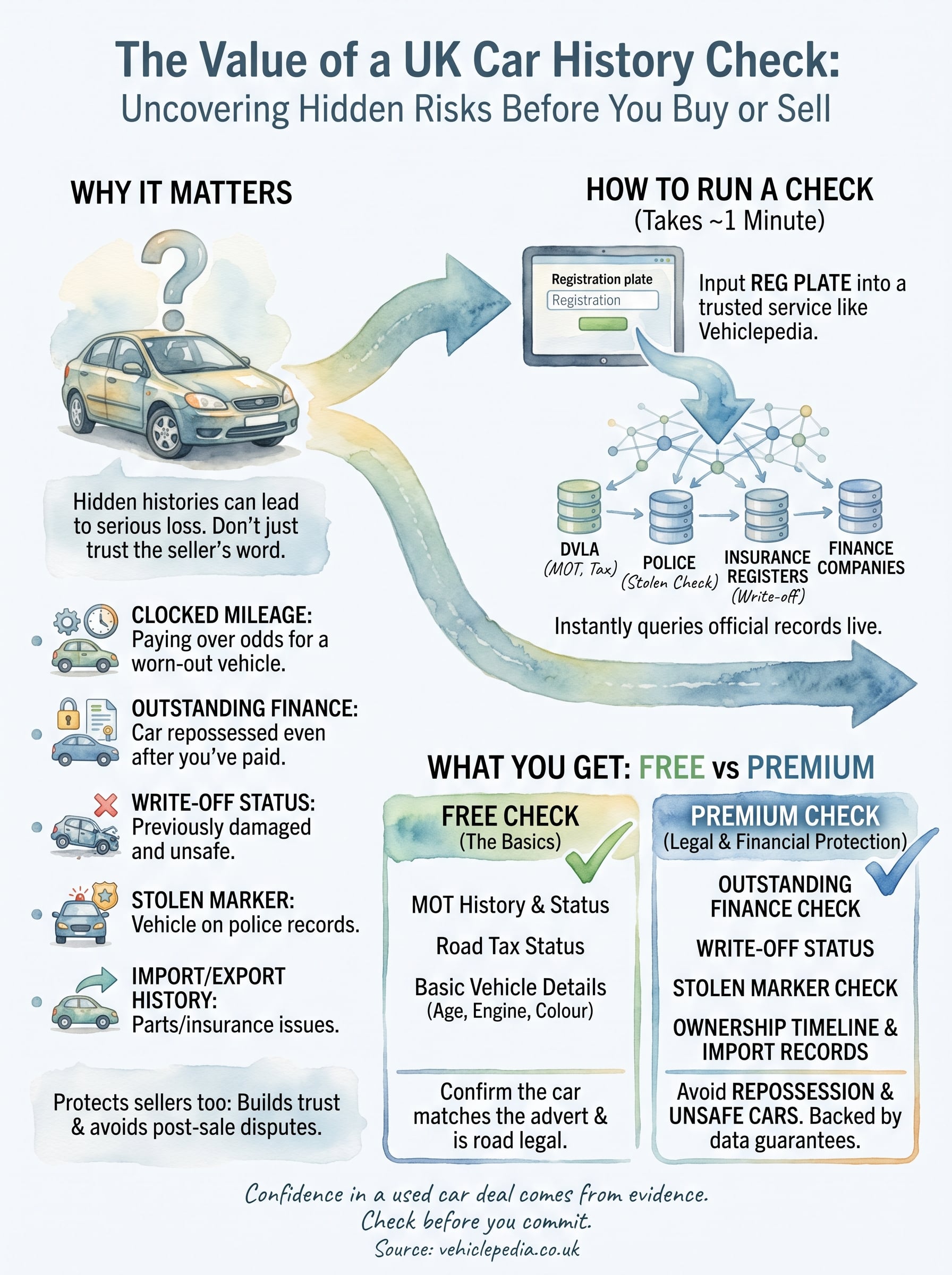
Buyers lose thousands of pounds every year on cars that look fine but carry serious problems underneath. A vehicle with clocked mileage can sell for far more than it's worth, and a car still tied to someone else's outstanding finance can legally be repossessed from you even after you've paid for it in full. None of this shows up in a viewing or a test drive. It only shows up in the paperwork, and sellers don't always volunteer paperwork that makes their car look worse.
The biggest risk in buying a used car isn't the price you negotiate, it's the history you never asked about.
Running a check before you commit gives you leverage too. If the report flags a colour change, a previous write-off, or a gap in the ownership timeline, you can raise it directly with the seller or walk away entirely. Sellers who are genuine usually welcome the transparency, since it backs up what they've already told you.
Common risks a proper check uncovers
A thorough history check car buyers run typically surfaces one or more of the following:
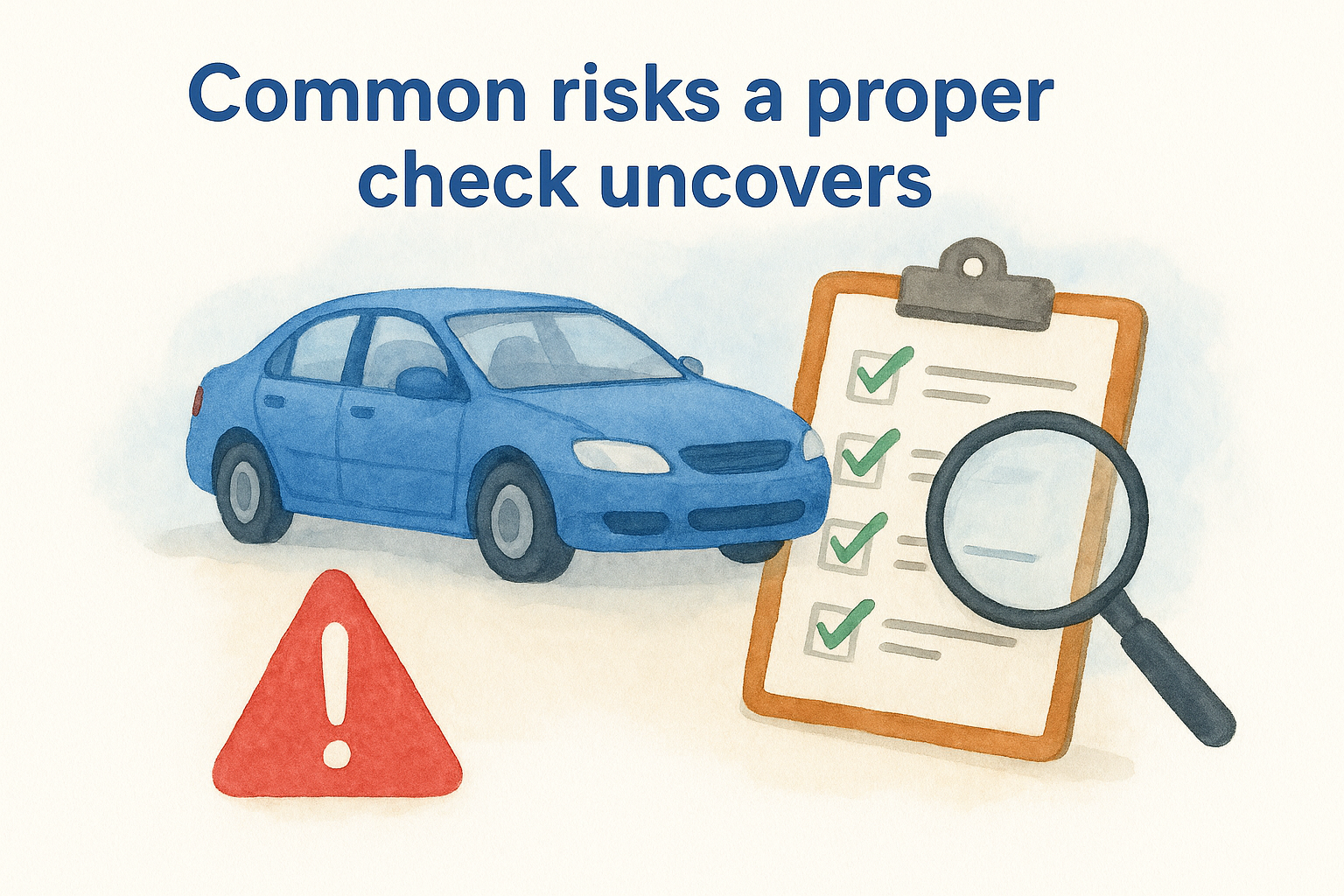
- Outstanding finance: the car is still owned by a lender, not the person selling it
- Write-off status: the car was declared a total loss by an insurer after damage
- Stolen marker: the vehicle appears on the Police National Computer
- Mileage discrepancies: recorded mileage drops or jumps unexpectedly between MOT tests
- Import or export history: the car came from abroad or has been sold overseas and back
Each of these affects either the legal ownership of the car or its real-world value, and any one of them is grounds to renegotiate or reject a sale.
It protects sellers as well as buyers
Selling a car comes with its own risks if you skip a check. Disputes over undisclosed mileage or a hidden accident history can come back on you months after the sale, even if you genuinely didn't know. Running a check before you list the car and sharing the results with buyers builds trust fast and cuts down on the back-and-forth haggling that comes from suspicion alone.
How to run a car history check with a registration number
Running a car history check takes about a minute if you have the registration plate in front of you. You don't need paperwork, a login, or the seller's permission. Just the reg number and, for premium checks, a card to pay for the report. Vehiclepedia pulls the data live from official sources, so the result you see reflects the DVLA and police records as they stand right now, not a cached snapshot from last month.
What you need before you start
Before you run a car check history search, have these ready:
- The full registration plate, copied exactly as it appears on the number plate
- A rough idea of the vehicle's make and model, so you can spot a mismatch immediately
- Ten minutes to read through the free results properly, rather than skimming
Steps to run the check
- Go to the vehicle checker and type the registration number into the search field.
- Confirm the make, model, and colour shown match what you're looking at in person or in the listing photos.
- Review the free report for MOT status, tax status, and basic vehicle details.
- If anything looks unusual, or you're about to commit real money, upgrade to a premium report for finance, write-off, and stolen checks.
A mismatched make or colour on the free report is often the first sign something's wrong, and it costs you nothing to spot it.
That mismatch alone has saved buyers from turning up to view a car that isn't what the advert claimed.
What information a car history check report reveals
Every car history check pulls together several data sets into one report, and knowing what each section actually tells you helps you read it properly instead of just skimming for red flags. The core details cover the vehicle itself: registration date, engine size, fuel type, and colour, all cross-checked against DVLA records so you can confirm the car in front of you matches what's on paper. From there, the report moves into condition and running costs, including MOT history stretching back years, current road tax status, and the vehicle's fuel efficiency rating.
A report is only useful if you read past the headline pass or fail and check the detail behind it.
The full breakdown
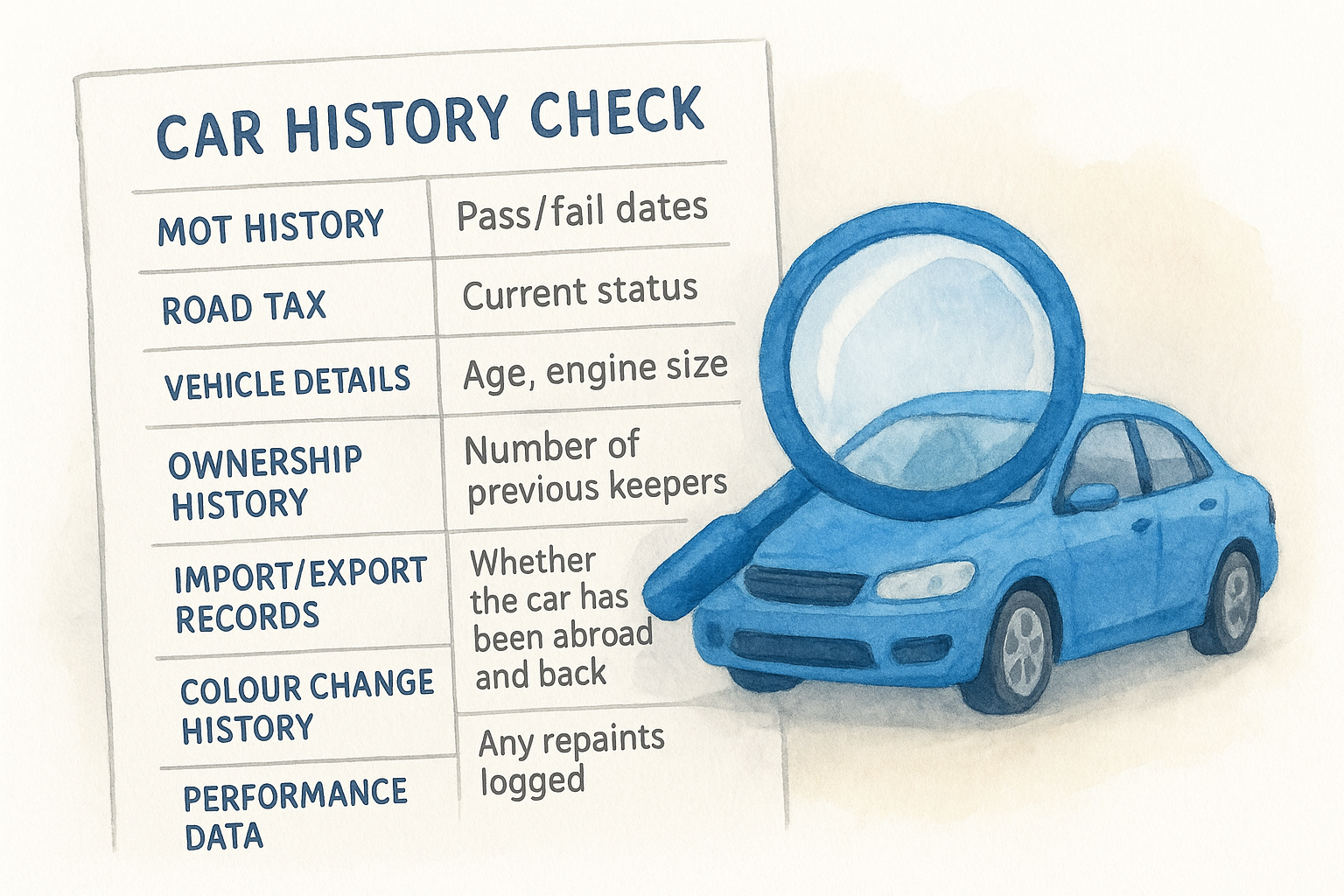
A complete report typically includes:
| Section | What it tells you |
|---|---|
| MOT history | Pass/fail dates, mileage at each test, recorded defects |
| Road tax | Current status, cost band, expiry date |
| Vehicle details | Age, engine size, fuel type, colour |
| Ownership history | Number of previous keepers, dates of change |
| Import/export records | Whether the car has been abroad and back |
| Colour change history | Any repaints logged on official records |
| Performance data | Power output, acceleration, top speed |
Ownership history matters more than buyers often realise. A car with five keepers in three years usually has a story worth asking about, even if nothing else in the report flags a problem. Import records tell you whether the car started life on UK roads or arrived from overseas, which can affect parts availability and insurance later. Together, these sections give you a fuller picture than any single detail could on its own.
Free vs paid car history checks: what to expect
A free car history check covers the basics well enough to catch obvious problems before you go any further. You get MOT status and history, road tax standing, registration date, and vehicle details like engine size and colour. That's usually enough to confirm the seller's description matches reality and to decide whether the car is worth a closer look at all.
Free checks answer "is this car what it claims to be", paid checks answer "is this car safe to buy".
Premium reports go further into the risks that actually cost you money if missed. Finance checks confirm whether a lender still holds an interest in the car, which matters because unpaid finance can lead to repossession even from an innocent buyer. Write-off and stolen checks pull directly from insurance registers and the Police National Computer, flagging anything a free lookup simply doesn't have access to.
Where the line sits
| Feature | Free check | Premium check |
|---|---|---|
| MOT and tax status | Yes | Yes |
| Vehicle details | Yes | Yes |
| Ownership history | Limited | Full |
| Outstanding finance | No | Yes |
| Write-off status | No | Yes |
| Stolen marker | No | Yes |
Spending a few pounds on a premium report is cheap insurance against losing thousands on a financed or stolen car. Vehiclepedia backs premium reports with a £30,000 data guarantee for non-trade buyers, and you can preview a sample report first to see exactly what you're paying for.
Buying with confidence
A car history check takes minutes but it separates a genuine bargain from a costly mistake. Buyers who skip it are the ones who end up chasing a lender over someone else's finance or discovering a repaint job hid a serious write-off. Sellers who run one before listing sell faster and field fewer suspicious questions. Either way, the registration number tells you almost everything you need to know before money changes hands.
Confidence in a used car deal comes from evidence, not from trusting a stranger's word on a listing page. Free checks catch the obvious mismatches, and premium reports catch the ones that actually cost you money. Curious what a full report looks like before you pay for one? Have a look at a sample premium report and see exactly what you'd be checking before you commit to buying or selling.