How To Check If A Car Is Written Off By Reg In The UK
Learn how to check if a car is written off using its reg. Identify insurance categories, spot hidden accidents, and avoid overpaying for a dangerous vehicle.

How To Check If A Car Is Written Off By Reg In The UK
Buying a used car without knowing its full history is a gamble, and one of the biggest risks is unknowingly purchasing a vehicle that's been declared an insurance write-off. Whether it was involved in a serious collision, flood damage, or theft recovery, a written-off car can come with hidden structural problems, safety concerns, and a significantly reduced resale value. Knowing how to check if a car is written off before you hand over any money is one of the smartest things you can do as a buyer. It's also easier than most people think, provided you have the vehicle's registration number.
In the UK, insurance write-offs are categorised as A, B, S, or N (previously C and D), and each category tells a different story about the severity of the damage. Some written-off cars are legally allowed back on the road, while others should never be driven again. The problem is that sellers, private or trade, aren't always upfront about a vehicle's past. Without running a proper check, you could end up with a car that's worth far less than you paid or, worse, one that's unsafe.
This guide walks you through exactly how to check a car's write-off status using its registration plate, what each write-off category means, and where to find reliable data. At Vehiclepedia, we pull information from trusted official sources including the DVLA and insurance registers, giving you access to comprehensive vehicle history checks, with key details available for free and full write-off data through our premium reports. Let's get into it.
What "written off" means in the UK
When an insurer declares a vehicle a write-off, it means the cost of repairing the car exceeds what the car is actually worth, or the damage is so severe it cannot be made safe again. In the UK, insurance write-offs are assigned one of four categories by the insurer: A, B, S, or N. Each category carries a different level of severity, and knowing which one applies to a car you're considering is essential before you commit to buying it.
The four UK write-off categories
The current system replaced the older Category C and Category D labels in October 2017. Here is how the four active categories break down:
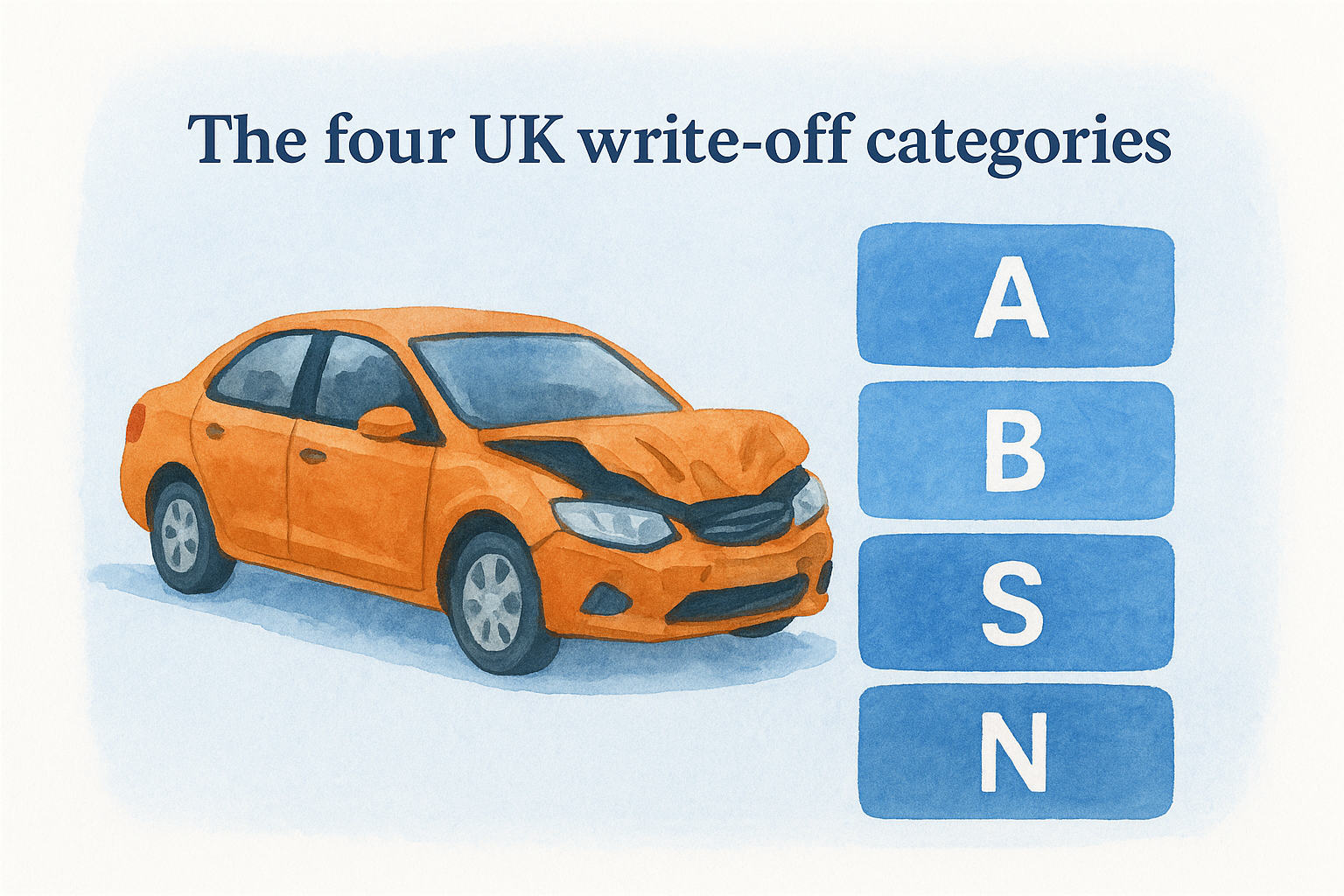
| Category | What it means | Can it return to the road? |
|---|---|---|
| A | Scrap only. The entire vehicle must be destroyed. | No |
| B | Body shell must be crushed, but parts can be salvaged. | No |
| S | Structural damage that is repairable to a roadworthy standard. | Yes, after proper repair |
| N | No structural damage. Non-structural faults only. | Yes, after repair |
Category A and B vehicles must never be driven on a public road again. Categories S and N can legally return to the road once repaired, but the owner must re-register the vehicle with the DVLA before putting it back into use.
A Category S car that has not been properly repaired and inspected is a serious safety risk, regardless of how clean it looks from the outside.
What a write-off history means for you as a buyer
Understanding how to check if a car is written off matters because the marker stays on a vehicle's history permanently. Even a Category N car, which involves no structural damage, typically carries a lower resale value than a clean equivalent, and some insurers will charge higher premiums or apply restrictions on the policy.
Your main concern with any Category S car should be documented proof of repair from a recognised bodyshop. Without a clear repair record, you have no reliable way to confirm whether the structural damage was fixed properly or simply patched over to pass a quick visual check.
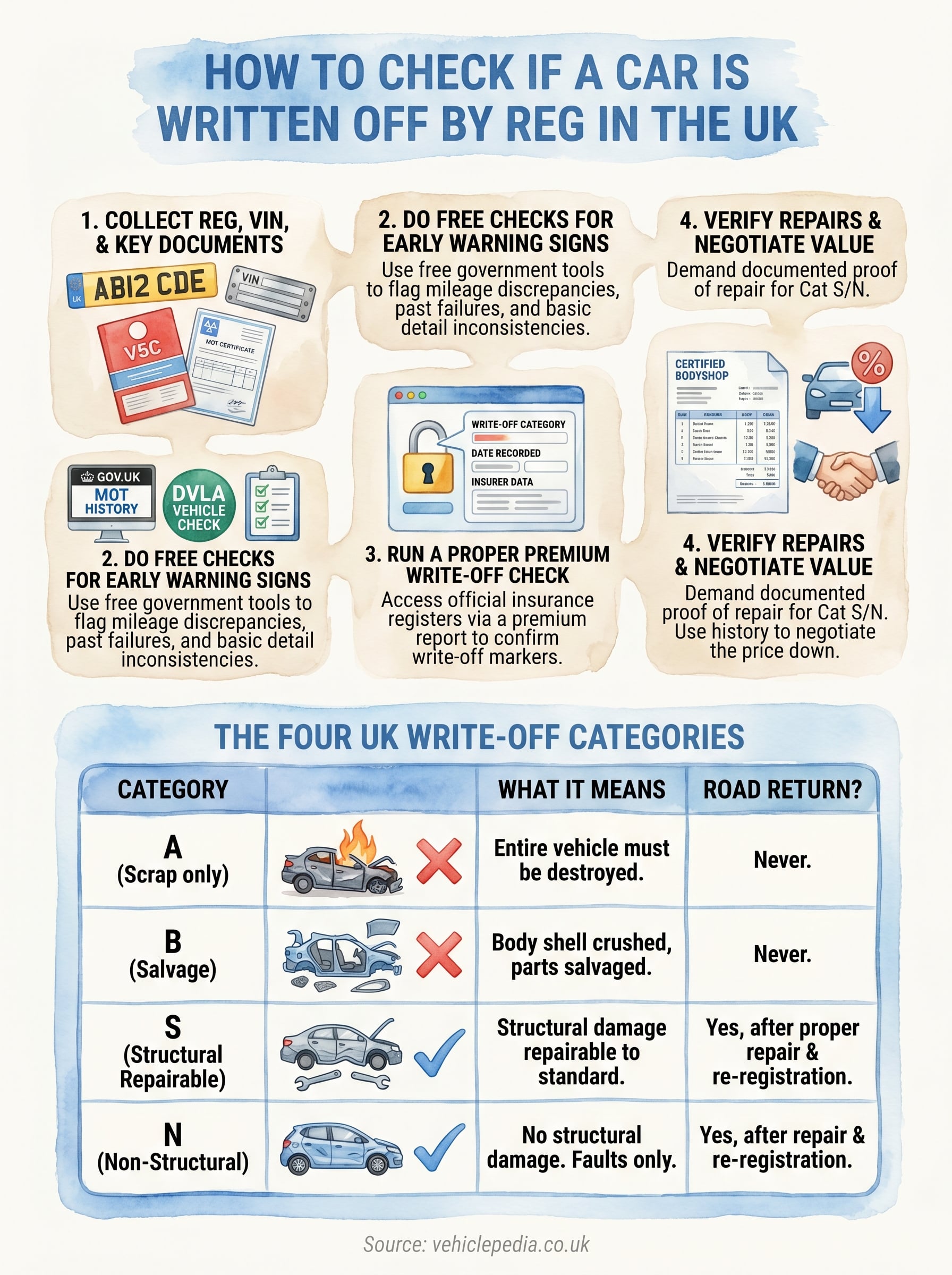
Step 1. Collect the reg, VIN, and key documents
Before you learn how to check if a car is written off, you need to gather the right information. The vehicle registration number is the most important piece, but having additional details ready will help you cross-reference results and spot any inconsistencies between what the seller tells you and what the official data shows.
What to gather before you run any check
Start by noting the full registration plate exactly as it appears on the physical car. Then locate the Vehicle Identification Number (VIN), which is usually stamped on a plate inside the driver's door frame or pressed into the metal at the base of the windscreen on the passenger side. Cross-checking both ensures the numbers match, since a mismatch can indicate the vehicle has been interfered with.
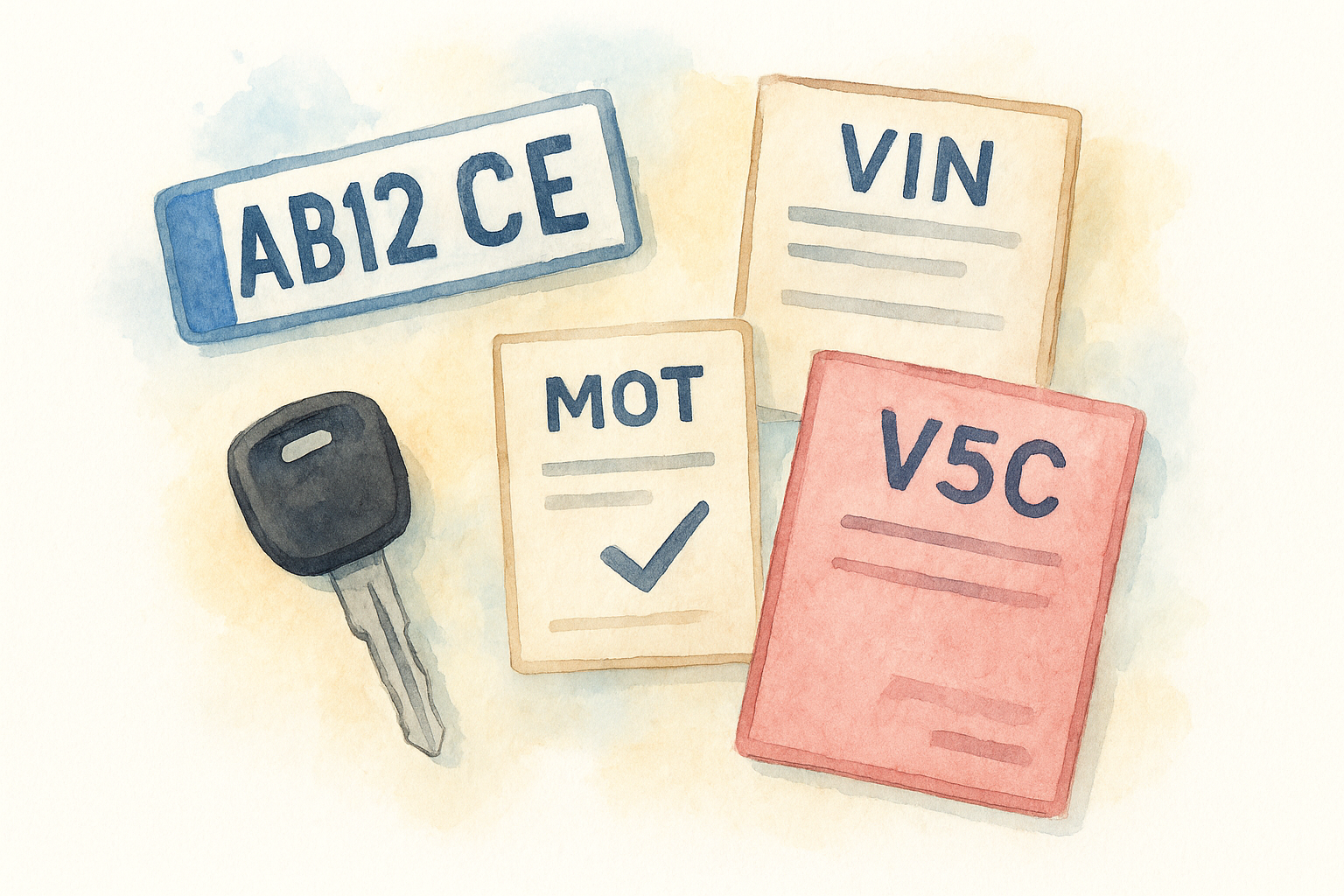
If the VIN on the car does not match the VIN printed in the V5C logbook, treat that as a serious red flag.
Here is a quick checklist of what to collect before running any check:
- Registration plate (from the physical car, not just paperwork)
- VIN / chassis number (located directly on the vehicle)
- V5C logbook (note the document reference number for comparison)
- MOT certificate (cross-check the recorded mileage against the odometer)
- Service history records (useful for verifying mileage consistency and past repairs)
Step 2. Do the free checks that flag obvious issues
Before you run a paid check to learn how to check if a car is written off properly, a few free steps can surface obvious problems in minutes. These checks won't confirm write-off status on their own, but they reveal early warning signs that something may not add up with the vehicle's history.
Check the MOT history on GOV.UK
The DVSA MOT history tool is free and available to anyone at gov.uk. Enter the registration number to pull up every MOT test the car has had, including pass and fail results, advisory notes, and mileage recorded at each test date.
If the mileage drops between two consecutive MOT tests, the odometer has likely been tampered with.
Look for failures that mention structural damage, chassis faults, or suspension issues, since these can point to accident damage that was never properly repaired.
Check the basic vehicle details with DVLA
Use the DVLA's free vehicle enquiry service at gov.uk to confirm the car's make, colour, and engine size. Then cross-reference those details against what the seller tells you and what appears in the physical V5C logbook. Run through this quick checklist:
- Colour: matches the car in front of you
- Engine size: consistent with the advert
- Previous keepers: aligns with what the seller claims
Step 3. Run a proper write-off check by reg
Free government tools confirm MOT history and basic vehicle details, but they do not access insurance write-off registers. To find out how to check if a car is written off accurately, you need a dedicated vehicle history check that queries those registers directly using the registration number.
What a premium write-off check covers
A proper check pulls data from insurance industry databases and cross-references it against the vehicle's registration and VIN. At Vehiclepedia, the premium report confirms whether the car carries a Category A, B, S, or N marker, along with the date the write-off was recorded. That date is important because it tells you whether the damage occurred before or after a previous keeper sold the car.
A write-off marker recorded shortly before a private sale is a strong sign the previous owner knew about the damage and chose not to disclose it.
How to run the check
Enter the registration plate at Vehiclepedia, review the free results for basic details, then unlock the full premium report to access the write-off data. The process takes under two minutes and gives you a clear, documented record you can refer back to if any dispute arises later.
Step 4. Verify repairs, value impact, and next actions
Once you know how to check if a car is written off and the report confirms a Category S or N marker, your next move is to verify the repairs and understand what that history does to the car's value. A write-off marker alone does not mean you should walk away, but it does mean you need documented proof before you consider proceeding.
Check the repair documentation
Ask the seller for a full repair invoice from a recognised bodyshop. The paperwork should confirm the specific damage repaired, the parts replaced, and the date the work was completed. Cross-reference that date against the write-off record in your Vehiclepedia report to confirm the timeline adds up.
Use this checklist when reviewing repair documents:
- Repairer name and address: a registered business, not an individual
- Parts listed: OEM or manufacturer-approved components where structural
- Date completed: after the write-off date on record
- Total cost: proportionate to the category of damage declared
Factor in the value impact
A Category S or N history reduces resale value on comparable clean vehicles, typically between 20% and 40% depending on the model and severity. Use that figure to negotiate the asking price down before committing.
Never pay clean-market price for a car carrying any write-off marker on its history.
Next steps before you buy
You now have a clear process for how to check if a car is written off using its registration plate, and you know what to do with the results. Before you hand over any money, run through these final steps to protect yourself: confirm the write-off category and repair documentation match up, negotiate the price based on the history, and make sure the VIN on the car matches the V5C logbook. If anything conflicts, walk away.
Every step in this guide costs you time upfront, but far less than recovering from a bad purchase. A Category S car with no repair paperwork is not worth any price, and a clean-looking vehicle can hide serious structural damage without a proper history check. Use the data available to you.
Run a full vehicle history check at Vehiclepedia today. You can preview a sample premium report before you buy to see exactly what the data covers.