How to Check if a Car Is Stolen by VIN
Learn to check stolen car VIN across 5 UK locations, verify against police records with our free tool, and spot cloning red flags before you buy.
How to Check if a Car Is Stolen by VIN
Buying a used car without knowing its background is a gamble, and a stolen vehicle is one of the worst outcomes you can walk into. If you've got a VIN from a listing or a seller and want to check stolen car VIN status before handing over any money, you're already doing the right thing. Most buyers skip this step and only find out something's wrong after the police turn up.
In the UK, stolen vehicle checks are usually run against the number plate rather than the VIN alone, since that's how DVLA and police records are cross-referenced. This guide shows you how to check if a car is stolen by VIN, including how to convert that VIN into a usable registration lookup and where to run a genuine stolen vehicle check against UK police data.
We'll walk through the exact steps, what counts as a reliable free lookup, and when it's worth paying for a full report that also flags outstanding finance or write-off history, the two other issues that trip up unsuspecting buyers just as often as stolen status does.
What a stolen VIN check can and can't tell you
A VIN check tells you whether the vehicle's identification number appears on a police stolen vehicle register, nothing more. It confirms or clears the car against a specific database at a specific moment. It won't tell you if the seller is the legal owner, whether the car has finance owing, or if it was written off after an accident. Those are separate checks entirely, and conflating them is where a lot of buyers get caught out.
Understanding this distinction matters because a clean stolen check can still sit alongside a serious problem elsewhere. Someone might genuinely own a car outright, with no theft flag against it, and still be quietly selling it on behind a loan the finance company hasn't been paid off. That's why a proper stolen vehicle check by VIN should always be one part of a wider history check, not the whole thing.
A clean stolen check only means the car isn't flagged as stolen right now, it says nothing about finance, write-off status, or ownership.
What each check actually covers
| Check type | What it confirms | What it misses |
|---|---|---|
| Stolen vehicle check | Reported to police as stolen | Finance, write-off, ownership disputes |
| Finance check | Outstanding loan against the vehicle | Theft status, mileage accuracy |
| Write-off check | Insurance write-off category (Cat N, S, etc.) | Theft status, finance |
Running all three together, ideally through one free lookup that pulls from DVLA and police data, gives you a far more complete picture than any single check on its own. If you only run one and skip the rest, you're leaving two of the three biggest risks unchecked.
Step 1. Find and confirm the car's VIN
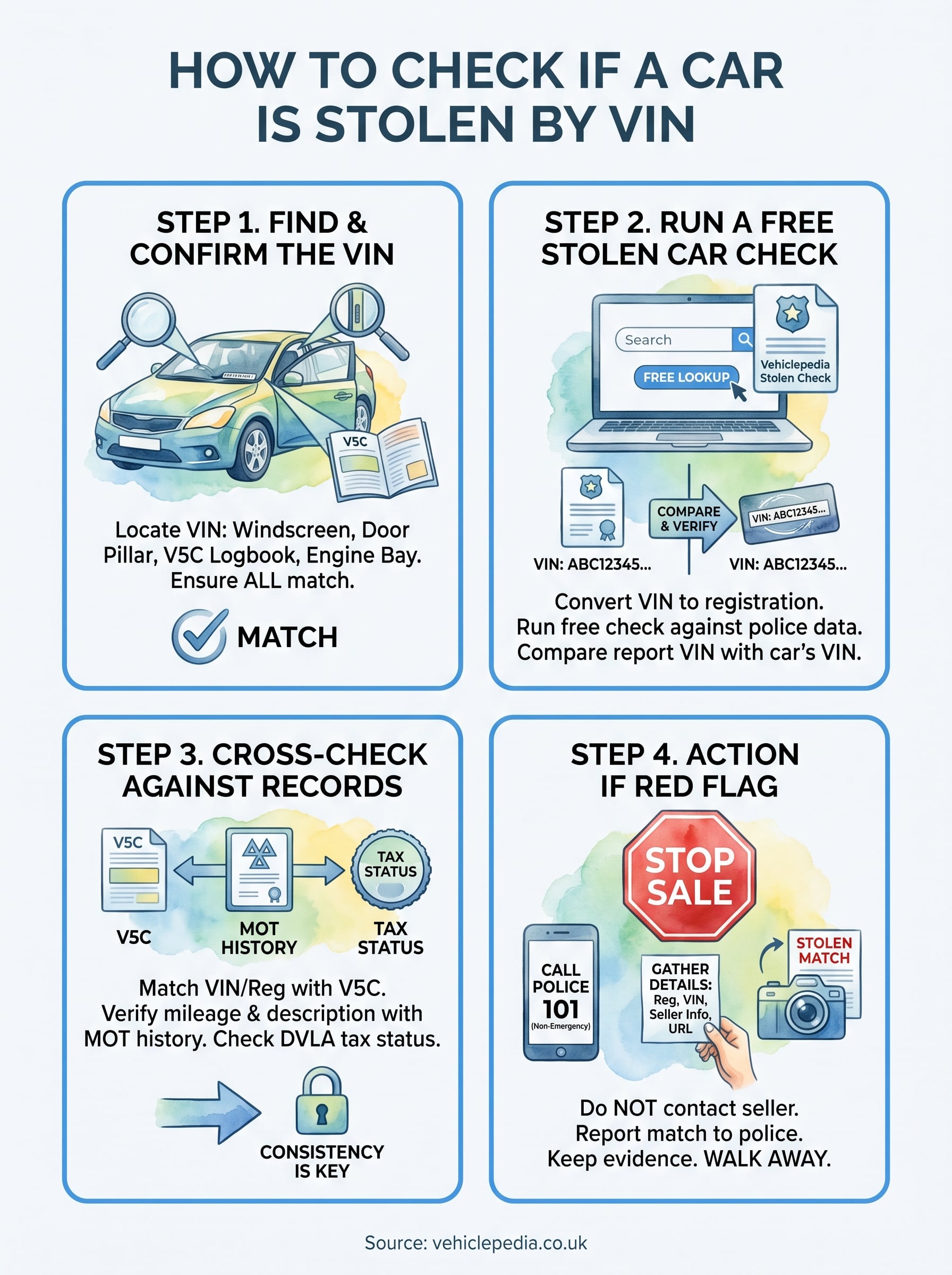
Before you can check stolen car VIN status, you need the actual 17-character code, not a guess from memory or a blurry photo. The VIN sits in a handful of standard VIN locations on a UK car, and checking more than one location helps you catch a cloned or altered plate before it costs you money.
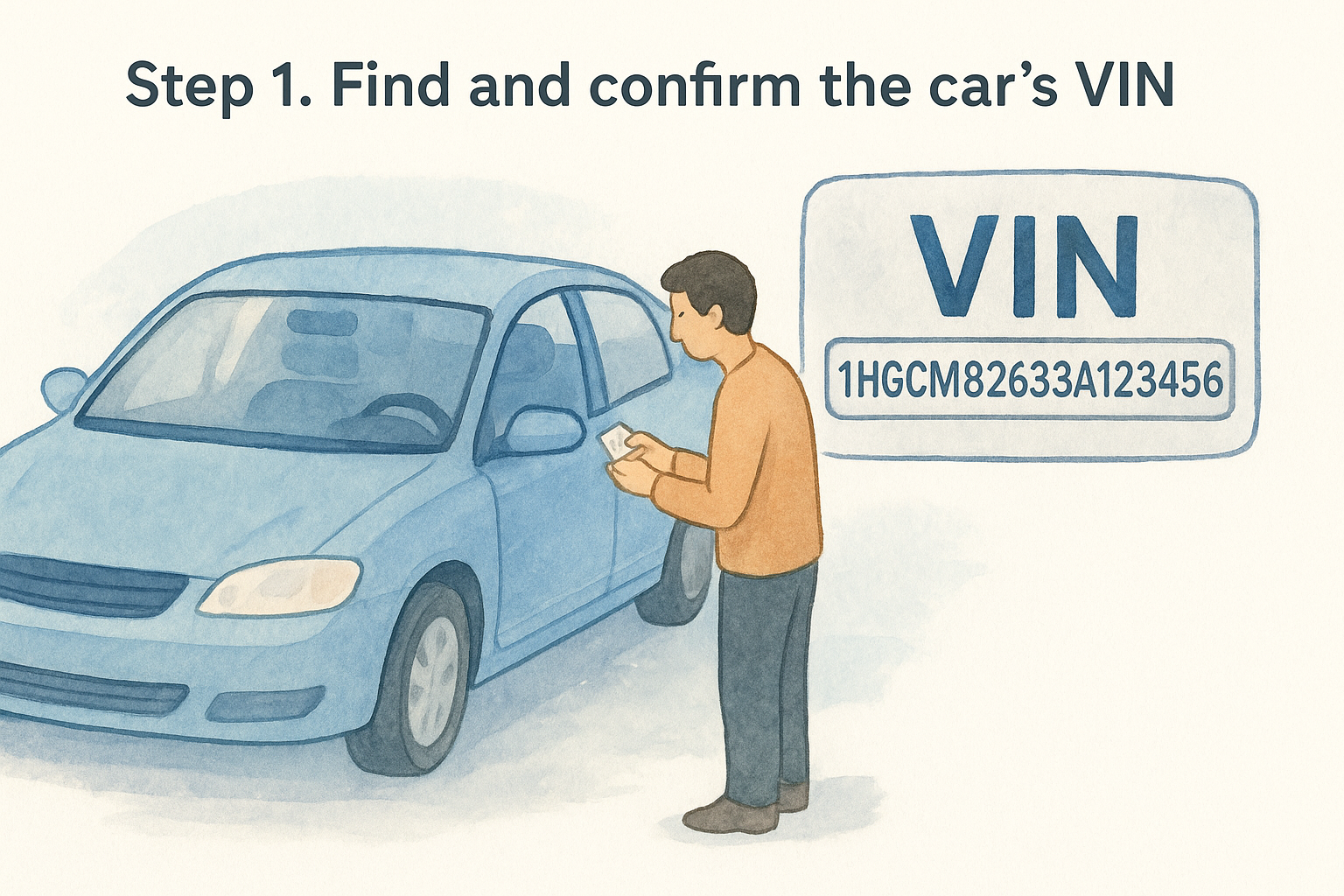
Look in these places and make sure the number matches everywhere:
- Bottom of the windscreen, driver's side, visible from outside
- Driver's side door pillar (open the door to see the sticker)
- Vehicle logbook (V5C), under section D.2
- Engine bay, often stamped near the front
- MOT certificate or dealer paperwork
Write the VIN down carefully. Mixing up an O for a 0 or an I for a 1 gives you a false result and wastes the check entirely. If the number stamped on the car doesn't match the VIN shown on the V5C, stop there. That mismatch alone is a bigger warning sign than most stolen checks will ever throw up, and it's worth walking away before you go any further.
Step 2. Run a free stolen car VIN check
Once you've got a confirmed VIN, convert it into a registration lookup. Most UK stolen vehicle databases, including police stolen vehicle records held on the PNC, index by number plate rather than VIN, so you'll need the reg from the V5C or the listing to run the search. Head to a free lookup tool like Vehiclepedia's free stolen car check, enter the registration, and pull the report. This is genuinely a stolen car vin check free of charge, so there's no reason to skip it before you view a car in person.
Compare the VIN shown in the results against the one you noted from the car itself. If they match and no theft flag appears, that's a good early sign. If they don't match, or the registration returns no valid record at all, treat that as a serious warning rather than a technical glitch.
If the VIN on the report doesn't match the VIN on the car, stop the sale immediately, no explanation from the seller makes that acceptable.
Running this check takes under a minute and costs nothing, which makes it one of the easiest ways to check if a vehicle is stolen by VIN before you go any further with a purchase.
Step 3. Cross-check the result against other records
Once the stolen check comes back clean, don't stop there. Match the VIN and registration against the V5C logbook details, then check the MOT history by registration to confirm the mileage and vehicle description line up. A seller who's cloned a plate often can't produce paperwork that matches the car in front of you, so this step catches problems a stolen check alone won't flag.
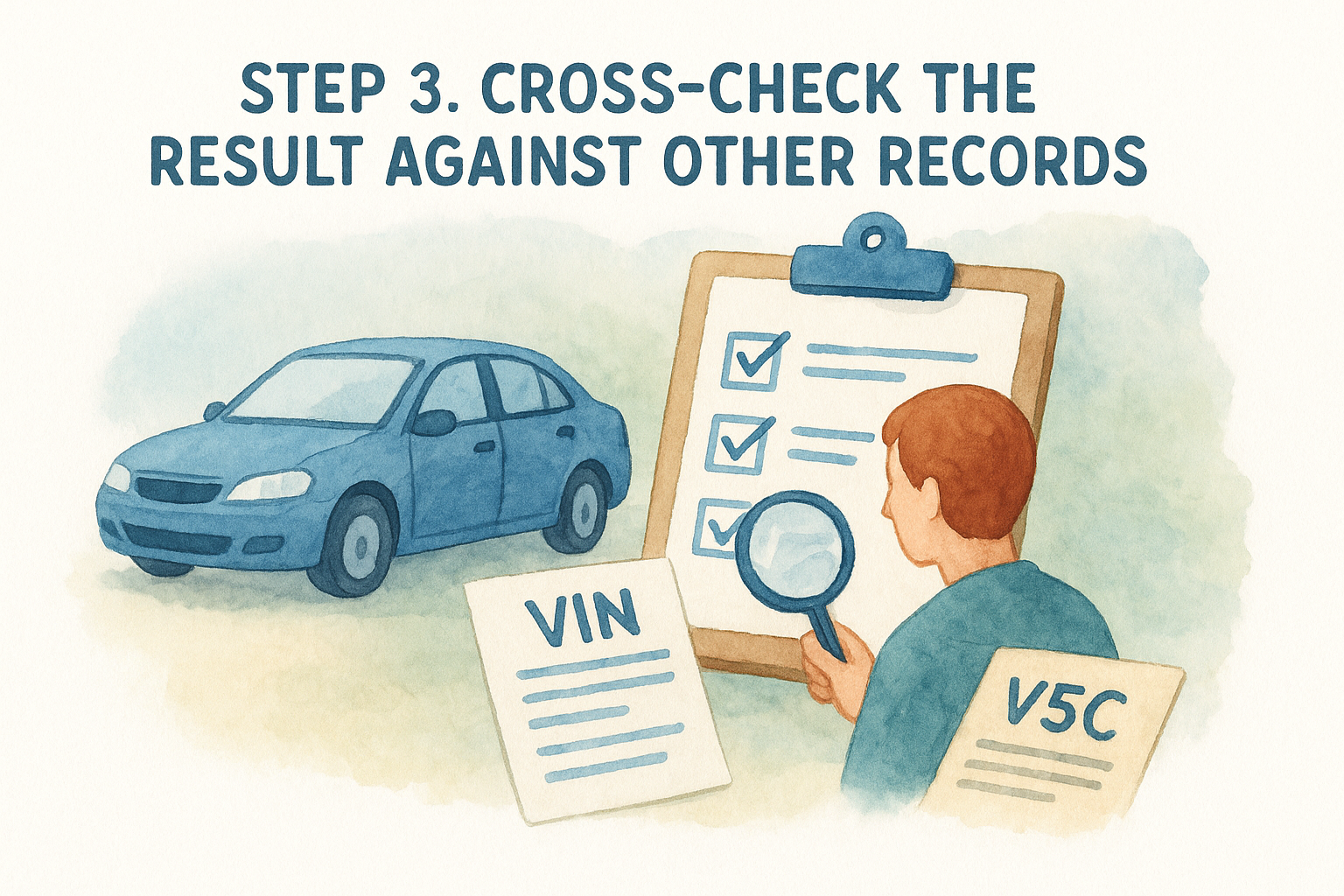
Also worth doing: a quick look at the vehicle's tax and MOT status through the DVLA's own service, since a car with no valid MOT or tax history recorded against a supposedly well-used vehicle is a red flag in itself. Compare that against what the seller has told you about the car's age and use.
One clean check is a data point, not proof, always cross-reference the VIN against the logbook, MOT history, and seller's story before you commit.
If everything, VIN, registration, mileage, and MOT record, tells the same consistent story, you can move ahead with real confidence rather than a hopeful guess.
Step 4. Know what to do if the VIN raises a red flag
Walking away is easy when a check comes back clean. It's harder when the stolen vehicle check flags a match, because your instinct might be to ask the seller for an explanation. Don't. A genuine stolen vehicle can be part of an active police investigation, and tipping off whoever's selling it can compromise that.
If a stolen car VIN check comes back positive, stop all contact with the seller and report it, don't try to negotiate an explanation out of them.
What to actually do next
- Stop the transaction immediately, don't hand over a deposit or arrange to view the car
- Note the registration, VIN, seller's contact details, and listing URL before you lose access to them
- Report the match to police on 101, the non-emergency line, rather than confronting the seller yourself
- Keep a screenshot of the check result as evidence
Quietly gathering this information protects you if the seller disputes anything later, and it gives police something concrete to work from. Treat any positive result as final rather than something to double-check with the seller, since checking if a car is stolen by VIN exists precisely to remove that judgement call from your hands.
Buying with confidence
Checking a VIN before you buy isn't paranoia, it's basic due diligence that takes minutes and costs nothing. You now know how to find and confirm a VIN, run it against police stolen records, and cross-check the result against the logbook and MOT history. That's more scrutiny than most buyers ever apply, and it's exactly the kind of process that stops a bad purchase before it happens.
Don't treat a single clean result as the finish line. A stolen vehicle check is one piece of a bigger picture that includes finance and write-off status too, so run all three whenever you're serious about a car. If you want to see exactly what a full report covers before you commit to buying one, see an example report covering stolen, finance and write-off data first. It shows you precisely what you're getting, no surprises, no guesswork.