Car Write-Off Check: Free DVLA & Gov.uk Options Explained
Learn why gov.uk can't show write-off status and how to run a car write-off check free dvla gov style with Vehiclepedia before buying used.

Car Write-Off Check: Free DVLA & Gov.uk Options Explained
You've found a car that looks right, priced right, and you want to know if it's ever been written off before you hand over a deposit. Searching for a car write-off check free dvla gov usually means you've heard that gov.uk or the DVLA can tell you this for nothing, and you want a straight answer before you spend money elsewhere.
Here's the reality: the DVLA vehicle enquiry service will confirm tax and MOT status, but it won't tell you the write-off category. That data sits with insurers, not DVLA. So a genuine free write-off check has to pull from a different source, usually an insurance industry database, to show whether a car is Cat A, B, S, or N.
This article explains exactly what gov.uk and DVLA tools can and can't tell you, where the real write-off data comes from, and how to run a free car history check that actually flags a written-off vehicle before you buy. We'll also cover what each category means for insurance, repairs, and resale, so you know what you're dealing with.
Why checking for a write-off matters before you buy
A written-off vehicle isn't automatically dangerous, but buying one without knowing carries real financial and safety risk. Insurance write-off categories exist precisely because an insurer decided the car wasn't worth repairing to its pre-accident standard, or that repairing it safely wasn't guaranteed. If you buy that car without knowing its history, you're taking on someone else's risk assessment without ever seeing it.
Category A and B cars should never be back on the road at all, yet a small number slip through with cloned plates or falsified paperwork. Category S and N vehicles can be repaired and driven legally, but poor-quality repairs are common, especially on structural damage, so it pays to know what a Cat S write-off means. A botched repair might look fine in a driveway inspection and still fail catastrophically in a future collision.
If you don't check the write-off history, you're trusting a stranger's repair job with your family's safety.
Money matters too. Insurers ask about write-off history when you take out a policy, and undisclosed history can void a claim later, leaving you unprotected after an accident that isn't even your fault. Resale value also takes a hit, since most buyers and trade valuers run their own history checks before purchasing. Finding out the truth after you've paid full market price for what turns out to be a repaired write-off is an expensive lesson.
Getting this right before you commit is exactly why a check if car is written off gov uk search leads so many buyers to look for official-sounding confirmation. The instinct is correct, even if gov.uk itself won't answer the write-off question directly. The next section explains where that gap sits and how to close it properly.
How to check if a car is written off using DVLA and gov.uk
Start by using a free gov.uk vehicle check tool, which pulls directly from DVLA and DVSA records. Type in the registration number and you'll get the car's tax status, MOT history, and expiry dates within seconds. This is the correct first step for anyone running a car write-off check free dvla gov search, but it's important to know what you won't see: DVLA doesn't hold insurance write-off categories, so this tool will confirm the car is legally taxed and MOT'd without ever mentioning a Cat A, B, S, or N marker.
Where the write-off data actually lives
Getting the full picture means pairing the DVLA check with a database that pulls insurance industry records. Here's the sequence that works:
- Run the free gov.uk check for tax and MOT status
- Note the MOT history for repair-related advisories or repeated failures
- Cross-reference the plate against an insurance-backed write-off database
- Compare the mileage shown against the seller's odometer reading
Gov.uk confirms the car is roadworthy on paper. It won't tell you if an insurer already wrote it off.
Vehiclepedia's free car check combines both layers automatically, so you're not juggling two separate lookups before you decide whether the car's worth viewing.
Write-off categories explained: Cat A, B, S and N
Each write-off category explained in full tells you something different about what happened to the car and whether it should be on the road at all. Insurers assign these codes after an accident, theft recovery, or fire damage assessment, and the code sticks to the vehicle's record permanently through the Association of British Insurers' framework.
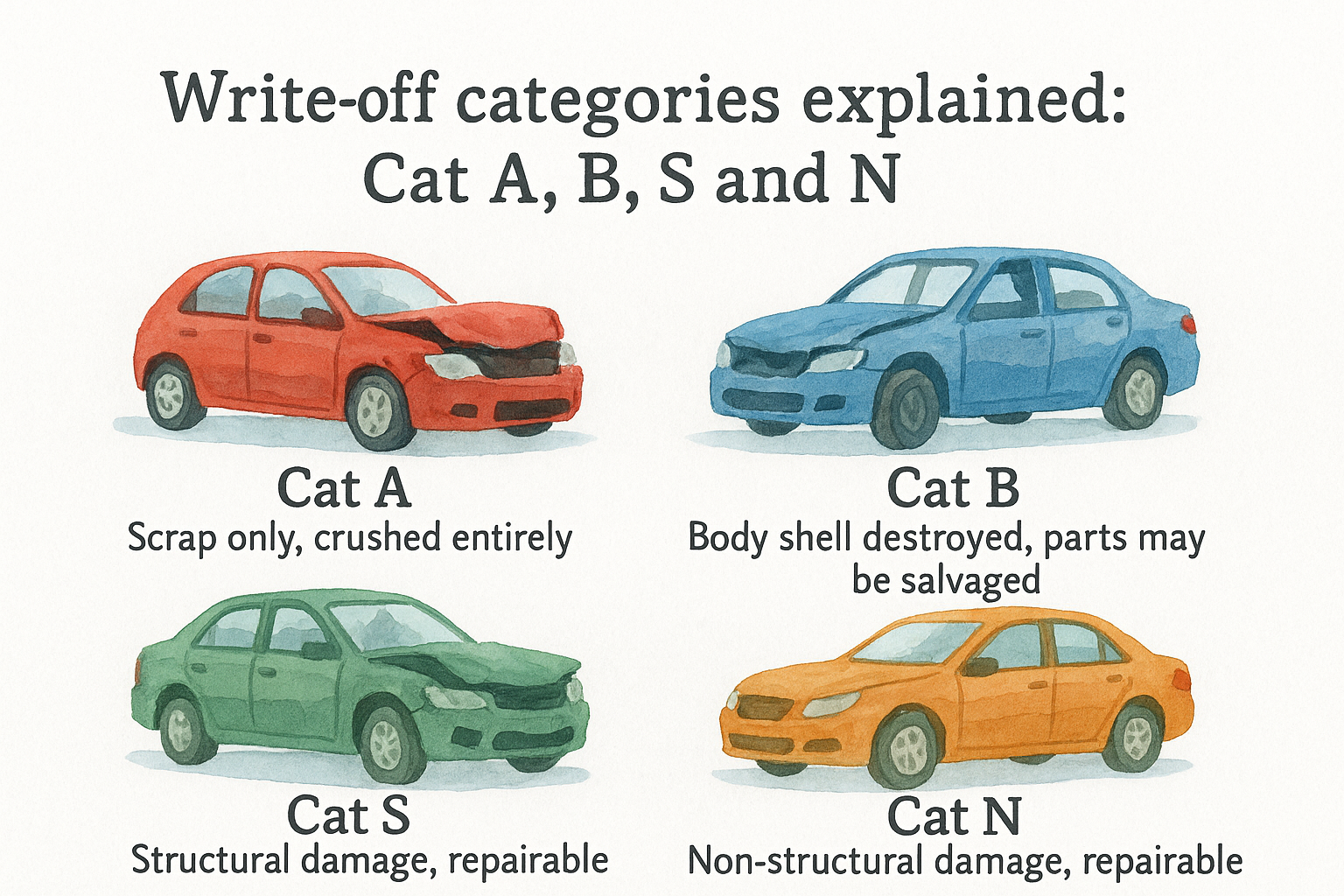
| Category | Meaning | Should it be driven? |
|---|---|---|
| Cat A | Scrap only, crushed entirely | Never |
| Cat B | Body shell destroyed, parts may be salvaged | Never |
| Cat S | Structural damage, repairable | Yes, if properly repaired |
| Cat N | Non-structural damage, repairable | Yes, if properly repaired |
Older records sometimes still show the pre-2017 codes, Cat C and what Cat D means on a car, which roughly map to today's S and N. If a seller mentions either old code, treat it the same way you'd treat S or N.
Cat A and B mean scrap. Cat S and N mean repaired, and repaired isn't always the same as safe.
Knowing the category before you view the car changes your entire inspection approach, from what questions you ask to what a mechanic should check underneath.
Free vs paid write-off checks: what you actually get
Most free write-off checks by registration confirm one thing clearly: whether the plate has ever been marked as a total loss and which category it falls under. That's genuinely useful, and it's why a free car write off check gov uk search so often ends with buyers running a basic registration lookup before they even book a viewing. What free checks usually skip is the detail around the write-off, things like the date it was recorded, the insurer involved, and whether the repair has since been inspected and cleared.
A paid report fills in that gap, alongside stolen vehicle status, outstanding finance, and mileage discrepancy checks pulled from separate databases entirely. Vehiclepedia's premium vehicle report adds all three, backed by a £30,000 data guarantee for private buyers.
Free tells you it's written off. Paid tells you why, and whether that matters to you.
| Check type | Write-off category | Finance check | Stolen check | Legal guarantee |
|---|---|---|---|---|
| Free | Yes | No | No | No |
| Premium | Yes | Yes | Yes | Up to £30,000 |
Deciding between the two really depends on how much you've got riding on the purchase.
Warning signs a car may be an undisclosed write-off
Sometimes a seller genuinely doesn't know their car was written off years ago by a previous owner, and sometimes they know exactly why they're keeping quiet. Either way, your job is spotting the clues before you hand over a deposit, not after.
Physical clues worth checking
Walk around the car slowly and look past the paintwork. Mismatched panel gaps and slightly different paint shades between panels often point to bodywork that's been replaced rather than repaired properly. Overspray on rubber seals, door hinges, or engine bay trim is another giveaway that a respray happened after damage, not from the factory, and in the worst cases it hides a cut and shut car.
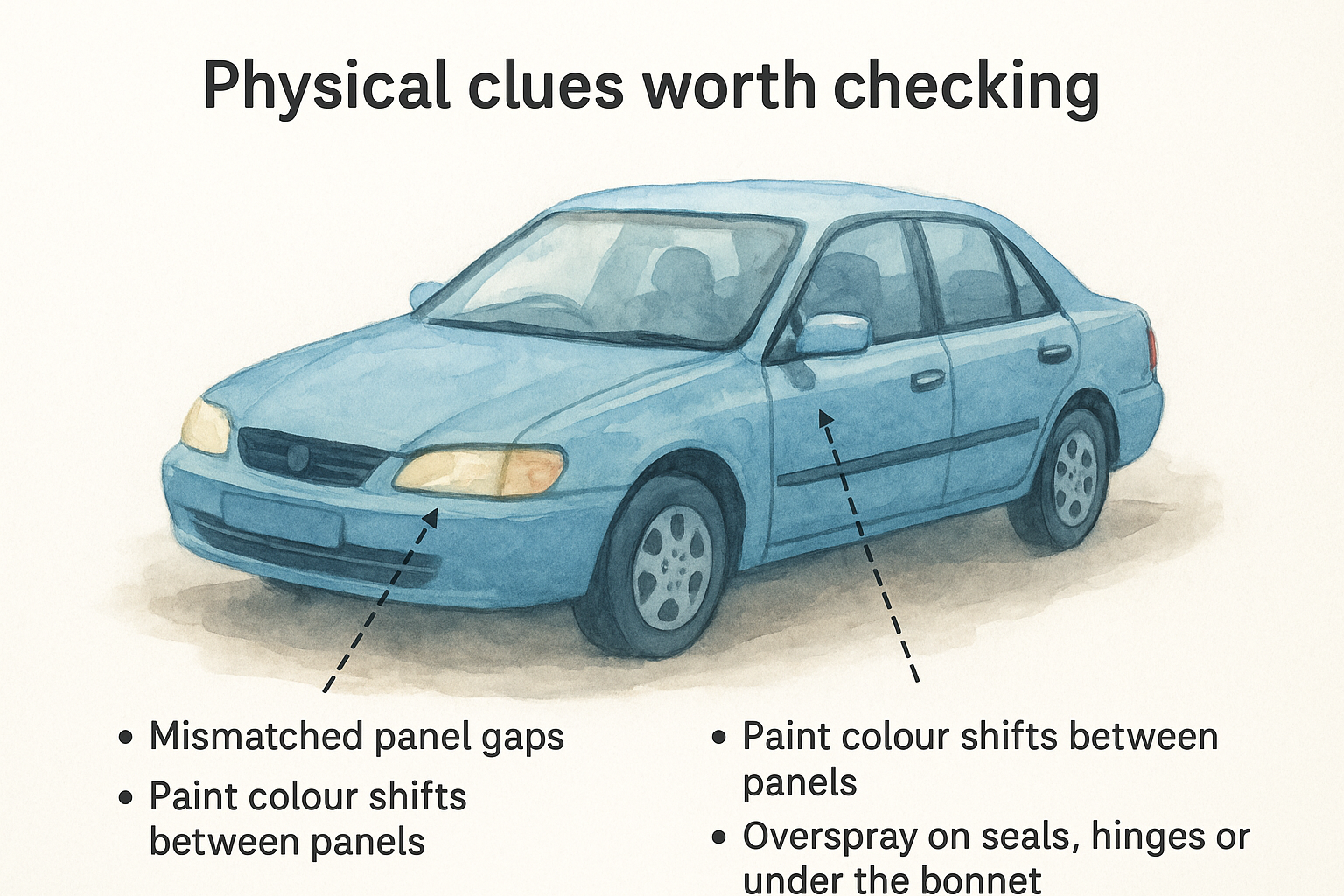
- Panel gaps that aren't even on both sides
- Paint colour that shifts slightly between panels
- Overspray on seals, badges, or under the bonnet
- New wiring or bolts on an otherwise old chassis
- A logbook (V5C) that looks recently reissued
A car that's had a professional respray for no obvious reason has usually had an accident somewhere in its past.
Paperwork gaps that matter
Ask directly whether the car's ever been declared a total loss, and watch how the seller answers, not just what they say. A seller who dodges the question, can't produce a full MOT history, or gets vague about a gap in ownership is worth walking away from until a proper history check clears things up.
Buying with confidence
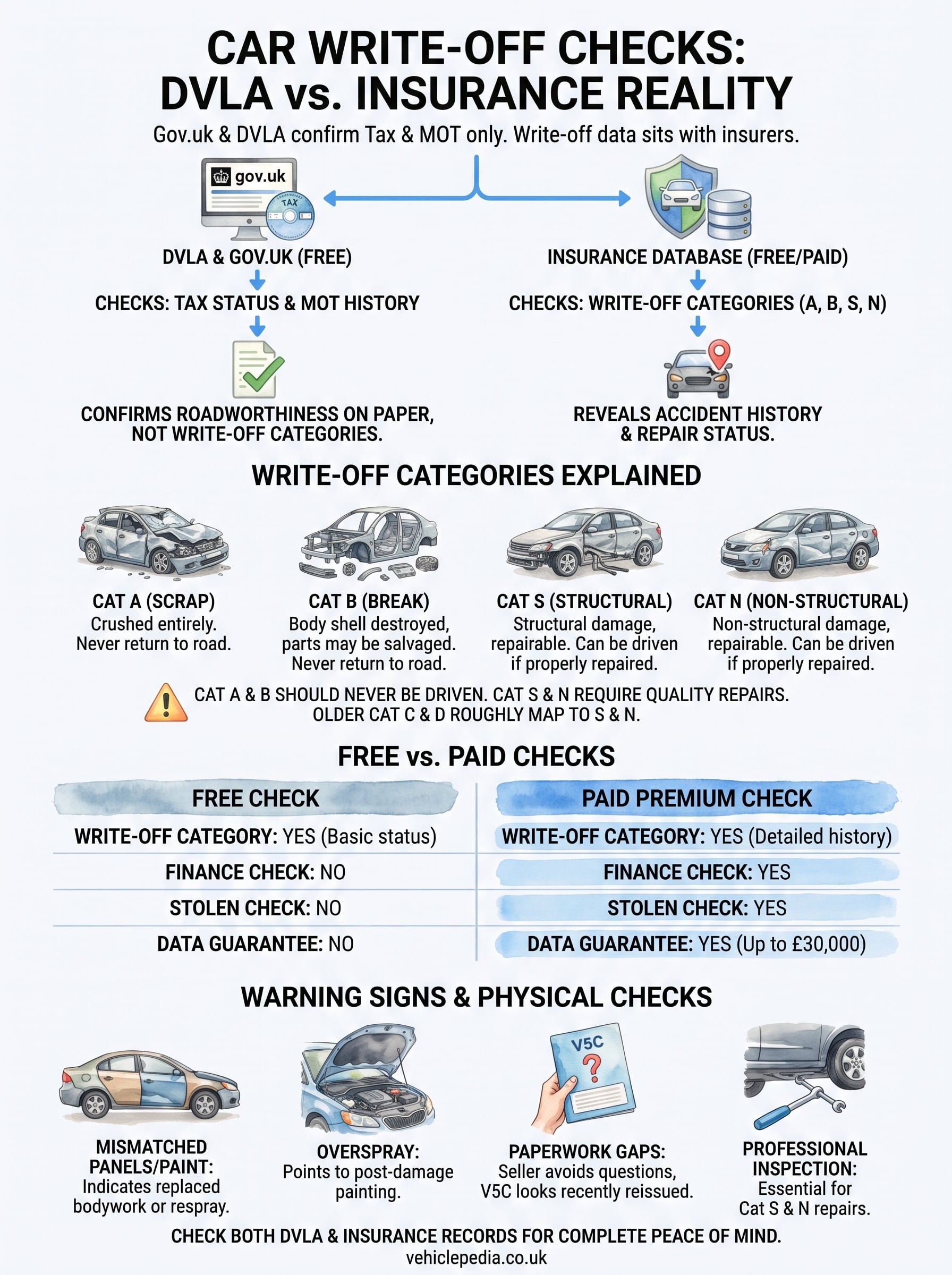
Gov.uk and DVLA give you tax and MOT status, nothing more. A proper car write-off check means going further, pulling insurance industry records that reveal whether a car's Cat A, B, S, or N, and whether that repair history stacks up against what you're seeing in person. Skipping that step means gambling on someone else's accident history without ever seeing the details.
Run the free check first. Look for panel mismatches, odd paperwork gaps, and vague answers from the seller. If anything about the write-off history matters to you, whether it's a Cat S repair quality or an insurer's assessment date, a paid report closes the gap that free tools leave open, backed by a proper guarantee if the data turns out wrong.
Before you view another car, compare our check levels and costs so you know exactly what protection covers and what it costs before you need it.