How to Check Car Registration Details for Free
Learn how to free check car registration using just a reg number, reveal MOT, tax and mileage history before you buy, with Vehiclepedia's official DVLA data.
How to Check Car Registration Details for Free
You've spotted a car you like, or maybe you're double-checking your own vehicle's paperwork, and you need answers fast. Typing the reg into a free check car registration tool sounds simple enough, but with so many sites promising instant results, it's hard to know which ones actually pull from official records rather than guesswork.
Here's the direct answer: you can run a genuine check car details with registration number using DVLA-backed data, and it costs nothing for the basics. MOT status, tax band, colour, engine size and registration date are all available within seconds, no sign-up required, no card details needed.
This guide walks you through exactly how to check details of car registration step by step, what information you'll get back, and where the free check ends and premium reports begin. We'll also flag the red flags worth watching for, like mismatched V5C details or unexplained colour changes, so you know when it's worth digging deeper before handing over any money.
Why check a car's registration details before you buy
Buying a used car without checking its registration is a bit like signing a contract without reading it. The instant DVLA check by registration you skip today can cost you thousands tomorrow, especially if the car turns out to be stolen, written off, or still under someone else's finance agreement. Every year, thousands of UK buyers discover too late that the car they paid for still has a finance agreement running against it or was declared a total loss after an accident.
The financial risks of skipping a check
Asking sellers to "be honest" about a car's history isn't a strategy, it's a gamble. A registration check pulls data straight from official sources like the DVLA and police records, so you're not relying on a stranger's word. This matters most when you're about to hand over several thousand pounds for a vehicle you've only seen once or twice.
A five-minute registration check can save you from a five-figure mistake.
What a check actually reveals
Running a check car details with registration number search before you buy gives you a clear picture of what you're really getting, including:
- Whether the MOT and tax are current and genuine
- If the mileage recorded matches previous MOT history
- Whether the car has been in a serious accident, and how to confirm if a car has been written off
- If there's outstanding finance attached to the vehicle
- Whether the registration plate, colour, or engine details match the paperwork
Peace of mind versus a costly surprise
Sellers rarely volunteer information that might scare off a buyer, and that's precisely why independent verification matters. Taking two minutes to run a check before you view the car, or before you agree a price, puts you in a stronger negotiating position and protects you from inheriting someone else's problem.
Step 1. Find the vehicle's registration number
Before you can run any check, you need the exact registration number, sometimes called the number plate or reg. This sits on a rectangular plate at the front and rear of the car, formatted like AB12 CDE for vehicles registered after 2001, or older formats for classics. Double check every character against the plate itself, since a single wrong letter or number will pull up entirely the wrong vehicle's history.
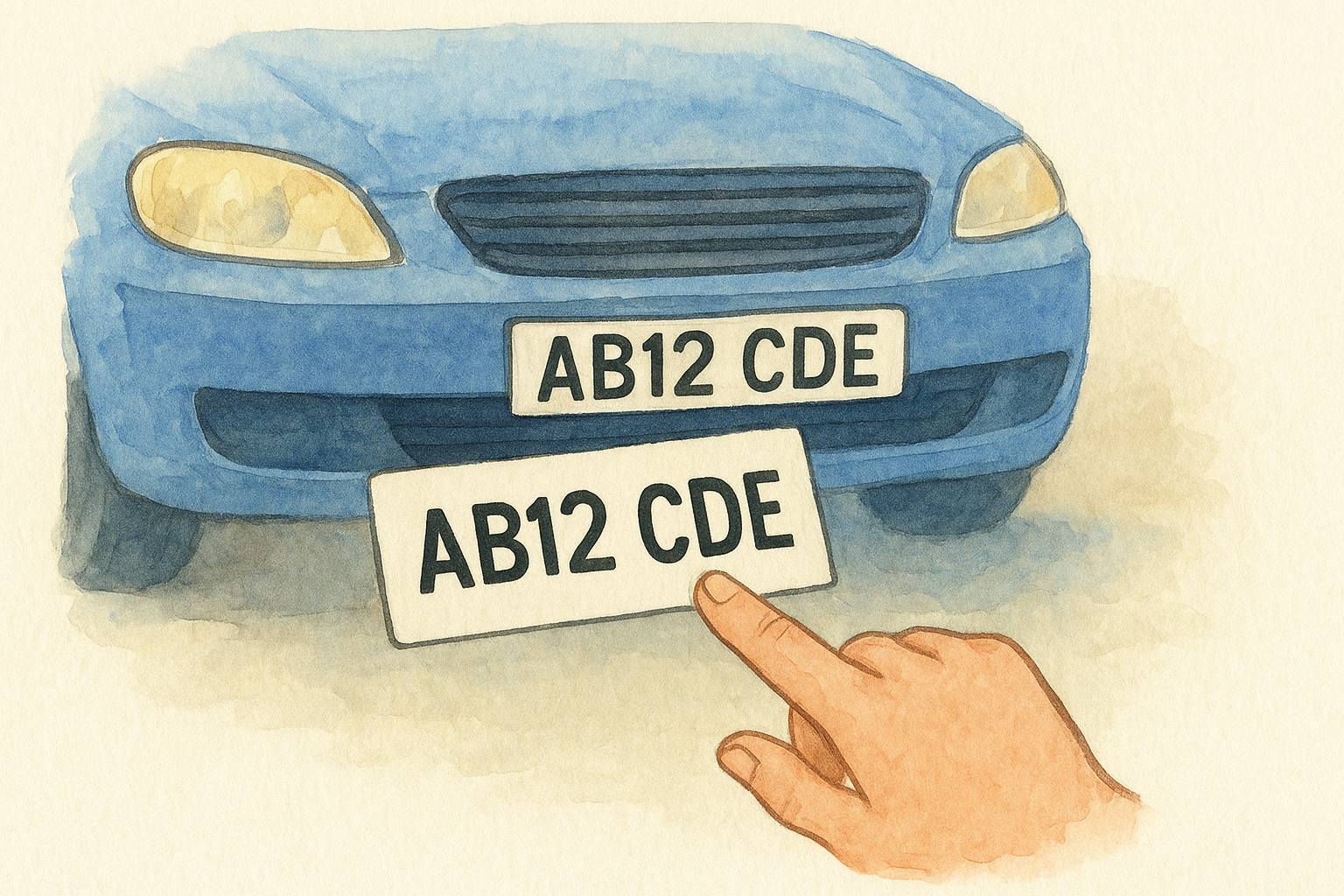
Where to find it if you're not viewing the car yet
If you're browsing an online listing rather than standing next to the car, look for the reg in the advert photos or description. Reputable sellers on sites like AutoTrader or Facebook Marketplace usually show it clearly, sometimes with a small blur that you can zoom into. If a seller refuses to share the registration before you view the car, treat that as your first warning sign.
No plate, no deal, a seller who won't share the reg is hiding something.
Double check for accuracy
A quick way to confirm you've copied it correctly:
- Compare the plate photo against what you've typed, character by character
- Watch out for easily confused characters like O and 0, or I and 1
- Cross-reference the reg against the V5C logbook details online if the seller has shared it
Step 2. Choose a reliable free car check service
Not every site calling itself a free car check actually pulls from official records, so it pays to know the best free car check sites in the UK. Some scrape outdated data, others bury the free option behind a paywall after you've already entered your reg. Picking the right service from the start saves you time and stops you handing over card details for information that should cost nothing.
What to look for in a checker
A trustworthy checker should tick these boxes before you trust its results:
- Sources data directly from the DVLA rather than third-party guesswork
- Shows MOT, tax and vehicle details without asking for payment first
- Displays a sample report so you know what premium checks include
- Has clear information about who runs the site and where the data comes from
If a checker asks for payment before showing basic details, it's not really free.
Why Vehiclepedia fits the bill
Vehiclepedia runs its free checks against official DVLA and police databases, so the registration number check you run gives you genuine, current results rather than cached data from months ago. You can also preview a sample premium report first, so you know exactly what you'd be paying for if you ever need deeper checks like finance or write-off status.
Step 3. Run your free registration check
With the reg confirmed, head to your chosen checker and enter it into the search box exactly as it appears on the plate. Most tools, including Vehiclepedia's free car check, only need the registration number itself, no email address, no payment card, no account creation. Within a few seconds you'll get a results page pulling live data straight from the DVLA.
The basic process
Here's what running the check actually looks like in practice:
- Type the registration number into the search field, using capital letters and the correct spacing.
- Confirm the vehicle shown matches the make and model you expected.
- Review the free summary, covering MOT status, tax status, colour, and engine size.
- Note any flags or mismatches before you move on to arranging a viewing.
A genuine free check car registration tool never asks for card details before showing basic results.
Watch for mismatched details early
Generally, the vehicle details displayed should match what the seller told you and what's printed on the V5C. If the make, model or colour on screen doesn't line up with the car in front of you, stop and ask questions before going any further.
Step 4. Read and understand your results
Once your free registration check loads, you'll see a summary broken into clear sections rather than one long block of text. Reading it properly matters as much as running the check in the first place, since a rushed glance can miss a warning sign buried in the detail.
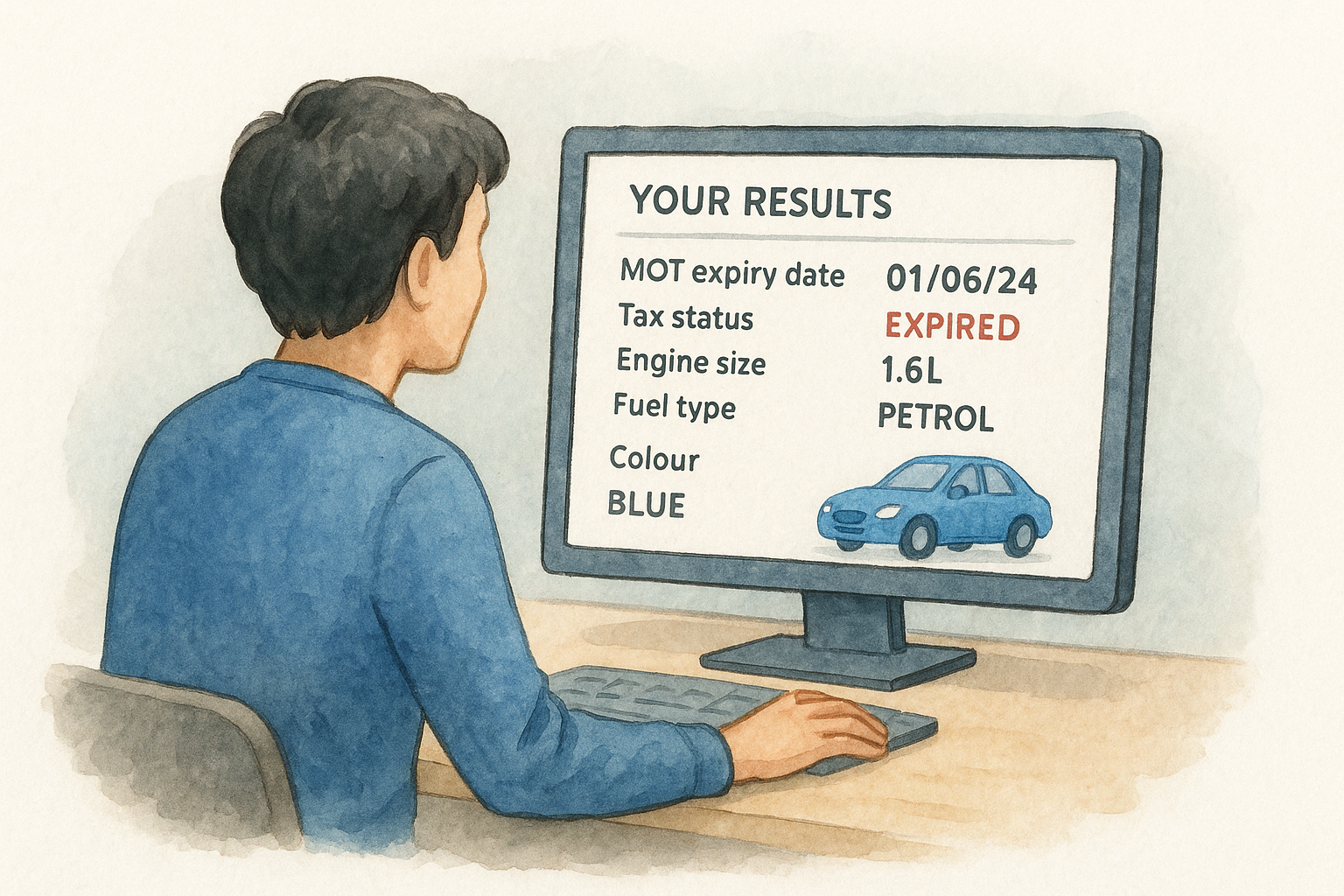
What the free results tell you
Focus first on the basics: MOT expiry date and test history, current tax status, engine size, fuel type, and colour history. If the car has changed colour more than once, or the tax status shows as SORN when the seller claims it's road-ready, question it before you go further.
Reading your results properly is just as important as running the check itself.
When to consider a premium report
While the free check covers the essentials, it won't confirm finance, theft, or write-off status. Yes, that's where a premium report earns its keep, especially for cars priced above a few thousand pounds, and it's worth seeing how much each level of check costs.
| Detail | Free check | Premium report |
|---|---|---|
| MOT and tax status | Yes | Yes |
| Mileage history | Yes | Yes |
| Outstanding finance | No | Yes |
| Stolen vehicle flag | No | Yes |
| Write-off category | No | Yes |
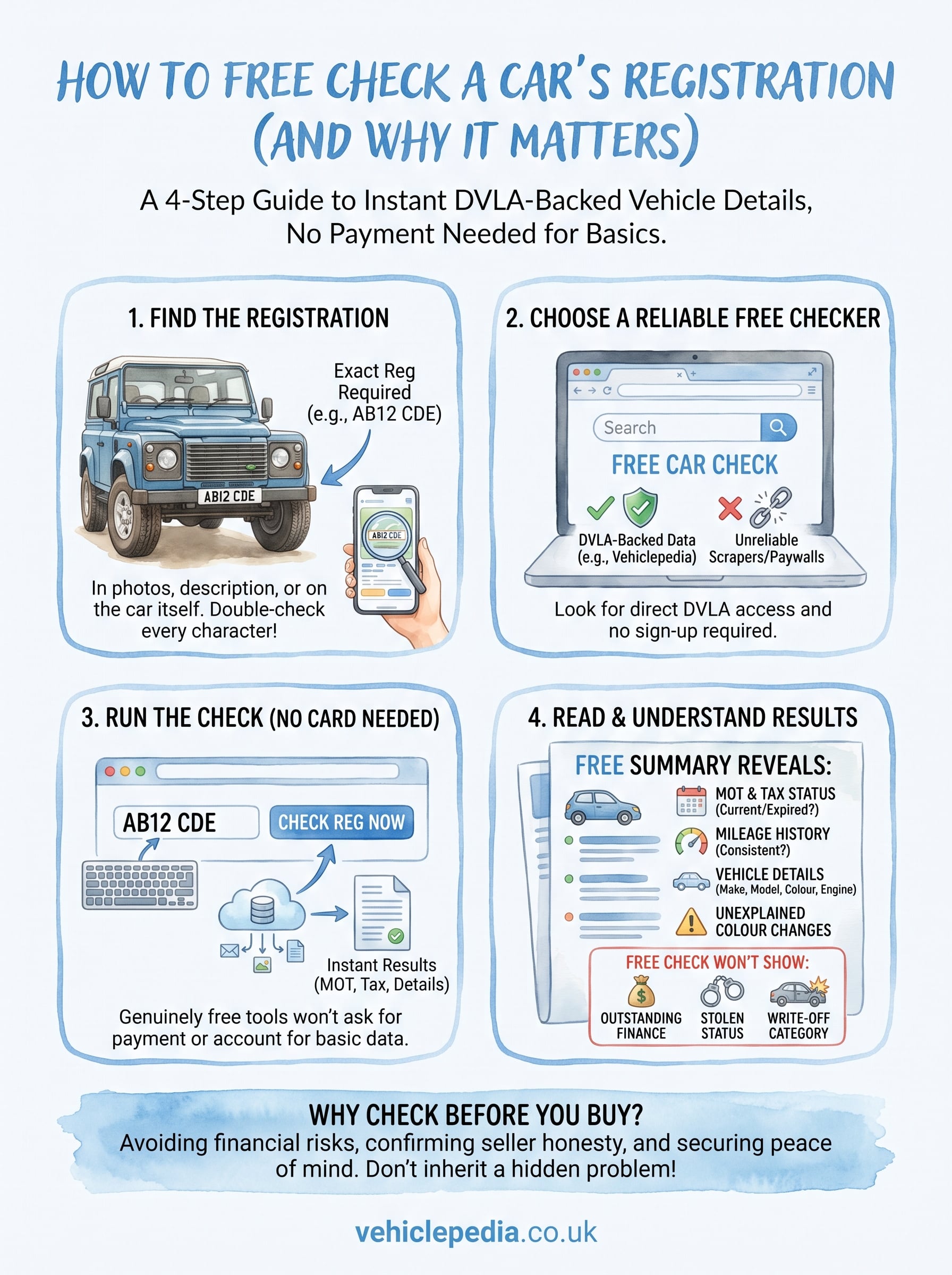
Know exactly what you're buying
Running a free check car registration search takes less time than making a cup of tea, and it puts real facts in your hands instead of a seller's word. You now know how to find the reg, pick a trustworthy checker, run the search, and read what comes back without missing a warning sign.
Starting with the free basics is smart, but a car worth several thousand pounds deserves more than MOT and tax status alone. Finance, theft, and write-off records only show up in a premium report, and given what's at stake, that's a small price for genuine peace of mind.
Before you commit to anything, take a look at what a full report actually contains. See what a full premium vehicle report includes, then decide if it's worth the extra step for the car you're about to buy.