How Long Does SORN Last? What Ends or Renews It
Find out how long does SORN last, what four actions cancel it, and how to check a car's SORN status free before you buy.
How Long Does SORN Last? What Ends or Renews It
You've taken a car off the road and declared a SORN, but now you're wondering when it actually expires and whether you need to do anything about it. That's a fair question, because the rules around how long does sorn last trip up a lot of car owners, especially those buying a vehicle that's been sitting unused for months or years.
Here's the short answer: a SORN doesn't have an expiry date in the way your MOT or tax disc does. It stays active indefinitely until something changes, such as you selling the car, taxing it again, or scrapping it. There's no annual renewal required, but there are specific triggers that end it automatically, and missing them can land you with a DVLA penalty even if you never intended to drive the car.
In this article, we'll walk through exactly what keeps a SORN valid, what circumstances cancel it without you doing anything, and what you need to check if you're buying a used car that's currently SORN'd. Understanding this matters if you want to avoid inheriting someone else's paperwork problem.
Why the length of a SORN matters for your car
Understanding how long does sorn last isn't just a technicality, it directly affects your legal obligations and your wallet. Because a SORN has no fixed end date, it's tempting to assume you can forget about the car entirely once you've declared it. That assumption causes problems. The declaration only protects you from tax and insurance requirements for as long as the vehicle stays exactly where you left it, off any public road, and you don't do anything that legally cancels the notice without realising it.
No expiry date, but real consequences for getting it wrong
A SORN vehicle doesn't need road tax and doesn't need insurance under the Continuous Insurance Enforcement rules, but that exemption only holds while the car sits on private land such as a driveway, garage, or private field. Move it onto a public road, even to push it a few metres to make space, and you're technically breaking the law. The DVLA penalty for keeping an untaxed, SORN vehicle on the public road starts with a fixed penalty notice, but it can escalate to a court fine of up to £2,500 if it ends up before a magistrate. That's a steep price for a car you thought was safely parked and forgotten.
A SORN protects you only while the car never touches a public road, not for a fixed length of time.
What happens if you ignore it for years
There's no time limit on how long a SORN can run, which is exactly why some owners leave vehicles declared for five, ten, even fifteen years without issue. The DVLA doesn't chase you to renew anything or confirm the car still exists. But this long-term inertia creates its own risks. Vehicles left SORN for extended periods often deteriorate, batteries die, tyres perish, and paperwork like the V5C logbook gets misplaced. If you eventually want to sell or drive the car again, you'll need a valid MOT before you can tax it, and an old, neglected vehicle may fail badly enough that repairs cost more than the car is worth.
How SORN length affects buyers and sellers differently
If you're selling a SORN'd car, the length of time it's been off the road matters to buyers, because it hints at the car's condition and how much recommissioning work lies ahead. If you're buying one, you need to know exactly when the SORN was declared and whether it's still valid, since a lapsed or improperly transferred SORN can leave you liable for fines you didn't cause. The table below sums up what stays constant regardless of how long the SORN has run, and what depends on the specific circumstances.
| Aspect | Stays the same however long SORN runs | Depends on individual circumstances |
|---|---|---|
| Expiry date | None, it's indefinite | N/A |
| Tax requirement | Exempt while off-road | Becomes due the moment it's taxed or sold |
| Insurance requirement | Exempt under CIE rules | Void if vehicle touches a public road |
| MOT validity | Not required while SORN | Needed again before re-taxing |
| Penalty risk | Applies if rules are broken | Severity depends on how it's broken |
Knowing this distinction, between what never changes and what depends on your specific situation, is the key to using a SORN properly instead of treating it as a set-and-forget solution.
How to check whether a car is currently on SORN
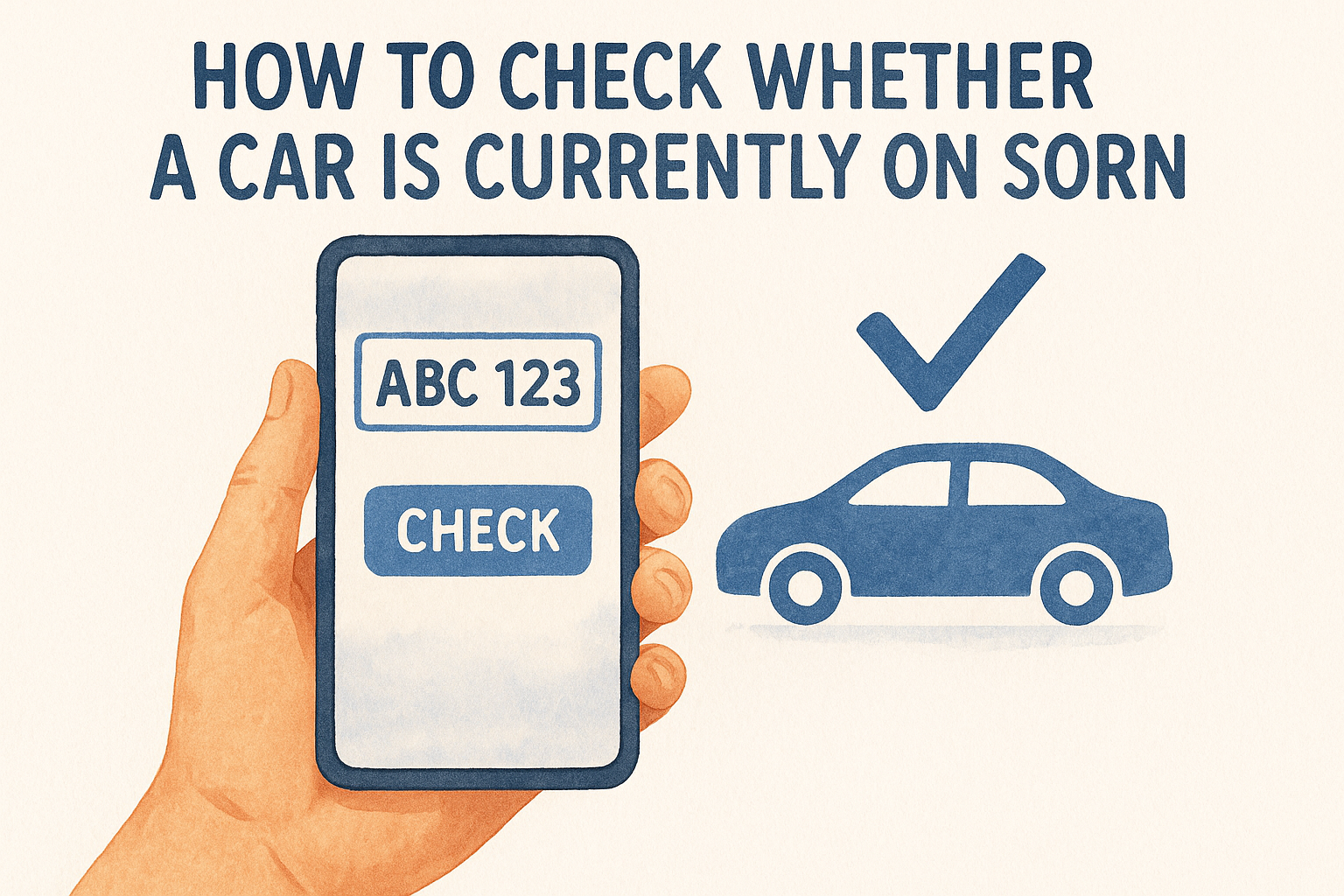
Checking whether a car currently has a SORN declared against it takes about thirty seconds and costs nothing. You don't need an account, a login, or any paperwork from the seller. All you need is the vehicle registration number, and you can run the check straight from your phone before you even view the car in person.
Using the free government vehicle enquiry service
GOV.UK runs a free vehicle information service that shows whether a car is taxed, SORN'd, or has neither status, straight from the DVLA's own records. Here's how to use it:
- Go to the Vehicle Enquiry Service on GOV.UK
- Enter the registration plate exactly as it appears on the car
- Review the result screen, which shows tax status, SORN status, MOT expiry, and CO2 details
- Note the date shown next to the SORN declaration, since this tells you when it was registered, not when it expires
What the result actually tells you
The result page will simply state that the vehicle is "not currently taxed" and give a SORN declaration date, rather than showing a countdown or expiry date, because none exists. This confuses a lot of buyers who expect to see how much time is "left" on the SORN. There isn't one. What matters is whether the declaration date lines up with what the seller has told you, and whether the vehicle has stayed off public roads since then. If the seller claims the car has been SORN for two years but the result shows a declaration from three weeks ago, that's a red flag worth asking about.
The SORN check won't show an expiry date because there isn't one, only a declaration date and current status.
Why checking before you buy matters
Doing this check before you hand over any money protects you from inheriting a problem that isn't yours. Sellers sometimes forget, or deliberately avoid mentioning, that a car has been sitting SORN with no MOT for years, which means you'll face testing and repair costs before you can legally drive it away. Running a full vehicle history check alongside the free SORN status confirms not just whether the car is off the road, but also flags MOT history, mileage, and outstanding finance, giving you a much clearer picture before you commit.
What automatically ends a SORN
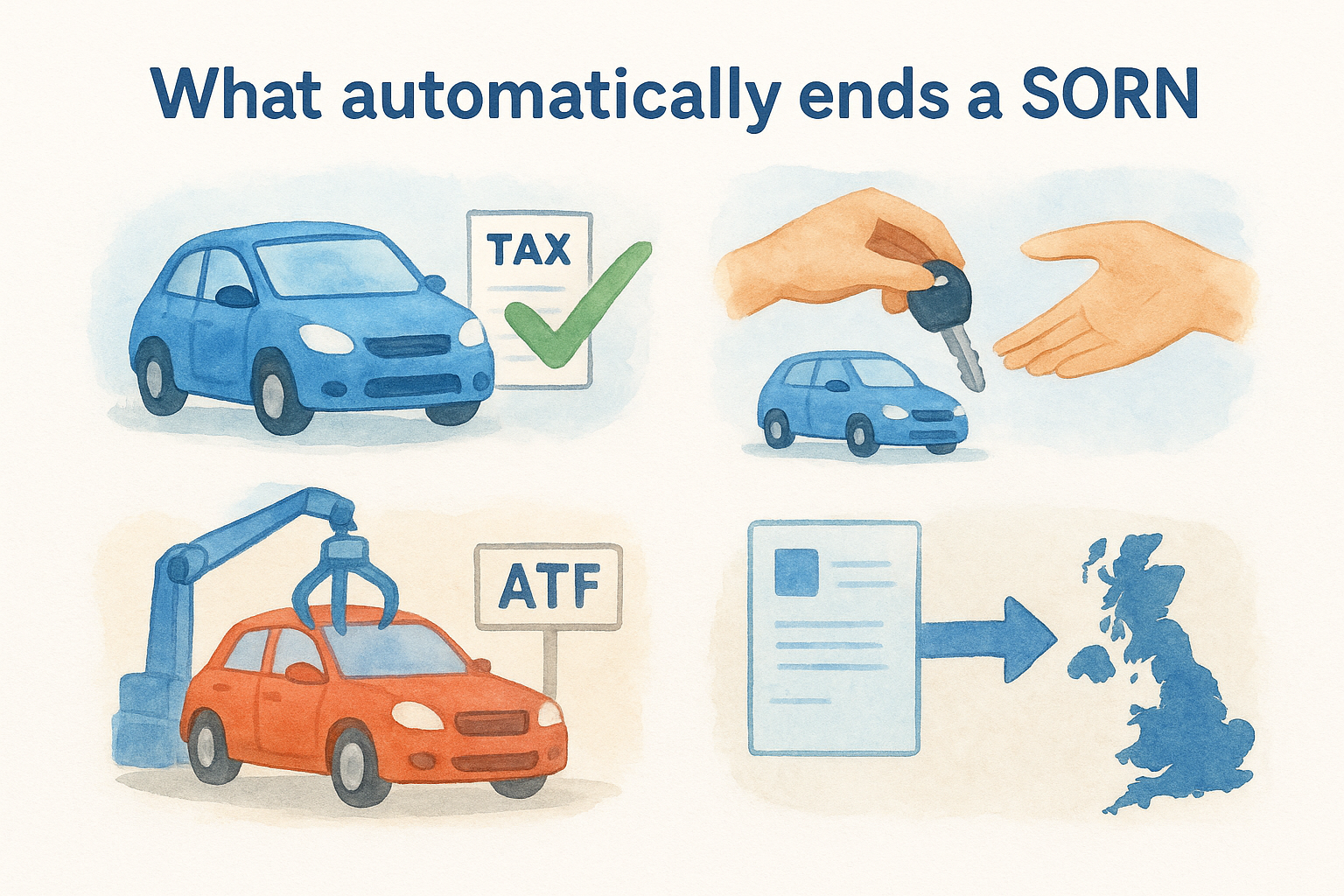
A SORN doesn't fade away on its own, but four specific actions cancel it the moment they happen. Knowing these triggers matters because some of them end the declaration without you filling in a single form, which catches out plenty of owners who assume nothing changes until they say so.
Taxing the vehicle cancels it instantly
Once you tax the car again, whether that's because you're putting it back on the road or you've sold it to someone who's doing so, the SORN ends automatically at that exact point. You don't need to notify the DVLA separately that the SORN is over, the tax declaration itself does the job. This is the most common way a SORN closes, and it's worth remembering that you can't tax a vehicle without a valid MOT if one's due, so factor that into your timing.
Selling or transferring ownership ends it too
When you sell the car, the SORN doesn't transfer with it. The moment you notify the DVLA of the sale using the V5C logbook, the existing SORN is cancelled against your name. The new owner then has to make their own decision, either tax the vehicle straight away or declare a fresh SORN in their own name within the legal window. This is a point buyers often miss.
Selling a car doesn't pass on the SORN, the buyer has to declare their own.
Scrapping or exporting closes it permanently
Two other actions end a SORN for good rather than just pausing it:
- Scrapping the vehicle through an Authorised Treatment Facility, which notifies the DVLA and closes the record entirely
- Exporting the vehicle permanently out of the UK, which also cancels the SORN once the DVLA processes the export notification
Both of these are final, there's no going back to the same SORN once either happens.
A quick reference for what ends the notice
| Trigger | Effect on SORN |
|---|---|
| Taxing the car | Cancelled instantly |
| Selling the car | Cancelled for the seller, buyer must act |
| Scrapping via ATF | Closed permanently |
| Exporting the vehicle | Closed permanently |
Outside these four events, the declaration simply keeps running, however long that turns out to be.
Does a SORN ever need renewing
No, a SORN doesn't need renewing under the current system, and that's the single biggest source of confusion when people ask how long does sorn last. The rules changed back in 2013, and since then a SORN simply carries on indefinitely once you've declared it, with no annual paperwork, no reminder letter to act on, and no deadline to hit. If you've heard otherwise, you're probably thinking of the old system, or you've been given outdated advice by someone who last dealt with a SORN over a decade ago.
Why older advice still causes confusion
Before the change, owners had to renew their SORN every 12 months using a paper form, and missing that renewal meant the exemption lapsed automatically. That system caused genuine problems, because people forgot, letters went missing, and cars ended up technically untaxed and uninsured without the owner realising. The DVLA scrapped that requirement precisely because it generated so many accidental penalties. Plenty of secondhand advice online, and even from well-meaning family members, still repeats the old rule, so it's worth double-checking any guidance that mentions renewing a SORN yearly.
A SORN declared today runs indefinitely, with nothing to renew and no deadline to miss.
What you actually need to watch instead
Rather than tracking a renewal date, focus on the events that genuinely change your SORN's status:
- Selling the car ends your SORN and starts the buyer's obligation to act
- Taxing the vehicle cancels the SORN the moment you do it
- Moving the car onto a public road breaks the terms even though it doesn't formally end the SORN
- Scrapping or exporting closes the record permanently
None of these run on a fixed schedule, so there's nothing to diary in advance beyond your own plans for the vehicle.
The practical takeaway
Once declared, a SORN just sits there quietly protecting you from tax and insurance requirements for as long as you leave the car exactly where it is. There's no clock ticking down, no letter demanding renewal, and no fee to pay to keep it valid. The only thing that changes its status is you, or whoever takes ownership next, taking one of the actions above.
Buying a car that's on SORN: what it means for you
Buying a car that's currently on SORN is common, especially with older vehicles, restoration projects, or cars that have sat unused during a long repair or probate delay. The price often reflects that status, since a SORN'd car usually needs work before it's roadworthy again. But the moment you agree to buy it, legal responsibility shifts to you, and that includes making sure you don't accidentally break the rules just getting the car home.
Getting the car home without breaking the law
Because the SORN doesn't transfer with the sale, you can't simply drive the car away on a public road under the seller's declaration or your own assumption that it's fine. You need valid insurance and tax in place before the wheels touch tarmac, or you need to transport it another way, such as on a trailer or recovery truck. Some buyers tax the vehicle the same day they collect it, provided it has a valid MOT, which lets them drive it home legally under their own cover.
You can't legally drive a SORN car home, even for five minutes, without insurance and tax first.
What to check before you hand over money
Before you pay anything, confirm a few basics directly with the seller and against the vehicle's paperwork:
- MOT history, since an expired or long-lapsed MOT means you can't tax the car until it passes a fresh test
- V5C logbook, checked against the seller's name and address to avoid buying from someone who isn't the registered keeper
- How long it's actually been SORN, compared against the declaration date from the free government check
- Condition after storage, particularly tyres, brakes, and the battery, which often suffer during long lay-ups
Skipping these checks is how buyers end up with an MOT failure bill on top of the purchase price.
Declaring your own SORN or taxing it straight away
Once the sale goes through, you have two options and no middle ground. Either tax the vehicle immediately if you plan to use it, or declare a new SORN in your own name if it's staying off the road for now. There's a short statutory window to do this after the sale, and leaving the vehicle in limbo, neither taxed nor SORN'd, is exactly the gap that attracts a DVLA penalty, regardless of whether you intended to drive it.
Keeping track of your SORN status
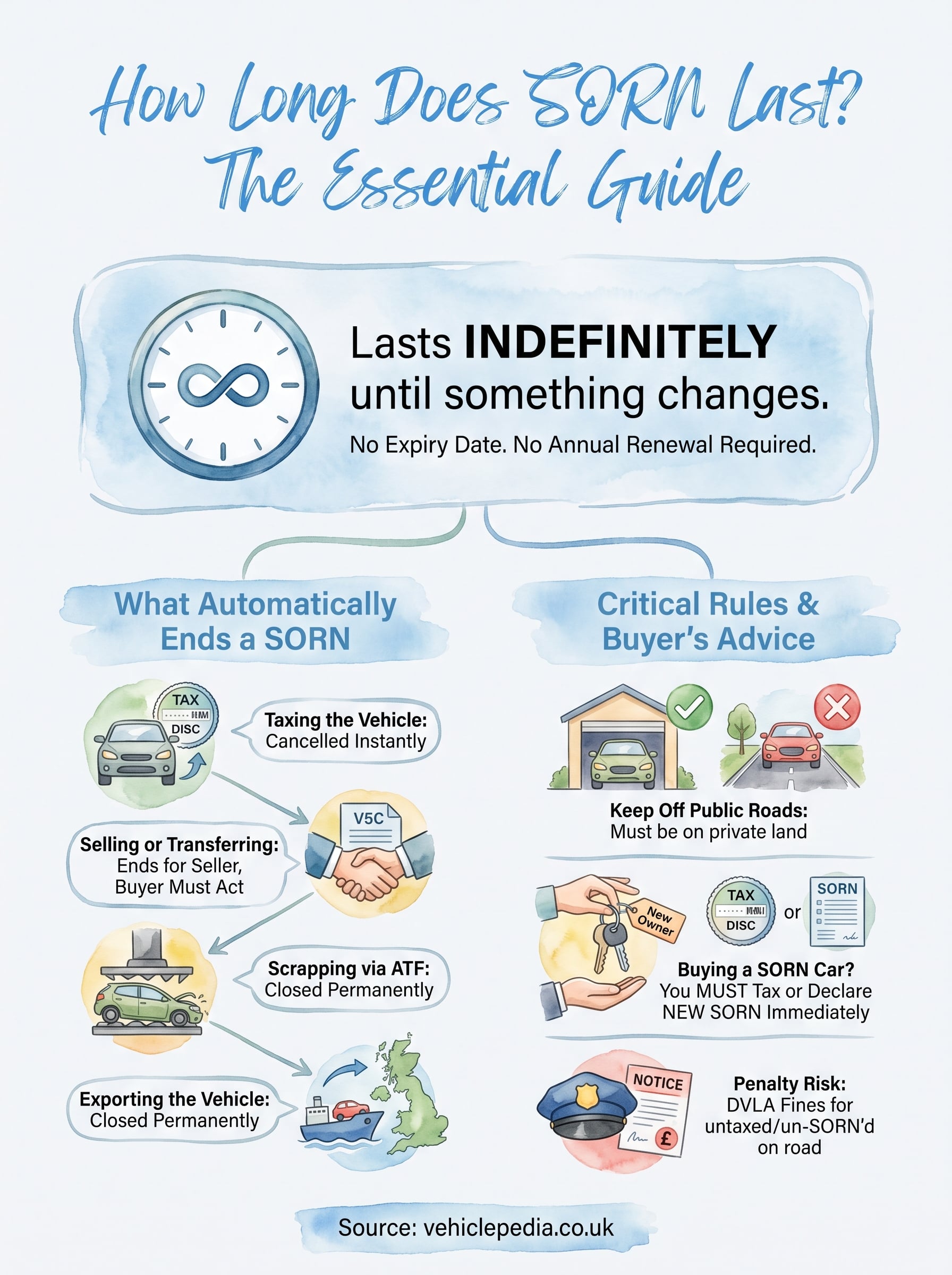
So, how long does sorn last? Indefinitely, until you tax it, sell it, scrap it, or export it. There's no renewal date to remember and no annual paperwork to chase, but that doesn't mean you can ignore the car entirely. Regular checks on the free government service cost you nothing and take seconds, and they're worth doing whenever you're buying a SORN'd vehicle or checking on one you've owned for years.
Before you commit any money to a car that's been sitting off the road, look past the SORN status alone. A full history check covers MOT records, mileage, outstanding finance, and write-off markers, all the things a simple SORN lookup won't tell you. That's exactly the gap Vehiclepedia fills. Have a look at a sample vehicle history report before you buy, so you know precisely what you're getting into with a car that's been parked up and forgotten.