Check If A Car Is Written Off: Reg Lookup & Cat Codes
Learn how to check if car is written off using a reg lookup. Understand salvage category codes and find hidden history to avoid risky used car purchases.

Check If A Car Is Written Off: Reg Lookup & Cat Codes
Buying a used car without knowing its full history is a gamble, and one of the biggest risks is unknowingly purchasing a vehicle that's been declared an insurance write-off. If you want to check if a car is written off, you need to know where to look, what the category codes mean, and how to interpret the results before handing over any money.
A written-off car isn't always a lost cause, but hidden write-off history can affect safety, value, and insurability. Some sellers won't mention it. Others genuinely don't know. Either way, the responsibility falls on you as the buyer to verify.
This guide walks you through exactly how to check a vehicle's write-off status using its registration number, explains the Cat A, B, S, and N categories, and shows you how tools like Vehiclepedia's vehicle history check can surface this information quickly, so you can buy with confidence, not crossed fingers.
What a write-off is and what cat codes mean
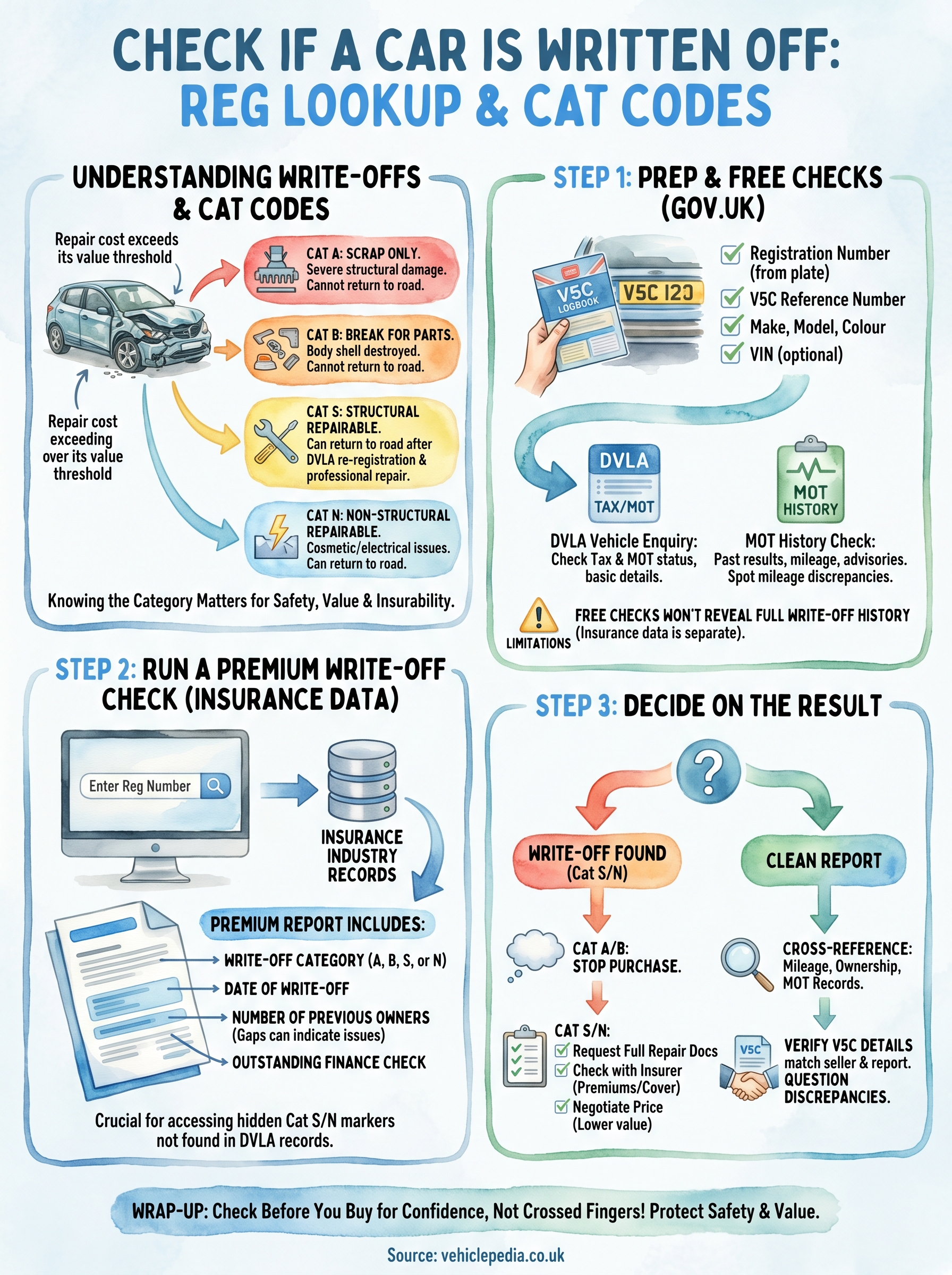
An insurer declares a vehicle a write-off when the cost to repair it exceeds a certain threshold relative to its market value, or when the damage makes it too dangerous to put back on the road. This typically happens after accidents, floods, fire damage, or theft recovery. The car then gets assigned a salvage category code, which tells you exactly what happened and whether the vehicle can legally return to public roads.
The four categories explained
Not all write-offs are the same, and understanding the category system is essential before you check if a car is written off and act on the result.
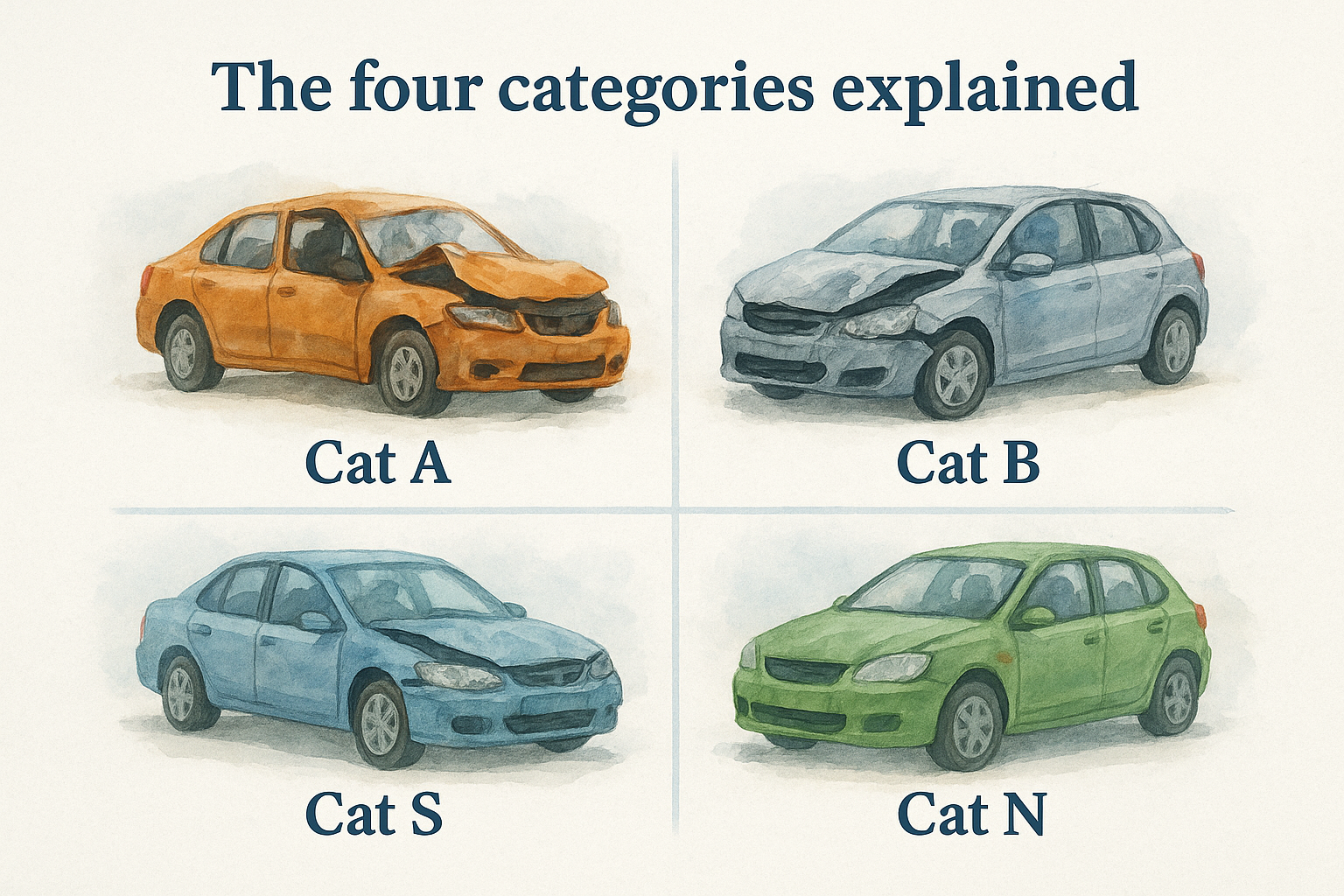
| Category | What it means | Can it return to the road? |
|---|---|---|
| Cat A | Scrap only. Severe structural damage. The car must be crushed entirely. | No |
| Cat B | Body shell must be destroyed, but some parts can be salvaged. | No |
| Cat S | Structural damage that a qualified repairer can restore to a roadworthy standard. | Yes, after DVLA re-registration |
| Cat N | Non-structural damage only, such as electrics or cosmetic issues. | Yes, no re-registration required |
A Cat A or Cat B vehicle listed for sale is a serious legal red flag. Both categories are prohibited from returning to the road under any circumstances.
Why the category matters to you as a buyer
Purchasing a Cat S or Cat N vehicle is perfectly legal, and some represent solid value when repaired correctly. However, you need that information upfront, not after you've signed. A Cat S car must be disclosed to your insurer, and many will charge higher premiums or decline cover entirely. A Cat N car carries lower structural risk, but unresolved electrical or mechanical faults can still leave you with significant repair bills once you own it.
Before you start: get the right details
Before you run any kind of check, you need the correct vehicle registration number and ideally a few supporting details to verify the results match the car in front of you. Getting this wrong at the start wastes time and, in some cases, can lead you to pull data on a completely different vehicle.
What to collect before you search
The registration plate is the primary piece of information every check relies on. Pull it directly from the physical plate on the car, not from a listing or advert, since sellers occasionally make errors or list older plates. If you have access to the V5C logbook, cross-check that the registration printed there matches the plate on the vehicle.
Here's a quick checklist of what to have ready before you begin:
- Registration number (from the physical plate on the car)
- V5C reference number if you have access to the logbook
- Make, model, and colour to verify the returned data matches the vehicle
- VIN (Vehicle Identification Number) for premium checks that go deeper
Always verify the registration against the V5C before you check if a car is written off, as mismatched details between the two are a warning sign in themselves.
Step 1. Do the free checks first
Before you pay for anything, start with the free tools available from official UK government sources. These checks won't reveal full insurance write-off history, but they flag obvious problems and help you build a baseline picture of the vehicle before spending a penny.
Free checks won't tell you everything, but they can rule out a car before you invest in a premium report.
What free checks actually cover
The DVLA's free vehicle enquiry service at gov.uk lets you look up tax status, MOT expiry, and basic registration details using the reg plate alone. Run this first because any discrepancies in make, model, or colour compared to what the seller is showing you are immediate warning signs worth investigating further.
Here's what to check for free before anything else:
- DVLA vehicle enquiry (gov.uk) - tax status, MOT expiry, basic vehicle details
- MOT history check (gov.uk) - past test results, mileage readings, and advisory notes
- Mileage comparison - cross-reference recorded mileage across MOT tests to detect potential clocking
These steps take five minutes and help you check if a car is written off or otherwise problematic before committing further.
Step 2. Run an insurance write-off check by reg
Free government tools won't reveal write-off history because that data sits in insurance registers, not DVLA records. To properly check if a car is written off, you need a premium vehicle history check that queries insurance databases directly using the registration number.
A vehicle can pass every free check and still carry a hidden Cat S or Cat N marker that only an insurance database lookup will surface.
What a premium write-off check includes
A full history report using the reg plate pulls data from insurance industry records and flags whether the vehicle has ever been declared a total loss, along with the specific salvage category assigned. Run the check on Vehiclepedia and enter the registration number exactly as it appears on the plate.
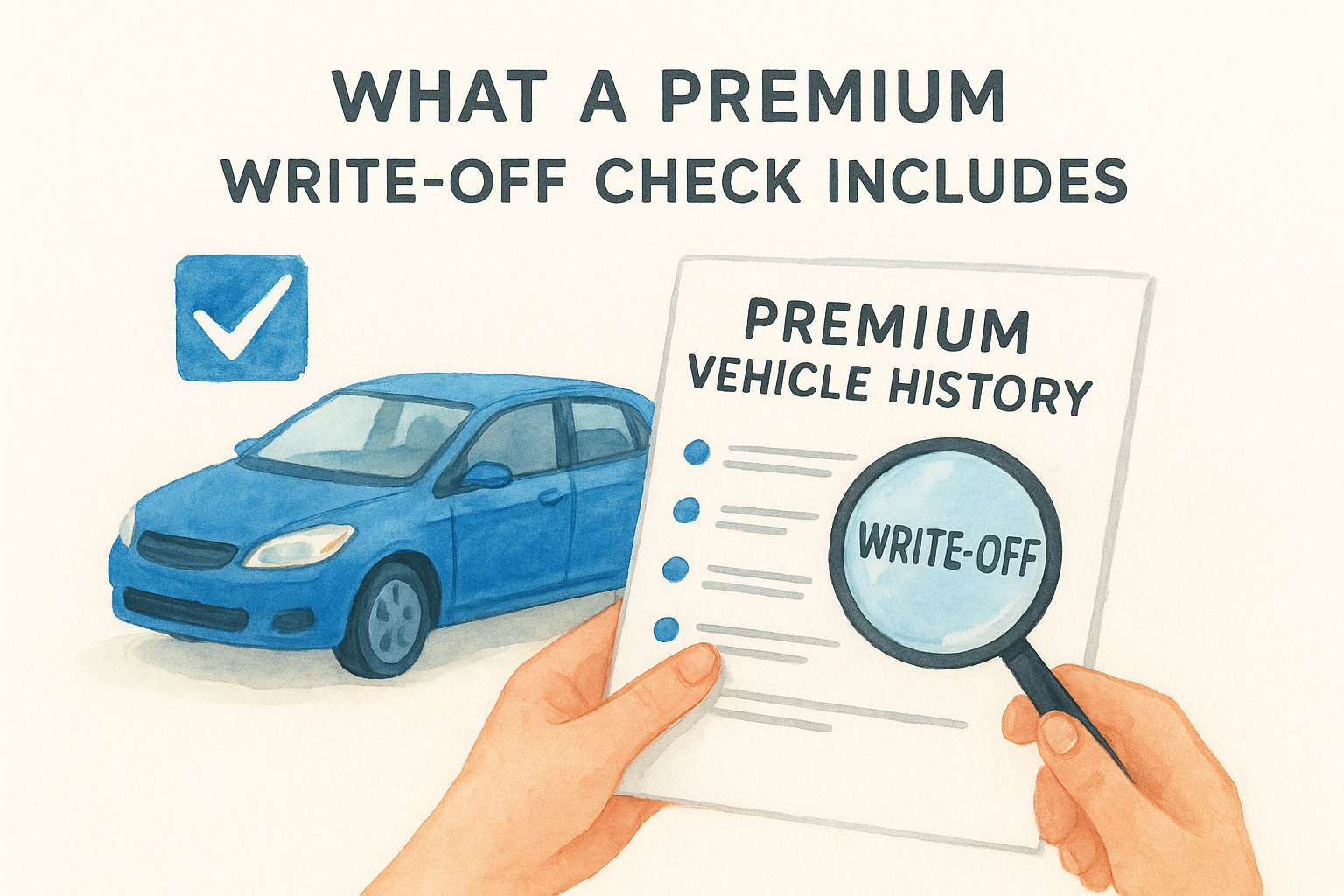
Once you get the results, look for these specific pieces of information in the report:
- Write-off category - Cat A, B, S, or N
- Date of the write-off - helps you assess how long ago the damage occurred
- Number of previous owners - a gap in ownership history can indicate an undisclosed write-off period
- Outstanding finance - commonly found alongside write-off history on problem vehicles
Step 3. Decide what to do with the result
Once you have the report, you need to act on what it shows. A clean result doesn't mean you ignore everything else, and a write-off marker doesn't automatically mean you walk away.
If the report shows a write-off
When you check if a car is written off and the result returns a Cat S or Cat N marker, your next step depends on the category and the asking price. A Cat A or Cat B result means you stop the purchase entirely. These vehicles cannot legally return to the road.
Never let a seller dismiss a write-off result as minor without documented proof of professional repairs.
For Cat S or Cat N vehicles, take these steps before deciding:
- Request full repair documentation from a qualified repairer
- Ask your insurer whether they will cover the vehicle and at what premium
- Negotiate the asking price to reflect the write-off status and reduced resale value
If the report comes back clean
A clear report is a positive sign, but treat it as one piece of evidence, not the final word. Cross-reference the mileage, ownership history, and MOT records from your earlier checks to confirm everything aligns.
Also verify the V5C details match what the seller has told you. Any discrepancy between the logbook and the report is worth questioning before you hand over money.
Wrap-up
Knowing how to check if a car is written off before you buy protects you from overpaying, from insuring a vehicle your provider won't cover, and from driving something that was never properly repaired. The category codes matter, the repair documentation matters, and so does verifying that the registration matches the logbook before you go any further.
Running a free government check first, then following up with a premium history report, gives you the full picture. You won't find write-off data in DVLA records alone, which is why using an insurance database lookup is a non-negotiable step in any serious used car purchase.
Before you make an offer on any used car, put the registration into Vehiclepedia's vehicle history checker and see exactly what the data shows. You can even preview a sample premium report before you commit, so you know precisely what information you're getting.