How To Check If A Car Is Stolen Online In The UK (Reg & VIN)
Learn how to check if a car is stolen using a registration or VIN. Use official databases, check V5C records, and inspect VINs to avoid buying a stolen car.
How To Check If A Car Is Stolen Online In The UK (Reg & VIN)
Buying a used car privately or from a smaller dealer always carries some risk, and one of the worst scenarios is unknowingly driving off in a stolen vehicle. If the police later recover it, you lose both the car and your money. Knowing how to check if a car is stolen before you hand over any cash is one of the smartest things you can do, and it's easier than most people think. A few quick checks using the registration number or VIN can flag serious red flags before they become expensive mistakes.
In this guide, we walk you through every method available in the UK, from free checks you can do right now to premium searches against the Police National Computer. We'll also cover the physical warning signs to look out for during a viewing. At Vehiclepedia, we pull data from official sources including the DVLA and UK police databases, so you can verify a vehicle's status in seconds using just its reg plate.
What you can and can't confirm online in the UK
Before you spend time or money on checks, it helps to understand what data is actually available in the UK and where its limits are. Knowing how to check if a car is stolen is partly about using the right tools, but it's also about recognising that no single online search gives you a complete picture. Some records are held in official databases that approved services can query; others rely on physical inspection that only you can carry out during a viewing.
What online checks can reveal
Online checks in the UK draw on databases maintained by organisations such as the DVLA, the Police National Computer (PNC), and the Insurance Write-Off Register. When you run a reg plate through a reputable checking service, you can typically confirm the following:
- Whether the vehicle carries a stolen marker on the Police National Computer
- Outstanding finance or loans secured against the car
- Whether an insurer has written it off, and under which category
- MOT history, mileage readings, tax status, and number of previous keepers
- Plate changes, colour changes, and import or export markers
A stolen marker on the PNC is one of the most reliable flags available, but it only shows up if the theft was formally reported to the police in the first place.
What you cannot confirm online
These databases only reflect what has been reported and recorded. A vehicle stolen abroad, never reported, or taken very recently may not yet carry a stolen marker. Similarly, cloned plates (where a criminal fits registration plates from a legitimate car onto a stolen one) can make a reg plate search look completely clean even though the physical vehicle is not. Verifying the VIN stamped onto the bodywork against the V5C logbook is the only reliable way to catch plate cloning, and that requires an in-person check. No database can confirm the number on your dashboard matches the one on the door pillar.
Step 1. Start with free DVLA, MOT and recall checks
The first part of learning how to check if a car is stolen costs nothing. Before you even view the car, run these three free government checks using just the registration plate. They take under five minutes and can immediately flag inconsistencies between what the seller tells you and what official records show.
DVLA vehicle enquiry
Using the DVLA's free vehicle enquiry service at gov.uk, you can confirm the car's make, colour, engine size, and current tax status in seconds. If the seller describes a 2019 black Ford Focus but the DVLA record shows a silver 2017 model, that is a serious warning sign. Cross-reference every detail the seller gives you against what this record returns.
MOT history check
Every recorded MOT result and mileage reading is stored on the DVSA's free MOT history tool, accessible at gov.uk using just the reg plate. Large mileage drops between tests suggest the odometer has been tampered with, which often accompanies stolen or cloned vehicles.
If the mileage on the dashboard is lower than a previous MOT reading, walk away immediately.
Vehicle recall check
Run the reg through the DVSA's vehicle recalls checker to confirm whether any outstanding safety recalls apply. An unresolved recall does not indicate theft, but a seller who is unaware of one may not know the vehicle's full history either.
Step 2. Verify the V5C, VIN and number plates in person
Online databases only take you so far. The physical checks you carry out during a viewing are just as important when thinking about how to check if a car is stolen, because cloned plates and mismatched VINs are things no database query will catch for you.
Check the V5C logbook
Ask the seller to show you the V5C registration document before you view the car. Confirm the name and address on the document match the seller's details, and check that the vehicle description, colour, and reg plate match exactly what you see in front of you. If the seller cannot produce a V5C or claims it is lost, treat that as a serious warning and walk away.
A V5C can be forged, so cross-reference every detail against what the DVLA vehicle enquiry returned in Step 1.
Match the VIN across multiple locations
The Vehicle Identification Number (VIN) is a 17-character code stamped into several locations on the car. Check each spot and confirm they all carry the same number before you proceed:
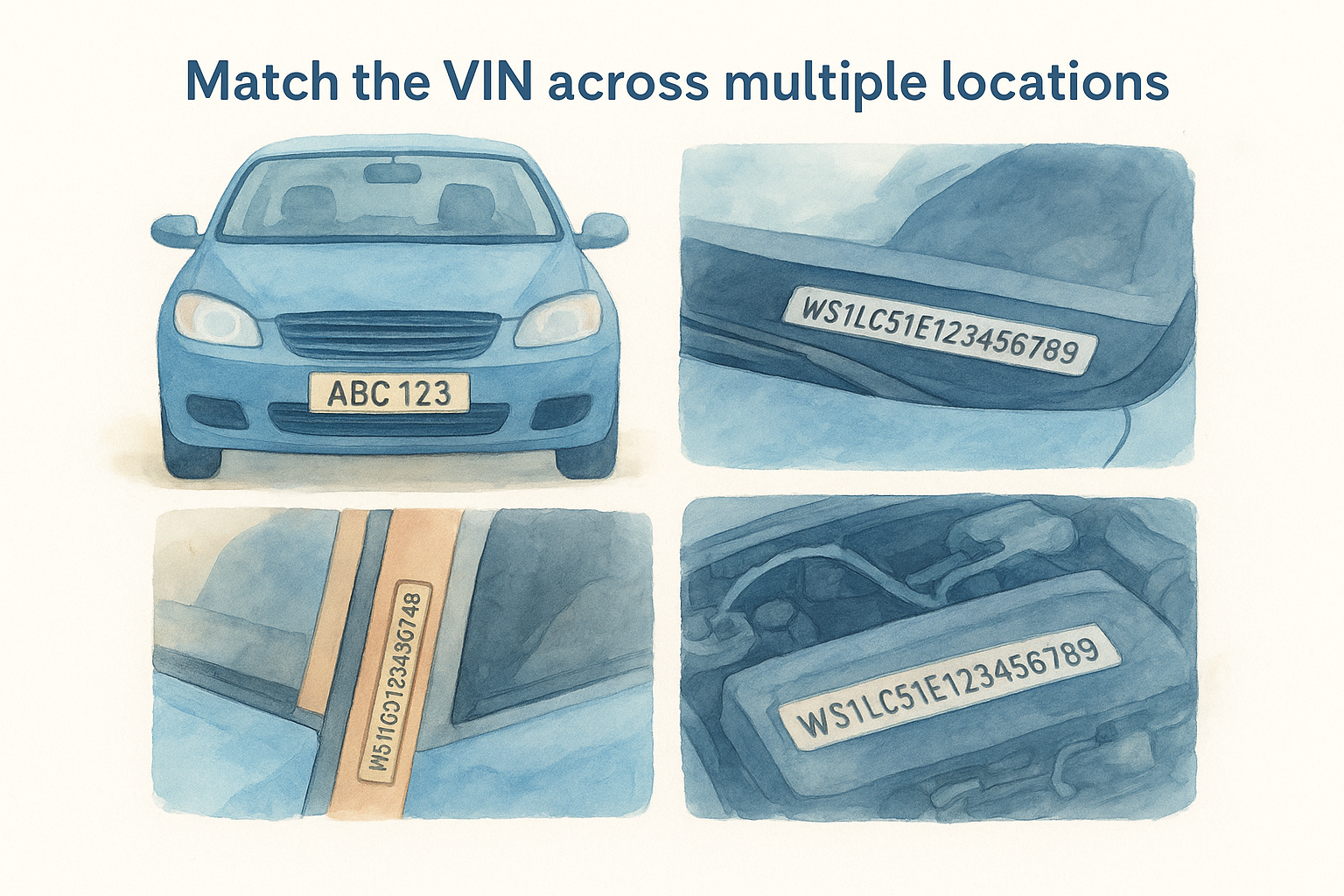
- Dashboard, visible through the windscreen on the driver's side
- Door jamb or door pillar on the driver's side
- Under the bonnet, on the engine bay or chassis plate
- Inside the V5C logbook
Any mismatch between these locations strongly suggests the car has been rebuilt from stolen parts or that its plates have been cloned onto a different vehicle.
Step 3. Use a stolen and finance check before paying
The free checks in Steps 1 and 2 reduce your risk significantly, but they don't query the Police National Computer directly. To fully understand how to check if a car is stolen, you need a dedicated vehicle history check that pulls from both the PNC and the Insurance Write-Off Register before any money changes hands.
What a premium check covers
A full vehicle history report queries several official data sources simultaneously, returning results you cannot piece together through free tools alone. Here is what a complete check typically covers:
| Data source | What it confirms |
|---|---|
| Police National Computer | Stolen marker against the reg plate |
| Insurance Write-Off Register | Category A, B, S, or N write-off status |
| Finance Register | Outstanding loans secured against the vehicle |
| DVLA records | Keeper history, plate changes, import markers |
Run the check before viewing, not after
Paying for a check after you've already viewed the car and agreed on a price leaves you emotionally committed to the purchase. Run the check using the reg plate the seller provides as soon as you receive the listing details. If the report returns a stolen marker, a finance flag, or a write-off category, you can cancel the viewing immediately and save yourself the trip.
Never pay a deposit or transfer any money before a full stolen and finance check has returned a clean result.
Step 4. What to do if you suspect the car is stolen
If your checks return a stolen marker, or if something during the viewing does not feel right, the way you handle the next few minutes matters. Knowing how to check if a car is stolen is only useful if you also know what to do when the answer points to serious trouble.
Do not confront the seller directly
Never accuse the seller to their face or let on that you have found anything suspicious. Make a polite excuse to leave, say you need more time to think it over, and remove yourself from the situation calmly. Confronting someone who may be handling a stolen vehicle puts your personal safety at risk, and it can also alert them to move the car before police arrive.
Leave the viewing without raising suspicion, then report everything you know from a safe location.
Report your suspicions to the police
Contact the police as soon as you are away from the seller. In a non-emergency situation, call 101 or submit a report online via the Action Fraud website. Provide the registration plate, VIN if you noted it down, the seller's contact details, and the address where the car is located. If you believe a crime is actively in progress, call 999 immediately. Keep a copy of all the details you gathered during your checks, as this information helps investigators act quickly.
A quick wrap-up before you buy
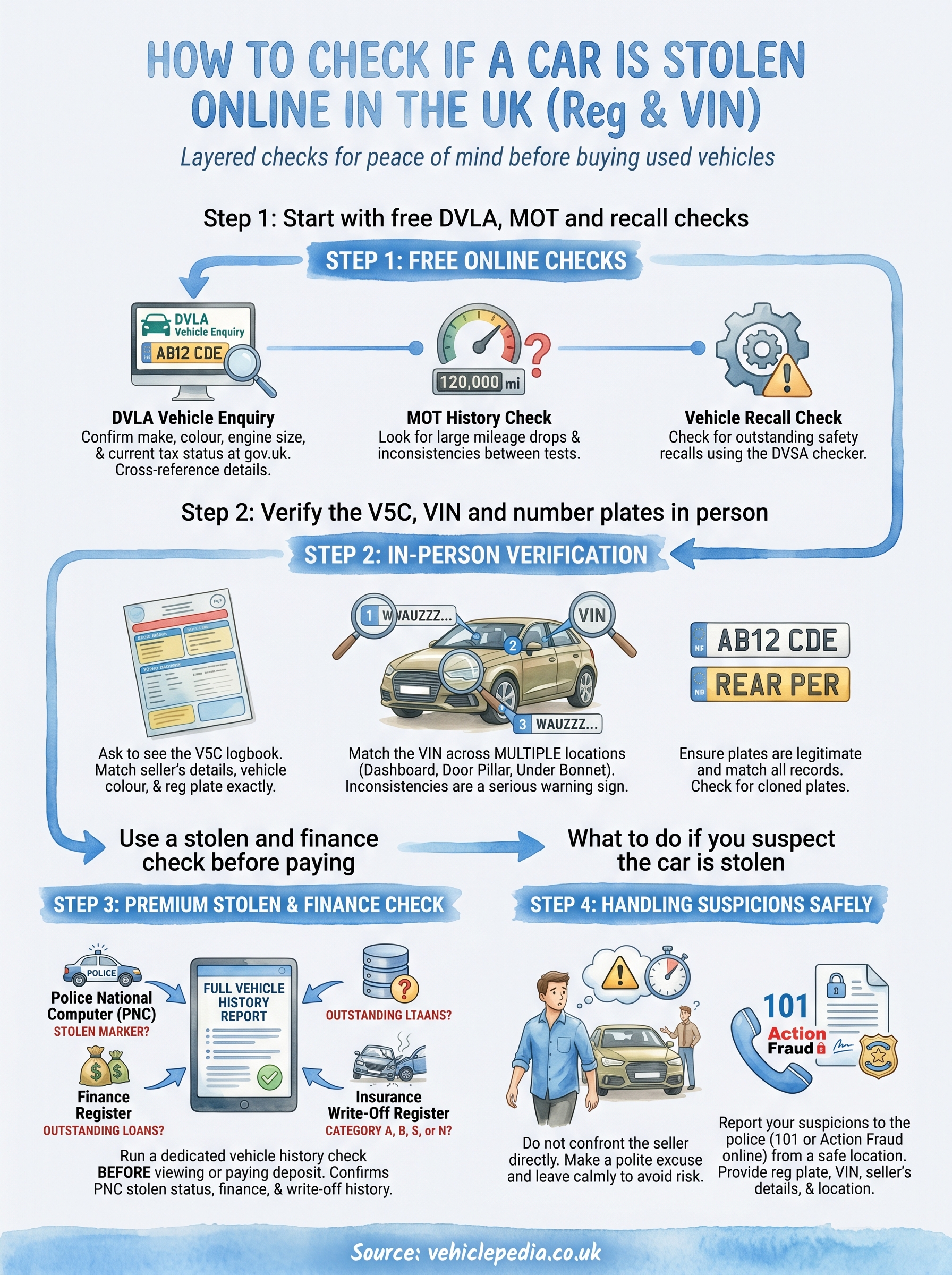
Knowing how to check if a car is stolen comes down to layering your checks correctly. Start with free DVLA and MOT history searches to catch obvious inconsistencies, then verify the VIN and V5C in person during the viewing. Run a dedicated stolen and finance check before you agree to any price or hand over any money. If any check returns a problem, leave calmly and report your findings to the police via 101 or Action Fraud.
Each step adds a layer of protection that the previous one cannot provide on its own. No single check is enough, but together they cover the most common ways criminals sell stolen vehicles. The whole process takes less than 30 minutes and can save you thousands of pounds and a great deal of stress.
See exactly what a full vehicle history report covers, including the stolen and finance check, by viewing a sample premium report on Vehiclepedia before your next viewing.