Reg Check NI: How to Check a Northern Ireland Car Registration
Run a reg check NI in 4 steps: verify the V5C, check MOT & tax status, then reveal finance or write-off history before you buy.
Reg Check NI: How to Check a Northern Ireland Car Registration
Northern Ireland plates follow a different format to the rest of the UK, and that trips people up more than you'd think. If you're staring at a registration like MDZ 1234 and wondering whether the usual DVLA lookup tools will actually work, you're not alone. Running a reg check ni search is the fastest way to confirm you're getting accurate results rather than guessing.
The short answer is yes, you can check a Northern Ireland registration using the same official data sources as GB plates, but you need to know which formats and databases actually cover NI vehicles. A proper car reg check ni pulls MOT history, tax status, and registration details straight from DVLA and DVA records, so you're not relying on a seller's word alone.
This guide walks you through exactly how to run a northern ireland car registration check, what information you'll get back for free, and when it's worth paying for a deeper report covering stolen vehicle checks or outstanding finance. Whether you're buying privately or from a dealer, you'll know precisely what to look for before handing over any money.
Why a Northern Ireland reg check matters before you buy
Buying a car without checking its history is a gamble anywhere in the UK, but Northern Ireland carries a few extra wrinkles that catch buyers off guard. Vehicle records for NI plates were historically managed separately from the DVSA system used in England, Scotland and Wales, with the Driver & Vehicle Agency (DVA) handling MOT testing and registration locally. That history means some older tools built for GB plates don't return complete results for NI vehicles, so you need a ni car registration check that specifically pulls from the right databases.
Cross-border trade adds another layer of risk
Northern Ireland's location next to the Republic of Ireland means a higher proportion of used cars have crossed borders at some point, whether imported, exported, or re-registered after a change of ownership abroad. A vehicle that looks like a straightforward used car on a dealer's forecourt might have an import history, a previous write-off recorded under a different jurisdiction, or outstanding finance from a lender you'd never think to contact. None of that shows up just by looking at the car or trusting the seller's paperwork.
A five-minute reg check costs nothing and can save you thousands in repair bills or legal disputes down the line.
What you're actually protecting yourself from
Running a reg checker ni search before you commit to a purchase protects you against three common scenarios: buying a car with unresolved finance still owed by the previous owner, buying a vehicle that's been declared a total loss by an insurer, and buying a stolen car without realising it. Each of these can leave you out of pocket or without a vehicle at all, even if you paid in good faith. A quick check upfront removes that uncertainty entirely.
Step 1. Gather the registration number and V5C details
Before you run any lookup, get the registration plate exactly right. Northern Ireland plates follow an older format, usually three letters followed by one to four numbers, such as MDZ 1234 or FFZ 6543, rather than the current-style GB plates with two letters, two numbers, and three more letters. Typing the reg incorrectly is the single biggest reason a check comes back empty or mismatched, so double-check every character against the physical plate, not a photo or a memory.
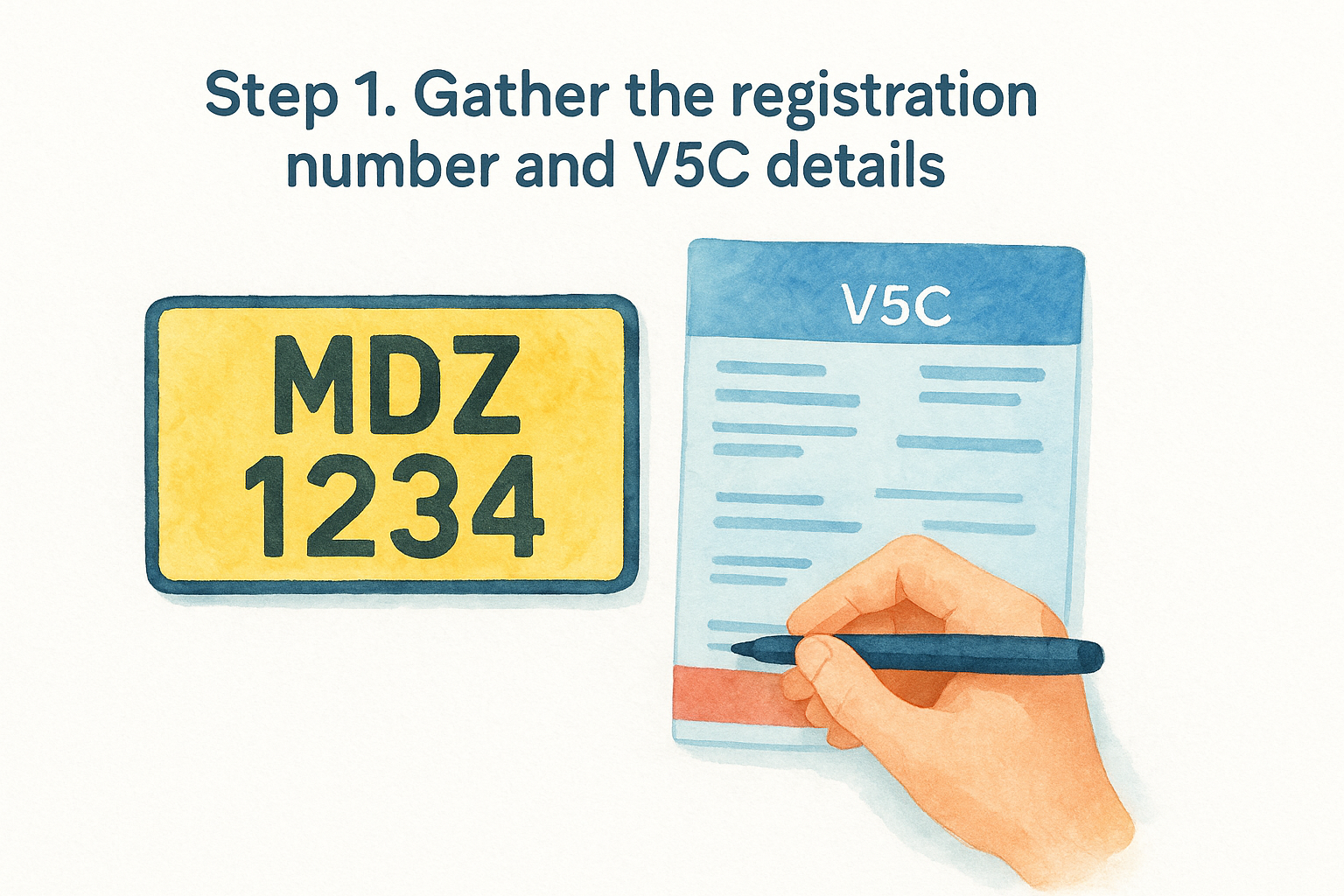
Ask the seller for the V5C registration certificate as well. This document confirms the registered keeper, the vehicle's make and model, and its date of first registration, all details you'll cross-reference against whatever a reg check ni search returns. If the seller can't produce a V5C, or the document looks altered, treat that as a warning sign before you go any further.
Matching the plate on the car to the plate on the V5C is the cheapest fraud check you'll ever do.
Write down the registration number, the VIN if it's visible on the vehicle, and the V5C document reference number. You'll want all three handy for the next step.
Step 2. Run a free reg check on the vehicle
With the registration number confirmed, head to a free car history check tool like Vehiclepedia and enter the plate exactly as it appears on the vehicle. NI plates work through the same lookup form as GB plates, since both feed from official DVLA records once you type the registration correctly. Within seconds you should see the vehicle's make, model, colour, engine size, and year of manufacture, all of which need to match what's on the V5C.
If the details on screen don't match the car in front of you, walk away before you go any further.
Compare every field against the physical vehicle and the paperwork, not just the headline details. A mismatched colour could mean a respray after an accident, and a different engine size could mean an engine swap that wasn't declared. This first free check won't tell you about finance or write-offs yet, but it confirms the basic identity of the car lines up, which is the foundation everything else in this northern ireland car registration check builds on.
Step 3. Review the MOT, tax and SORN status
Once you've confirmed the car's identity matches its paperwork, move on to checking whether it's actually legal to drive. Your free reg check ni results should show the current MOT status, the expiry date, and a full history of previous tests going back several years. Look through the advisory notes on past MOTs, not just the pass or fail result, since recurring advisories about corrosion, brakes, or suspension often signal a car that's been neglected.
Next, check the road tax status. A car showing as taxed and due for renewal soon isn't a problem, but one marked as untaxed with no SORN declaration raises a red flag, since that means someone's been driving it illegally. SORN stands for Statutory Off Road Notification, and it confirms the vehicle has been legitimately kept off public roads.
A car with a lapsed MOT and no SORN has likely been driven illegally, and that's not a seller you want to trust.
Cross-reference the mileage shown in the MOT history against the odometer reading in front of you. A drop in recorded mileage between tests is one of the clearest warning signs of clocking you'll find in any car reg check ni.
Step 4. Check for write-offs, finance and stolen records
Free checks confirm a car's identity and legal status, but they won't tell you about outstanding finance, insurance write-off history, or whether the vehicle appears on the police stolen register. Those three checks sit behind a premium report, and they're the ones that matter most for anyone buying privately in Northern Ireland, where cross-border trade makes hidden histories more common.
Skipping the finance and write-off check is how buyers end up owning a car they never legally owned in the first place.
A finance check reveals whether a previous owner still owes money against the vehicle, and until that debt clears, the finance company technically owns the car, regardless of what you paid the seller. A write-off check shows whether an insurer has ever declared the vehicle a total loss, and under what category, since some write-offs return to the road legally while others never should. A stolen vehicle check against the UK Police Database confirms the car isn't reported missing, which matters even more given how many vehicles move between Northern Ireland and the Republic.
Vehiclepedia's premium report covers all three, backed by a £30,000 data guarantee for non-trade buyers, so you're protected even if something slips through.
Buying with confidence in Northern Ireland
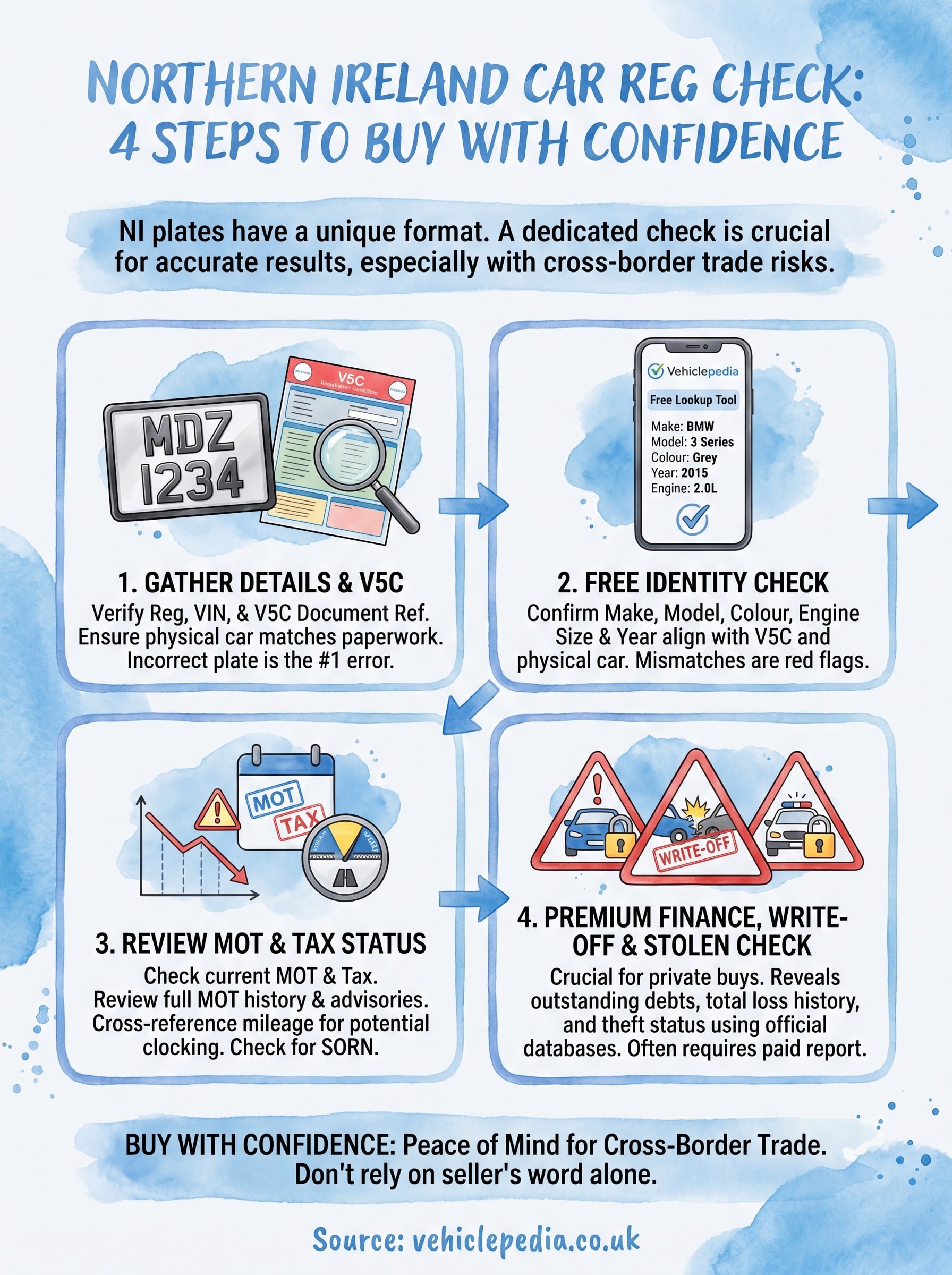
Getting a reg check ni right comes down to following the same order every time: confirm the plate against the V5C, run a free lookup, review the MOT and tax status, then dig into finance and write-off history before you hand over a penny. Skip any one of those steps and you're relying on trust alone, which isn't much protection when cross-border trade makes hidden histories so common in Northern Ireland.
None of this takes long, and the peace of mind is worth far more than the few minutes it costs you. A car that checks out clean on every count is one you can buy without second-guessing yourself on the drive home. One that doesn't is a car you walk away from, no matter how good the price looks.
Want to see exactly what a full history report covers before you buy one? Take a look at our sample report and check for yourself.