Reg Plate Checker: What It Is and How to Use One
Learn how a reg plate checker exposes clocked mileage, hidden write-offs and finance issues before you buy a used car in the UK.

Reg Plate Checker: What It Is and How to Use One
Buying a used car without checking its background is a gamble most people can't afford. A reg plate checker takes the guesswork out of it by pulling official data on any UK-registered vehicle in seconds, using nothing more than the number plate. If you've ever wondered what's actually behind that shiny listing on Facebook Marketplace or Autotrader, this is the tool that tells you.
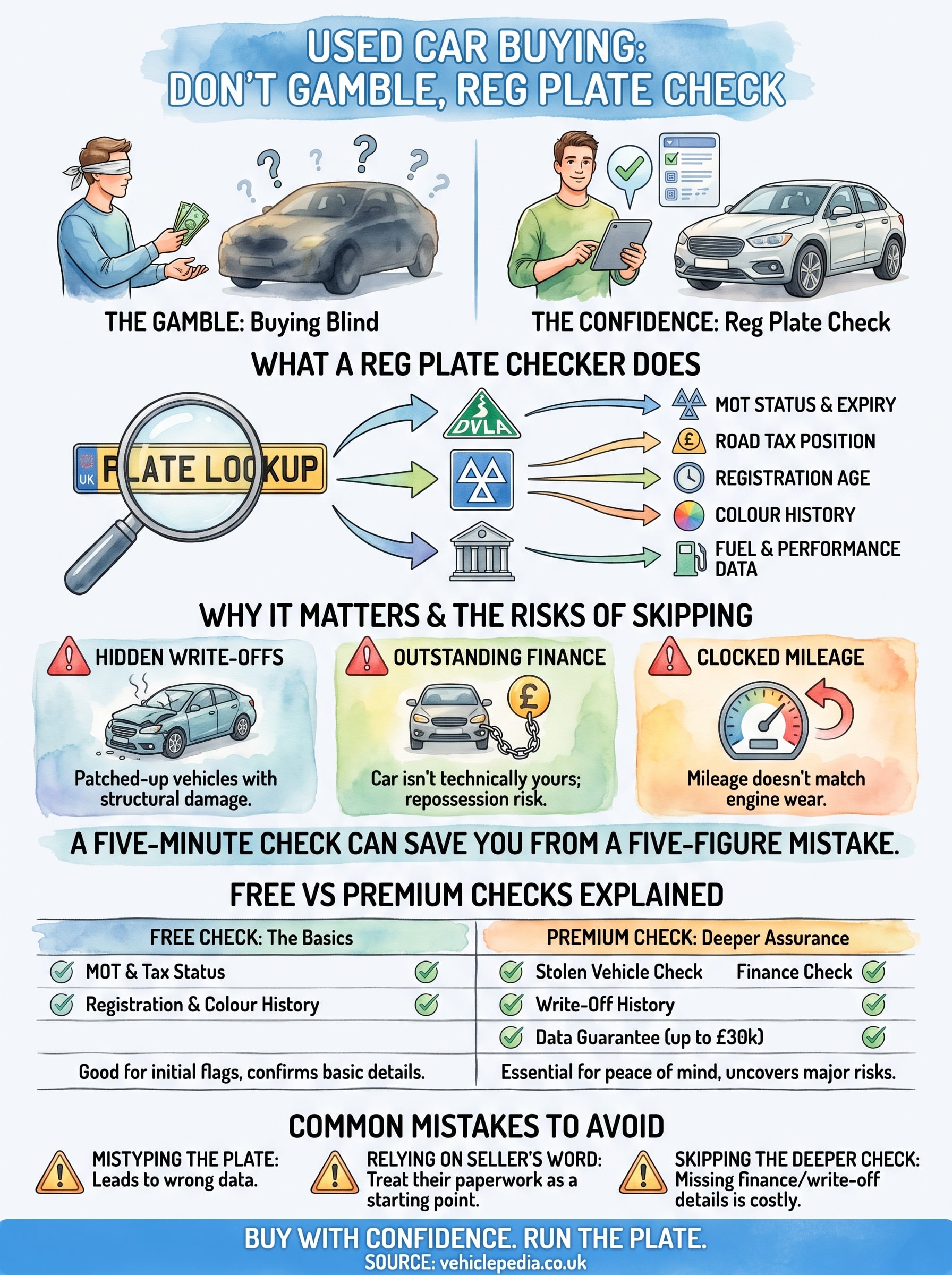
At its core, a reg plate checker is a lookup service that queries official UK databases, including the DVLA, to confirm a car's MOT status, tax position, registration age, and more. Run a plate through one before you view a car, and you'll know whether the mileage, colour, and paperwork actually match what the seller is telling you, all before you hand over a deposit.
This article walks through exactly what a reg plate checker shows you, how the free and premium versions differ, and how to run a check yourself in under a minute. We'll also cover the details that matter most when you're trying to spot a stolen, written-off, or financed vehicle before it becomes your problem.
Why a reg plate checker matters before buying a car
Spending thousands of pounds on a used car based on a listing photo and a friendly seller is riskier than most buyers realise. A used car scam often hides in plain sight: clocked mileage, an undisclosed write-off, or finance still owed on the vehicle. Running a number plate check before you view the car strips away the seller's version of events and replaces it with hard data from official records.
The cost of skipping the check
Buyers who skip this step tend to find out the hard way, usually after they've already paid. Finance still outstanding on a used car means the car technically isn't the seller's to sell, and a written-off vehicle that's been patched up can fail an MOT within weeks or, worse, fail structurally on the road. A £200 premium report is nothing compared to losing a £12,000 car to repossession because the previous owner never cleared the loan.
A five-minute reg plate check can save you from a five-figure mistake.
Matching the car to its paperwork
Beyond fraud, a check confirms the basics actually line up. Sellers sometimes get details wrong, whether by accident or design, and a quick lookup catches the mismatch before you're stood in their driveway.
- Does the registration date match what the seller told you?
- Has the car changed colour since it was first registered?
- Is the MOT history and mileage record consistent with the mileage on the odometer?
- Does a road tax status check show it's actually legal to drive?
Getting answers to these questions before you arrange a viewing means you're negotiating from a position of knowledge, not hope, and you can walk away from a bad deal without wasting a wasted journey.
How to use a reg plate checker step by step
Running a check takes less time than parking the car you're about to view. Head to a free lookup tool like Vehiclepedia's car check page, type in the registration plate, and let the system query the DVLA and other official sources on your behalf. No account, no card details, just a plate number and a few seconds.
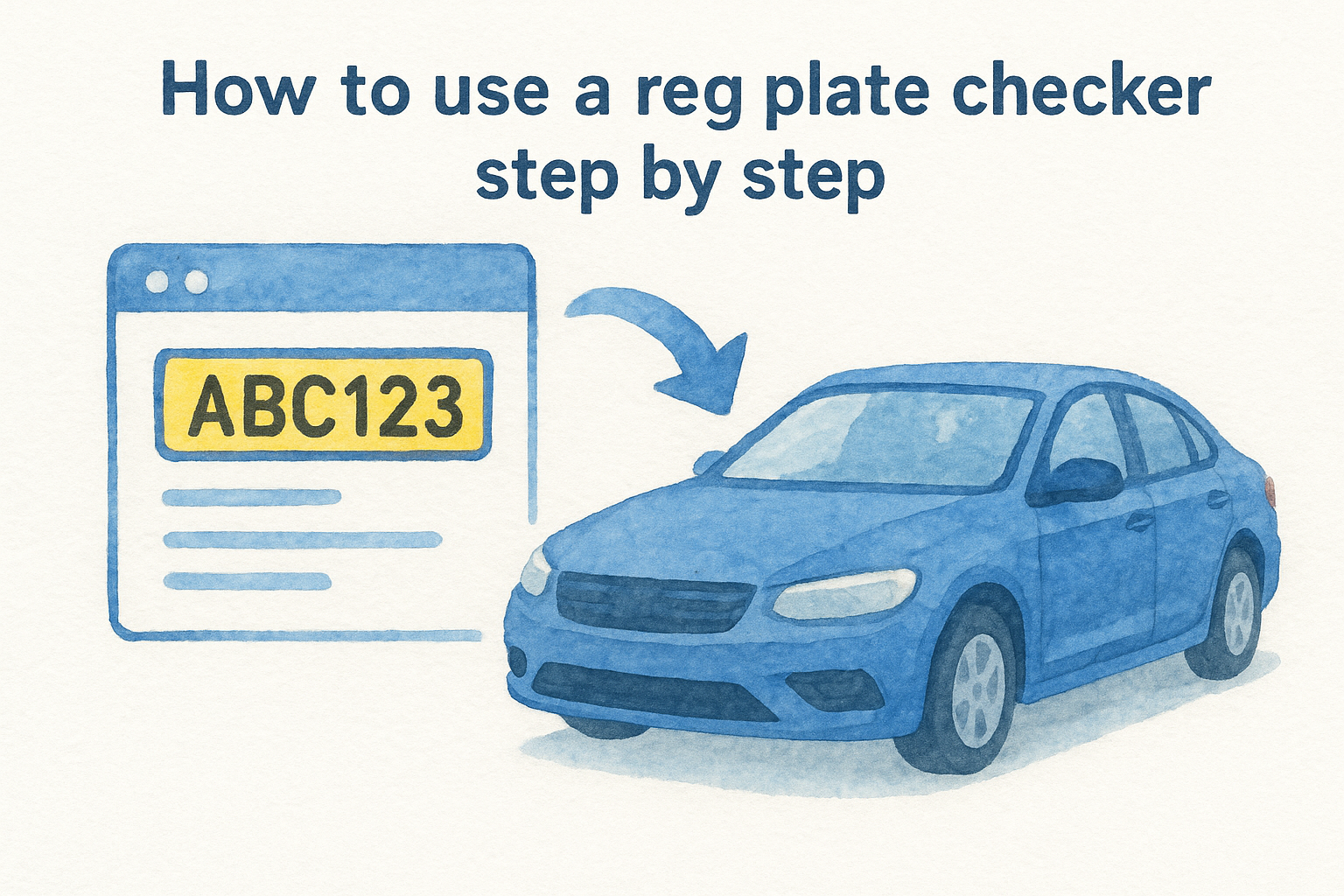
- Find the registration plate on the seller's listing or ask them for it directly.
- Enter the plate into the search box on a trusted reg plate checker, following the steps for checking a reg plate in the UK.
- Review the free summary: MOT status, tax position, registration age, and colour history.
- Cross-check these details against what the seller has told you.
- If anything looks off, or you want deeper assurance, run a premium report before committing to a viewing.
Once the results load, you're looking at a snapshot pulled straight from official records, not a seller's memory or a printed logbook that could be years out of date. If the free summary raises questions, that's your cue to dig further rather than ignore it.
Never view a car before you've run its plate, the check takes a minute and the mistake could take years to fix.
Compare what you see on screen against the physical car when you arrive. A mismatch in colour or an MOT that expired last month is worth asking about before you even open the door.
What information a reg plate check reveals
Run a plate through a checker and you get a full snapshot of the car's official life, not just a single fact. Every vehicle registration check pulls together data points that would otherwise mean contacting several separate agencies, saving you hours of digging through paperwork.
One search replaces a dozen phone calls to separate agencies.
Here's what typically shows up in a standard result:
| Data point | What it tells you |
|---|---|
| MOT status and expiry | Whether the car is legally roadworthy right now |
| Road tax status | If tax is paid or the car is SORN |
| Registration date | The true age of the vehicle |
| Colour history | Any undisclosed respray or colour change |
| Fuel type and efficiency | Running costs you can expect |
| Performance data | Engine size and output specs |
Gathering this yourself would mean using the free DVLA lookup by registration for tax and separately requesting MOT history through the government's own portal. A single plate lookup condenses all of it into one readable report, which is exactly why it's worth running before you commit to viewing anything.
Free versus premium reg plate checks explained
A free reg check covers the basics: MOT status, tax, registration age, and colour history. That's enough to catch obvious red flags, but it won't tell you if the car has outstanding finance, was written off after an accident, or would fail a stolen car check against the police database. For those answers, you need a premium report.
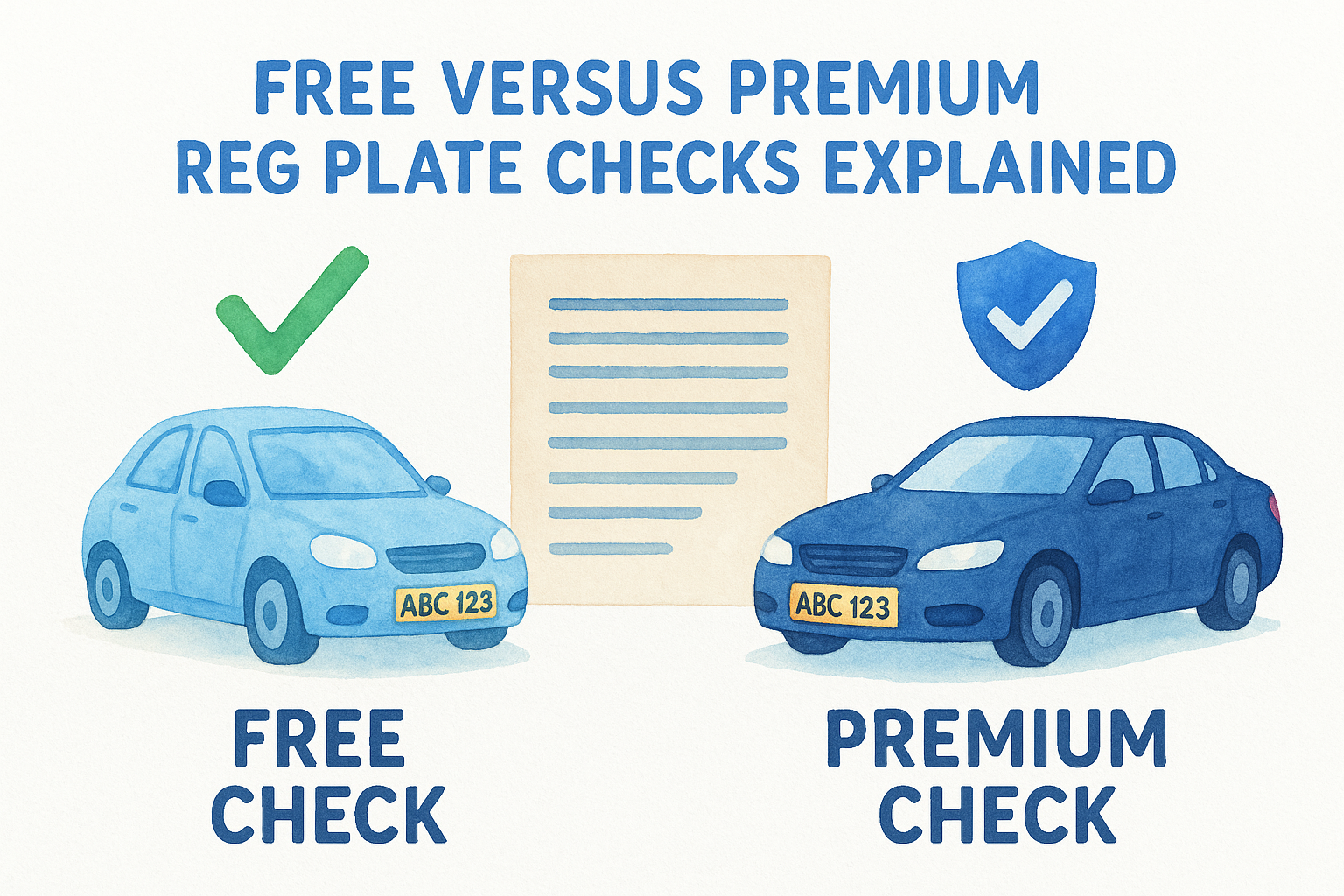
Free checks tell you what a car is, premium checks tell you what happened to it.
Spending a small fee on a full report before you buy is cheap insurance against a five-figure mistake. Vehiclepedia's premium vehicle check adds a £30,000 data guarantee for non-trade buyers, meaning you're financially protected if the data turns out to be wrong.
| Feature | Free check | Premium check |
|---|---|---|
| MOT and tax status | Yes | Yes |
| Registration and colour history | Yes | Yes |
| Finance check | No | Yes |
| Stolen vehicle check | No | Yes |
| Write-off history | No | Yes |
| Data guarantee | No | Up to £30,000 |
Understanding this split helps you decide when a free lookup is enough and when it's worth paying for full peace of mind.
Common mistakes to avoid when checking a plate
Even with a solid tool in hand, buyers still trip themselves up when running a check. Getting the plate wrong, trusting the seller's paperwork over live data, or stopping at the free summary when the situation calls for more all lead to the same outcome: a nasty surprise after the sale.
Typing errors and outdated details
Mistyping a single character in the registration plate pulls up the wrong vehicle entirely, and you'll walk away with a false sense of security about a car you've never actually checked. Always double-check the plate against the physical car, not just the listing photo, since sellers occasionally list an outdated image.
Relying on the seller's word
A logbook or service history the seller hands you is only as reliable as the person who filled it in. Treat it as a starting point, not proof, and let the official data from your check confirm or contradict it.
Trust the database, not the driveway conversation.
Skipping the deeper check
A basic search won't flag finance, write-offs, or stolen status. If you're spending real money, that gap is exactly where costly mistakes hide.
Buying with confidence
A reg plate checker turns a nerve-wracking purchase into a straightforward decision. You've seen how a free check covers the basics, how a premium report exposes finance, write-offs, and theft, and how skipping either step leaves you exposed to problems you can't undo after the money's changed hands. The habit is simple: run the plate before you view the car, cross-check the results against what you're told, and only hand over cash once the paperwork and the data agree.
None of this needs to be complicated or expensive. A few minutes of checking now beats months of dealing with a car that was never quite what it seemed. Before you commit to a premium purchase, see exactly what a premium report reveals, then decide with the full picture in front of you rather than a seller's word alone.