What Is An MOT Check? What's Tested, Rules & MOT History
Learn what is an mot check, what safety items are tested, and the latest rules. Use MOT history to spot hidden faults and buy your next car with certainty.
What Is An MOT Check? What's Tested, Rules & MOT History
Every car, van, and motorhome on UK roads must pass an annual roadworthiness inspection once it's three years old. But what is an MOT check, exactly? It's more than just a tick-box exercise, it's a structured assessment of your vehicle's safety, emissions, and overall condition, carried out by an authorised tester at an approved testing centre. Without a valid MOT certificate, driving your vehicle is illegal (with very few exceptions), and you won't be able to tax it either.
Whether you're a first-time buyer trying to spot a dodgy motor or a current owner keeping on top of your vehicle's legal requirements, understanding the MOT process matters. Knowing what gets tested, what the rules are, and how to check a vehicle's MOT history can save you from costly surprises, especially before handing over money for a used car. At Vehiclepedia, our free registration plate lookup pulls MOT status, history, and expiry dates directly from official sources, giving you the facts before you commit.
This article breaks down everything you need to know: what an MOT covers, how it differs from a service, the legal requirements, and how to check any vehicle's MOT record in seconds.
Why an MOT check matters for UK drivers and buyers
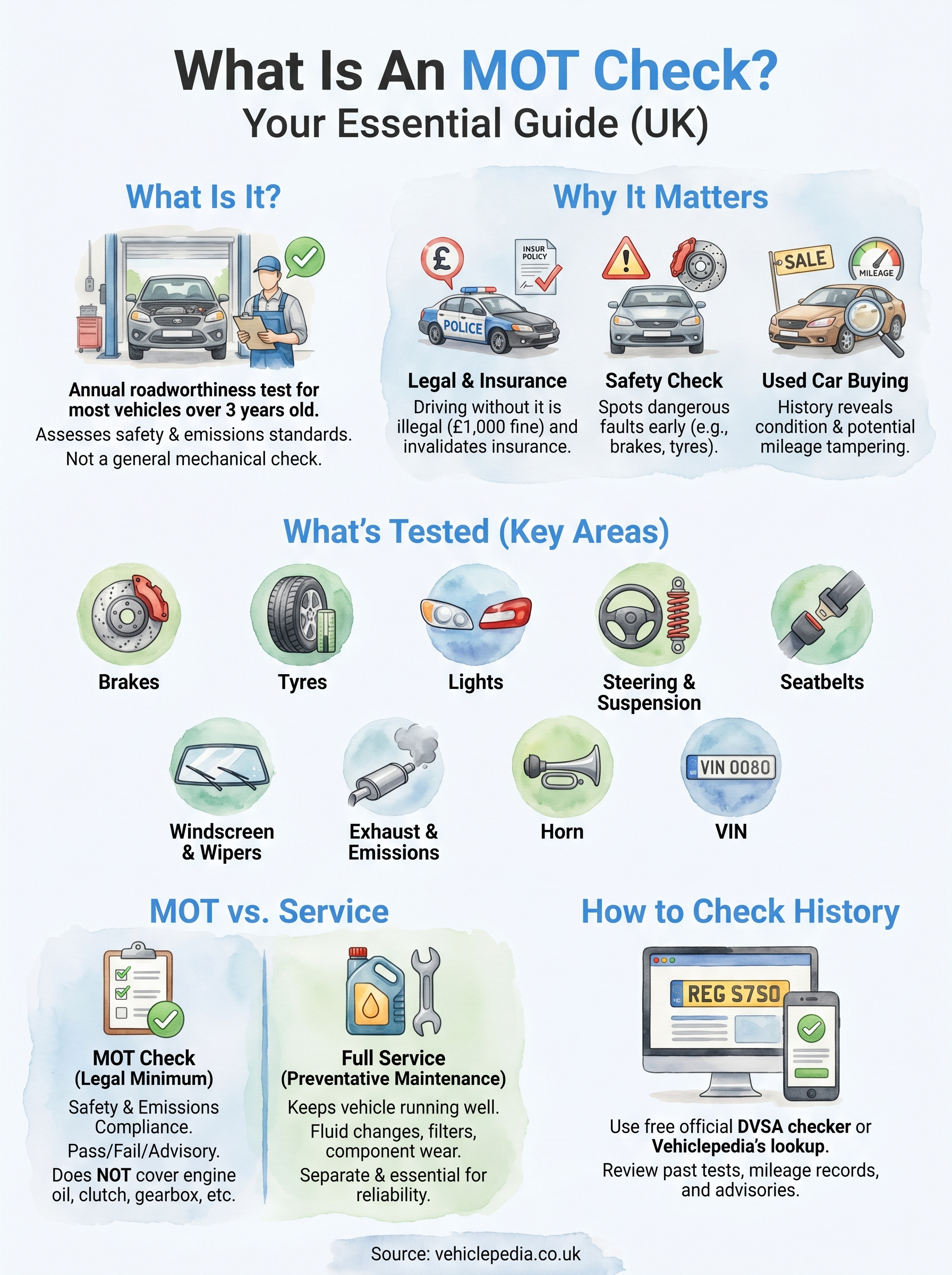
Understanding what is an MOT check goes beyond satisfying curiosity. A valid MOT certificate confirms that a vehicle met minimum safety and emissions standards at the point of testing. Without one, you're driving illegally and exposing yourself to a fine of up to £1,000, plus the very real risk of an invalidated insurance policy. Those aren't edge cases. Thousands of drivers get caught out every year simply because they lost track of their expiry date or assumed someone else would remind them.
Driving without a valid MOT can invalidate your insurance policy entirely, leaving you personally liable for any damage or injury you cause in an accident.
Why it matters for current vehicle owners
If you own a vehicle, tracking your MOT expiry date is your legal responsibility, not the DVLA's. There's no official government reminder system. You might get a message from your garage or a third-party app, but those are optional extras, not guaranteed alerts. Missing your expiry date by even one day means you're breaking the law, regardless of how roadworthy the car actually is.
Regular MOT testing also works as a practical safety checkpoint you can rely on. Testers flag issues you might not catch yourself, from brake wear and tyre tread depth to failed lights and dangerous emissions levels. Spotting those faults early almost always costs less than dealing with a breakdown, an accident, or a roadside inspection by police.
Why it matters for used car buyers
Buying a used car without reviewing its MOT history is one of the most avoidable mistakes you can make. The MOT record gives you a detailed picture of how the vehicle has held up over time: whether it passed consistently, what advisories were raised, and whether serious faults kept it off the road for extended periods. Repeated failures in the same area, especially brakes or suspension, should raise immediate questions for any buyer.
Your MOT history check can also help you spot a clocked car before you buy it. Every MOT inspection records the odometer reading at the time of testing. If those recorded mileage figures don't follow a logical progression across years, the numbers have almost certainly been tampered with. That single check can protect you from paying thousands over the odds for a car with far more wear than it appears.
When you need an MOT and the key rules
Understanding when the MOT requirement kicks in is fundamental to staying on the right side of the law. Most vehicles need their first MOT at three years old, then annually from that point forward. The renewal date ties to the original registration date, not when you bought the car. You can book your test up to one calendar month early without losing any time on the current certificate, which gives you a practical window to avoid last-minute scrambles.
Renewing your MOT up to a month before expiry keeps your existing renewal date intact, so you don't lose any days from your current certificate.
Vehicles that are exempt
Not every vehicle on UK roads needs an annual test. Vehicles manufactured before 1960 became exempt following a legislative change in 2018, removing the obligation for classic car owners to obtain a certificate each year. Brand-new vehicles also benefit from a built-in grace period, as no MOT is required until the third anniversary of their first registration date.
Here's a quick summary of the main exemptions:
- Vehicles over 40 years old (registered before 1960, now rolling)
- New vehicles within their first three years
- Vehicles used only on private land with no public road access
What happens when your MOT lapses
Once your MOT certificate expires, driving the vehicle on a public road becomes illegal. The only permitted exception is travelling to a pre-booked MOT appointment. Beyond that, you face a fine of up to £1,000 and the real possibility that your insurer will treat the lapsed certificate as grounds to void your cover entirely.
What an MOT check includes and what gets tested
Understanding what is an MOT check in practical terms means looking at exactly what a tester inspects during your appointment. The test follows a standardised checklist set by the Driver and Vehicle Standards Agency (DVSA), covering safety systems, road visibility, and exhaust emissions. Testers record every finding, whether the vehicle passes, fails, or receives an advisory note for something not yet serious enough to fail but worth monitoring.
An advisory note on your MOT does not prevent your vehicle from passing, but it does signal a fault you should address before your next test.
The main areas an MOT tester examines
Your tester works through a structured set of vehicle systems and components during the inspection. Every area links directly to road safety or environmental standards, so nothing on the list is arbitrary.
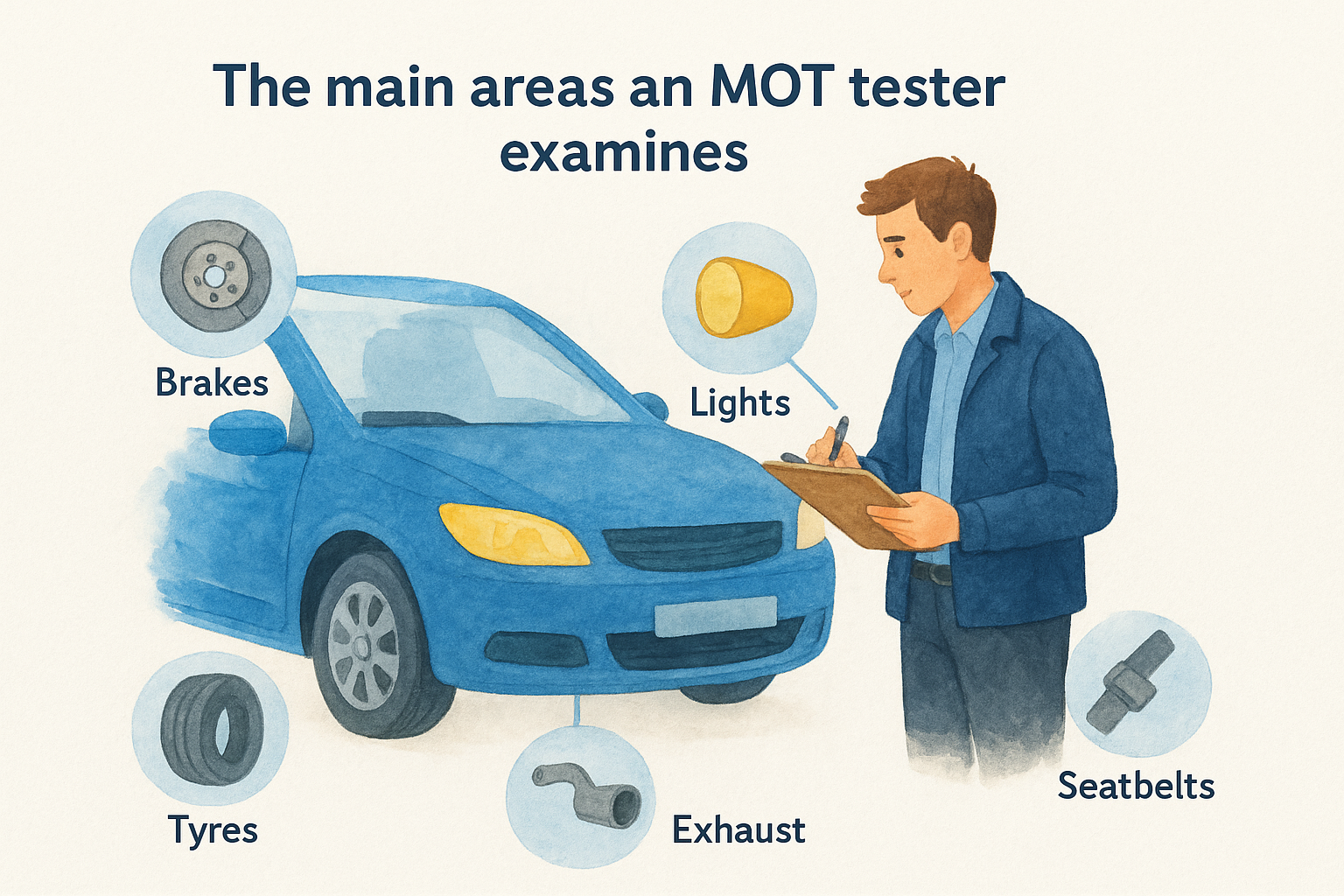
Here are the key areas checked during an MOT:
- Brakes: condition, performance, and balance across all wheels
- Tyres: tread depth (minimum 1.6mm), condition, and correct fitment
- Lights: headlights, brake lights, indicators, and hazard warning lights
- Steering and suspension: play, wear, and overall stability
- Seatbelts: operation, condition, and mounting security
- Windscreen and wipers: clear visibility and effective wiper function
- Exhaust and emissions: output levels and system integrity
- Horn: audible operation confirmed
- Vehicle identification number (VIN): legibility and accurate match
Each item receives one result: pass, fail, or advisory. A single failure in any category means your vehicle cannot legally return to the road until the fault is repaired and the vehicle retested.
What an MOT does not cover and MOT vs service
Knowing what is an MOT check tells you what's included, but understanding what it deliberately skips is just as important. An MOT tests whether your vehicle meets minimum legal safety standards at the moment of inspection. It does not assess general mechanical reliability, component longevity, or whether your car will hold up dependably over the coming months.
Passing an MOT does not mean your vehicle is in good mechanical condition, only that it met the minimum legal safety threshold on the day of testing.
What the MOT deliberately skips
The test has a clearly defined scope, and several significant items fall outside it. Testers do not inspect your engine condition, clutch performance, gearbox function, or fluid levels such as oil or coolant. These items fall outside the standardised DVSA checklist because they relate to the vehicle's mechanical health rather than its immediate roadworthiness on the day.
Here are common items the MOT does not cover:
- Engine oil and coolant levels
- Clutch and gearbox condition
- Air conditioning performance
- Battery health
- General wear on brake pads beyond the minimum safety threshold
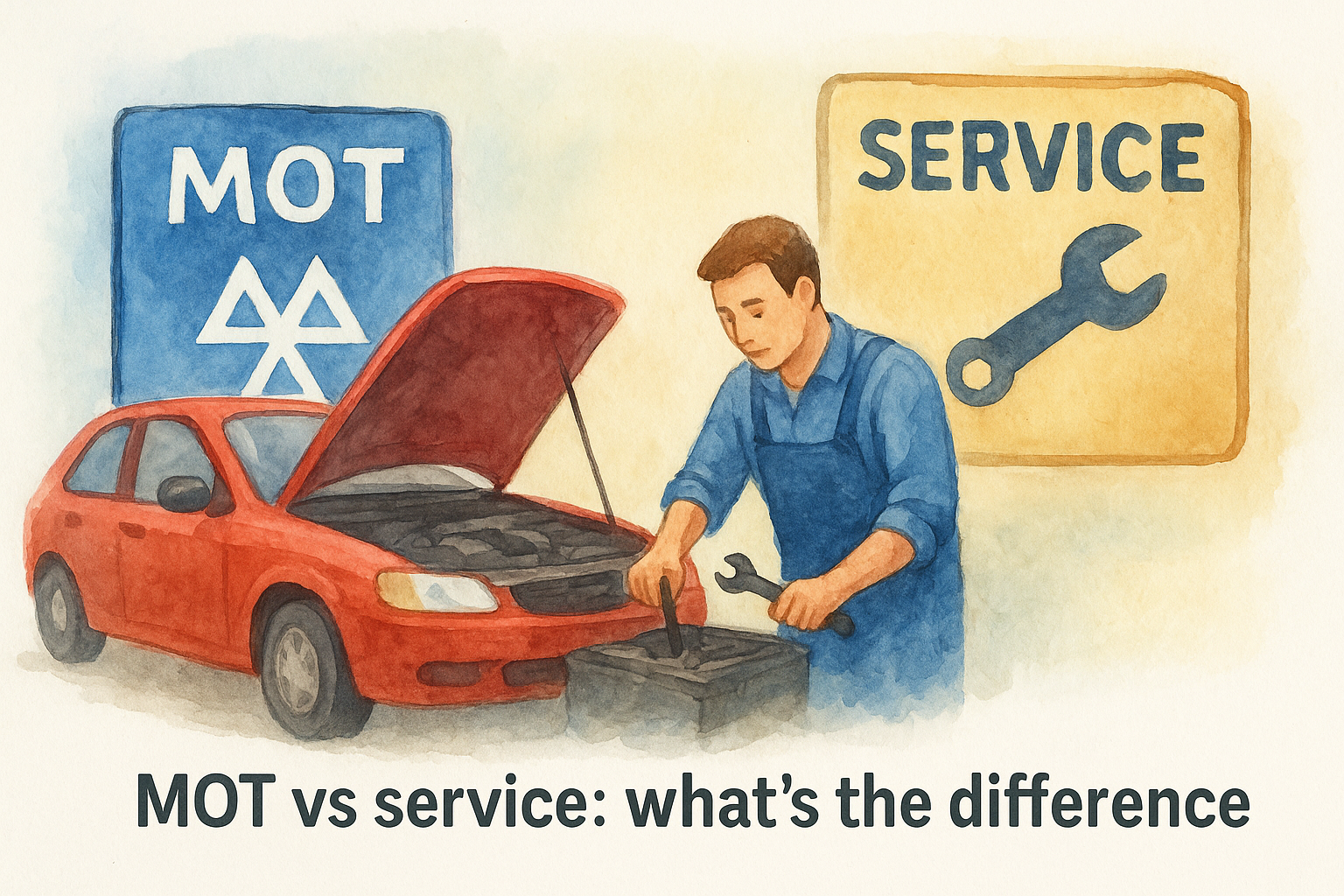
MOT vs service: what's the difference
A full service is entirely separate from the MOT and focuses on preventive maintenance rather than legal compliance. A service typically covers fluid changes, filter replacements, spark plugs, and a broader inspection of components the MOT ignores completely. Your car can pass an MOT with critically low oil and still be in need of urgent servicing. Treating the two as the same thing leads to avoidable mechanical failures that a basic check would never catch.
How to check MOT expiry date and MOT history
Checking a vehicle's MOT status is straightforward, and you don't need a full understanding of what is an MOT check to do it. The DVSA provides a free official checker on GOV.UK that lets you enter any UK registration plate and retrieve the current MOT expiry date alongside a complete history of past tests, including results, recorded mileage, and any advisories raised during each inspection.
Using the official government tool
The GOV.UK MOT history service gives you instant access to every MOT result logged against a registered vehicle. You simply enter the registration number and the results appear within seconds. No account or payment is required. Each entry in the history shows:
- Test date and pass or fail outcome
- Mileage recorded at the time of testing
- Any advisory notes raised during that inspection
If the mileage figures across multiple MOT entries don't follow a logical upward progression, treat that as a serious warning sign before buying any used vehicle.
What Vehiclepedia adds to the picture
Vehiclepedia's free registration plate lookup pulls the same official MOT data and combines it with road tax status, vehicle registration details, and performance figures in one report. Rather than switching between multiple tools, you get a single consolidated view of the vehicle's record.
For buyers who want deeper protection, the premium report goes further, checking for outstanding finance, stolen vehicle markers, and write-off history, giving you a complete picture before you commit to any purchase.
Next steps
Now that you know what is an MOT check and what it actually covers, you're in a much stronger position whether you're buying a used car or managing one you already own. The key takeaway is simple: the MOT confirms minimum legal roadworthiness on the day of testing, nothing more. It doesn't replace a full service, and a pass certificate doesn't guarantee the car is mechanically sound or problem-free.
Before you hand over money for any used vehicle, run a check on its MOT history and expiry date to verify the mileage progression and spot any recurring faults. Combining that with a full vehicle history report gives you the clearest picture available. Vehiclepedia pulls official MOT data alongside road tax status, ownership records, and more, all from one registration plate search. View a sample premium report to see exactly what you get before you commit to any purchase.