Car Finance Check Reviews: Is It Legit or a Scam?
Read car finance check reviews wisely: learn red flags, legitimacy checklists, and why Vehiclepedia's DVLA-backed reports offer real protection.
Car Finance Check Reviews: Is It Legit or a Scam?
You've found a car you like, but something's telling you to check whether it's still being paid off before you hand over your money. That's when you start searching for car finance check reviews, trying to work out whether these services actually deliver or just take your card details and give you nothing useful back. It's a fair question, and you're not the only one asking it.
Here's the short answer: legitimate finance checks pull data directly from official finance industry registers, so the reliable ones are genuinely worth using, but not every provider is equally trustworthy. The legitimacy of a check comes down to where its data is sourced from and what guarantee stands behind the report, not flashy marketing on the homepage.
In this article, we'll walk through what a proper finance check review should tell you, the red flags that suggest a service is cutting corners or running a scam, and what to look for in the small print, including data guarantees and source transparency, so you can spot a trustworthy check before you pay for one.
Why car finance check reviews matter before you engage
Buying a car with outstanding finance attached to it isn't just an inconvenience, it's a legal problem. Under the Hire Purchase Act 1964, if the seller doesn't own the car outright because a lender still has a claim on it, the finance company can repossess the vehicle from you, even after you've paid for it in full and in good faith. This is why car finance check reviews matter so much before you engage a service: you're not just checking whether a website looks trustworthy, you're deciding whether to trust the data that could save you from losing thousands of pounds.
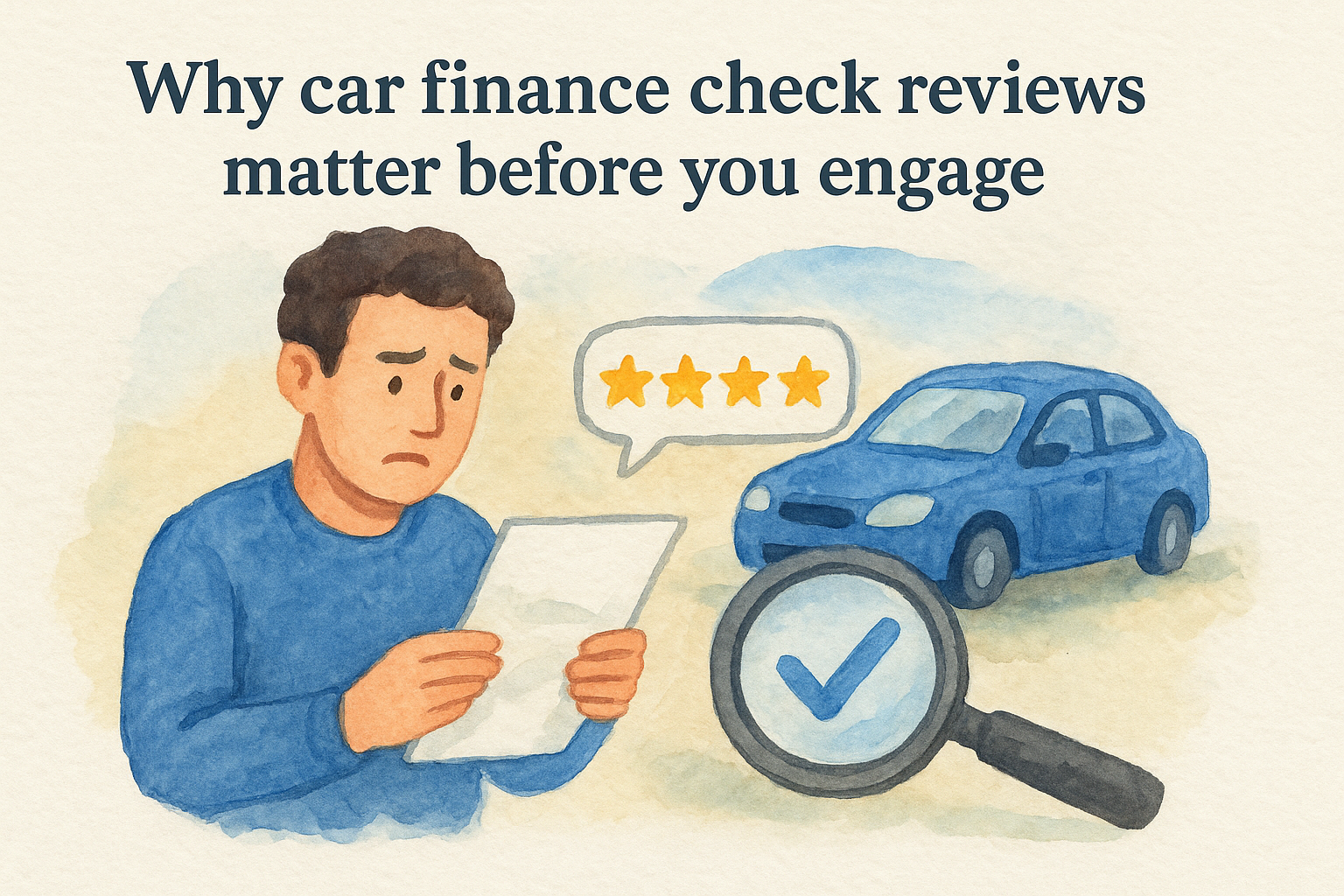
A finance check is only as good as the register it pulls from, and a repossession risk doesn't disappear just because the seller seems honest.
Scammers and low-quality providers know that buyers are anxious and in a hurry, and they exploit that. Some sites charge for a report that's little more than a generic disclaimer with no real data behind it. Others use dramatic warnings about finance letters or unpaid loans to pressure you into paying for a "full report" that never actually confirms anything specific about your vehicle. Reading genuine car finance check UK reviews before you commit helps you separate providers who pull from the Finance & Leasing Association's shared database and similar official sources from those who are simply repackaging publicly available registration data with a scary headline.
Think about the financial exposure here. A used car in the UK typically costs somewhere between £8,000 and £20,000, and if it turns out to be under an active finance agreement you didn't know about, you could lose the car and the money you paid for it. Spending ten minutes reading reviews and checking a provider's data sources before you buy a report is a tiny cost next to that risk. It's also worth checking whether the provider mentions the DVLA as one of its data partners, since a genuine check should cross-reference registration and finance data rather than relying on a single source. That combination of transparency and sourcing is exactly what separates a review-worthy service from one you should walk away from.
How to verify if a car finance check company is legitimate
Before you pay for any report, spend five minutes checking the company itself rather than just the price on the homepage. A legitimate provider will tell you plainly where its data comes from, usually the DVLA, insurance registers, and finance industry databases, and it won't hide behind vague phrases like "multiple trusted sources" without naming them. Search for the company name alongside "reviews" or "scam" on a search engine and look past the testimonials on their own site, since those are cherry-picked by definition.
If a company can't name its data sources, its report isn't worth the price you're paying for it.
Check these five things before you hand over payment details:
- Companies House registration: a real UK business will have a registered company number you can look up on Companies House.
- A clear refund or data guarantee: legitimate providers back their reports with a stated guarantee amount, not just a promise.
- Contact details beyond a form: a phone number or verified address, not just a contact form that goes nowhere.
- Sample reports available: the ability to preview a sample report before buying shows the provider has nothing to hide.
- Independent review platforms: genuine feedback on Trustpilot or similar, not just quotes on the provider's own page.
Running through this checklist takes less time than reading a single overhyped finance check review on a forum, and it tells you far more about whether the company will actually deliver when you need it.
Common red flags in car finance claim letters and scams
Some drivers get a letter or email claiming their car still has outstanding finance attached, demanding payment before they can sell or register it. These letters often look official, but genuine finance claims come from the lender itself or through the Finance & Leasing Association, not from a random third party who found your registration online. Before you panic and pay anyone, treat the letter as a prompt to run your own check, not as proof of debt.
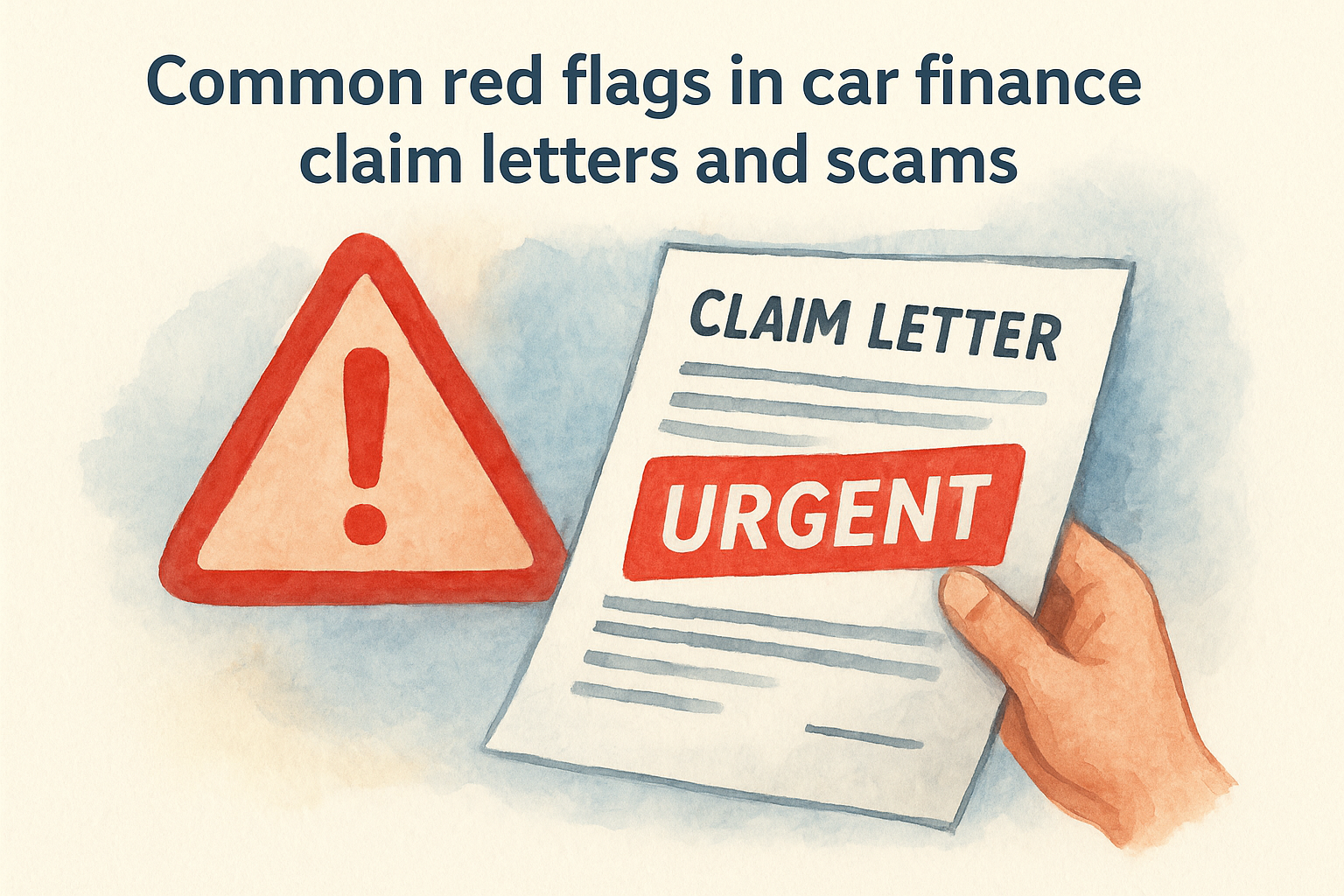
Warning signs in a finance claim letter
Scammers rely on urgency and vague threats to stop you thinking clearly. Watch for these signs that a claim letter or finance check review site is trying to scare you into paying:
- No specific finance agreement number or lender name mentioned
- Payment demanded by bank transfer or gift card, not a traceable method
- Threats of legal action within an unusually short deadline
- No named company, registered address, or Companies House number
- Pressure to "resolve this today" before you can verify anything independently
Tactics that signal a scam
Many scam sites copy the layout of legitimate finance checkers but strip out the actual data. They'll show a dramatic red warning banner regardless of the registration you enter, because the goal is the sale, not accuracy.
If a report warns you of finance risk before you've even entered your registration plate, it isn't checking anything.
Genuine car finance check reviews consistently mention named data sources and verifiable guarantees. Scam operators rarely survive that scrutiny once you look past their homepage.
A safer way to check your car's finance history
Running your own check through a service that sources data directly from official registers beats relying on a claim letter or a random forum recommendation. Vehiclepedia pulls vehicle history from the DVLA, insurance registers, and finance industry databases, so you see whether a car has an outstanding finance agreement before you hand over any money. The free check covers MOT history, road tax status, and registration details, while the premium report adds the finance check itself alongside stolen vehicle and written-off detection.
A finance check that names its sources and backs itself with a guarantee is the only kind worth paying for.
What a trustworthy report includes
Before you buy any report, whether from Vehiclepedia or elsewhere, check that it includes these basics:
- Named data sources, not vague claims about "official databases"
- A stated financial guarantee, such as Vehiclepedia's £30,000 data guarantee for non-trade users
- A sample report you can preview before paying
- Clear confirmation of any active finance agreement tied to the registration plate
Sample reports matter more than most buyers realise. Seeing exactly what you'll receive, laid out with real fields rather than placeholder text, tells you whether a provider has genuine data behind it or just a template designed to look convincing. That transparency is the difference between a report you can trust with your money and one you'll regret buying.
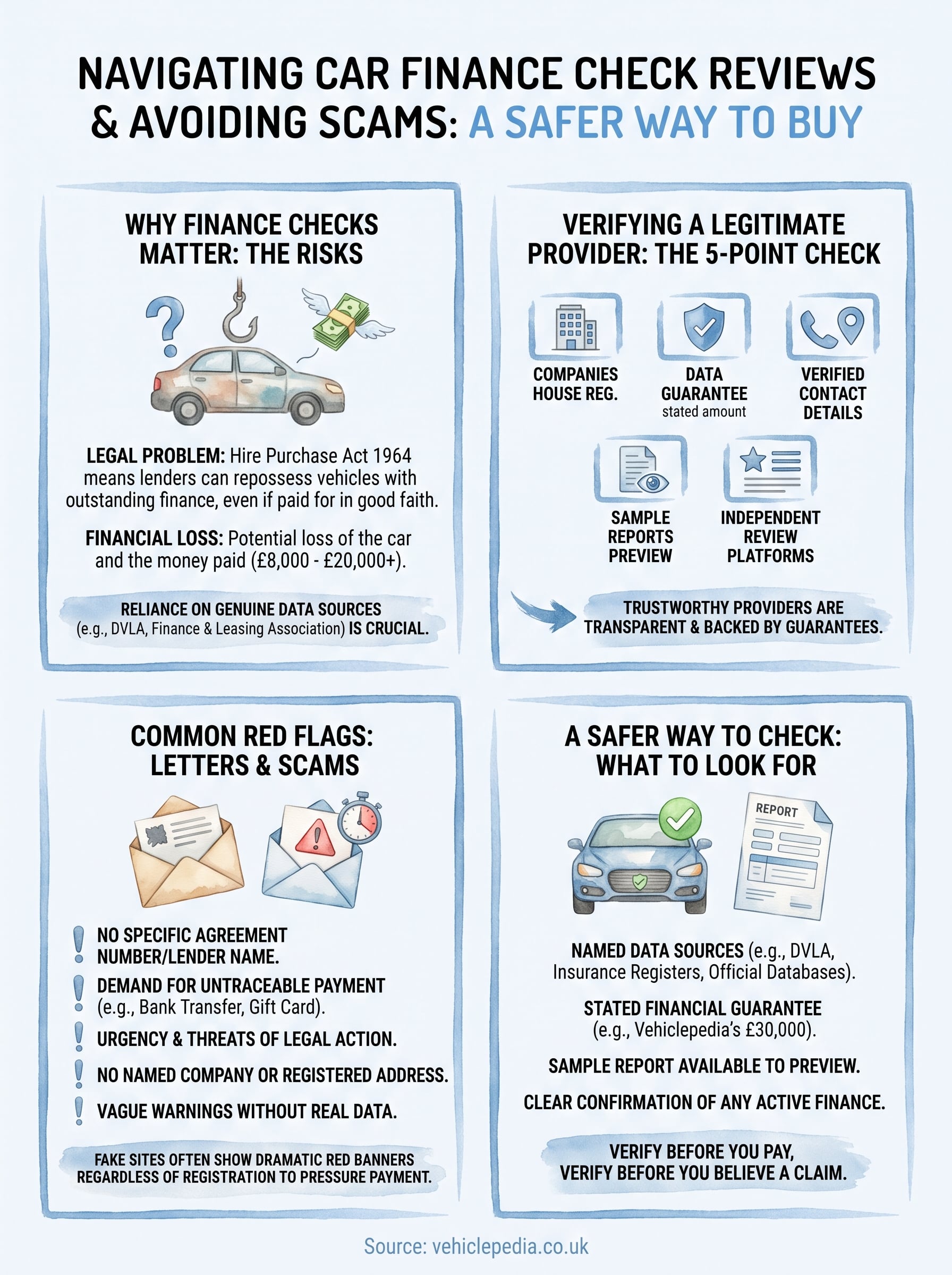
Staying safe when checking car finance
Getting this right comes down to a simple habit: verify before you pay, and verify before you believe a claim letter too. Trustworthy providers name their data sources, back their reports with a real guarantee, and let you preview a sample before you buy. Scammers rely on urgency and vague warnings because their reports have nothing solid behind them once you look closely.
Skip the guesswork and treat every finance check review as a starting point, not the final word. Do your own five-minute check on the company, ask direct questions if anything seems unclear, and never let a scary letter push you into paying before you've confirmed the facts yourself.
When you're ready to check a car properly, preview a sample report first, so you know exactly what you're paying for before you commit a single penny.