How to Check Car Finance History Before You Buy
Learn how to check car finance history using registration checks, credit reports, lender contact, and SARs to avoid repossession risks before buying.
How to Check Car Finance History Before You Buy
Buying a used car without checking for outstanding finance is a gamble you don't need to take. If the seller still owes money on it, the finance company technically owns the car, not them, and that debt can follow the vehicle straight to you. Learning how to check car finance history takes minutes and could save you thousands.
The good news is you don't need to be a mechanic or a solicitor to do this properly. Using the registration number, you can run a free car check that flags obvious red flags like a change of keeper pattern or mileage inconsistencies, then move on to a dedicated finance check that searches records held by lenders and credit reference agencies for active agreements against that specific vehicle.
In this guide, we'll walk through exactly how outstanding finance shows up in a vehicle's history, which details you need before you start, and where to look for genuinely reliable results. We'll also cover what to do if a check comes back showing money is still owed, so you know your options before you hand over any cash.
Why checking car finance history matters
Here's the legal reality most buyers don't know: if you buy a car that still has outstanding finance on it, you don't automatically become the legal owner, even if you've paid the seller in full and driven away. Under the Hire Purchase Act 1964, the finance company retains rights over the vehicle until the agreement is settled. That means a lender can repossess a car from your driveway months after you bought it, and you'd have no claim against the person who sold it to you if they've disappeared or spent the cash.
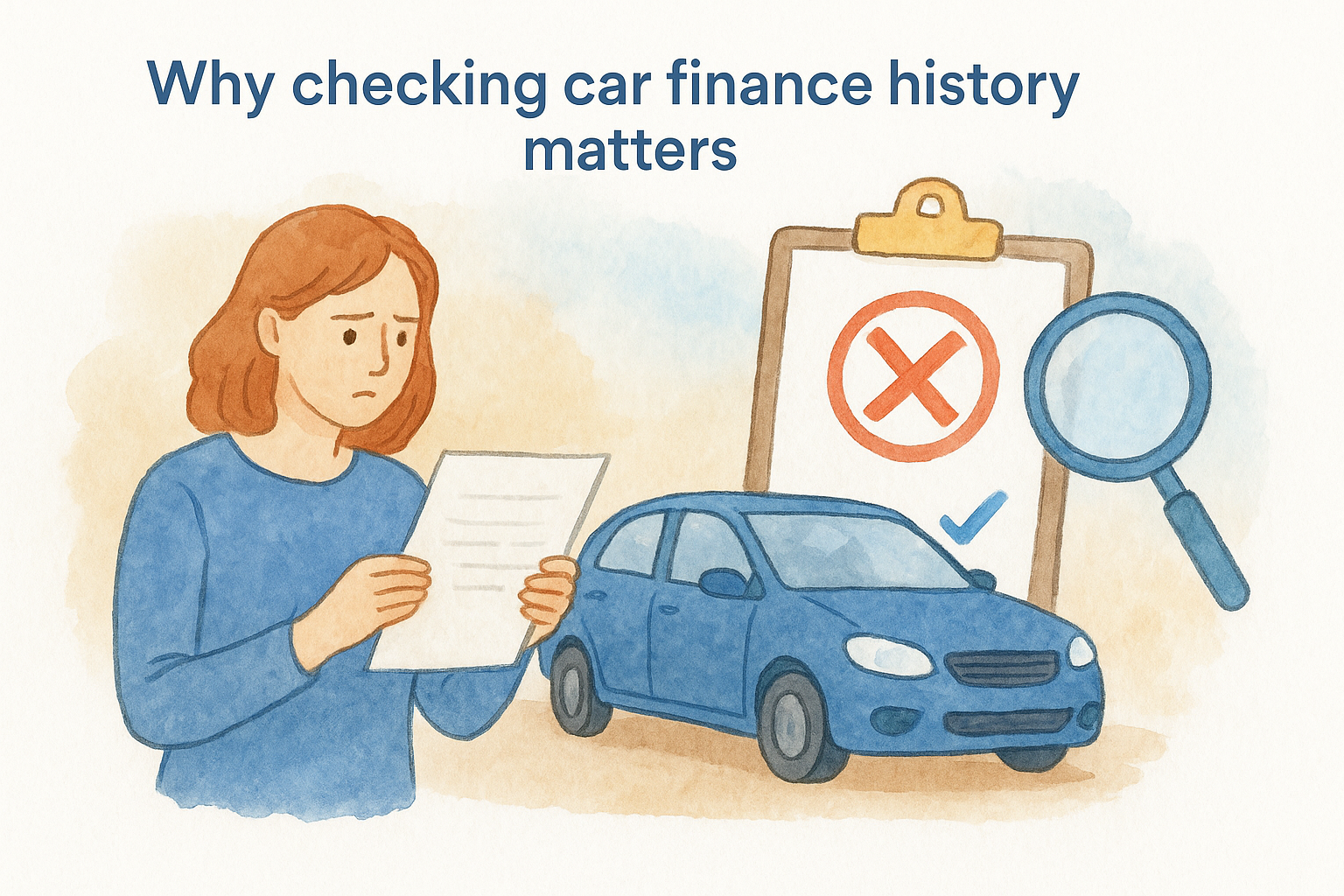
If a car has outstanding finance, the finance company can repossess it from you, even if you paid the seller in good faith.
This isn't a rare scenario. Thousands of vehicles change hands every year in the UK while still tied to a personal contract purchase (PCP) or hire purchase agreement, often because the seller is behind on payments or hoping to clear the debt with your money before the finance company notices. Some sellers know exactly what they're doing; others are simply confused about how their own finance works and assume paying off the balance happens automatically at sale.
There's also a knock-on risk with your own credit file. If you unknowingly take on a car with existing finance and later try to get a loan, mortgage, or even a mobile phone contract, lenders may flag inconsistencies linked to that vehicle's history. Sorting out someone else's unpaid agreement after the fact can take months and usually involves the finance company, the police, and sometimes a solicitor.
Running a check before you commit costs you nothing but a few minutes, compared with the weeks of stress and potential legal fees involved in untangling finance fraud after you've already paid for the car.
Step 1. Run a car finance check by registration number
Start with the vehicle registration number, since it's the fastest way to surface finance flags without paperwork from the seller. A proper finance check cross-references the plate against records held by lenders and credit reference agencies, looking specifically for active hire purchase or PCP agreements tied to that car rather than the person selling it.
A finance check on the registration number takes seconds and can stop a costly mistake before you hand over a deposit.
What you'll need before you start
Gather these details first so the check runs cleanly:
- The full registration plate, checked against the V5C logbook
- The car's make and model, to confirm the plate matches what you're viewing
- A note of the mileage shown, useful if you need to query results later
Where to run it
Use a service that pulls from official UK sources, not a generic lookup tool. Vehiclepedia's finance check searches lender and credit reference data directly, and you can preview a sample premium report first so you know exactly what the results look like before paying anything.
Step 2. Review your credit report for finance records
A registration check searches records tied to the car, but your credit report can reveal finance agreements tied to a specific person, which matters if you're buying from someone you know or a private seller who's shared their details. This step is less about the vehicle and more about spotting patterns, like whether someone has multiple active car finance agreements running at once, which can hint at cars being sold before the debt is cleared.
Your credit report won't name the car, but it can expose a seller's habit of selling cars still under finance.
How to check it
You can access your own credit file free through agencies regulated in the UK, and it updates monthly. If you're helping a family member buy, or you're the seller trying to prove your agreement is settled, pulling your own report is straightforward:
- Request a copy from a UK credit reference agency (Experian, Equifax, or TransUnion)
- Look for entries under hire purchase or conditional sale
- Check the status column for "settled" versus "active"
Sellers can share a redacted settlement letter or screenshot showing a zero balance, which gives you documented proof alongside the registration check.
Step 3. Contact the lender, dealership or bank directly
Sometimes the fastest way to settle doubt is simply asking the people holding the paperwork. If a registration check flags an active agreement, ring the lender named on the report and ask directly whether the vehicle still carries outstanding finance. Lenders won't hand over the seller's personal details, but they'll usually confirm whether the account against that specific car is settled or active, since this affects their own security over the vehicle.
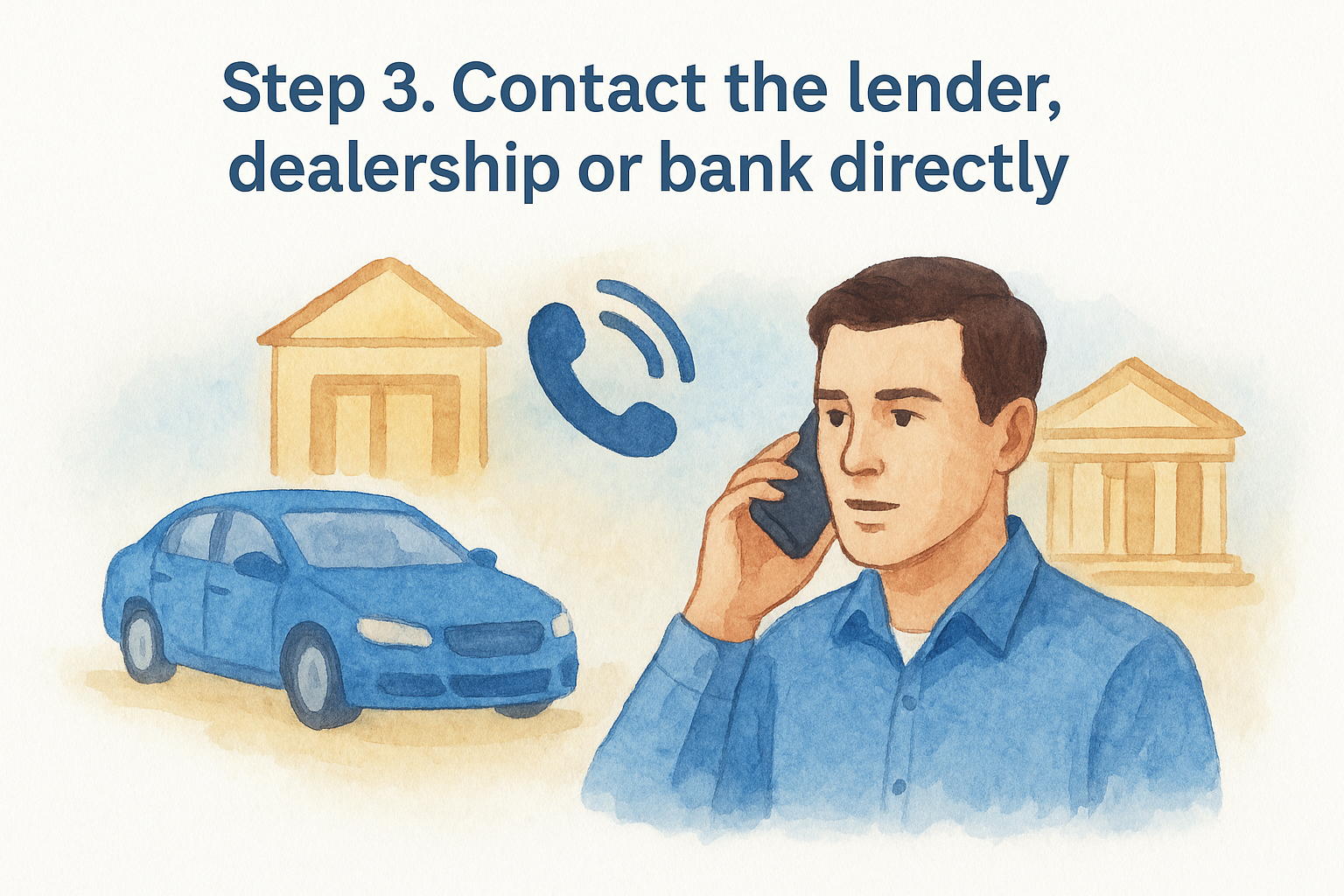
Lenders can confirm whether finance is still owed on a car, even if they can't share the seller's private details.
What to ask and who to call
Work through these contacts in order, and keep notes of who you spoke to and when:
- The finance company named in your check, asking for confirmation of settlement status
- The dealership, if you're buying from a trade seller, since they're legally required to disclose known finance
- The seller's bank, only if they've volunteered account details as proof of a cleared loan
Dealerships selling a car with undisclosed finance are breaching consumer protection law, so a straight answer here also tells you something about how trustworthy the seller is. If nobody will confirm anything in writing, treat that as a warning sign rather than bad luck.
Step 4. Submit a subject access request for older agreements
Occasionally a finance check comes back clean but something still feels off, maybe the seller mentions a past loan on the car that predates the records you can see. In this case, a subject access request (SAR) lets you or the seller ask a lender directly for a full copy of an agreement, even one that's several years old and no longer showing on standard checks. Under UK data protection law, lenders must respond within one month, and the request costs nothing to submit.
A subject access request can uncover old finance agreements that standard checks no longer show.
How to submit one
The seller usually needs to make this request themselves, since it relates to their own agreement, but you can ask them to share the outcome as proof:
- Identify the lender, using paperwork or your finance check results
- Email or write to the lender's data protection team, quoting the vehicle registration and agreement dates
- Request full agreement history, including settlement confirmation
This step suits older cars or private sales where paperwork has gone missing, giving you documented evidence rather than a verbal assurance.
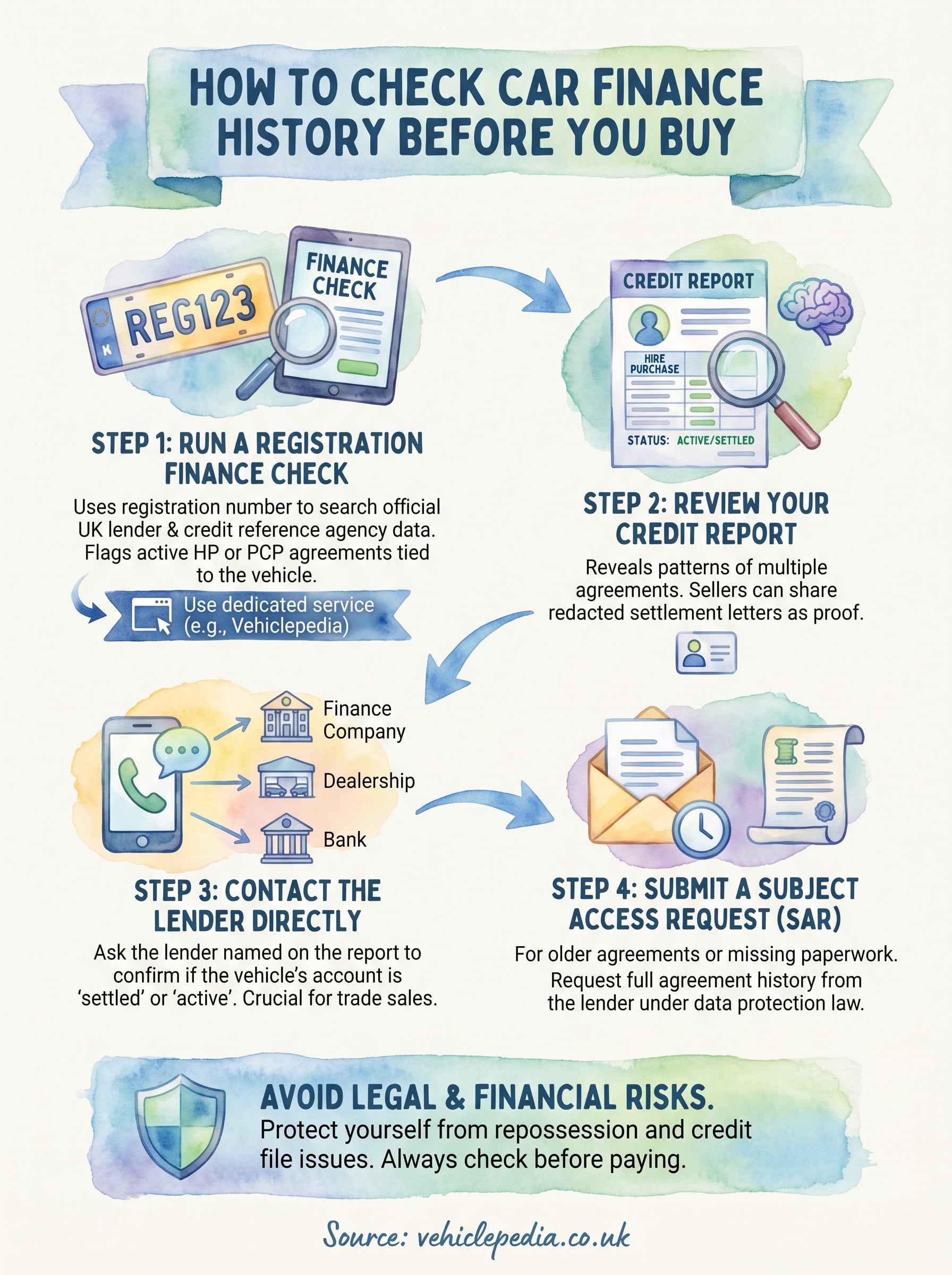
Getting peace of mind before you buy
None of these four steps takes long, but together they build a picture no single check can give you alone. A registration-based finance check catches the obvious cases fast, your credit report and direct conversations with lenders fill in the gaps, and a subject access request handles the rare older agreement that's slipped off standard records. Skipping any one of these steps is how buyers end up owning someone else's debt.
Treat this research as part of the purchase price, not an optional extra. Spending twenty minutes now costs far less than discovering months later that the car you're driving still belongs to a finance company. Before you hand over a deposit, run the numbers and see what's included at each level of detail by checking Vehiclepedia's pricing, so you know exactly what a proper finance check covers before you commit.