7 Cheapest Cars To Tax UK: £0, £20 & £30 VED Bands In 2026
Discover the 7 cheapest cars to tax uk in 2026. Learn which models qualify for £0, £20, and £30 VED bands and how to verify official rates before you buy.

7 Cheapest Cars To Tax UK: £0, £20 & £30 VED Bands In 2026
Road tax can quietly drain hundreds of pounds from your annual motoring budget, or it can cost you virtually nothing. If you're after the cheapest cars to tax UK buyers can get their hands on, the difference between picking the right and wrong model is significant. Some cars sit in VED bands that charge £0, £20, or just £30 per year, making them ideal choices for budget-conscious drivers.
But low running costs only tell part of the story. Before committing to any used car, it pays to know exactly what you're buying. That's where Vehiclepedia comes in, our free registration plate lookup pulls MOT history, tax status, and vehicle details straight from official DVLA records, so you can verify a car's standing before you spend a penny.
Below, we've put together seven cars across the cheapest VED bands, covering electric, hybrid, and low-emission petrol and diesel models that keep your tax bill as low as possible. Each pick includes what you can expect to pay and why it qualifies for its band.
1. Vehiclepedia number plate check
Before you start hunting for the cheapest cars to tax UK buyers can realistically find, you need a reliable way to verify what you're actually looking at. A low asking price means little if the VED band turns out higher than advertised, or if the car carries hidden problems that cost you more down the line. Vehiclepedia's free number plate check pulls official data directly from DVLA records, so you can see the real picture before you commit to anything.
Find the cheapest VED band in minutes
Enter any UK registration plate into Vehiclepedia and you'll get the car's CO2 emissions, fuel type, and engine size pulled straight from DVLA records. These are the exact details that determine which VED band a vehicle falls into. Rather than relying on a seller's word or an advert that may be outdated, you can check the official figures yourself and confirm whether the car genuinely sits in the £0, £20, or £30 bracket you're targeting.
A seller may list a car as "low tax" without knowing the precise band, so always verify the CO2 figure independently before you hand over any money.
Confirm the exact tax rules for the car's age
Registration date matters enormously when it comes to VED. Cars registered before April 2001 are taxed on engine size, those registered between April 2001 and March 2017 are taxed on CO2 emissions, and vehicles registered from April 2017 onwards follow a newer structure with a standard annual rate that applies after the first year. Vehiclepedia's check surfaces the registration date clearly, so you can apply the correct rules straight away and avoid a nasty surprise when you go to tax the car.
Spot costly surprises that push tax up
Beyond VED, a Vehiclepedia check can flag issues that quietly raise your overall costs. Outstanding finance on the vehicle means you could inherit a lender's debt alongside the car, while a written-off status can push insurance premiums up sharply. Vehicles with MOT failures linked to emissions-related faults may also face complications during a retest that affect running costs beyond just road tax. Running a free check before you negotiate puts you in a stronger position and ensures the low-tax deal you think you're getting actually holds up on paper.
2. Volkswagen up!
The Volkswagen up! is one of the most practical entries on any cheapest cars to tax UK shortlist. Small, reliable, and widely available as a used buy, certain versions of the up! sit comfortably in the £20 VED band, making it a strong choice for drivers who want low running costs without sacrificing everyday usability.
Why some up! versions land in the £20 band
Petrol versions of the up! registered between April 2001 and March 2017 are taxed on CO2 emissions. The most common 1.0-litre petrol engine returns figures between 99g/km and 108g/km CO2, depending on the year and specification. Models emitting under 100g/km fall into the £20 per year band, while those just above sit at £30. The electric e-up!, where you can find one, costs £0 to tax annually as a zero-emission vehicle.
Even a small difference in CO2 output between two up! variants from the same year can push you into a higher VED band, so always check the exact figure rather than assuming all versions are equal.
What to check on the V5C and online before you buy
Your V5C document lists the registered CO2 figure that DVLA uses to calculate road tax. Cross-reference this against current DVLA records online to confirm the figures match. Pay attention to the registration date too, as up! models registered from April 2017 onwards follow the newer VED structure with a standard rate after year one.
Common trims and engines that keep VED low
The 1.0-litre three-cylinder petrol engine is the one to target, particularly in older manual variants. You will regularly find CO2 figures at or below 99g/km in these versions, which locks in the £20 annual rate. Avoid modified examples or those with aftermarket changes, as these can complicate the official emissions record.
Trims worth targeting from 2012 to 2016 include:
- Take Up - entry-level, typically the lightest spec
- Move Up - adds basic equipment without a CO2 penalty
- High Up - top trim, still within the low band in standard petrol form
3. Hyundai i10 and Kia Picanto
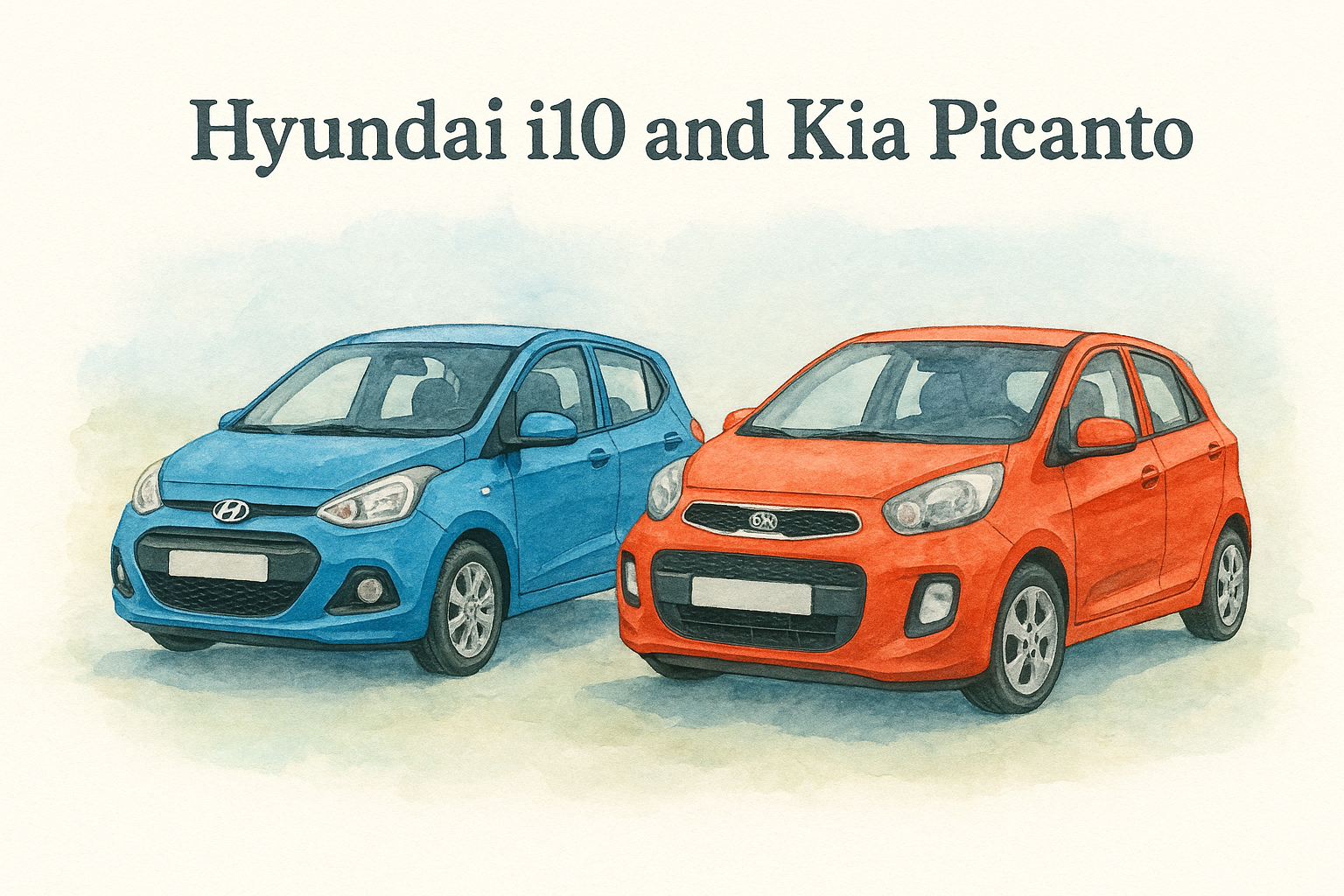
The Hyundai i10 and Kia Picanto are two of the most consistently affordable city cars on the used market, and both sit firmly among the cheapest cars to tax UK drivers can realistically find. Produced by the same parent company, they share similar engineering principles that keep CO2 figures low and VED costs manageable year after year.
Why these city cars often sit in £20 to £30 bands
Both models rely on small-capacity petrol engines that produce modest CO2 outputs. Most i10 and Picanto variants registered between April 2001 and March 2017 land in the £20 or £30 VED band thanks to emissions between 100g/km and 120g/km. Certain earlier versions with lighter specifications dip below 100g/km, placing them in the £20 annual bracket and making them particularly attractive for cost-conscious buyers.
Always check the CO2 figure on the V5C directly rather than relying on the listed trim level, as specification changes between model years can shift emissions slightly.
Which engines and years to target for low VED
The 1.0-litre petrol engine is the version to prioritise in both models. Picanto examples from 2012 to 2016 and i10 variants from the same period regularly return CO2 figures of 99g/km to 109g/km in standard form, keeping annual tax at £20 to £30. Avoid the 1.2-litre engines if minimising VED is your priority, as these tend to push emissions slightly higher.
Running costs to watch alongside road tax
Low VED is only part of the picture. Insurance groupings for both cars are typically low, and fuel economy is strong, but check service history carefully before buying, as missed maintenance on these smaller engines can lead to repair bills that quickly outweigh any tax savings you gain.
4. Skoda Fabia
The Skoda Fabia is a practical hatchback that regularly appears among the cheapest cars to tax UK buyers consider, and for good reason. Certain versions sit in VED bands as low as £0 to £30 per year, making it a strong option if you want more interior space than a city car without pushing running costs up.
Which Fabia versions can hit £0 to £30 VED
Fabia models from 2015 to 2021 fitted with the 1.0-litre MPI or TSI petrol engine regularly return CO2 figures between 95g/km and 115g/km, placing most versions in the £20 or £30 VED band. Earlier second-generation models with the 1.2-litre petrol can also reach the £30 bracket if the CO2 figure on the V5C falls below 120g/km.
A handful of Fabia variants with stop-start technology produce sub-100g/km CO2, which drops annual tax to £20 on pre-2017 registrations.
How the registration date changes what you pay
Registration date is the single biggest variable when calculating Fabia VED. Models registered before April 2017 are taxed on CO2 output alone, while those registered from April 2017 onwards pay a flat standard rate after their first year, regardless of emissions.
Checking the V5C registration date before you agree a price lets you apply the correct tax rules immediately and avoids any confusion at the point of purchase.
What to avoid if you want to keep tax low
Steer clear of 1.4-litre and 1.6-litre petrol variants, as these emit significantly more CO2 and fall into higher VED brackets. Any Fabia modified since manufacture may carry an altered emissions figure that no longer matches the original DVLA record, complicating both taxing and insurance. Variants to avoid include:
- Fabia vRS performance models
- Any example with a modified exhaust or engine tune
- Higher-displacement diesels from the early second-generation range
5. Ford Fiesta
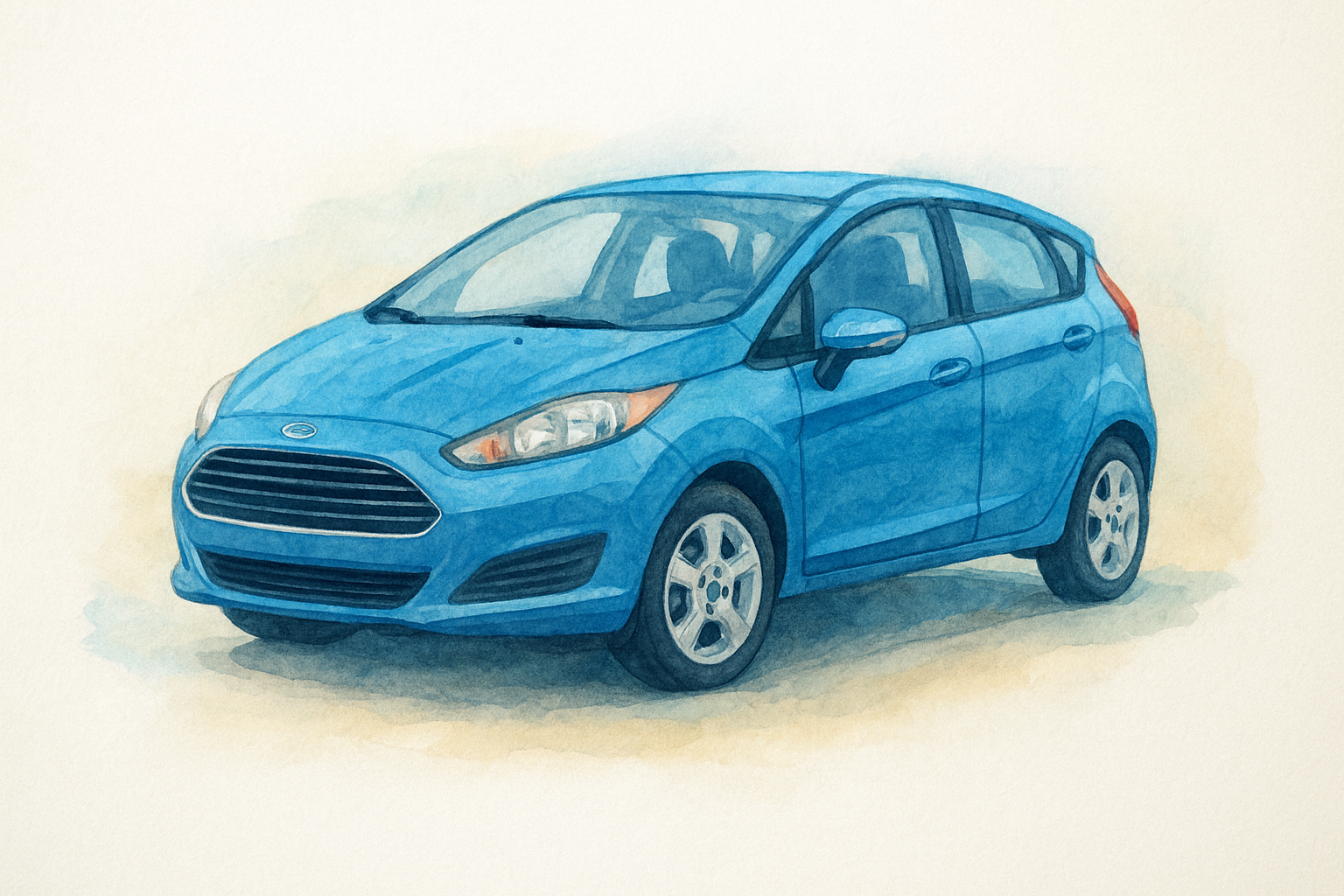
The Ford Fiesta remains one of the most popular used cars in the UK, and certain versions rank among the cheapest cars to tax UK buyers can find in this size class. With millions sold across multiple generations, low-emission variants are genuinely easy to locate on the used market at competitive prices.
The Fiesta variants that commonly qualify for low VED
Petrol Fiesta models registered between April 2001 and March 2017 are taxed on CO2 output. The 1.0-litre EcoBoost three-cylinder engine, introduced from 2012 onwards, regularly produces between 99g/km and 109g/km CO2, landing most versions in the £20 or £30 VED band. Specific 1.0-litre variants with stop-start technology dip below 99g/km, qualifying for the £20 annual rate.
Always target the 1.0-litre EcoBoost over the older 1.25-litre or 1.4-litre petrol engines, as both tend to carry higher CO2 figures that push VED above £30.
How to verify CO2 ratings and tax band before purchase
Your V5C logbook lists the official CO2 figure DVLA uses to set the tax band, so check this before you commit to a price. Cross-reference that figure against DVLA's own records online to confirm they match. Registration date is equally important, as Fiestas registered from April 2017 use a flat standard rate structure regardless of emissions.
The trade-offs with older low-tax Fiesta models
Older Fiestas with low VED can carry higher mileage and general wear than newer alternatives, which introduces maintenance costs that quickly cancel out any annual tax saving. Check service history and MOT records carefully, as high-mileage EcoBoost engines particularly benefit from verified oil change intervals.
6. Nissan Qashqai
The Nissan Qashqai surprises many buyers who assume that a family-sized SUV automatically means a heavy tax bill. Certain versions actually qualify for £30 VED per year, placing the Qashqai among the more unexpected entries on any cheapest cars to tax UK list and making it worth serious consideration if you need more space without a steep running cost penalty.
How a family SUV can still qualify for £30 VED
Qashqai models registered between April 2001 and March 2017 are taxed on CO2 emissions. The 1.2-litre petrol DIG-T engine, introduced with the second-generation Qashqai from 2014, produces CO2 figures around 117g/km to 127g/km in standard form, landing many variants in the £30 VED band. Diesel versions with the 1.5 dCi engine can also dip into this bracket, though fuel type and trim level both influence the final figure.
Always confirm the CO2 figure on the V5C before you rely on any band estimate, as Qashqai variants from the same model year can differ depending on specification.
The exact variant details that matter for low tax
Manual gearbox versions consistently return lower CO2 figures than automatic equivalents. Targeting a second-generation Qashqai with a manual transmission and the smaller petrol or 1.5 dCi diesel engine gives you the best chance of landing in the £30 band on pre-2017 registrations.
Checks to run before you commit to a specific Qashqai
Qashqais registered from April 2017 onwards pay the flat standard rate regardless of emissions, so verify the registration date on the V5C first. Also check MOT history for any emissions-related advisories, as these can signal engine issues that inflate future costs beyond road tax alone.
A simple way to double-check before you buy
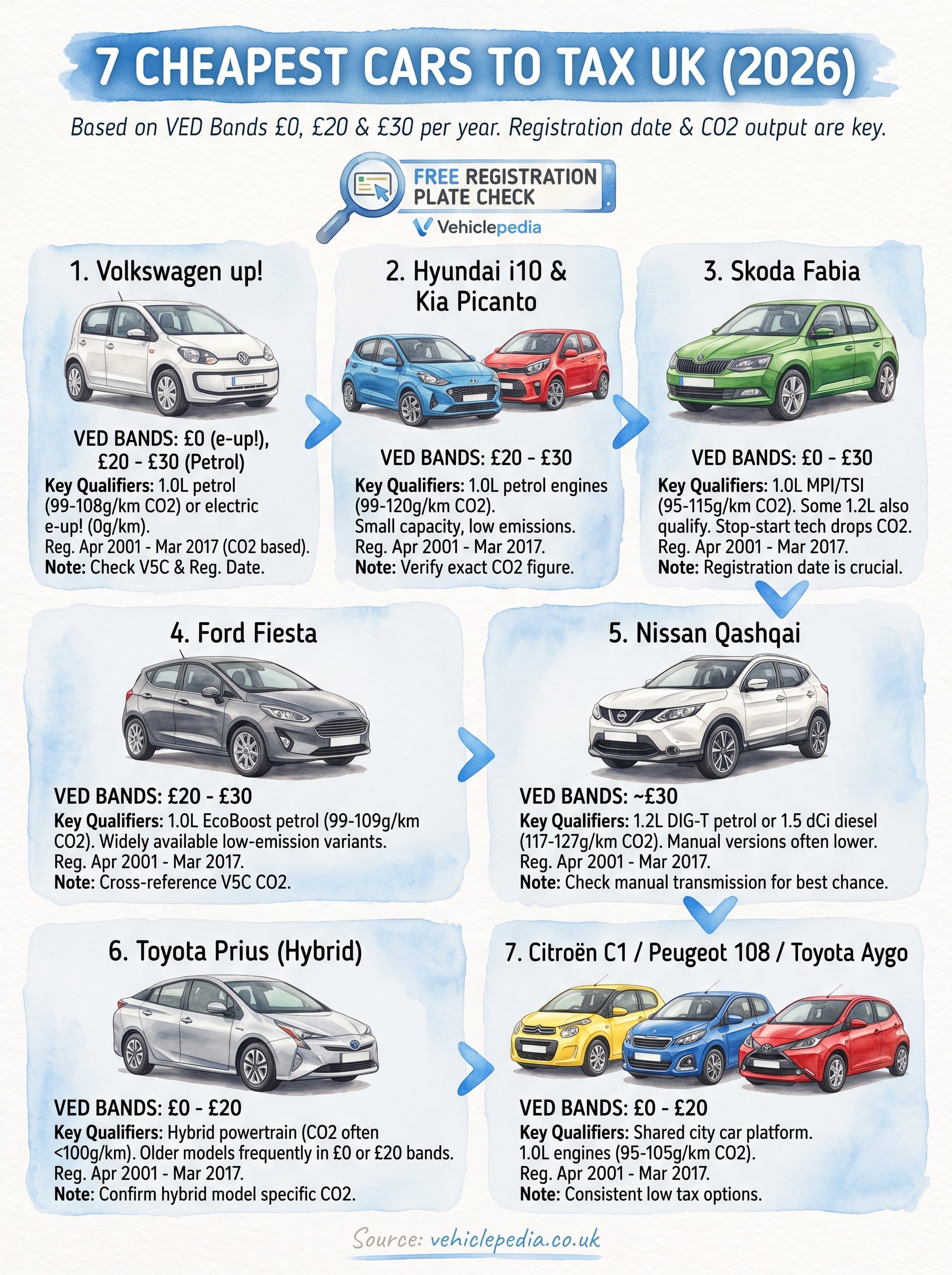
Every car on this list can keep your annual road tax bill to a minimum, but the actual figure you pay depends entirely on the specific vehicle you're buying. Trim level, registration date, and engine variant all shift which VED band applies, and sellers don't always get these details right.
Running a Vehiclepedia registration check before you agree a price takes minutes and pulls the exact CO2 figure, registration date, and vehicle status directly from official DVLA records. You can confirm that the car you're considering genuinely qualifies for the £0, £20, or £30 band you're targeting, and spot any outstanding finance or write-off markers that could complicate the purchase. Finding the cheapest cars to tax UK buyers can actually own means verifying the details before you commit. Check a car's tax band and full history and buy with complete confidence.