How to Check the History of a Car in the UK
Learn how to check history of car UK sellers won't mention, spot clocked mileage, finance, write-offs and stolen status before you buy.
How to Check the History of a Car in the UK
Buying a used car without checking its background is a gamble. That dent-free bodywork could be hiding a written-off shell, and a friendly seller might conveniently forget about the outstanding finance still attached to the logbook. If you want to check history of car uk before you hand over any money, you need more than a quick look under the bonnet.
The good news is that every registered vehicle in Britain leaves a paper trail, and most of it is accessible with nothing more than the number plate. A proper vehicle history report uk pulls together MOT records, mileage patterns, tax status, ownership changes, and safety flags like stolen or write-off markers, all sourced from official databases including the DVLA and police registers.
This guide walks you through exactly how to run a car check history uk step by step, what each result actually means, and which checks are worth paying for versus what you can get for free. By the end, you will know precisely what to look for before you commit to buying any second-hand car.
Why you should check a car's history before buying
Every year, thousands of UK buyers hand over cash for a car that turns out to be clocked, cloned, or carrying hidden finance. The seller rarely volunteers this information, and a car that looks pristine on a driveway can still be a category N write-off that's been cosmetically patched up. Without a history check, you're relying entirely on the seller's word, and that's not a position you want to be in when you're spending several thousand pounds.
Money is only part of the risk. If a car turns out to have undeclared outstanding finance, the finance company technically still owns it, even if you paid the seller in full. That means it can be repossessed from your driveway with no compensation to you, because you never legally owned it in the first place. Buying a stolen vehicle carries the same outcome: the police will recover it and return it to its rightful owner, leaving you out of pocket.
A five-minute registration check can save you from a five-figure mistake.
Safety is the other reason this matters. A car with a rolled-back odometer might be due for major work far sooner than the dashboard suggests, and a poorly repaired write-off can have structural issues that only show up in a crash. Checking MOT history also tells you whether a car has a pattern of recurring advisories, which often signals a seller is doing the bare minimum to pass each test rather than properly maintaining the vehicle.
Finally, a history check protects your negotiating position. If the report flags a shorter MOT than expected, a tax band mismatch, or a change of colour that doesn't match the listing photos, you have concrete grounds to question the price or walk away entirely. Sellers who have nothing to hide won't object to you running one before you commit.
Step 1. Gather the registration number and V5C details
Start with the basics: you need the vehicle registration number clearly visible on the number plate, and ideally a look at the V5C registration certificate (the logbook) if the seller has it to hand. The registration number is all you strictly need to run a free check, but the V5C gives you extra confirmation points that matter once you're standing in front of the car.
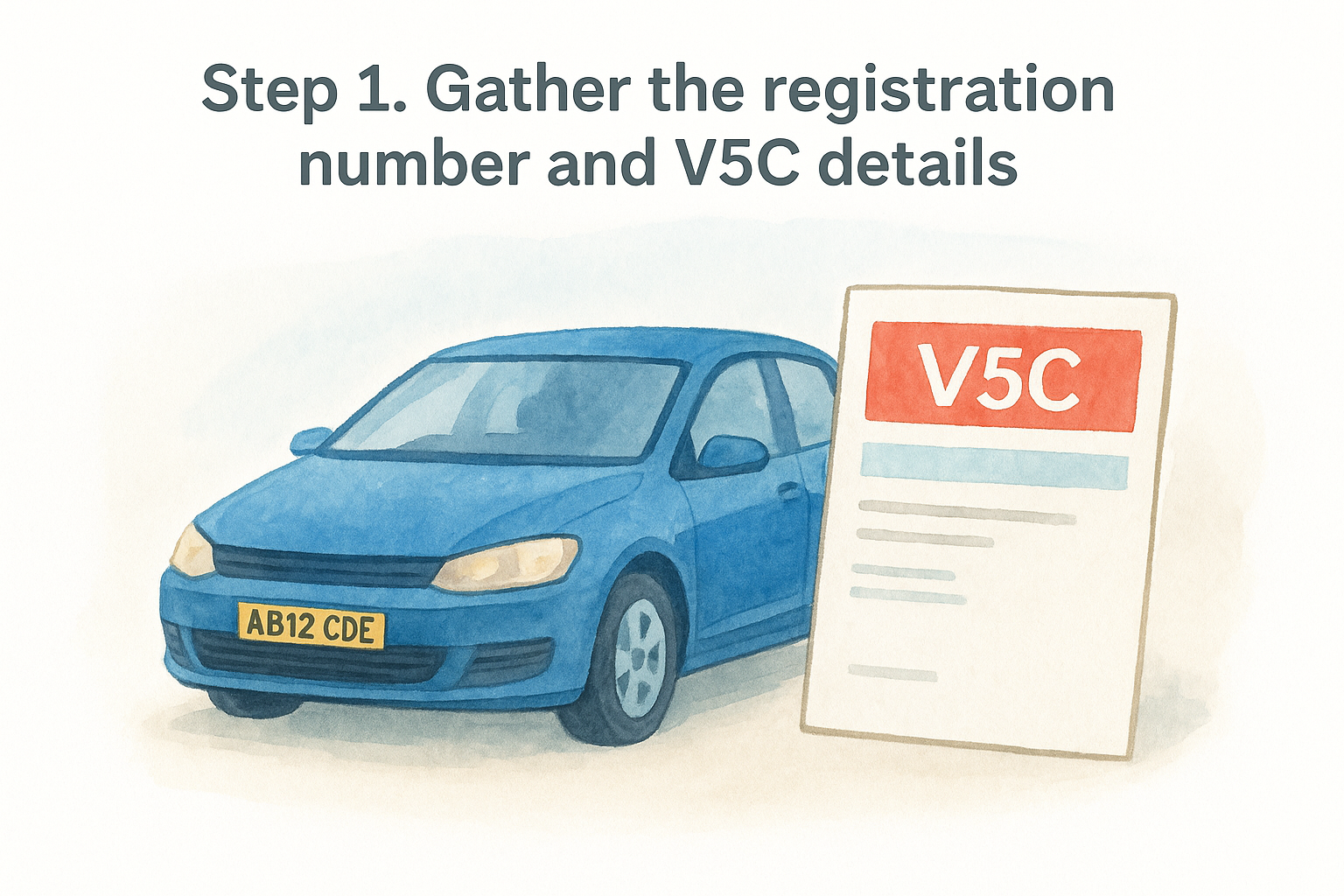
Before you type anything into a checker, compare these details from the V5C against the car itself:
- Registration number matches the plates exactly
- VIN (chassis number) stamped on the car matches the document
- Colour listed matches what you're looking at
- Registered keeper's name and address matches who you're dealing with
- V5C document reference number isn't crossed out or altered
A mismatched VIN or a suspiciously fresh-looking V5C is often the first sign something's wrong.
If the seller can't produce a V5C at all, treat that as a warning sign rather than a minor inconvenience. Genuine private sellers almost always have it, since it's needed to tax the car and transfer ownership. Once you've confirmed these details line up, you're ready to run the registration through a proper checking service.
Step 2. Check free MOT, tax and mileage records
With the registration confirmed, run it through Vehiclepedia's free car check to pull the MOT records by registration, road tax status, and mileage record straight from official DVLA and DVSA data. You'll get the MOT expiry date, pass and fail history, and any advisories logged at each test, plus whether the car is currently taxed or SORN.
Pay close attention to the mileage progression across MOT records. A genuine car shows steady, plausible increases year on year. Watch for these red flags:
- Mileage that drops between consecutive tests
- Large jumps that don't match the car's age or use
- Gaps where no MOT was recorded for over a year
- Recurring advisories for the same fault, suggesting neglect
If the mileage story doesn't add up, walk away before you waste time on anything else.
Road tax status matters too. If the vehicle shows as SORN, ask why it's off the road, since it could mean it's been sitting unused with mechanical problems, or the seller hasn't been driving it legally. These free checks won't tell you about finance or write-off status, but they're the fastest way to rule out an obviously problematic car before you invest in a premium report.
Step 3. Check for stolen status, finance and write-offs
Free checks won't reveal whether a car is stolen, still owed on finance, or was previously written off. These come from insurance industry registers and the Police National Computer, not the DVLA, so you need a premium report to access them. Vehiclepedia's premium vehicle check pulls all three together in one report, backed by a £30,000 data guarantee for private buyers.
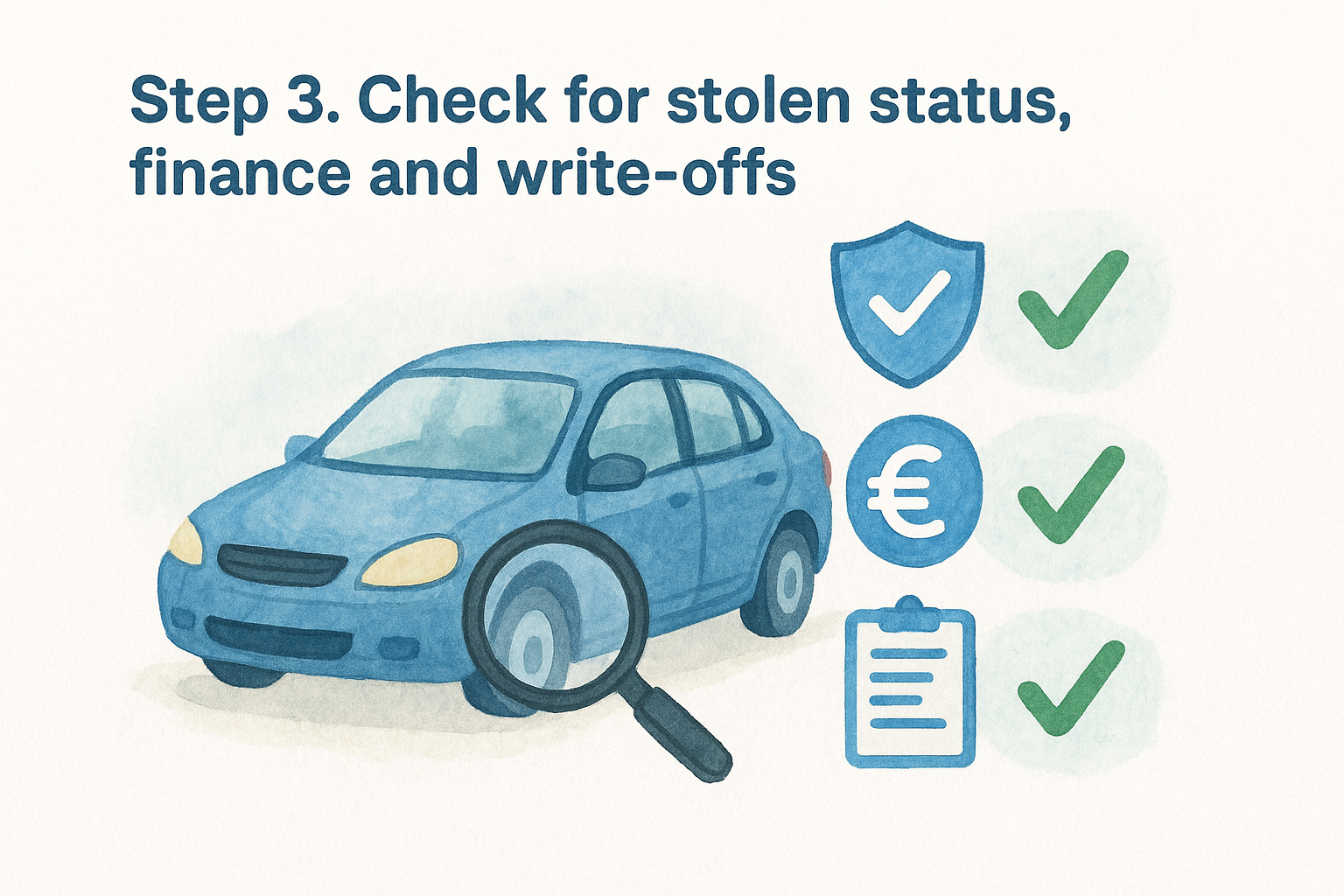
Here's what each check actually protects you from:
- Stolen check: cross-references the registration against the police database. A stolen car gets recovered by police with no compensation to you, regardless of what you paid.
- Finance check: reveals outstanding loans or hire purchase agreements. Buying a financed car doesn't clear the debt; the finance company can still repossess it.
- Write-off check: shows insurance category (A, B, S, or N) if the car was ever declared a total loss, even after cosmetic repairs.
Never buy a used car without ruling out stolen status, finance, and write-off history first.
These three checks matter most for cars bought privately, since dealers are legally required to disclose known issues, but private sellers face no such obligation. Run this before you transfer any money, not after you've already agreed a price.
Step 4. Review the report before you buy
Once your report lands, don't just skim the top line and move on. Read every section carefully and cross-check it against what the seller told you and what the V5C shows. This is where a thorough vehicle history report uk earns its keep, turning raw data into a clear picture of what you're actually buying.
Work through this checklist before you commit to anything:
- Does the mileage on the report match the odometer reading in front of you?
- Is the MOT expiry date what the seller claimed?
- Are there any stolen, finance, or write-off flags at all?
- Does the number of previous keepers match the seller's story?
- Has the colour changed at any point, and does that match the listing photos?
If any answer surprises you, treat that surprise as your cue to ask harder questions or walk away.
Question the seller directly about any discrepancy rather than assuming it's an admin error. Genuine mistakes happen, but a seller who gets defensive or vague when you raise a flagged issue is telling you something important. Take your time here; rushing this step is how people end up stuck with a car they can't legally sell on.
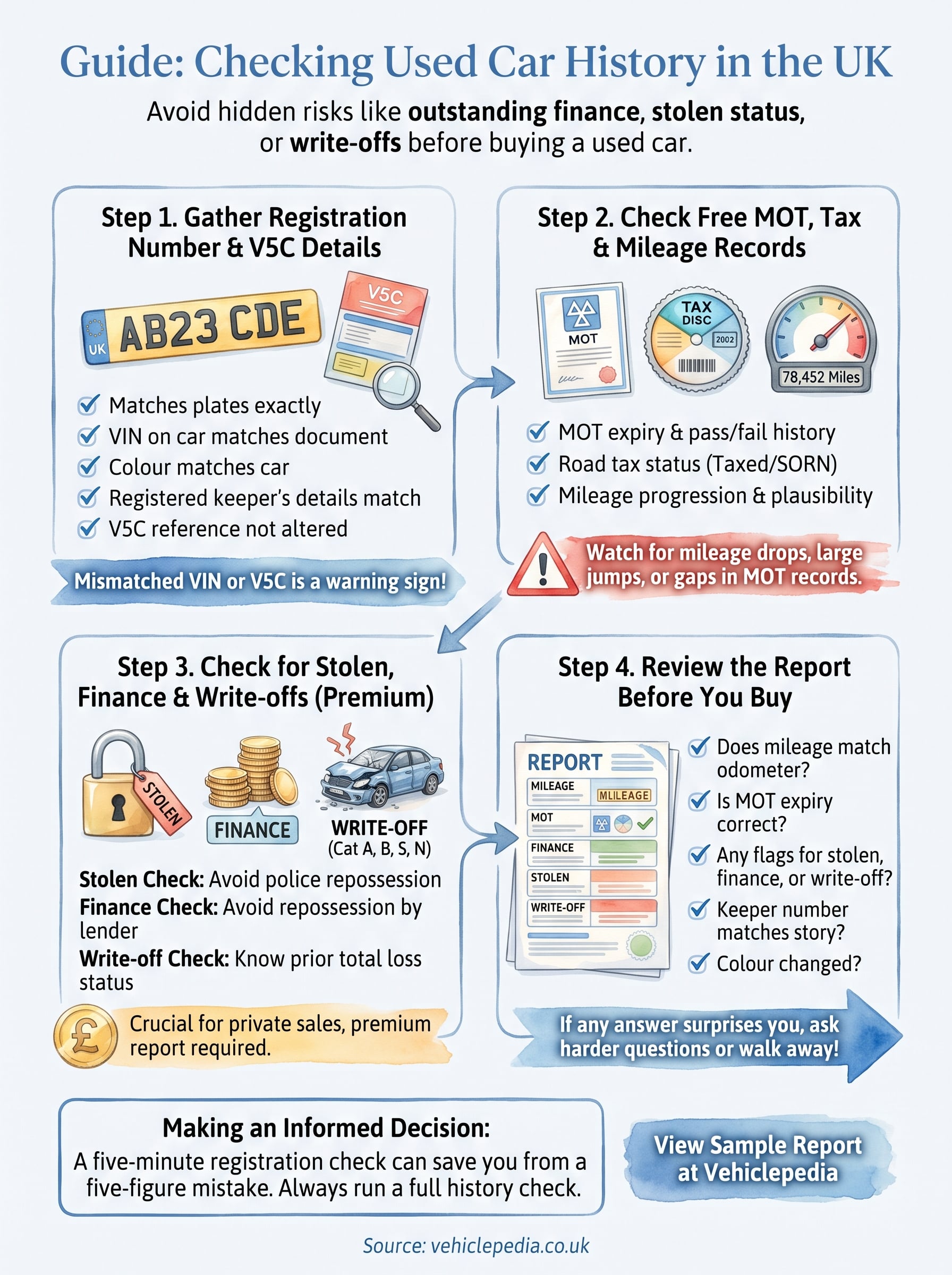
Making an informed decision
Running a check history of car uk before you buy isn't optional caution, it's basic due diligence that takes minutes and can save you thousands. Start with the free MOT, tax and mileage data to weed out obvious problem cars, then pay for the full stolen, finance and write-off checks before any money changes hands. Skip either step and you're gambling on a seller's honesty rather than verified facts from official registers.
Good sellers expect this scrutiny and won't flinch when you ask to run a check. If anything in your vehicle history report uk doesn't line up with what you're told or what the V5C shows, treat that as your answer and walk away. Curious what a full report actually looks like before you commit to buying one? Have a look at our sample premium car report and see exactly what you'll get.