Classic Car Tax Exemption UK: How the 40-Year Rule Works
Learn how classic car tax exemption UK rules work, why it's not automatic, and how to check DVLA records before buying a historic vehicle.

Classic Car Tax Exemption UK: How the 40-Year Rule Works
If your car is creeping towards its 40th birthday, you might be wondering whether you can stop paying road tax on it. The classic car tax exemption uk rule is exactly that: a rolling exemption that removes Vehicle Excise Duty from vehicles once they hit the 40-year mark, based on their build date rather than a fixed cutoff year like the old "pre-1973" rules people still ask about.
To qualify, your car needs to be registered as a historic vehicle with the DVLA, and the exemption only covers tax, not the MOT requirement, which has its own separate 40-year rule with different conditions attached.
This article walks through exactly how the 40-year rule works, which vehicles qualify, how to apply through the DVLA, and what to check before you assume your car is covered. If you're researching a used classic before buying, running a quick history check on Vehiclepedia first will confirm the registration date and tax status DVLA has on record, so you know precisely where the car stands before you commit.
Why the classic car tax exemption matters
Owning a car that's about to turn 40 isn't just a milestone for petrolheads, it's a genuine financial and legal turning point. The historic vehicle tax exemption removes an annual bill that, for many owners, is the biggest recurring cost of keeping a classic on the road. Beyond the money, the exemption recognises that vehicles built decades ago are driven differently: fewer miles, more careful maintenance, often preserved rather than used as daily transport. Grasping why this rule exists helps you see it's not a loophole, it's a deliberate policy choice reviewed and rolled forward by successive governments.
The financial saving is real
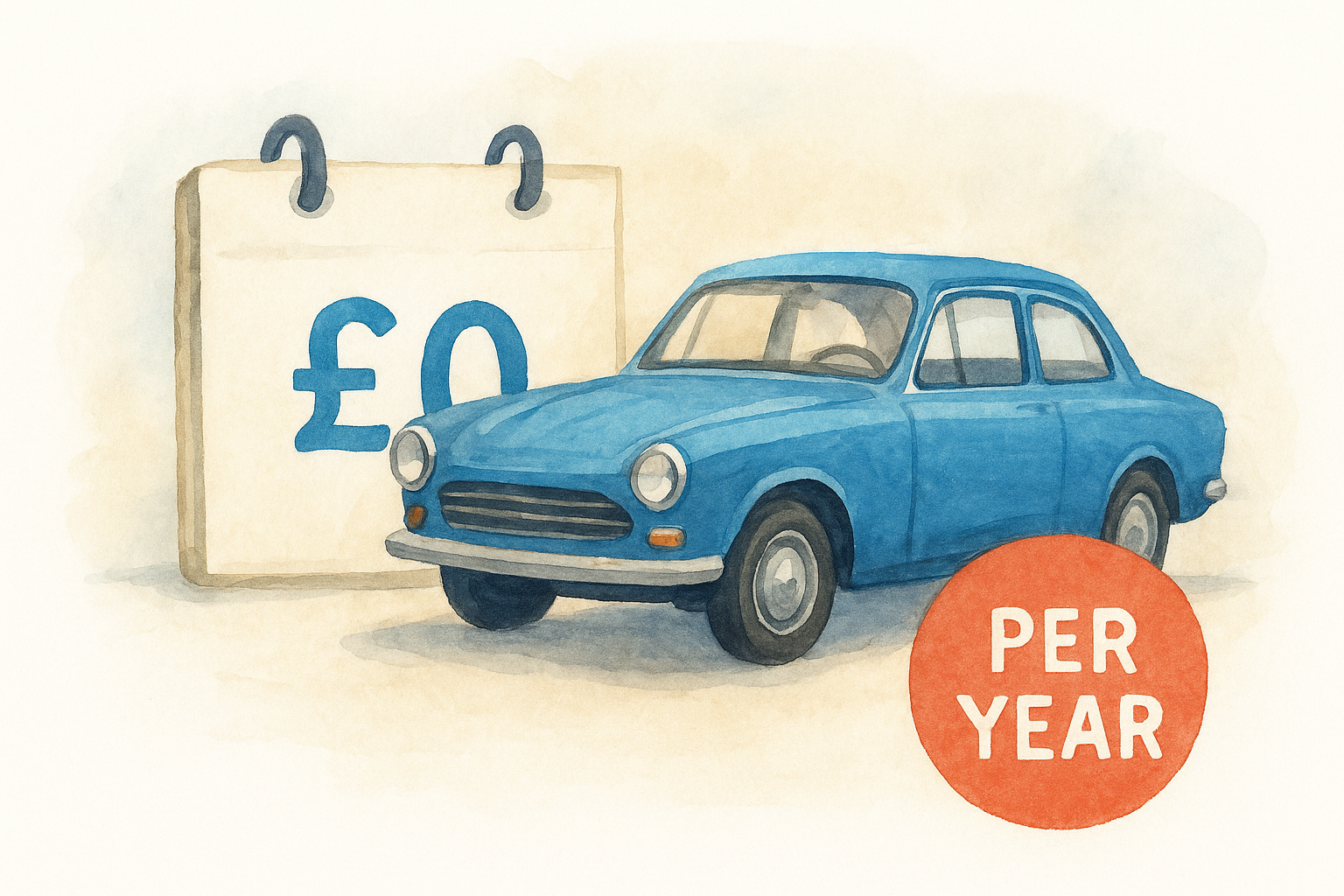
Skipping Vehicle Excise Duty (VED) altogether means classic car owners avoid the VED bands and rates that regular petrol and diesel drivers pay every year. Depending on engine size and emissions class, that's often £180 to over £600 saved annually just by qualifying for historic vehicle status.
| Vehicle type | Typical annual VED |
|---|---|
| Standard petrol/diesel car (post-2017 rules) | £180-£600+ |
| Historic vehicle (40+ years, exempt) | £0 (small admin fee to register) |
| Alternative fuel car | Reduced rate, still payable |
Reaching 40 years old can quietly save a classic car owner several hundred pounds every single year, for as long as they own the car.
Spread that saving across a decade of ownership and it becomes a meaningful part of what it actually costs to keep a classic on the road, not just a nice-to-have.
It's about heritage, not just money
Historically, the exemption exists because Parliament recognised that older vehicles form part of Britain's automotive heritage and shouldn't be taxed off the road simply because they're old. Lawmakers have kept moving the qualifying date forward specifically so genuinely historic cars stay accessible to enthusiasts rather than becoming too expensive to run and maintain.
Government data also shapes the policy: classic cars typically cover far fewer miles annually than daily drivers, so the tax and environmental case for charging full VED on them is weaker. This same reasoning sits behind the separate, and slightly different, classic car MOT exemption that applies to vehicles of the same age.
Exemption status affects resale value too
Buyers actively search for cars that already qualify, or are close to qualifying, because it changes the ongoing cost of ownership from day one. A car sitting one or two years shy of the 40-year cutoff can be genuinely more attractive to patient buyers, while one that already carries confirmed exempt status often commands a small premium at sale. Verify that status independently rather than taking a seller's word for it. A quick check on Vehiclepedia against the DVLA record confirms the exact registration date and current tax class, so you're not caught out by an overly optimistic advert.
How to check if your car qualifies for exemption
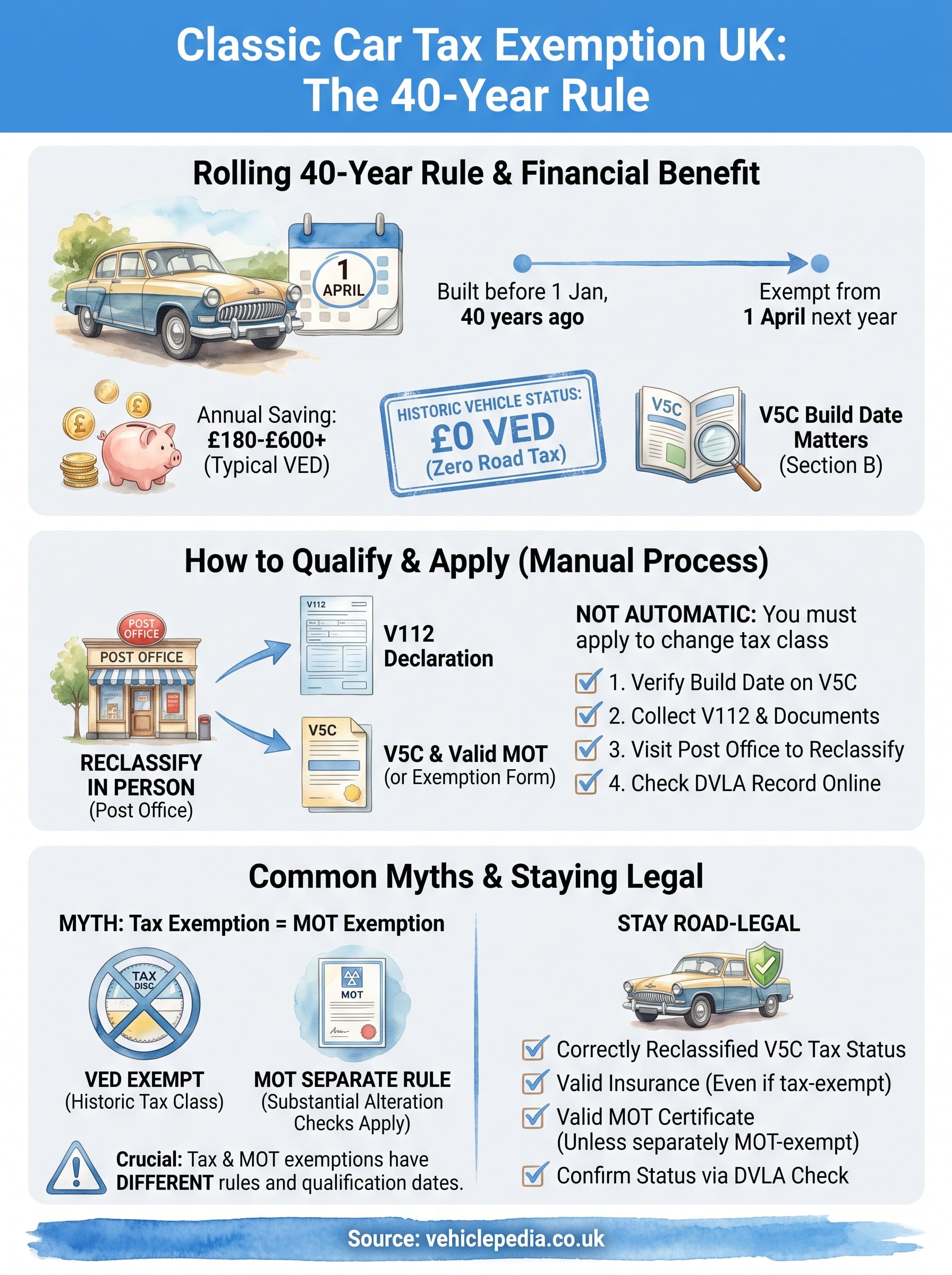
Working out whether a car actually qualifies takes more than counting back 40 years from today. The DVLA applies a rolling exemption date, so a car becomes eligible for historic vehicle tax class on 1 April each year if it was built before 1 January, 40 years earlier. That means a car built in 1985 doesn't become exempt until April 2026, not January 2025, and the gap catches a lot of owners out.
Know the exact qualifying date
Before assuming anything, find the date of manufacture on your V5C logbook, in section B. If that field is blank, DVLA falls back on the date of first registration instead, which can shift things by months if the car sat unsold before being plated. Cars registered between 1983 and 1985 often trip people up here, since a late-year build date can push the exemption back a full year compared with what the registration plate implies.
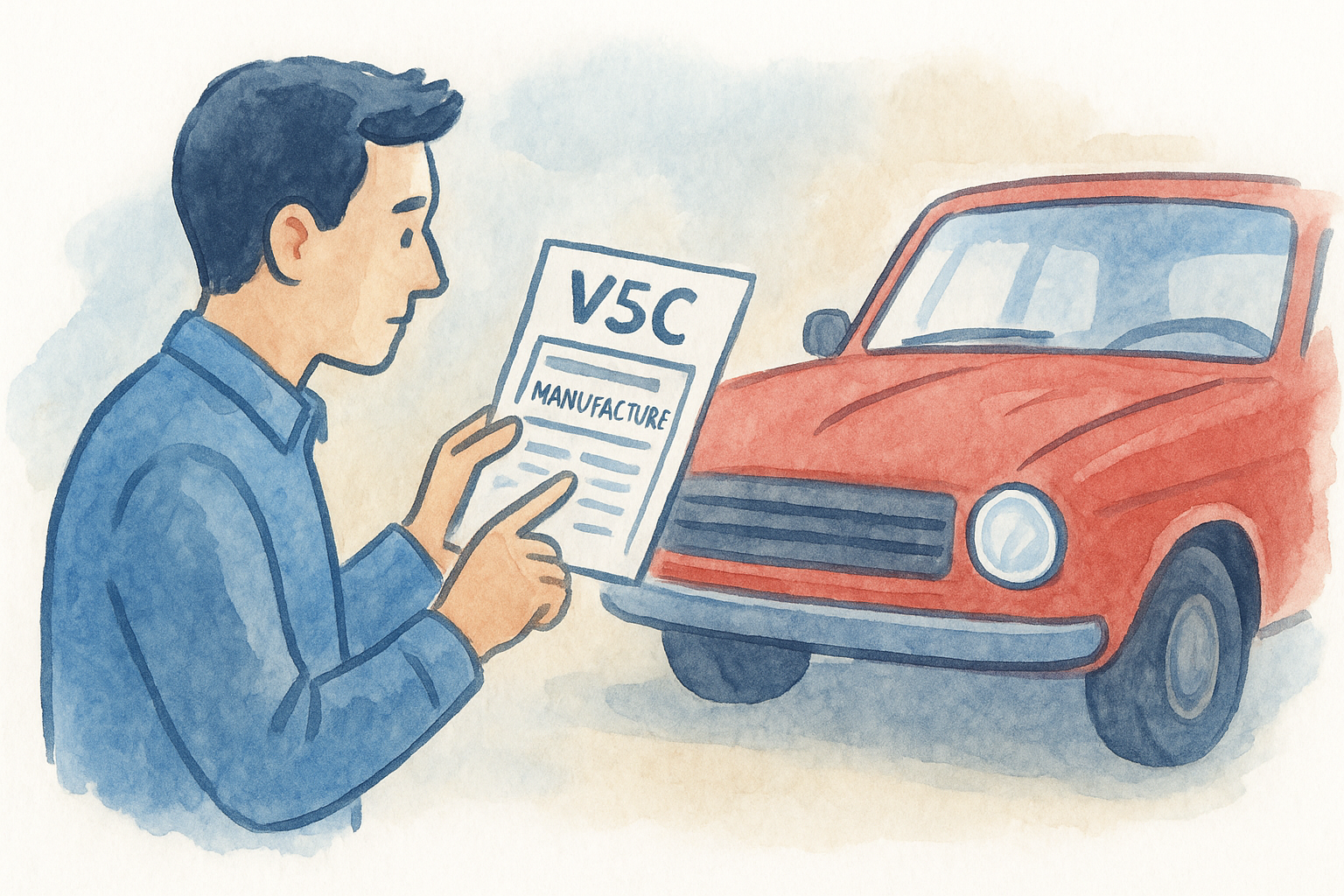
A car's exemption date is set by its build year, not its number plate, and getting that wrong is the most common reason applications get rejected.
Confirm the details before you rely on them
Don't take a logbook, an advert, or a seller's word for it. Run these checks before assuming your car qualifies:
- Check the DVLA vehicle enquiry service for the recorded tax status and MOT history
- Compare the build date on the V5C against the first registration date
- Look for any gap between manufacture and registration that could delay eligibility
- Confirm the current tax class shown on record, not just the vehicle's age
Running a check through Vehiclepedia pulls the DVLA's own registration and tax data together in one place, so you can see exactly where a car stands before assuming the exemption applies.
How to apply for historic vehicle tax exemption
Applying for the historic vehicle tax class isn't automatic, even once your car passes the 40-year threshold. You need to actively reclassify the vehicle with DVLA, and until you do, the system will keep charging standard VED regardless of the car's actual age. Most owners handle this in person at a Post Office that deals with vehicle tax, much like taxing a car at a Post Office normally works, though you can also start the process by post if you'd rather avoid the queue.
What you'll need on the day
Before heading out, gather the paperwork. Missing a single document usually means a wasted trip, so check everything against this list first:
- A valid V5C logbook explained showing the correct date of manufacture or first registration
- A V112 form to declare the vehicle as exempt from tax
- A valid MOT certificate, unless your car also qualifies for the MOT exemption
- Confirmation of current insurance, even though it isn't taxed
Reclassifying to historic tax class is a manual step, and DVLA won't do it for you just because your car has turned 40.
Submitting the application
Hand these documents to the Post Office clerk and ask specifically for historic vehicle reclassification, not just standard tax renewal, since the two processes look similar but produce different outcomes. Staff will update the vehicle's tax class on DVLA's system there and then, and you'll walk away with confirmation that the car now sits in the exempt category going forward.
Once it's done, check your car's status through the official DVLA vehicle check a few days later to confirm the change has actually registered. If you're buying rather than selling, checking whether a car is taxed by running the same registration through Vehiclepedia beforehand tells you whether the current owner has already completed this step, saving you from inheriting a paperwork gap.
Common mistakes and myths to avoid
Misunderstandings about the 40-year tax exemption cause more failed applications than any paperwork error. Most stem from confusing this rule with the separate MOT exemption, or assuming a car's age alone is enough without DVLA actually updating its records. Clearing up these myths now saves you a wasted trip to the Post Office later.
The exemption isn't automatic
Owners often assume that once a car turns 40, the system quietly stops charging tax on its own. It doesn't. DVLA keeps billing standard VED until you submit the V112 declaration and reclassify the vehicle in person or by post. Skip that step and you'll keep paying full rate indefinitely, even on a genuinely qualifying car.
A car doesn't become tax exempt just by getting older, you have to tell DVLA and get the record changed.
Tax exemption and MOT exemption aren't the same thing
This is the single most common mix-up. The classic vehicle tax exemption covers VED only, while the MOT exemption has its own separate rules and only applies if the car hasn't been substantially altered. Plenty of owners stop taxing correctly but wrongly assume they can also skip the MOT, which leaves the car uninsured and illegal to drive if something goes wrong.
| Myth | Reality |
|---|---|
| "40 years old means no tax and no MOT" | Tax and MOT exemptions are separate, with different qualifying rules |
| "My registration plate proves the date" | DVLA uses the build date on the V5C, not the plate |
| "Exemption applies the day it turns 40" | It applies from the next 1 April after the qualifying date |
| "Modified classics still count as historic" | Substantial changes can disqualify a car from the MOT exemption |
Before relying on any of these assumptions, check the actual DVLA record. Vehiclepedia's free vehicle check confirms the recorded tax class and build date in seconds, so you're working from fact rather than a myth someone repeated at a car meet.
Staying road-legal as a classic car owner
Qualifying for the classic car tax exemption uk rule is only half the job. You still need accurate paperwork, a correctly reclassified tax status, and clarity on whether the MOT exemption applies too, since assuming one covers the other is how owners end up driving illegally without realising it. Getting the build date right on your V5C, applying properly through DVLA, and rechecking the record afterwards keeps everything above board rather than resting on guesswork.
Buying rather than restoring? Don't take a seller's claims about historic status at face value. A car listed as tax-exempt should show that clearly on DVLA's own record, and verifying it before you hand over money costs a few minutes against years of potential hassle. Compare what's included in each check level and price and pick the report that gives you confidence before you buy.