DVLA Stolen Car Check Online: How to Verify by Reg
Why a DVLA stolen car check online can't confirm theft, and how to properly verify a reg using police-sourced data before you buy.

DVLA Stolen Car Check Online: How to Verify by Reg
You've found a car you like, the price looks decent, and now you want to make sure it hasn't been reported stolen before you hand over any money. Running a dvla stolen car check online feels like the obvious first move, but here's the catch: the DVLA itself doesn't run a stolen vehicle register you can search directly. That job sits with the police, and that's exactly why so many buyers end up confused about where to actually look.
The real answer is straightforward once you know it. A proper stolen vehicle check pulls data from the Police National Computer, cross-referenced against DVLA registration records, using nothing more than the car's number plate. You don't need to visit a police station or wait days for a response, a reg plate lookup gives you an instant yes or no on stolen status alongside other red flags worth knowing about.
This guide walks you through exactly how that process works, what gov.uk actually covers versus what it doesn't, and where to run a genuine stolen car check using official police and DVLA data before you commit to buying.
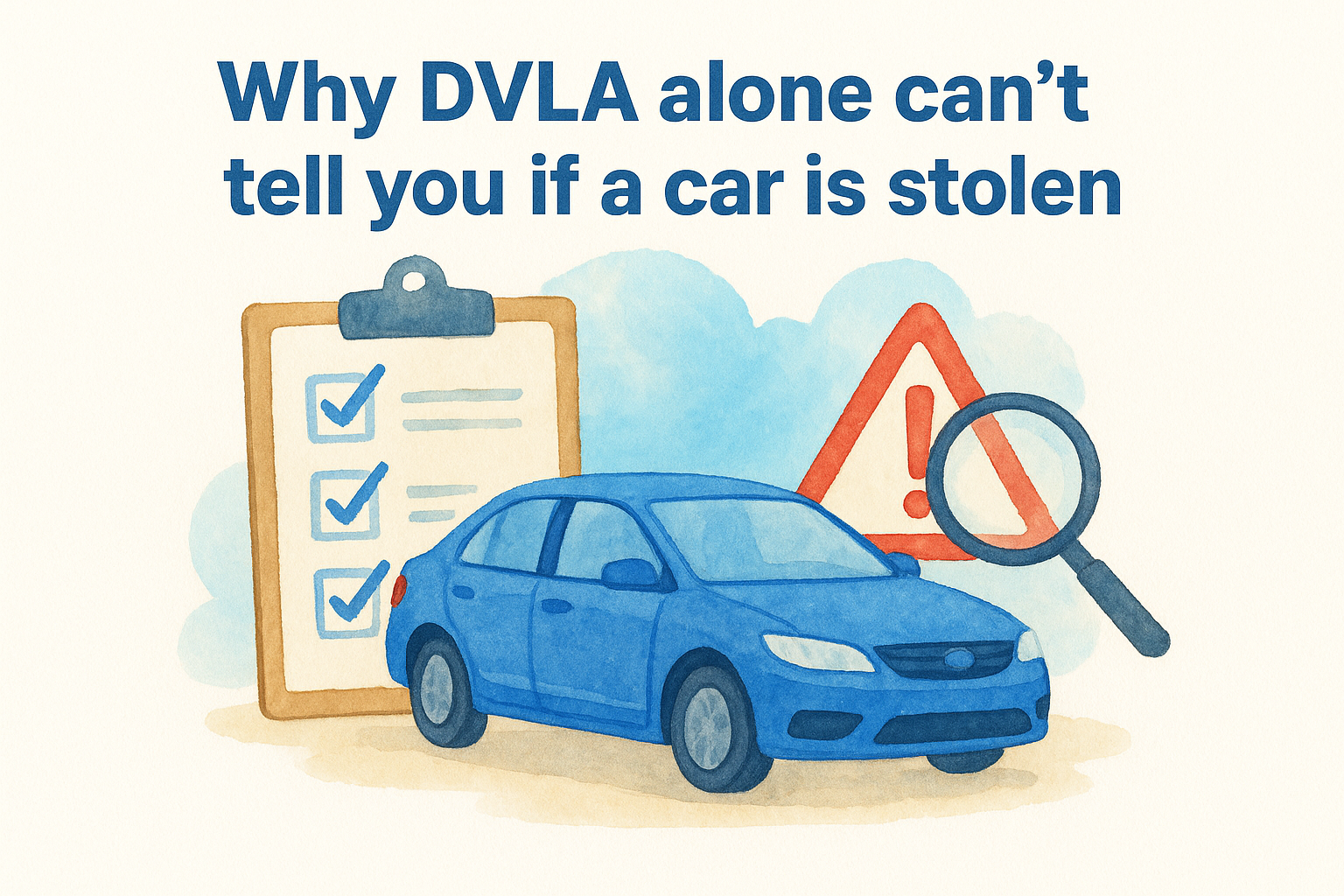
Why DVLA alone can't tell you if a car is stolen
Most buyers assume a dvla vehicle check stolen search is just another field on the standard gov.uk lookup tool. It isn't. The free service at gov.uk was built to confirm tax and MOT status, not to flag stolen vehicles, and that gap catches out plenty of people who think they've done their due diligence when they've only checked half the picture.
What the free DVLA vehicle check actually shows
Running a plate through the official gov.uk vehicle enquiry service gives you what a free DVLA vehicle check shows: tax status, MOT expiry, engine size, colour, and the date first registered. Useful information, but none of it tells you whether the car has been reported to police as stolen. Here's the split:
| Data point | DVLA vehicle check | Stolen vehicle check |
|---|---|---|
| Tax status | Yes | No |
| MOT history | Yes | No |
| Colour changes | Yes | No |
| Stolen status | No | Yes |
| Police marker | No | Yes |
Where stolen vehicle records actually sit
Stolen reports live on the Police National Computer, managed by police forces across the UK, not by the DVLA. When someone reports a car stolen, that record gets logged with the police, and it's this database that a police stolen vehicle check needs to query, cross-referenced against the registration, to return an accurate answer. The DVLA's own vehicle enquiry service confirms as much: it deals with keeper and tax records, not crime data.
A stolen car check dvla search alone will never confirm stolen status, because the DVLA doesn't hold that data in the first place.
Knowing this distinction upfront saves you from a false sense of security. Getting a clean tax and MOT result doesn't mean the car's clear, it just means those two boxes are ticked.
Step 1. Gather the vehicle's registration and documents
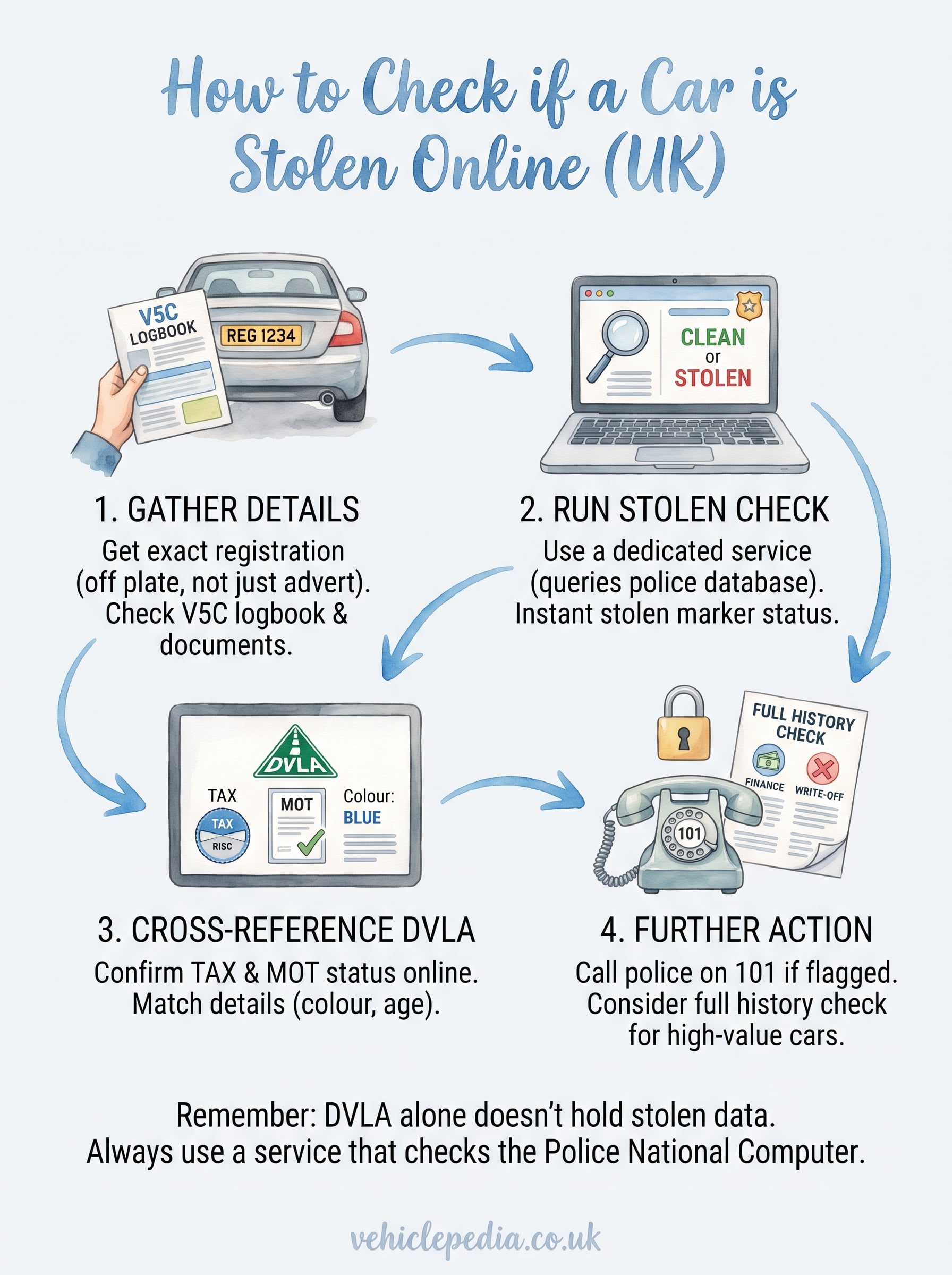
Before you run any dvla stolen car check online, get the basics sorted so you're not fumbling for details mid-search. You need the exact registration number, ideally read straight off the number plate rather than copied from an advert, since typos here return useless results. Grab the V5C logbook and check it against DVLA records too if the seller has it to hand, along with any service records or previous MOT certificates. These documents don't confirm stolen status by themselves, but they help you spot mismatches between what the seller tells you and what's on paper.
What to have ready before you search
- The full registration plate, checked twice for accuracy
- The V5C logbook, if the seller can produce it
- Any MOT or service history documents on offer
- The seller's name, matched against the V5C keeper details
Get the registration wrong and every check that follows is worthless, so double-check it before you type a single digit.
Sellers who stall on producing a V5C or claim it's "in the post" deserve extra scrutiny before you go further.
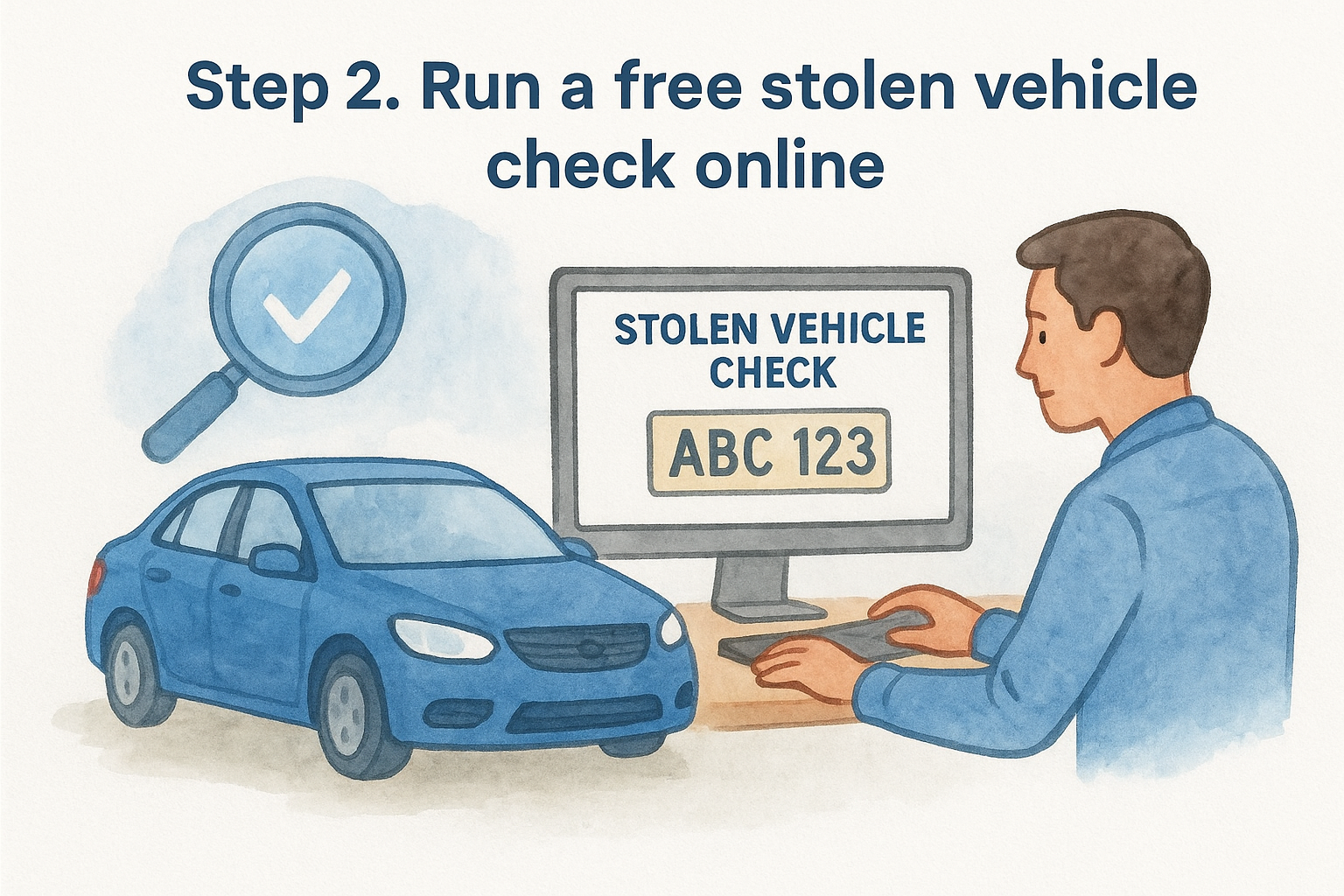
Step 2. Run a free stolen vehicle check online
Once you've got the reg written down correctly, head to a service that actually queries police stolen records, not just the DVLA tax database. Vehiclepedia's free stolen vehicle check by reg pulls this data automatically the moment you enter a plate, giving you a straight answer alongside MOT status, tax, and ownership history in one report. This is how most buyers now check if a car is stolen by license plate, checking stolen status by reg or VIN, without ever contacting a police station directly.
What a genuine check confirms
- Whether the vehicle carries an active police stolen marker
- Current tax and MOT status alongside the stolen result
- Basic registration details, so you can confirm the plate matches the car in front of you
Running a stolen car number plate check takes seconds, and results appear on screen instantly rather than after a wait.
A clean stolen check doesn't replace other due diligence, it just clears one serious risk off your list.
Treat this as step one of several, not the finish line. A stolen vehicle check free gov uk search doesn't exist in the form most buyers expect, so a dedicated service filling that gap is the practical route.
Step 3. Cross-check tax, MOT and other DVLA records
With the stolen check done, turn back to the official DVLA data and read it properly rather than glancing past it, which means checking tax and MOT online by reg. Tax and MOT status act as a second layer of confidence, and mismatches here often signal a car worth walking away from, stolen or not. If the seller says the car's taxed but the record shows it as SORN, ask why. If the MOT expired months ago but they're advertising it as "drives perfectly," that's a red flag worth chasing before you go further.
What to cross-check against the seller's story
- Tax status, confirmed as currently taxed, not just "paid recently"
- MOT history, checked for gaps, failures, or repeated advisories on the same fault
- Registration date, matched against what the seller claims about the car's age
- Colour on record, compared to the car parked in front of you
Official DVLA records won't confirm stolen status, but they'll expose lies about tax, MOT, and history that a stolen vehicle check never touches.
Treat these records as a cross-reference tool, not a standalone check. Together with the stolen marker from step 2, they build a much fuller picture of the car's real condition and history.
Step 4. Confirm with the police or a full history check
If your online check flags a stolen marker, or something about the seller's story still doesn't sit right, don't just walk away quietly. Contact the police non-emergency line on 101 and give them the registration, they can confirm whether a live report exists and advise on next steps before you lose any money. Treat an online result as a strong indicator, not a legal ruling, since the final word always sits with the police.
When to go beyond the basic check
For higher-value purchases, a full stolen vehicle check uk buyers rely on goes further than the free version. Vehiclepedia's premium vehicle check with a data guarantee adds finance checks, write-off history, and a police-sourced stolen marker in one report, backed by £30,000 of cover for non-trade buyers.
If a free check flags anything unusual, call 101 before you hand over a deposit, not after.
- Ring 101 with the registration if the stolen marker shows positive
- Ask the seller to explain any mismatch before proceeding
- Run a premium report on higher-value cars for extra legal protection
Buying a used car with confidence
Getting a straight answer on stolen status shouldn't need a police station visit or a guessing game with gov.uk. Running a dvla stolen car check online through a proper stolen vehicle service, then cross-referencing DVLA tax and MOT records, gives you a genuinely complete picture before you commit any money.
Higher-value purchases deserve more than the free check alone. Finance outstanding on a car, or a hidden write-off history, can cost you just as much as buying something stolen, and neither shows up on a basic plate lookup. Pairing a stolen marker check with a full history report closes that gap properly.
Before you view another car, see exactly what a full premium report covers, then decide if the extra protection is worth it for the car you've got your eye on. It usually is.