Electric Car Depreciation UK: How Fast EVs Lose Value
Electric car depreciation UK explained: typical 3-year losses of 40-60%, how EVs compare with petrol, what drives it and how to protect your money.

Electric Car Depreciation UK: How Fast EVs Lose Value
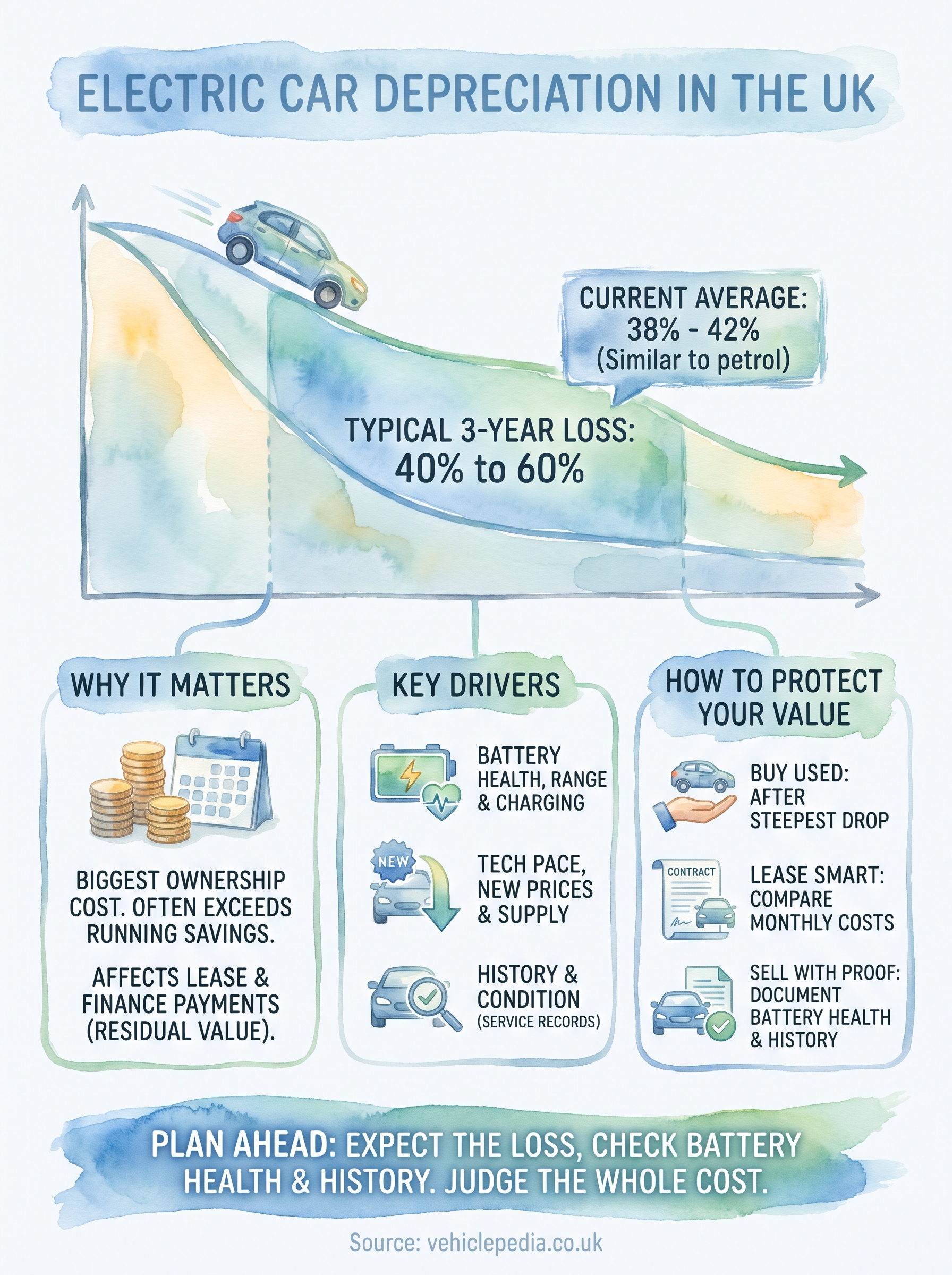
Electric car depreciation in the UK is the fall in an EV's value between the day it is first registered and the day you sell or hand it back, normally shown as a percentage of the new price. A typical electric car loses roughly 40% to 60% of its price over three years, depending on the model, the mileage and how the figure is measured. Recent market data puts the average at 38% to 42% after three years, against 35% to 40% for petrol cars.
Early EVs lost value faster than petrol and diesel cars because buyers were unsure about battery life and the used market was small. That gap has narrowed as more used EVs have come through fleet renewals and salary sacrifice schemes. Models still vary widely, though, so an average only helps if you know what sits behind it.
This article explains why depreciation matters, how to estimate it for a specific car, what drives it, and how to protect yourself when you buy, lease or sell. Vehiclepedia's UK vehicle history checks include finance and write-off records, and these, along with battery details and service history, all change what a car is really worth.
Why electric car depreciation matters to you
Depreciation is usually the biggest single cost of owning any car. For an EV it is also the hardest cost to forecast, so it affects whether you buy, lease or sell.
Depreciation outweighs the running-cost savings
An EV costs less per mile to run than a petrol car, and servicing is lighter. Those savings add up to hundreds of pounds a year. Depreciation is counted in thousands. On a £35,000 EV, a 40% loss over three years is £14,000, or about £390 a month over 36 months.
A cheap-to-run EV that loses value quickly can therefore cost more than a dearer car that holds its price. Judge the whole cost of ownership, not just the charging bill.
Depreciation, not electricity, is the largest cost of most EVs, so check it before you check the charging bill.
It sets your lease and finance payments
Contract hire and PCP payments rest on a forecast residual value, which is what the lender expects the car to be worth at the end of the agreement. The lower that forecast, the more you pay each month to cover the difference. A model with strong used demand therefore leases for less, even if you never sell it.
Forecasts are more reliable than they were, but incentives, new model launches and policy changes still move them. If you take a PCP and the car is worth less than the final payment, you can end up in negative equity if you want to keep or part-exchange it.
How to estimate what an EV will lose in the UK
To estimate it, take the price paid when new, choose the age and mileage you care about, and compare that with a current valuation. Then check your answer against published averages.
What the published figures say
Published UK figures disagree, and the reason is how each one is measured. Some use the list price as the starting point, some use real transaction prices, and some assume higher mileage. The table sets the common ones side by side.
| Measure | Figure | Note |
|---|---|---|
| Average EV after three years (late 2025 market data) | 38% to 42% lost | The gap with petrol is narrowing |
| Average petrol car after three years (same data) | 35% to 40% lost | Established, well-forecast pattern |
| Average EV after two years (one comparison of fuel types) | About 31% lost | Fast early drop |
| EV after three years or 36,000 miles (other estimates) | About 61% lost (39% retained) | Higher mileage assumed |
| Average new car, any fuel, after three years at 10,000 miles a year (AA) | About 60% lost | Useful benchmark |
Plan on 40% to 60% over three years unless you have a model-specific figure. Use the lower end for popular, long-range models with fast charging and the higher end for older-generation or niche EVs.
Quote a loss as a range, not a single percentage, because the starting price, mileage and model change the answer.
EV against petrol and diesel
EVs used to lose more than petrol and diesel cars, and some early models still show it. Today the average sits close to petrol, with a wider spread between the best and worst EVs than between petrol models. Diesel values have been pressured by emissions-zone charges and doubts about the fuel's future.
One estimate puts the EV average above petrol and another puts it level, so don't expect an EV to beat a petrol car automatically. Compare two specific cars of the same age and mileage, not fuel types in general.
A worked example
Take a £35,000 EV you want to value at three years old. Follow these steps:
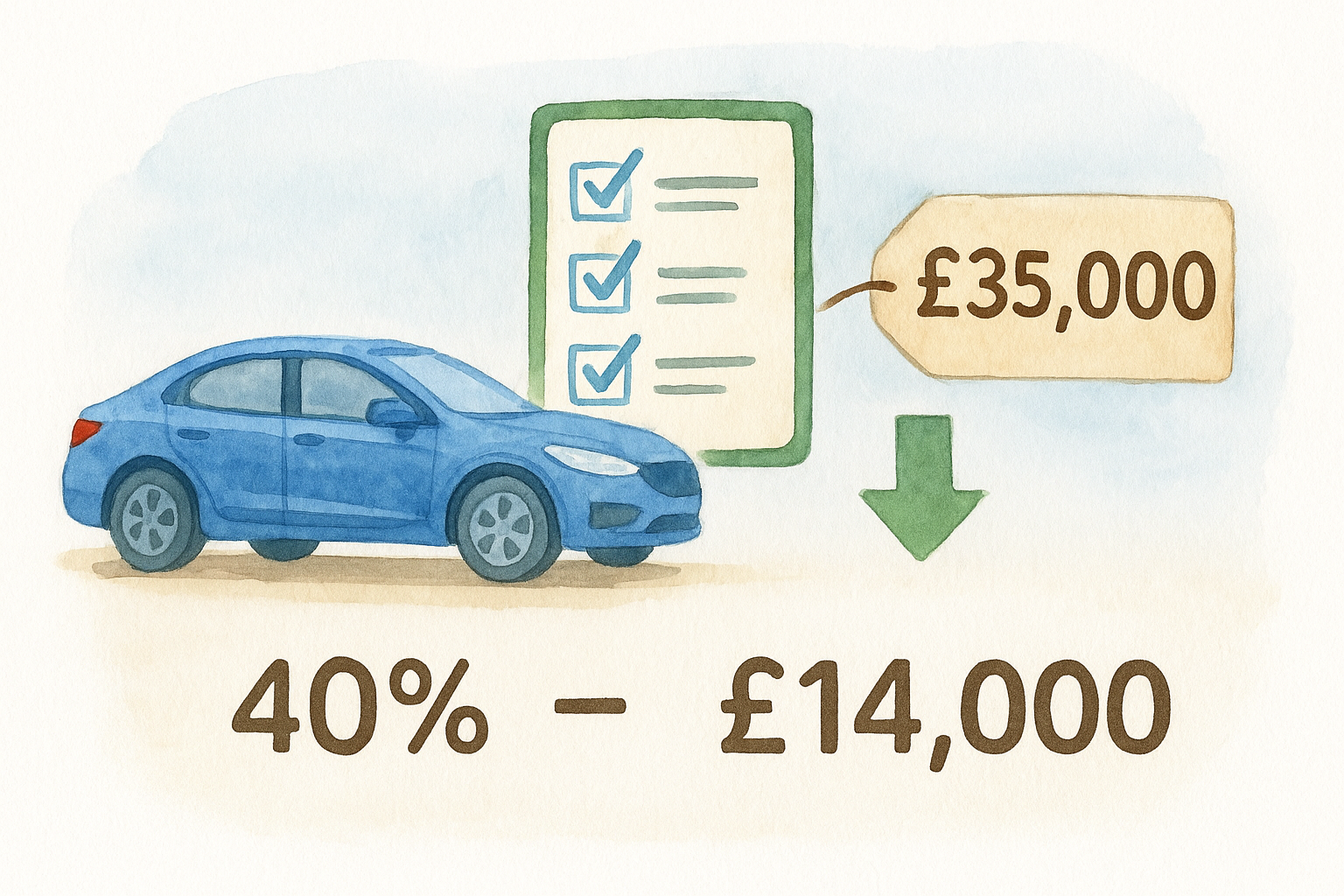
- Note the price when new, including options: £35,000.
- Look up a current valuation for that exact car and mileage.
- Subtract the valuation from the new price, then divide by the new price.
- Compare the result with the 40% to 60% range.
At 40% the car is worth £21,000 and you have lost £14,000. At 60% it is worth £14,000 and you have lost £21,000. A £7,000 gap between the two ends is why model choice matters. Vehiclepedia's car valuation check finds a value from a registration number and lists what raises or lowers resale value.
What drives an EV's loss in value
Battery condition, charging ability and range matter most. Technology cycles, new-car prices, used supply and the car's history and condition also move the price.
Battery health, range and charging
Buyers pay most attention to the battery because it is the most valuable component. They look at state of health (SoH), charge cycle data and how the car was charged. Even a small difference in SoH can shift the price in the budget end of the market.
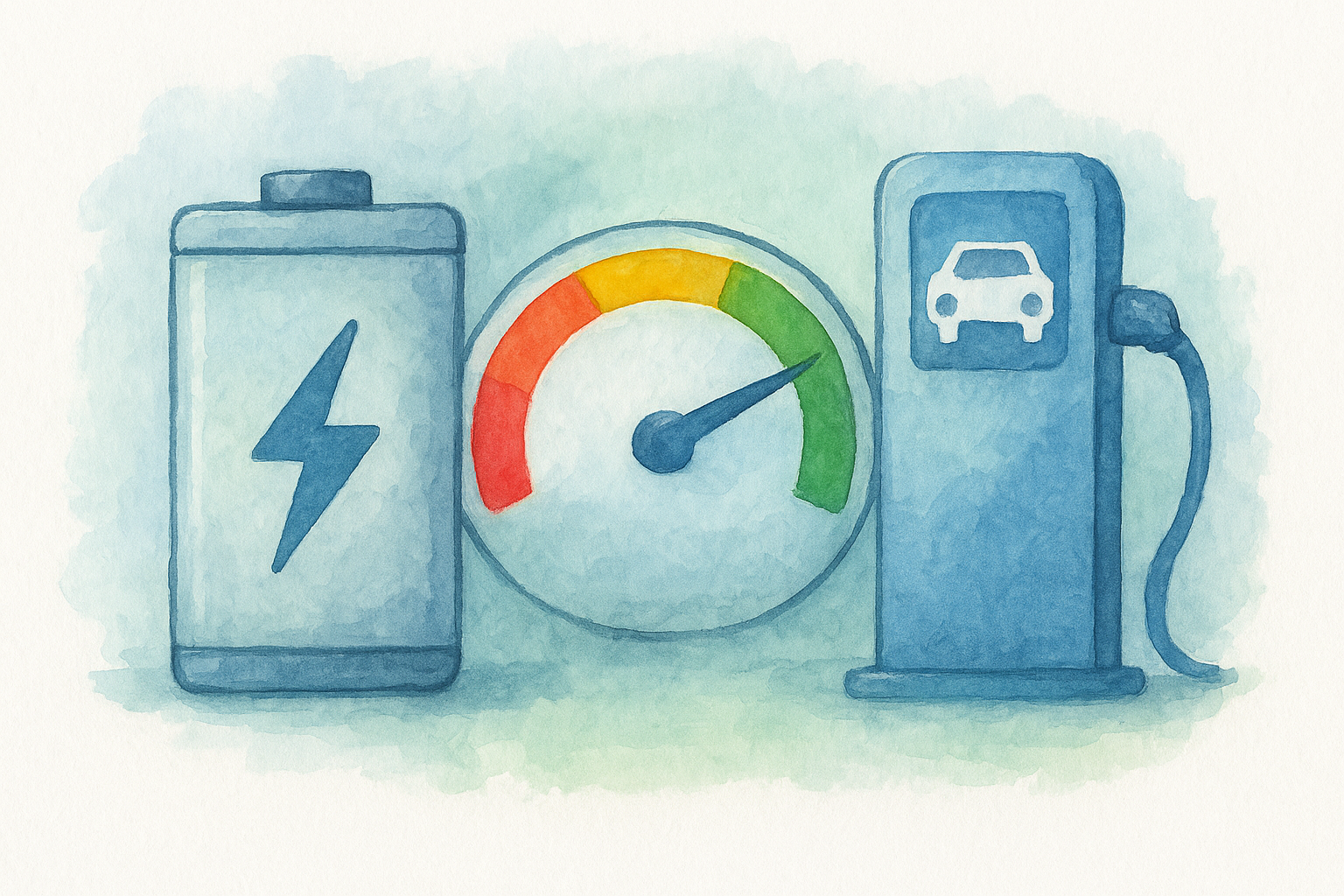
Range and charging speed matter too. Models that meet real-world driving needs and charge quickly keep value better. Larger long-range cars with strong brand demand and a good battery warranty tend to depreciate least.
Technology, pricing and supply
EV technology moves quickly. A newer model with more range or faster charging makes the older one look dated. Cuts in new prices, including government grants on eligible new cars, put pressure on used values.
Supply matters as well. Used EV sales have grown strongly, with fleet and salary sacrifice cars arriving on the market. Plenty of supply can hold down prices for some models even while the overall average settles.
A used EV is priced against the newest model on sale, so rapid improvements and new-car discounts pull used values down.
History and condition
Mileage and service history count as they do with any car. EVs have fewer moving parts, but buyers still want a complete, verifiable service record, with evidence of tyre, brake and battery cooling checks. Missing records quickly put buyers off.
Cosmetic damage, a worn interior and an unclear past all cut value. A written-off record or outstanding finance can make a car unsellable, whatever the battery shows.
How to protect your money when you buy, lease or sell
You protect your money by buying after the steepest drop, leasing models with strong residual forecasts, and selling with documented proof of battery health and servicing.
Buying a used EV
Someone else has already taken the steepest drop, so a two- or three-year-old EV is often the best-value way in. Before you pay, check the following:
- The remaining battery warranty, usually quoted in years or miles.
- A battery SoH reading, or at least the range and capacity data.
- Finance, stolen and write-off records.
- A full service history.
Vehiclepedia's free EV check shows range, battery chemistry, capacity and battery warranty from a registration number. Finance, stolen and write-off checks are part of the premium report.
Leasing an EV
Lease prices follow forecast residuals, so compare monthly payments for similar cars. A lower payment often signals a model the lender expects to hold value. On a lease you hand the car back, so you are largely protected from a drop in value, but check the mileage limit and condition charges.
A short lease also guards against technology moving on. It makes less sense if you drive far above the mileage allowance.
Selling an EV
Sell with proof. Buyers pay more for documented battery health and a clean record. Before listing, work through this checklist:
- Get a battery SoH report.
- Install the latest software updates and keep proof.
- Gather the full service history and recent inspection reports.
- Check tyres and brakes, and replace worn consumables.
- Valet the car, fix cosmetic damage and include the charging cable.
- Put the SoH figure and service evidence in the listing.
Documented battery health and a full service history are the cheapest ways to raise an EV's resale price.
Plan for the loss before you commit
Expect an EV to lose roughly 40% to 60% of its price in three years. The average is now close to petrol, but the gap between a good and a poor model is large. Battery health, charging ability, range, new-car pricing and a clean history decide which side you land on.
Check the numbers before you commit. Work out the likely loss on your chosen car, look at the battery warranty, and confirm there is no hidden finance or write-off record. A premium Vehiclepedia report adds those checks, and you can preview what it includes in the sample premium report. Premium reports for non-trade users carry a data guarantee of up to £30,000.