How Long Does a Used Car Warranty Last? UK Time Limits
How long does used car warranty last? See UK limits for statutory, approved-used, dealer and third-party cover, and how mileage ends it.
How Long Does a Used Car Warranty Last? UK Time Limits
How long a used car warranty lasts depends on who provides it. A used car warranty is a contract that pays for covered mechanical or electrical repairs for a set period. In the UK that period runs from 30 days on a basic dealer policy to 12 to 24 months on an approved-used warranty. Third-party policies run from three months to 36 months or more. Whatever the length, cover normally ends at the time limit or the mileage limit, whichever you reach first.
Your legal rights as a buyer from a dealer work differently. They are not a warranty, but they do run on a clock: 30 days, then six months. This guide sets every timeline side by side, explains what shortens or ends cover early, and shows you how to work out your own end date before you pay.
We run vehicle history checks on UK cars at Vehiclepedia, and the dates and mileages in those checks are exactly what you need to test a warranty's limits. The figures below are typical, not guaranteed. Your policy document always has the final word.
Why the length of a used car warranty matters
The length of a warranty decides whether a fault is the seller's bill or yours. That makes it one of the most important terms in the contract, and one buyers often skim past.
Timing decides who pays for a repair
A warranty is a time-limited promise. A fault that appears on day 80 of a 90-day dealer warranty is the dealer's problem. The same fault on day 100 is yours. Repairs to gearboxes, turbochargers and electrical systems can cost anywhere from a few hundred to several thousand pounds. A few weeks either side of the end date can therefore be expensive.
Faults rarely arrive on a convenient schedule. Used cars have already covered thousands of miles, and parts wear at different rates. The first few months of ownership are when problems that were hiding at the point of sale tend to surface.
A warranty is only worth the time and mileage left on it on the day something breaks.
Longer is not automatically better
A longer term helps only if the cover behind it is worth having. Two 12-month policies can differ enormously. Compare these points alongside the length:
- Claim limits, both per claim and across the whole policy
- The excess you pay on each claim
- Exclusions, especially wear-and-tear items such as clutches and brake pads
- Servicing conditions you must meet to keep cover valid
- Any waiting period before you can make your first claim
A cheap 24-month policy with a low claim limit may pay out less than a good six-month one. Read the schedule of cover before you compare the headline length.
How long each type of used car warranty lasts
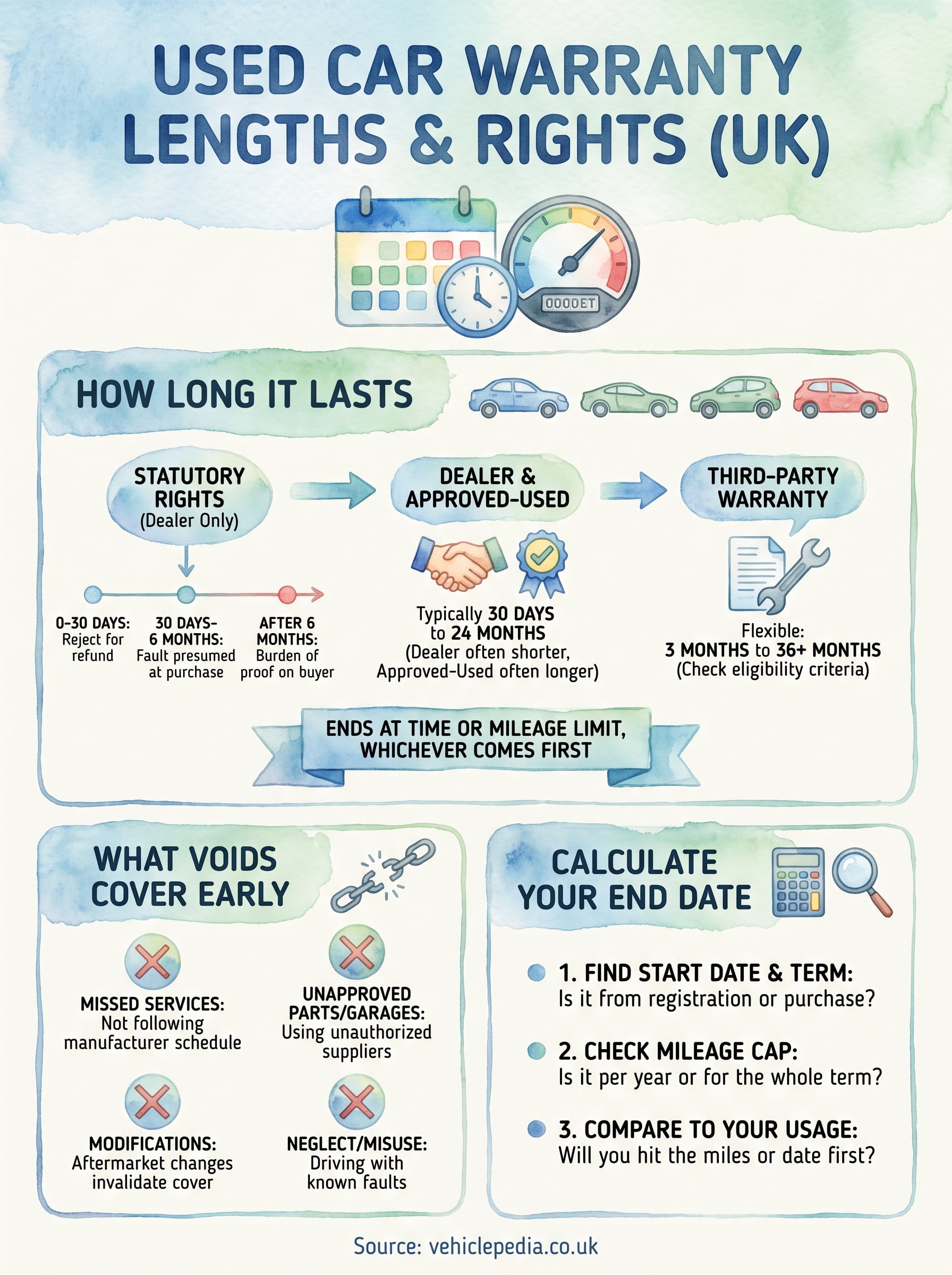
Statutory protection runs for 30 days to six months in practice, a dealer warranty typically lasts 30 days to a year, an approved-used warranty usually 12 to 24 months, and a third-party policy anywhere from three to 36 months. The table below puts them together.
Typical lengths at a glance
| Type of cover | Typical length | Who provides it | Worth knowing |
|---|---|---|---|
| Statutory rights (Consumer Rights Act 2015) | 30 days to reject, six months of protection, claims possible for years | Dealers only, by law | Not a warranty. Excludes normal wear and tear |
| Balance of manufacturer warranty | Whatever remains of a typical three to seven years | The car maker | Counts from first registration. Often has a mileage cap |
| Approved-used warranty | Usually 12 to 24 months | Franchised dealer or manufacturer scheme | Often extendable. Counts from your purchase date |
| Dealer warranty | 30 days to around six months, sometimes 12 | The selling dealer | May be included in the price or sold as an optional extra |
| Third-party warranty | Three to 36 months, some up to 60 | Specialist warranty provider | Often has age and mileage limits for eligibility |
Statutory rights: 30 days, six months and beyond
If you buy from a dealer, the Consumer Rights Act 2015 says the car must be as described, of satisfactory quality and fit for purpose. Within 30 days you can reject a faulty car and get a full refund. Between 30 days and six months the law presumes the fault was there at purchase. The seller usually gets one chance to repair or replace before you can reject the car, and a deduction for your use of it may apply.
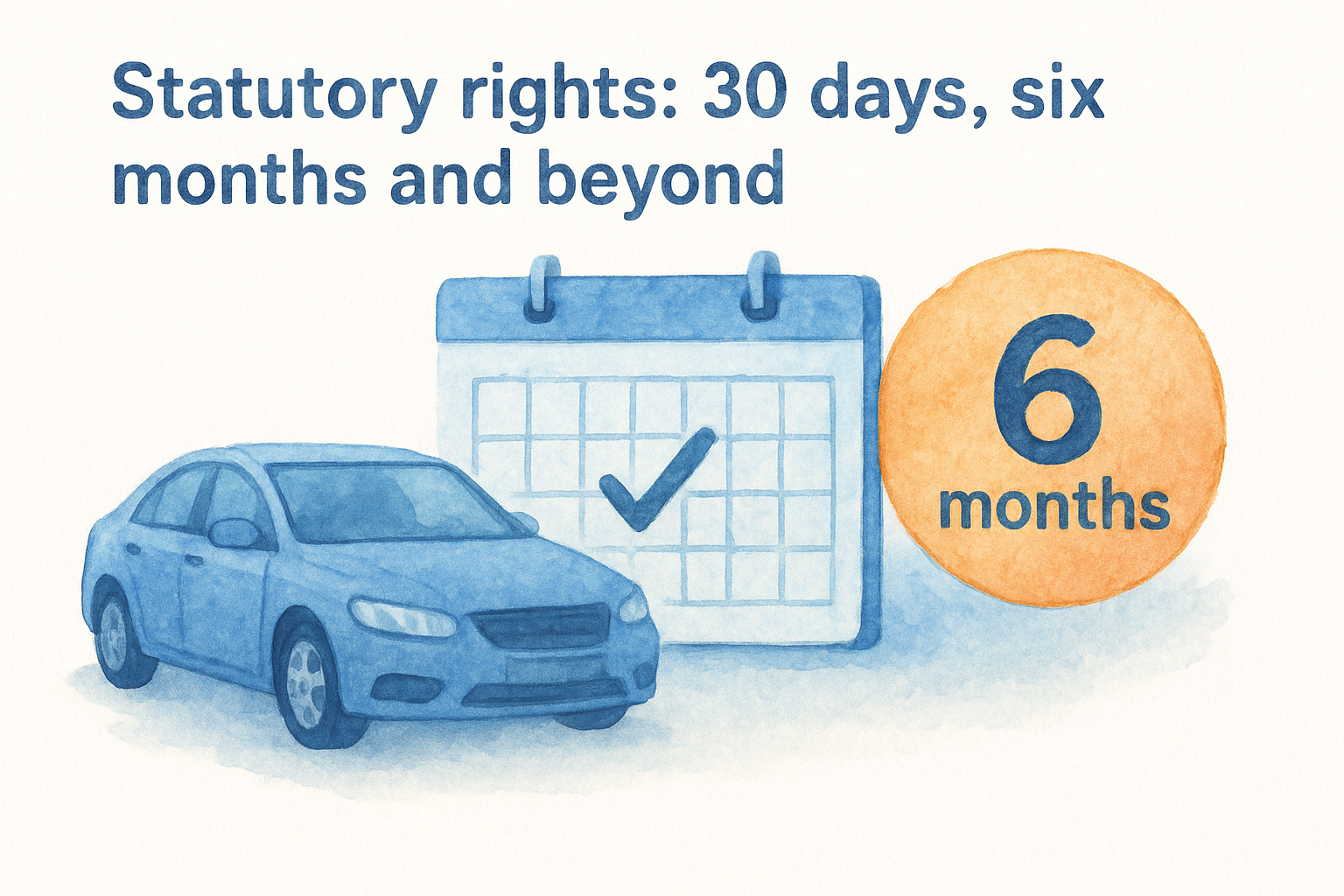
After six months the burden of proof shifts to you. You can still make a claim for years afterwards, up to six years in England, Wales and Northern Ireland and five in Scotland. You would need to show the fault was present when you bought the car. None of this applies to private sales, and it never covers ordinary wear.
Dealer, approved-used and third-party lengths
A franchised dealer's approved-used warranty usually lasts 12 months, with the option to pay for a further year or two. Independent dealers often include 30 or 90 days, or around six months, and some larger independents offer more. Smaller operations may offer nothing at all, because no law requires a used car to be sold with a warranty.
Third-party policies are the most flexible. Providers sell terms from three months up to 36 months, with some going to 60. They often renew monthly or annually. A car's age or mileage can rule it out, so check eligibility before you assume a very old or high-mileage car can be covered.
There is no single length. Each warranty has its own clock, and the one you were quoted is the only one that counts.
What ends a used car warranty early
A used car warranty ends at whichever comes first: its end date, its mileage cap or a breach of its conditions. Many buyers only watch the date and are caught out by the other two.
Time and mileage limits
Most warranties expire once you hit either the time limit or the mileage limit, whichever arrives first. A five-year, 60,000-mile manufacturer warranty on a car with 55,000 miles on the clock is effectively a warranty with 5,000 miles left, even if three years of the term remain. Drivers who cover high annual mileage can hit the cap long before the calendar end date.
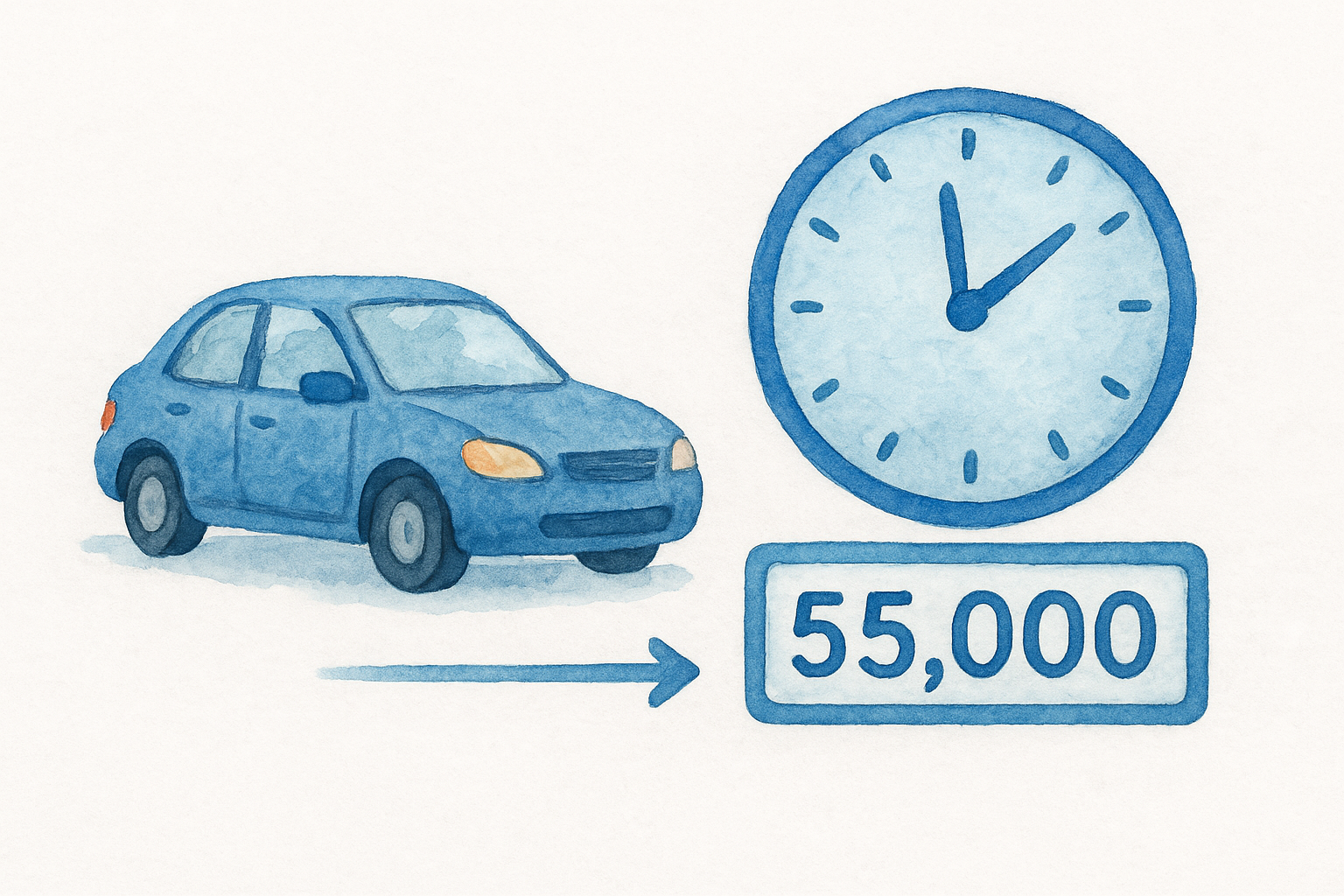
Some mileage limits apply per year. Others apply to the whole term. The start date also differs: manufacturer cover counts from first registration, while approved-used and third-party cover normally counts from the day you buy. Check which applies to you.
Mileage and time run side by side. Whichever limit you reach first ends your cover.
Conditions that can void cover
Even inside the dates, a claim can be refused if you have broken the terms. The usual reasons are:
- Missed or undocumented services. Many policies require servicing to the manufacturer's schedule, with records kept.
- Unapproved garages or parts. Some warranties only pay if repairs use approved suppliers or original parts.
- Modifications. Aftermarket changes can invalidate cover for related components.
- Neglect or misuse. Driving on after a warning light appears can turn a small fault into an excluded one.
Claim limits can also end cover in practice. If a policy caps total payouts, the cover can run out before the date does. Check the cap before you rely on it.
How to work out your warranty end date
Work out your end date in three steps: find the start date, add the term, then test the mileage allowance against how much you drive. Do it before you buy, because the answer should influence what you are willing to pay.
Find the start date and the limits
- Get the first registration date. Enter the registration number in a free check to see the car's age and registration details, or read it from the V5C logbook.
- Identify who the warranty is from. Manufacturer, dealer, approved-used scheme or third party. Ask whether the term counts from first registration or from your purchase date.
- Note the months and the mileage cap. Find out whether the cap is for the whole term or per year.
- Check the mileage history. The MOT history shows recorded mileage readings, so you can see how fast the car has covered ground and whether the odometer story holds up.
- Look at the service record. A free check on the car's service history shows the date and mileage of recorded services. Gaps can matter if the warranty requires servicing.
A worked example
You buy a car first registered in March 2022 with a five-year, 60,000-mile manufacturer warranty. It has 48,000 miles on the clock in October 2026. That leaves roughly five months and 12,000 miles. At 15,000 miles a year you would cover only about 5,600 miles in those five months, so the date ends your cover, not the mileage.
Statutory dates work the same way. If you collect a car from a dealer on 1 March, your 30-day right to reject ends on 31 March and the six-month presumption ends on 1 September.
What to do when cover runs out
Before the end date, decide whether the car justifies new cover. Policies bought direct from a specialist provider are often cheaper than extensions sold by a dealer, so compare quotes from warranty providers rather than accepting the first offer. Book any required service first, because an overdue service can make a new claim difficult.
A warranty does not cover hidden problems such as outstanding finance, a stolen marker or a write-off history. A history check is how you find those. A Vehiclepedia premium report covers them.
Put your end date in your calendar the day you buy, and shop for extensions at least a month before it.
Know your end date before you buy
A used car warranty can last anything from 30 days to several years. The real length is whichever limit you hit first, whether that is the date, the mileage or a condition you failed to meet. Statutory rights give you 30 days to reject and six months of protection when buying from a dealer. Everything beyond that depends on the paperwork in your hand.
Read the start date, the term, the mileage cap, the claim limit and the servicing rules before you sign. Then check the car itself with a free registration lookup. If you want to see what a full check adds on finance, stolen and write-off status, look at a sample Vehiclepedia report before you commit to a car.