How to Check a Car's Registration Date in the UK
Learn how to check registration date of car via plates and DVLA data, spot cloned plates, decode age identifiers, and verify a seller's claims free.

How to Check a Car's Registration Date in the UK
Buying a used car without knowing its true age is a gamble. Sellers sometimes round up or down, and a private plate can hide the actual year a vehicle first hit the road. If you want to check registration date of car details before handing over any money, you need a quick way to confirm the facts rather than trust a verbal claim.
The good news is you don't need paperwork or a garage visit. A car reg year checker works from nothing more than the number plate, pulling data straight from official DVLA records to show you exactly when the vehicle was registered. This same lookup also reveals the plate age identifier, so you can cross-check it against what the seller has told you in seconds.
In this guide, we'll walk you through how to check car registration number details step by step, using a free UK tool that draws on trusted government sources. You'll learn what information the registration date actually tells you, why it matters for valuation and insurance, and how to spot warning signs that a plate doesn't match the car it's attached to.
Why the registration date matters
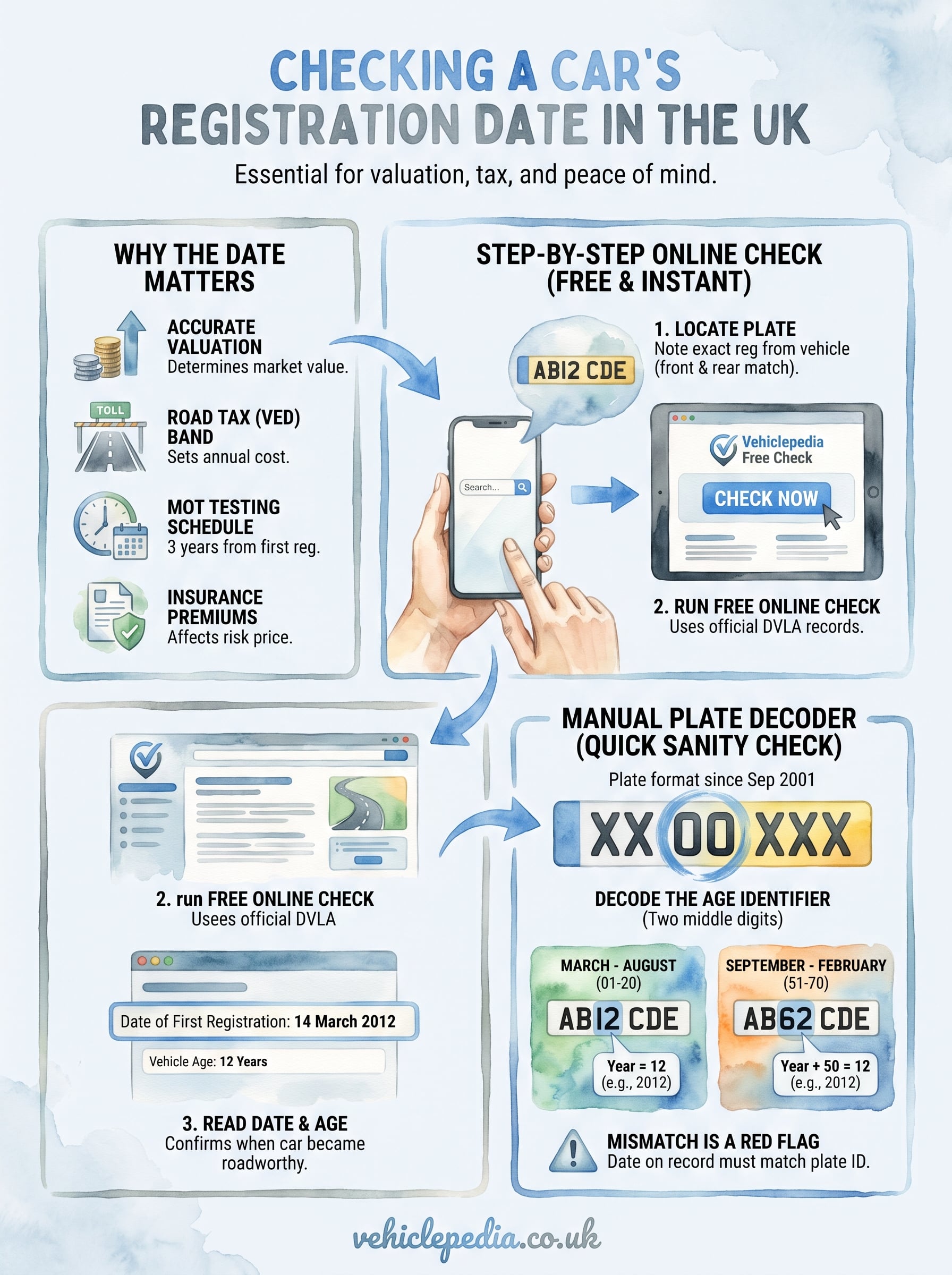
Knowing the exact registration date of a car tells you far more than just its birthday. It sets the road tax band you can check by reg, determines the MOT testing schedule, and heavily influences the car's market value. A car first registered in March will often be worth less by reg valuation than the same model registered in September, purely because of how UK number plates encode the half-year it left the factory. Get this wrong and you could overpay by hundreds of pounds or misjudge how many years of MOT-free driving you've actually got left, so it pays to find the MOT expiry date and status as well.
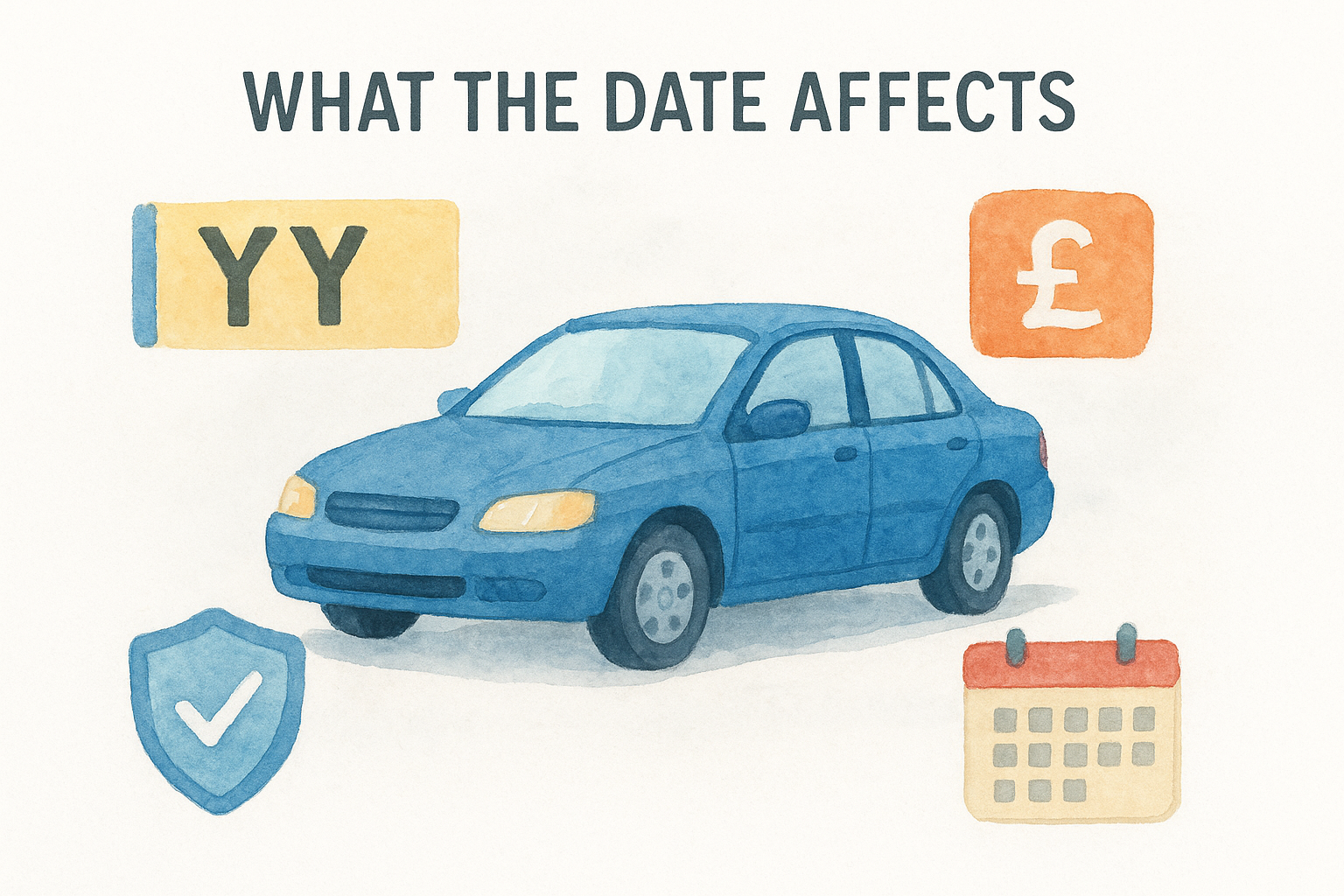
What the date affects
| Factor | Why the date matters |
|---|---|
| Road tax (VED) | Older cars sit in different emissions bands with different annual costs |
| Insurance premiums | Insurers price risk partly on the vehicle's true age |
| MOT due date | First MOT is due three years from initial registration |
| Resale value | Buyers pay more for a car registered earlier in its plate year |
Sellers rarely lie outright about a car's age, but they do sometimes quote the model year instead of the actual registration date, which can differ by months. A uk car registration year check clears up that ambiguity instantly, showing you the precise date DVLA logged the vehicle rather than a rounded-off estimate.
A car's true age lives in its registration date, not in what the seller remembers or the model year on the brochure.
There's a safety angle too. Private number plates can be transferred between vehicles, which means the plate itself no longer reflects when that specific car was built. Criminals also use "cloning", fitting a legitimate plate to a different vehicle, often a stolen one, to avoid detection, which is why it's worth learning how to check if a car is stolen online. Checking the registration date against the car's actual build and documents helps you spot a mismatch before you're the one left holding a problem vehicle.
Step 1. Locate the number plate
Before you can run any check, you need the exact registration number, and that means reading it correctly from the car itself rather than a listing photo that might be outdated or doctored. The number plate sits on the front and rear of every UK vehicle, and both should match, which is the starting point for checking a car's MOT and tax by number plate. If a seller only sends you a picture of one plate, ask for the other, since mismatched plates are a red flag worth investigating before you go any further.
Where to look and what to check
Grab a pen or your phone camera and note the registration exactly as it appears, including spaces.
- Front plate: white background, black characters
- Rear plate: yellow background, black characters
- Check both plates show identical characters
- Look for signs of tampering, such as mismatched fonts or loose screws
- Confirm the plate isn't obscured by dirt, a frame, or a private plate holder
Read the plate off the car in person whenever you can; photos can be cropped, filtered, or simply out of date.
Once you have the correct registration written down, you're ready to run it through a free online checker.
Step 2. Run a free registration check online
With the plate copied down accurately, head to a free vehicle check tool and enter it exactly as it appears, no spaces added or removed unless the form asks for them. Vehiclepedia's free car check pulls straight from DVLA records, so you get the same registration date the government holds on file rather than a third-party estimate.
Running the lookup
Type the registration into the search box and submit the form. Within seconds you'll see a results page covering:
- Registration date and vehicle age
- MOT status and expiry
- Road tax band and cost
- Make, model, and engine size
Enter reg: AB12 CDE
Result: First registered 14 March 2012
One search against official DVLA data settles any argument about a car's true age faster than any conversation with a seller.
No account or payment is needed for this level of detail, since the registration check draws from the same free tier used by millions of UK buyers each year when they check a car reg for free to see MOT history, tax status and specs. If you want deeper history, such as write-off status or outstanding finance, premium reports build on this same lookup, but the registration date itself is always free to view.
Step 3. Read the registration date and vehicle age
Once your results load, look past the headline reg number and find the field labelled date of first registration. This is the exact day DVLA logged the car as roadworthy, not the manufacture date, and not the date the current owner bought it. Vehicles can sit on a dealer's forecourt for months before someone registers them, so a small gap between build year and registration date is normal and nothing to worry about.
Turning the date into an age figure
Most checkers do the maths for you, but it's worth knowing how to verify it yourself.
- Subtract the registration year from the current year for a rough age
- Check the month against today's date for the precise number of years and months
- Compare this figure against what the seller advertised
Trust the date on the record, not the age quoted in the advert.
Anything more than a few months' discrepancy deserves a direct question to the seller. A genuine mistake is common, but a vehicle registration that doesn't match the plate's age identifier at all points to something worth investigating further before you commit to buying.
Step 4. Decode the plate format as a manual check
Sometimes you want a quick sanity check without opening a browser, and that's where knowing the plate format pays off. Since September 2001, every UK reg follows the same pattern: two letters, two numbers, then three letters. Those middle two digits are the age identifier, and once you know how to read a reg plate in the UK, you can work out the registration date in your head.
Reading the age identifier
Use this table to translate the numbers into a registration window.
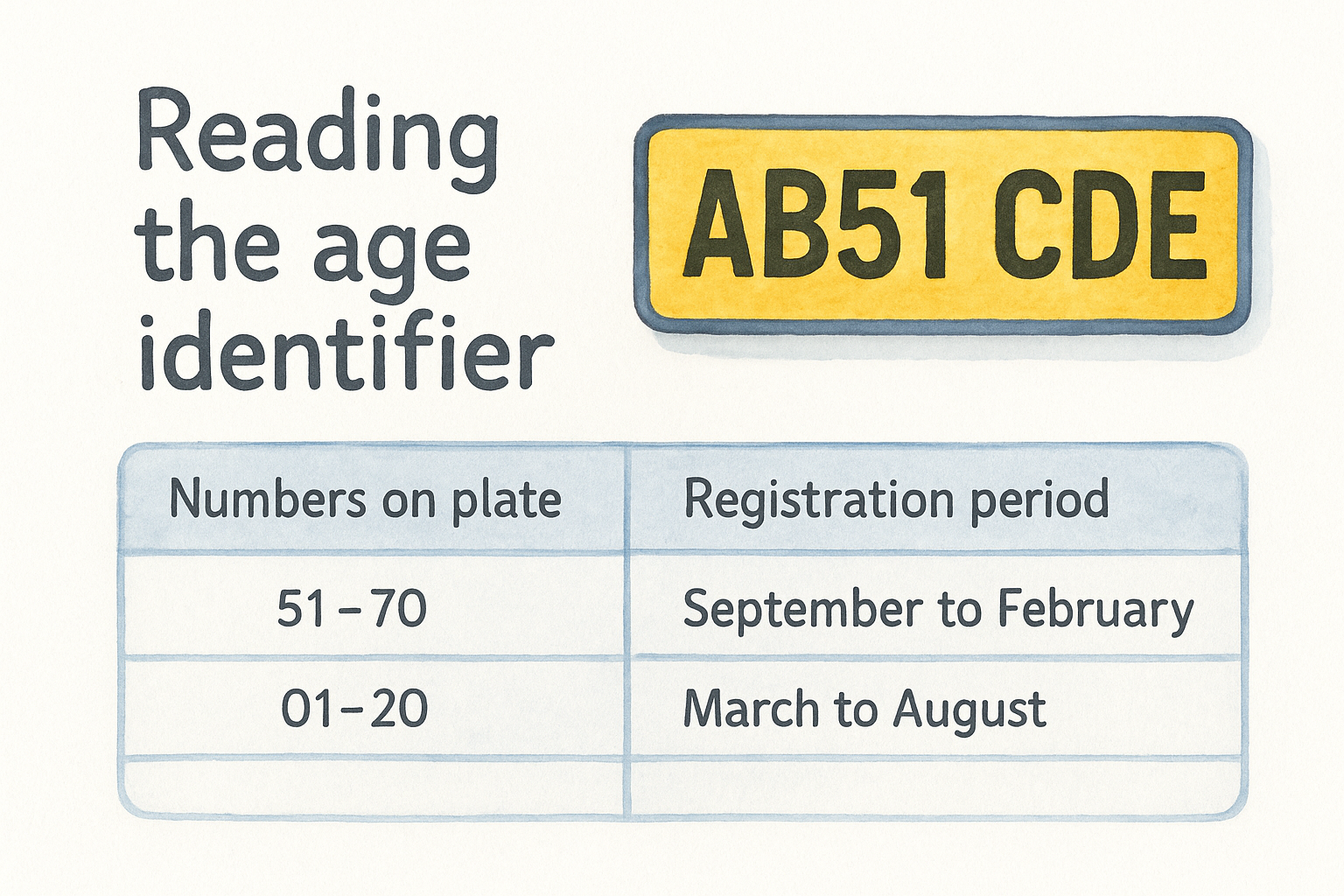
| Numbers on plate | Registration period |
|---|---|
| 51-70 | September to February (2001 onwards, add 50) |
| 01-20 | March to August |
| Example: 12 | March to August 2012 |
| Example: 62 | September 2012 to February 2013 |
Grab any plate and match the two middle digits against this table before you even run an online search.
If the age identifier on the plate doesn't match the DVLA registration date, someone has swapped plates between cars.
Vehicles registered before September 2001 use a different letter-prefix system entirely, so if the numbers don't fit this table, you're likely looking at an older car that needs the online lookup to confirm its exact year.
Buying with confidence
Getting the registration date right isn't just admin, it's the foundation for every other decision you make about a used car. Once you've confirmed the true age against the seller's claims, you're in a far stronger position to negotiate price, budget for tax, and plan your MOT dates without surprises. Knowledge like this turns a nerve-wracking purchase into a straightforward transaction.
Running a free registration check takes less time than reading a listing description, and it removes all the guesswork a plate age identifier can't fully answer on its own. Cross-check the DVLA record, decode the plate manually as a backup, and treat any mismatch as a reason to ask more questions before you commit.
If you want to see exactly what a fuller vehicle history report looks like before buying one, see a full example vehicle report and judge the depth of detail available beyond the free check.