Used Car Warranty: What Does It Cover?
Used car warranty: what does it cover? Learn exclusions, claims tips and why pairing cover with a vehicle history check protects your purchase.
Used Car Warranty: What Does It Cover?
Buying a used car without knowing what happens if the gearbox fails next month is a gamble. A used car warranty promises to cover certain repairs, but the small print varies wildly between providers, and dealers don't always explain the gaps until you're filing a claim that gets rejected. That's the moment most buyers wish they'd read the terms first.
In short, a used car warranty typically covers mechanical and electrical faults on components like the engine, gearbox, and clutch, but it excludes wear and tear items such as brake pads, tyres, and batteries. Cover levels range from basic "named component" plans to comprehensive policies that mirror manufacturer warranties, and the price you pay usually reflects how much risk the provider is willing to take on.
This article breaks down exactly what's typically included, what's commonly excluded, and how to judge whether a warranty is worth the cost for your specific car. Before you sign anything, it's worth pairing that warranty check with a full vehicle history check so you know the car's condition and past issues, not just its future cover.
Why a used car warranty matters when buying used
Every used car carries some risk of failure, and that risk climbs sharply once a vehicle passes the 60,000-mile mark or turns five years old. A used car warranty shifts that risk from your bank account to the warranty provider, at least for the components it covers. Without one, a single gearbox rebuild or turbo replacement can cost more than a year's worth of car payments, and you're left covering the full bill the day it happens.
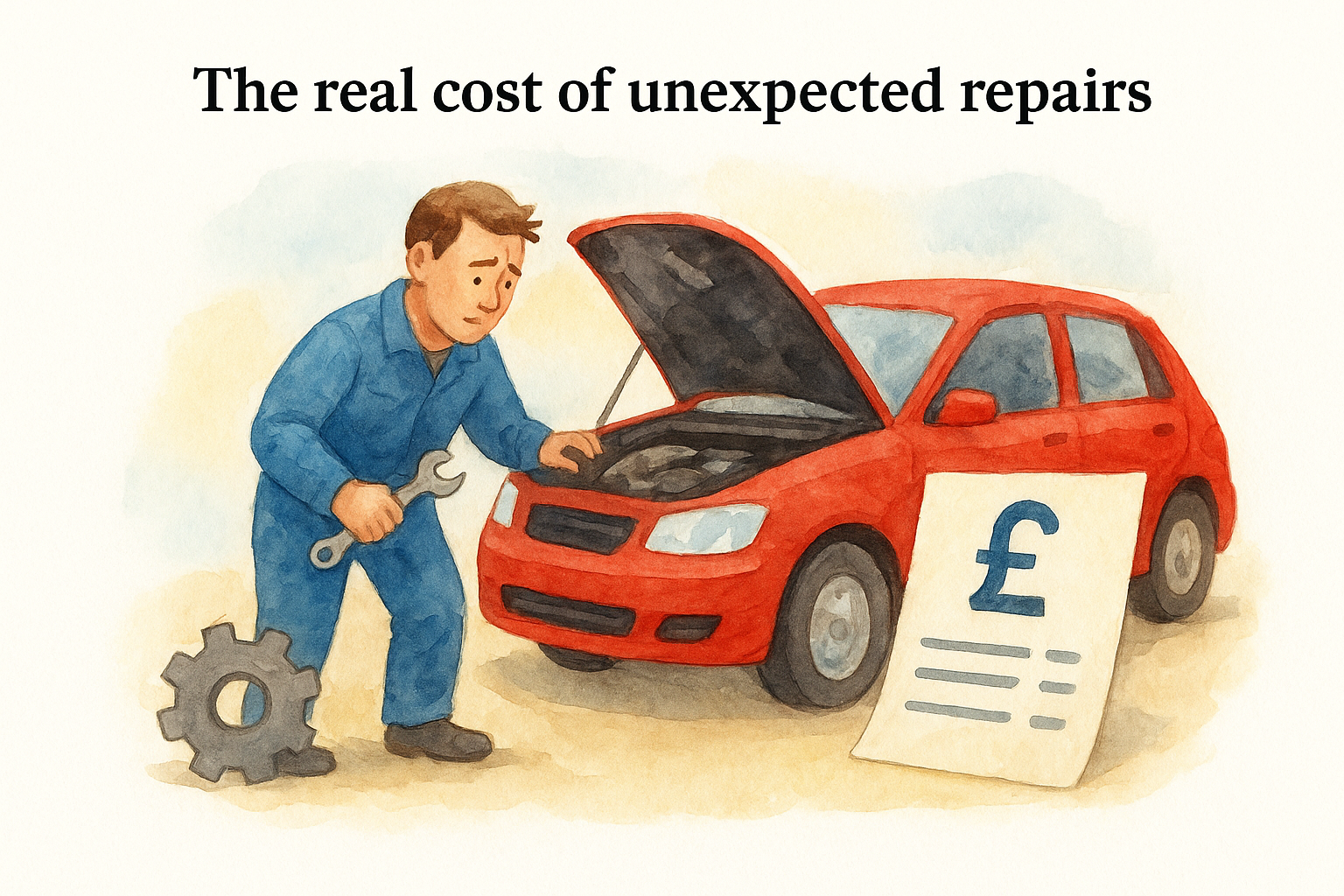
The real cost of unexpected repairs
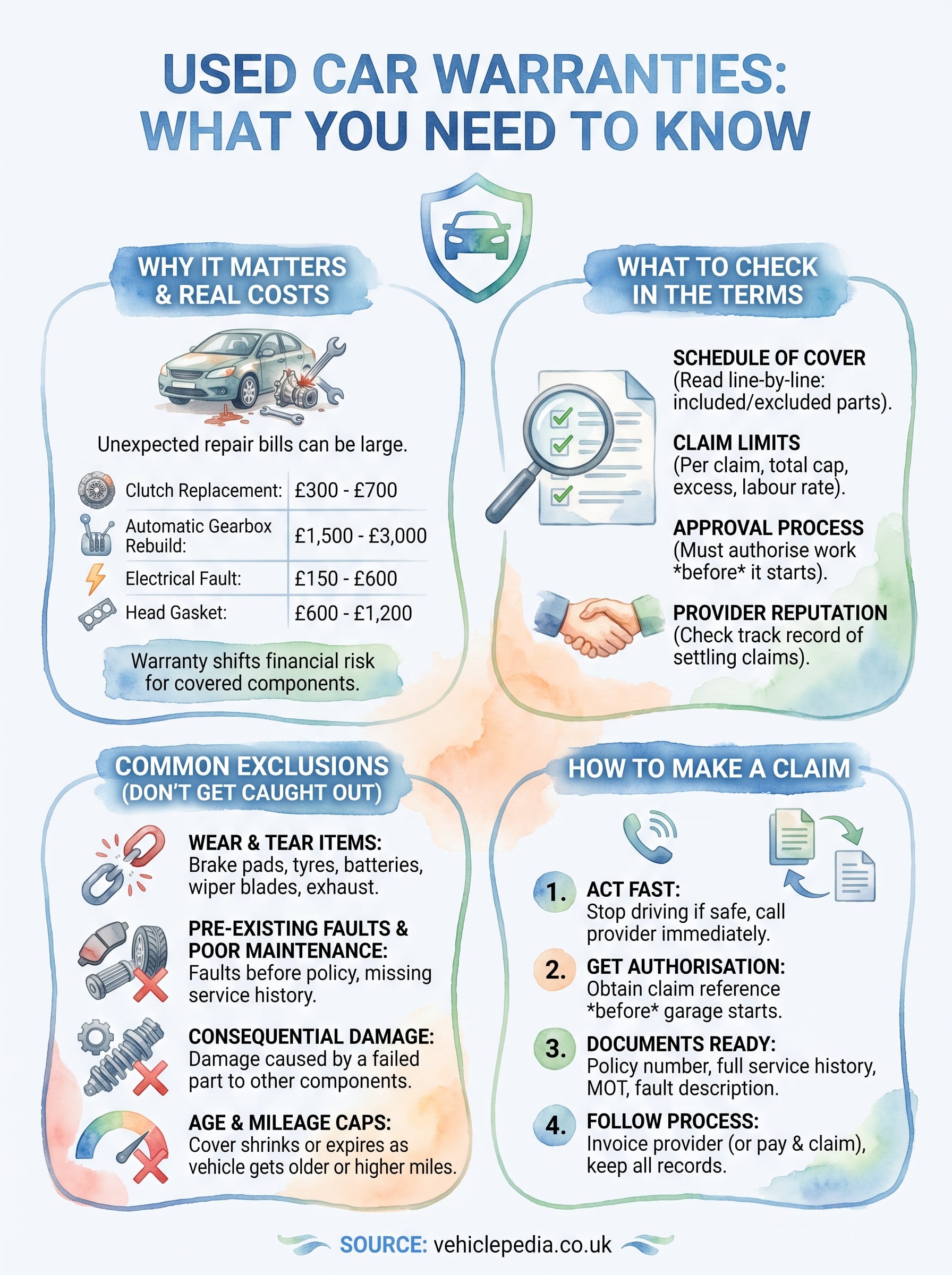
Repair bills for mechanical faults rarely come in small. A clutch replacement on a typical family hatchback runs to several hundred pounds in parts and labour, while a failed automatic gearbox can easily exceed £2,000. Electrical faults, particularly on cars with far more onboard computers than a decade ago, add another layer of unpredictable cost. The table below shows rough repair costs for common faults on a used car, based on typical UK garage rates.
| Fault | Typical repair cost (UK) |
|---|---|
| Clutch replacement | £300 - £700 |
| Automatic gearbox rebuild | £1,500 - £3,000 |
| Turbocharger replacement | £500 - £1,200 |
| Electrical fault diagnosis and repair | £150 - £600 |
| Head gasket replacement | £600 - £1,200 |
A warranty doesn't stop parts from failing, it just decides who pays when they do.
Peace of mind versus real protection
Sellers often use "peace of mind" as a selling point for extended car warranty cover, but the phrase only means something if the policy actually pays out. A warranty that excludes the exact fault your car develops offers no protection at all, which is why reading the terms matters more than the marketing around them. Trade sellers know this too, and a warranty can be a genuine reassurance signal when it comes from an established provider with a track record of settling claims rather than fighting them, so it pays to compare used car warranty providers before committing.
Why a warranty isn't a substitute for history checks
Protection against future faults is only half the picture. A warranty won't tell you whether the car you're about to buy has been written off after a serious accident, had its odometer altered, or still has outstanding finance attached to it. That's a different kind of risk, and it's one you check before you buy rather than after. Running a full check alongside your warranty research gives you a complete view: what a car's history report actually shows about what's already happened to the car, and what's covered if something goes wrong next.
How to check exactly what your warranty covers
Don't take a salesperson's word for what a warranty includes. Ask for the full policy document, sometimes called the schedule of cover, before you hand over any money. This document lists every named component covered, the claim limits, and the specific exclusions, and it's the only version of the terms that actually matters if a dispute arises later.
Read the schedule of cover line by line
Start with the list of covered parts rather than the marketing summary on the front page. Basic policies name individual components like the engine block, gearbox, and clutch assembly, while comprehensive plans use broader language covering most mechanical and electrical parts except a short exclusion list. If the document only lists what's excluded rather than what's included, treat that as a comprehensive-style policy and check the exclusion list carefully, since that's where the real limits sit.
Check the claim limits and excess
Every warranty claim usually carries a maximum payout per claim, per part, or per policy year, and some providers also cap total repair costs at the car's current market value. Look for these figures before you buy:
- Maximum claim value per repair
- Total claim limit across the policy term
- Excess payable per claim
- Labour rate cap (garages billing above this rate may leave you covering the difference)
If the small print doesn't state a figure, assume the limit works against you, not in your favour.
Confirm who approves repairs
Most warranty providers require authorisation before a garage starts work, and some restrict repairs to approved garage networks rather than your own mechanic. Skipping this step, even with a genuine fault, is one of the fastest ways to get a claim rejected outright. Ringing the provider's claims line before booking any work, and getting written confirmation of what's approved, protects you if the bill later comes under dispute.
Common exclusions that catch buyers out
Even a well-written used car warranty won't pay out for every fault, and the exclusions are usually where buyers get caught off guard. Providers draw a firm line between mechanical breakdown and general deterioration, and that line decides whether your claim gets settled or rejected.
Wear and tear items
Nearly every policy excludes parts that degrade through normal use rather than sudden failure. This includes brake pads and discs, tyres, wiper blades, exhaust systems, and batteries. Insurers treat these as maintenance costs, not breakdowns, so no warranty tier covers them as standard.
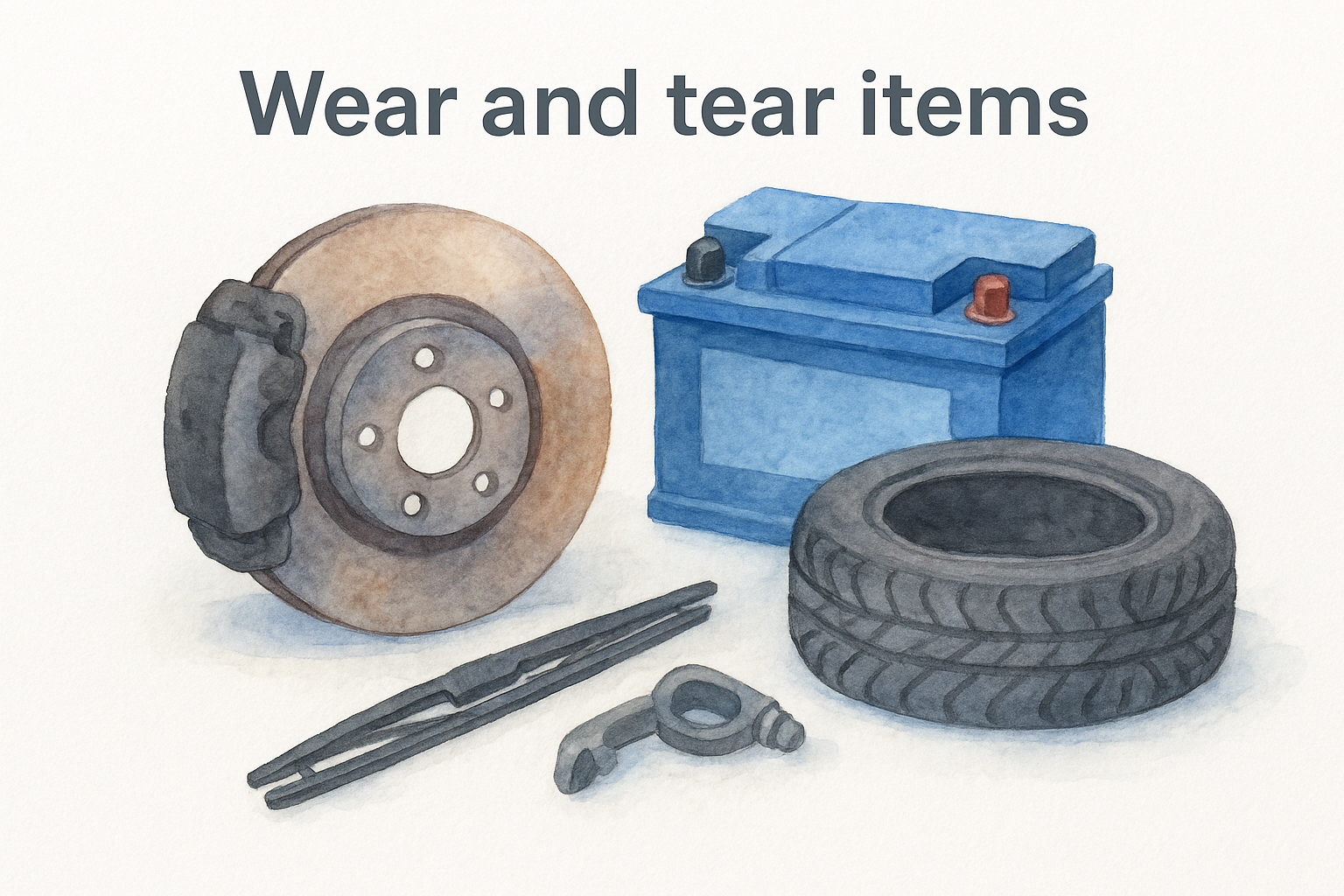
A warranty covers what breaks unexpectedly, not what wears out on schedule.
Pre-existing faults and poor maintenance
Most providers exclude faults that existed before the policy started, which is why some require a pre-purchase inspection or recent MOT before cover begins, and why it helps to know how to check a used car before buying it. Servicing gaps cause just as many rejected claims. If you can't produce a full service history matching the manufacturer's schedule, a provider can refuse a claim on the basis that poor maintenance caused or contributed to the fault, even when that link is tenuous, so learn how to verify a car's service record early.
Consequential damage and modifications
Cover often stops at the failed part itself and excludes any damage that fault causes elsewhere. A snapped cambelt that wrecks the pistons, for example, might only have the belt covered under a basic policy, leaving you to fund the far larger engine repair. Modifications complicate things further:
- Aftermarket exhausts, remaps, or suspension changes can void cover on related components
- Non-standard alloy wheels may exclude tyre and suspension claims
- Towbars and roof racks can affect drivetrain and bodywork cover
Age, mileage, and cover caps
Most policies set an upper mileage or vehicle age limit, and cover typically shrinks as a car approaches either threshold. A car warranty check on the small print should confirm these caps before you buy, since a warranty that expires the same month your car crosses 100,000 miles offers far less protection than the sales pitch implies. Some providers also reduce payout percentages on higher-mileage cars, settling only a portion of the repair cost rather than the full bill.
How to make a claim on your used car warranty
Acting fast matters more than most drivers realise. The moment you notice unusual noises, warning lights, or a loss of power, stop driving if it's safe to do so and contact your provider before booking a garage. Continuing to drive a car with a developing fault can turn a straightforward mechanical claim into a rejected one, because providers can argue you caused further damage by ignoring the warning signs.
Get authorisation first
Booking work without prior approval is the single biggest reason genuine warranty claims get refused. Call the claims line, describe the symptoms, and get a claim reference number before any garage touches the car. Most providers will then either direct you to an approved garage or ask your chosen mechanic to submit a diagnosis and repair quote for sign-off.
A claim approved before the work starts is worth far more than one you're hoping to justify afterwards.
What to have ready when you call
Having the right documents to hand speeds up authorisation and reduces the chance of a dispute later:
- Policy number and start date
- Full service history, including receipts and dates
- Current mileage and last MOT certificate
- A written description of when the fault first appeared
After the repair
Once work is approved, the garage typically invoices the provider directly, though some policies require you to pay upfront and claim the cost back. Ask which applies before agreeing to any repair, since a reimbursement model means you'll need enough spare cash to cover the bill in the meantime. Keep copies of every invoice, diagnostic report, and email exchange with the provider, because a rejected claim is far easier to appeal with a paper trail than without one.
If the claim gets rejected
Insist on a written explanation citing the specific policy clause used to refuse payment. Compare that clause against your schedule of cover, and if the reasoning looks shaky, escalate through the provider's formal complaints process before involving the Financial Ombudsman Service, which handles disputes over regulated warranty products sold in the UK.
Making an informed choice on cover
A used car warranty is only worth its price if you've actually read what it covers before you sign. Match the policy tier to the car's age and mileage, check the claim limits against realistic repair costs, and keep your service history in order so a technicality never derails a genuine claim. None of that replaces knowing the car's actual condition and background before you buy it.
Running a vehicle history check first tells you whether you're buying a sound car that just needs sensible cover, or one with hidden problems no warranty will fix. Between the two, you cover both what's already happened and what might happen next. If you want to see exactly what that level of detail looks like before you commit to anything, see an example premium vehicle report and judge the value for yourself.