Instant Car Valuation UK: How To Value Your Car By Reg
Get an instant car valuation uk using your registration. Learn how to adjust for mileage and history to find your vehicle’s true market value today.
Instant Car Valuation UK: How To Value Your Car By Reg
Whether you're selling privately, trading in at a dealership, or just curious about what your motor is worth, getting an instant car valuation UK drivers can trust starts with one thing: your registration number. Plug it into the right tool, and you'll have a ballpark figure within seconds, no phone calls, no guesswork.
But here's what most people miss: a valuation figure on its own only tells half the story. A car's true market value depends heavily on its history, outstanding finance, write-off records, MOT failures, and ownership changes all push the price up or down. That's exactly where a service like Vehiclepedia fits in, giving you the detailed vehicle history data you need to back up (or challenge) any valuation you receive.
This guide walks you through how to value your car by reg, which tools to use, and what factors actually affect the number you'll get. By the end, you'll know how to get an accurate valuation and, just as importantly, how to verify the data behind it before making any decisions.
What an instant car valuation shows and misses
When you run an instant car valuation UK tool by registration number, you get a data-driven estimate based on the vehicle's make, model, year, and mileage. Most tools pull from live market data, including recent private sales, dealer listings, and auction results, to generate a figure in seconds. That number gives you a useful starting point, but it does not reflect every factor that will influence what a real buyer actually pays.
What the valuation tool actually gives you
A valuation tool typically returns three separate figures: a private sale value (what a private buyer might pay you directly), a part-exchange value (what a dealer will offer against your next purchase), and a dealer retail price (what that same car would be listed for on a forecourt). Knowing the gap between these three helps you choose the right route before you commit to anything.
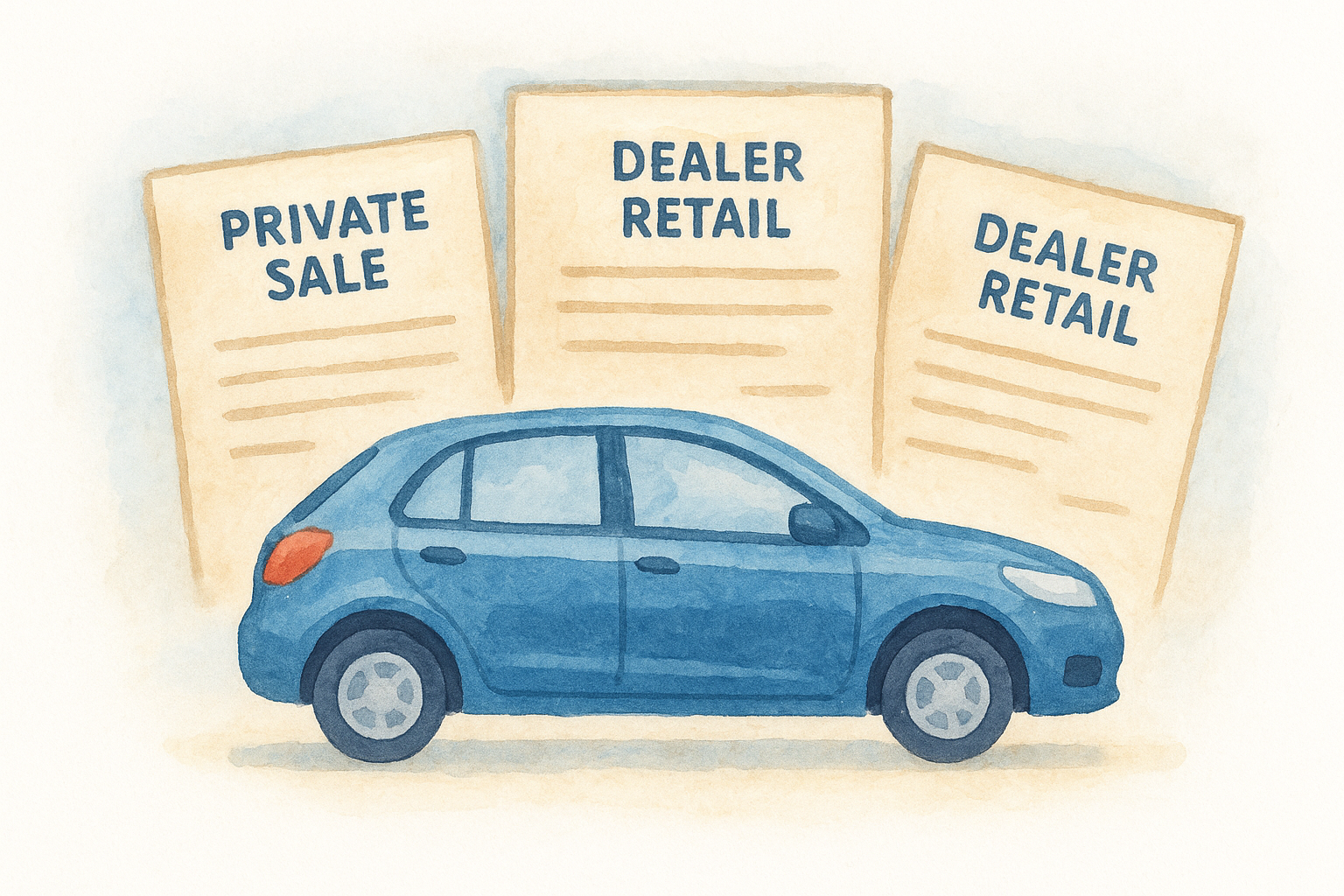
The difference between a private sale value and a part-exchange offer can easily reach £1,000 or more on a typical mid-range used car.
Here is what a standard instant valuation output covers:
| Valuation Type | What It Represents |
|---|---|
| Private sale | What a private buyer is likely to pay you |
| Part-exchange | What a dealer offers against a new purchase |
| Dealer retail | What a dealer lists the same car for on their forecourt |
What the number does not tell you
The valuation assumes your car has a clean history: no outstanding finance, no insurance write-offs, no serious MOT failures, and a complete service record. If any of those conditions do not apply, the real-world price drops below the estimate. Informed buyers now routinely run a vehicle history check before agreeing a price, and any red flags they find give them grounds to negotiate hard or pull out entirely.
Valuation tools also ignore regional demand, seasonal patterns, and colour trends that genuinely shift what buyers will pay. The figure you see is a benchmark based on averages, not a binding offer.
Step 1. Gather the details that change the price
Before you run any instant car valuation UK tool, spend two minutes pulling together the details that actually move the number. Valuation tools take your registration as a starting point, but they rely on additional inputs to return a figure that reflects your specific vehicle rather than a generic average for that model.
The core details to collect before you start
Your current mileage is the single biggest variable after make and model. A car with 30,000 miles commands a noticeably higher price than the same car at 80,000 miles, even if the registration year is identical. Collect the following before you open any valuation tool:
- Current mileage (read directly from the odometer, not from memory)
- Number of previous owners (check your V5C logbook)
- Full service history status: full, partial, or none
- MOT expiry date (find this free at GOV.UK using your registration)
- Any known accident damage, even repaired bodywork
- Modifications that differ from the standard factory specification
A car with a full service history typically achieves a higher valuation than the same model with no service record, often by several hundred pounds.
Having these details ready means the figure you get back reflects your car, not a textbook average of the model.
Step 2. Get a fast estimate by reg and mileage
With your details in hand, you can now run an instant car valuation UK tool to get a fast figure. Most reputable valuation tools work the same way: enter your registration number, input your current mileage, and the tool returns a price estimate within seconds based on live market data pulled from recent private sales, dealer listings, and auction results.
What to enter and what to expect back
Open a valuation tool and follow these steps in order to get a reliable starting figure:
- Enter your full registration number exactly as it appears on your V5C logbook
- Confirm the make, model, trim level, and fuel type the tool pre-fills from DVLA data
- Enter your exact current mileage directly from the odometer, not from memory
- Submit and review the three figures returned: private sale, part-exchange, and dealer retail
Always cross-check the vehicle details the tool auto-fills against your V5C. A wrong trim level or fuel type will skew every figure it returns.
Most tools complete this process in under 30 seconds. If the pre-filled data does not match your car exactly, correct it before you accept the output. A wrong trim level can shift the valuation by several hundred pounds in either direction, so confirming those details is worth the extra minute.
Step 3. Adjust for condition, spec, and history
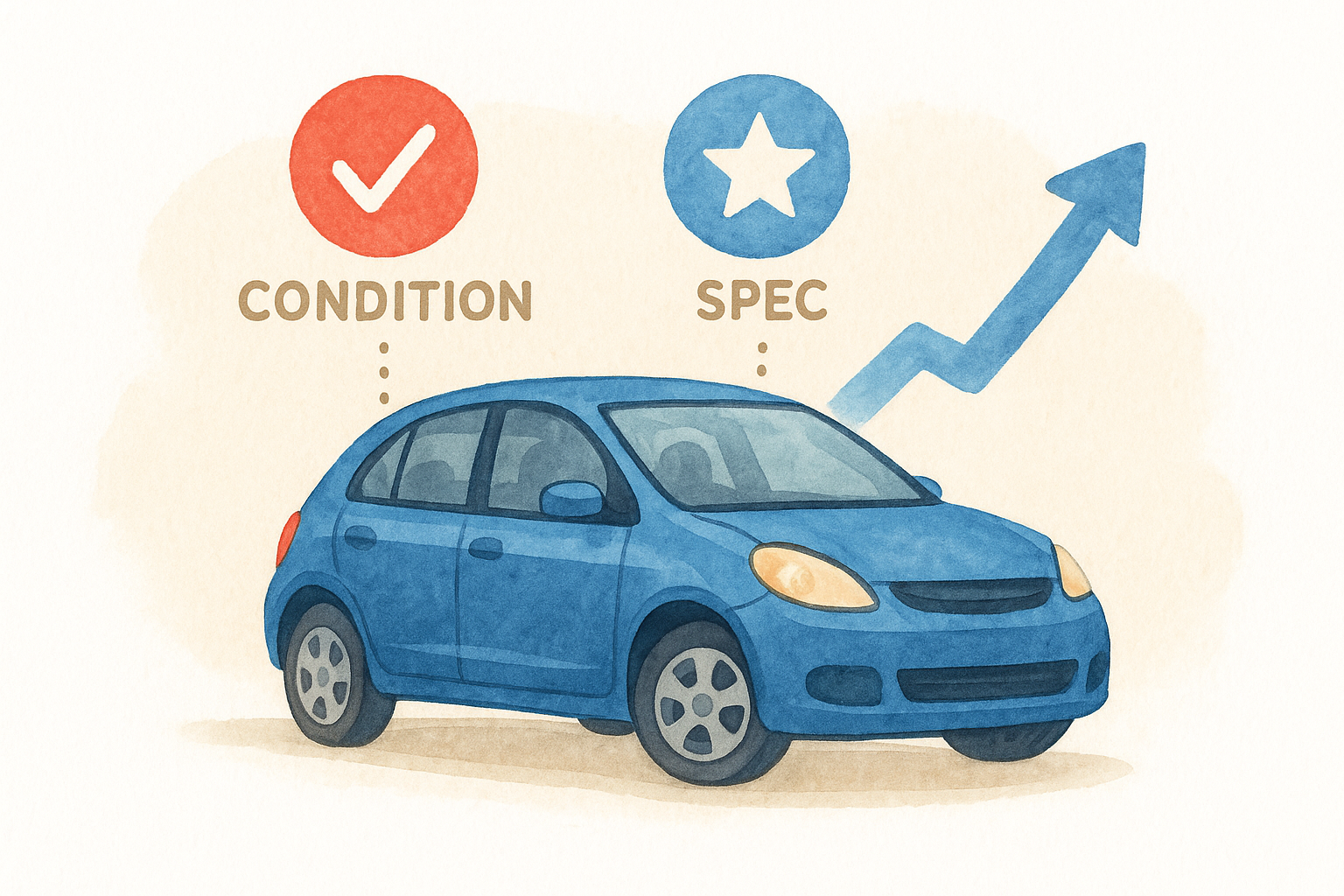
The figure any instant car valuation UK tool returns is a market average, not your car's specific value. You now need to move that number up or down based on three factors: physical condition, specification level, and vehicle history. Each one can shift the price by hundreds of pounds, and buyers will check all three before they commit.
How condition and spec affect the number
Your car's physical condition covers bodywork, interior wear, tyre depth, and mechanical state. A car in excellent condition sits at the top of the valuation range; one with kerbed alloys, scuffed bumpers, or worn upholstery sits at the bottom. Trim level matters just as much: a higher specification with features like leather seats, a sunroof, or upgraded audio supports a stronger asking price than the same model in base form.
Use this as a practical adjustment guide:
| Factor | Likely price impact |
|---|---|
| Full service history vs no history | +£300 to £600 |
| Excellent condition vs poor condition | +£500 to £1,500 |
| Higher trim level vs base spec | +£400 to £1,000 |
Why history matters more than most sellers expect
Vehicle history issues such as outstanding finance, insurance write-offs, and a high count of MOT advisories reduce what buyers will pay, and informed buyers now check for these before agreeing any price.
A buyer who uncovers undisclosed finance or a write-off marker during their checks will either pull out or push your price down sharply.
Running a history check before you list lets you price accurately and answer buyer questions with confidence rather than guesswork.
Step 4. Compare sale routes and set a price
Once you have your adjusted valuation and a clear picture of your car's history, the final step is matching the right sale route to the figure you want to achieve. Each route returns a different amount, and choosing the wrong one means leaving money behind or waiting longer than you need to.
Matching the route to your adjusted figure
Your instant car valuation UK result gave you three separate prices. Use those figures directly to decide where to sell. Private sale delivers the highest return but requires your time and direct contact with buyers. Part-exchange is faster but the dealer offer will sit noticeably lower than your private sale figure.
| Sale route | Expected return | Typical speed |
|---|---|---|
| Private sale | Closest to private sale value | Days to weeks |
| Part-exchange | Closest to part-exchange value | Same day |
| Car buying service | Between both figures | 24 to 48 hours |
Selling privately with a clean history check ready to share gives buyers less reason to negotiate your price down.
Setting a final asking price
With your route chosen, set your asking price slightly above your target figure to leave room for negotiation without dropping below what the market supports. If you are selling privately, list at three to five percent above your adjusted private sale value. Check three or four current listings for the same model, trim, and mileage to confirm your number sits within the realistic range buyers are actually seeing.
Quick recap and next step
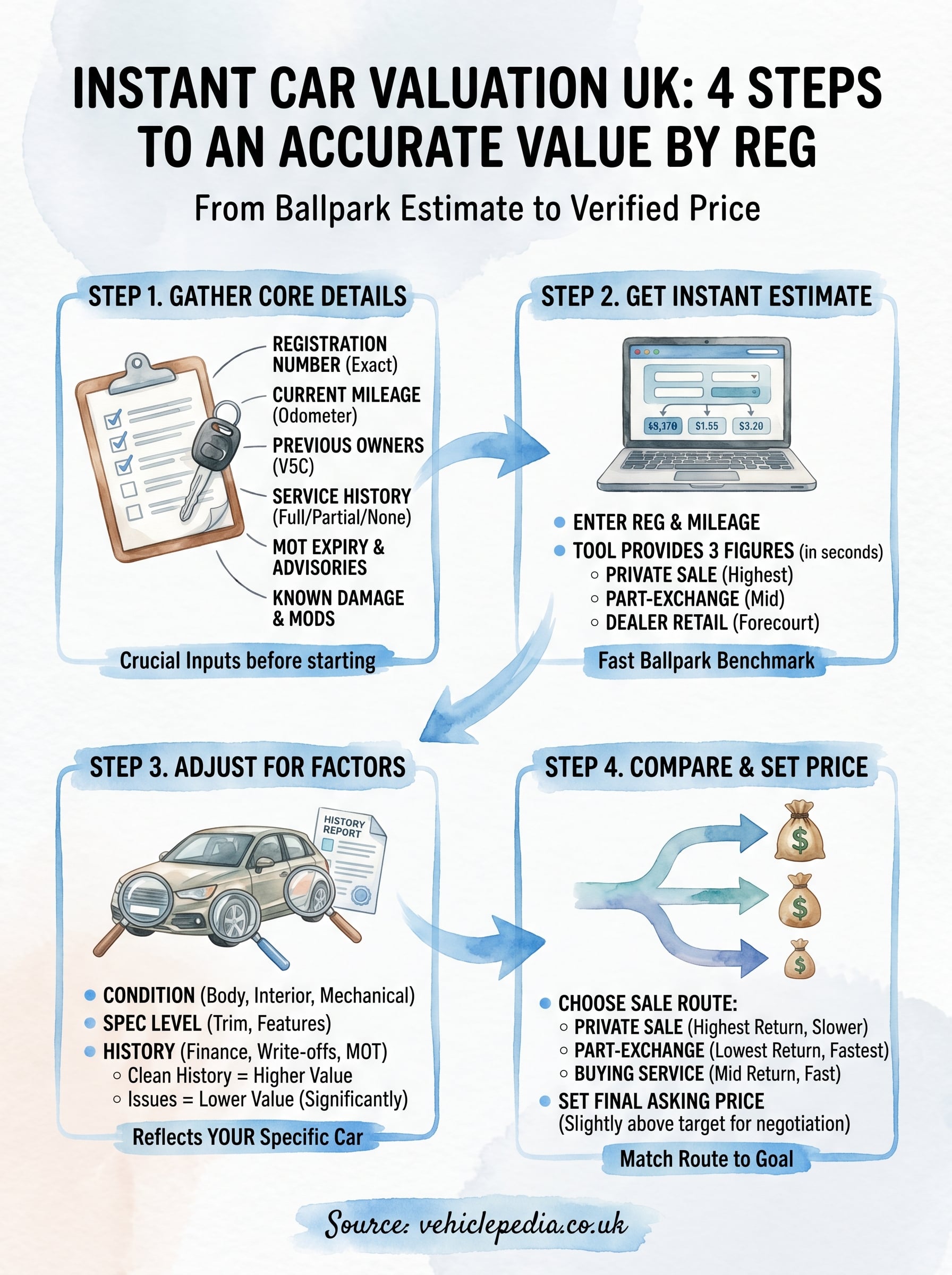
You now have a clear four-step process for getting a reliable figure on your car. Start with your current mileage and service history, run an instant car valuation UK tool by registration number, adjust the output for your car's actual condition and spec, then match the right sale route to the price you want. Following those steps in order stops you from accepting the first figure you see as final.
One thing the valuation alone cannot do is reveal hidden problems in the vehicle's background. Outstanding finance and write-off markers, along with MOT advisories, all reduce what buyers will pay, and they will check for these before they commit. Knowing your car's full history in advance puts you in control of any negotiation.
Before you list or agree a deal, run a history check to see exactly what informed buyers will find. View a sample premium report to understand what a full vehicle history check covers and whether a premium report is right for you.