Salvage Car Check: How to Check a Car's Salvage History
Run a salvage car check to spot Cat A, B, S and N write-offs, avoid clocked mileage, and negotiate with confidence before you buy.
Salvage Car Check: How to Check a Car's Salvage History
A car that looks perfectly clean on the forecourt can still be hiding a written-off past. Dealers sometimes repair Cat S and Cat N vehicles and sell them on without ever mentioning the accident, which is exactly why a salvage car check should sit at the top of your pre-purchase checklist. Skip it and you risk paying full price for a car that's worth thousands less, or one with hidden structural damage.
So how do you actually check if a car is salvage? You run the registration number through official DVLA-linked data and insurance write-off registers, which flag whether a vehicle has ever been recorded as Cat S, Cat N, Cat C or Cat A. This tells you if the car was declared uneconomical to repair, structurally damaged, or has an auction and repair history worth investigating further before you hand over any money.
In this guide, we'll walk through exactly how to check a car's salvage history, what each write-off category actually means, and how to read the results properly. We'll also cover free versus premium checks, so you know what you're getting either way.
Why check a car's salvage history before buying
Buying a used car without checking its salvage history is a bit like buying a house without a survey. You might get lucky, but you're gambling with thousands of pounds. A written-off vehicle that's been patched up and resprayed can look showroom-ready while hiding bent chassis rails, faulty airbags, or electrical faults that only surface months later.
The financial risk of a hidden write-off
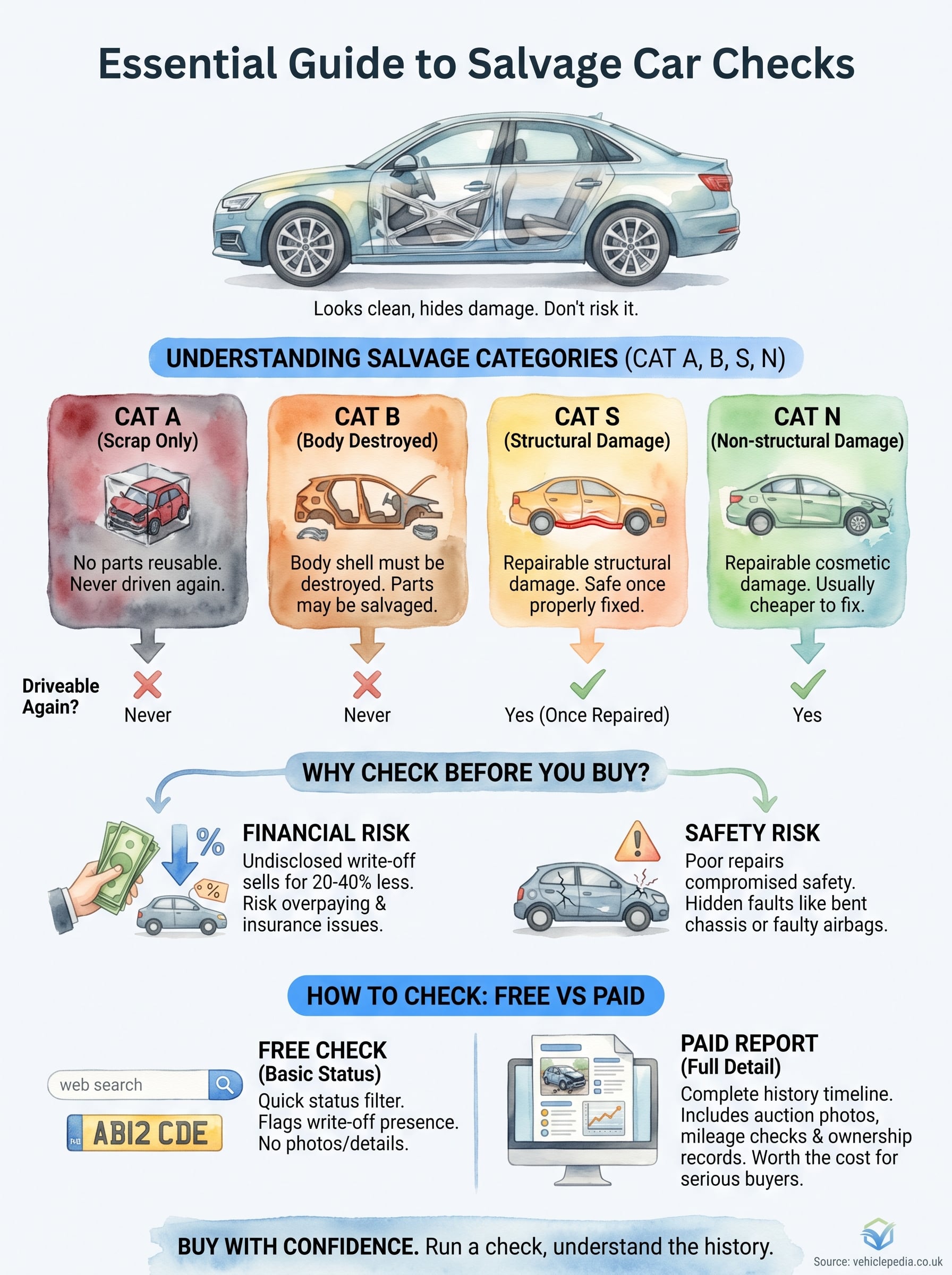
Money is usually the first thing that suffers. A car with an undisclosed Cat S or Cat N history typically sells for 20-40% less than an equivalent clean-history model, so if you pay full price without knowing, you've overpaid the moment you sign the paperwork. Insurers also treat write-off history differently, and some will refuse cover altogether or load your premium once they find out, which can catch buyers out at renewal time.
A car's price tag means nothing until you know its history, and salvage status changes that number instantly.
Safety and insurance problems down the line
Safety is the bigger issue, though. Structural repairs after a serious accident aren't always done to manufacturer standard, especially on cars sold quickly through auction. A poorly repaired Cat S vehicle might pass an MOT visually while still having compromised crash structures, which is why it pays to know whether a repaired Cat S car is safe to buy. Running a car salvage check before you buy gives you the chance to walk away, negotiate a fairer price, or at least get the car inspected by an independent engineer with full knowledge of what you're dealing with. It also protects your resale value later, since buyers doing their own checks will find the same history you would have.
Selling privately without disclosing known salvage history is illegal under the Consumer Rights Act, and the same law protects you as a buyer if a dealer hides it from you.
How to check if a car is salvage
Running a salvage car check takes less than a minute if you know where to look. The quickest route is entering the registration plate into a free car salvage check by registration that pulls data straight from DVLA-linked databases and insurance write-off registers, rather than relying on what a seller tells you or what a logbook shows.
Here's the process most buyers follow when they want to look up a car's write-off status by reg plate and check if a car is salvage:
- Grab the vehicle's registration number from the V5C or the plate itself.
- Enter it into a salvage check tool that searches insurance and DVLA-linked records.
- Review the results for any Cat A, B, S or N markers.
- Cross-check the mileage and MOT history against what the seller has told you.
If the reg plate doesn't reveal a category, don't assume it's clean, always confirm with a proper report.
Free lookups often flag write-off status but stop short of showing photos or auction records. For a car salvage history check with full detail, a paid report is worth the small cost before you commit to buying.
What a salvage check report reveals
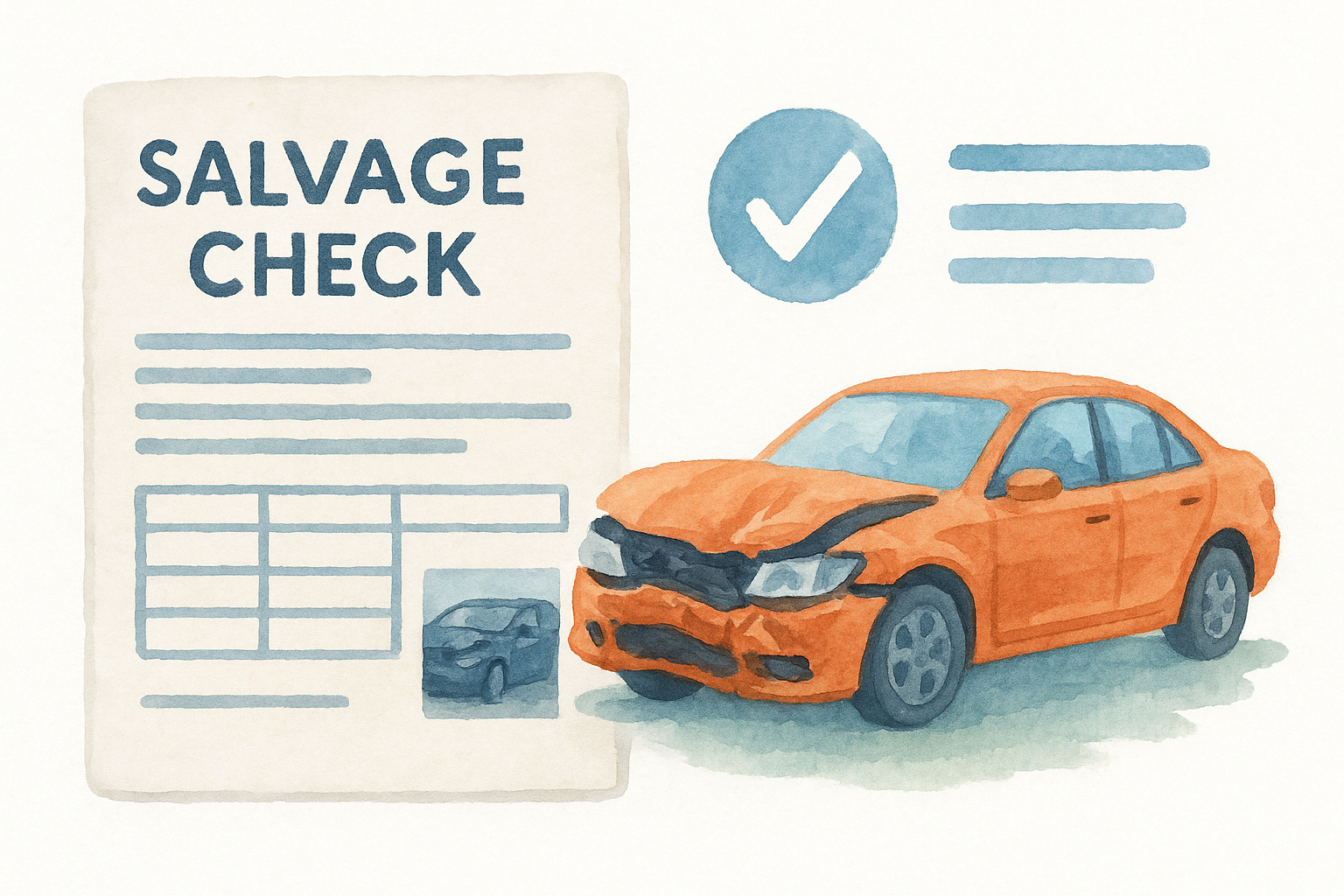
A proper salvage car history check goes well beyond a simple yes or no on write-off status. It builds a timeline of the car's damage, repair, and ownership history, so you can see exactly what happened and when.
The core details you'll see
Most reports lay out the same core information, though depth varies between providers:
- The write-off category (Cat A, B, S or N) and the date it was recorded
- The insurer or body that logged the write-off
- Auction listing history, including sale dates and locations
- Photos taken at the point of sale, showing the damage before repair
- Mileage recorded at each stage, helping you spot clocking
- Previous keeper changes around the time of the write-off
A report that shows damage photos and auction dates tells you more in thirty seconds than any seller conversation ever will.
Why the detail matters
Seeing the actual auction records and damage photos matters because sellers rarely volunteer this information themselves. A vague "minor bump, all fixed" claim looks very different once you've seen the pre-repair photos showing a crushed rear quarter panel or a bent chassis rail.
Understanding salvage categories: Cat A, B, S and N
Each write-off category tells you something different about what happened to the car, and confusing them can cost you real money, so it helps to have the Cat A, B, S and N categories explained properly. Before 2017, insurers used Cat C and Cat D, but the industry switched to the current system to better reflect structural versus cosmetic damage.
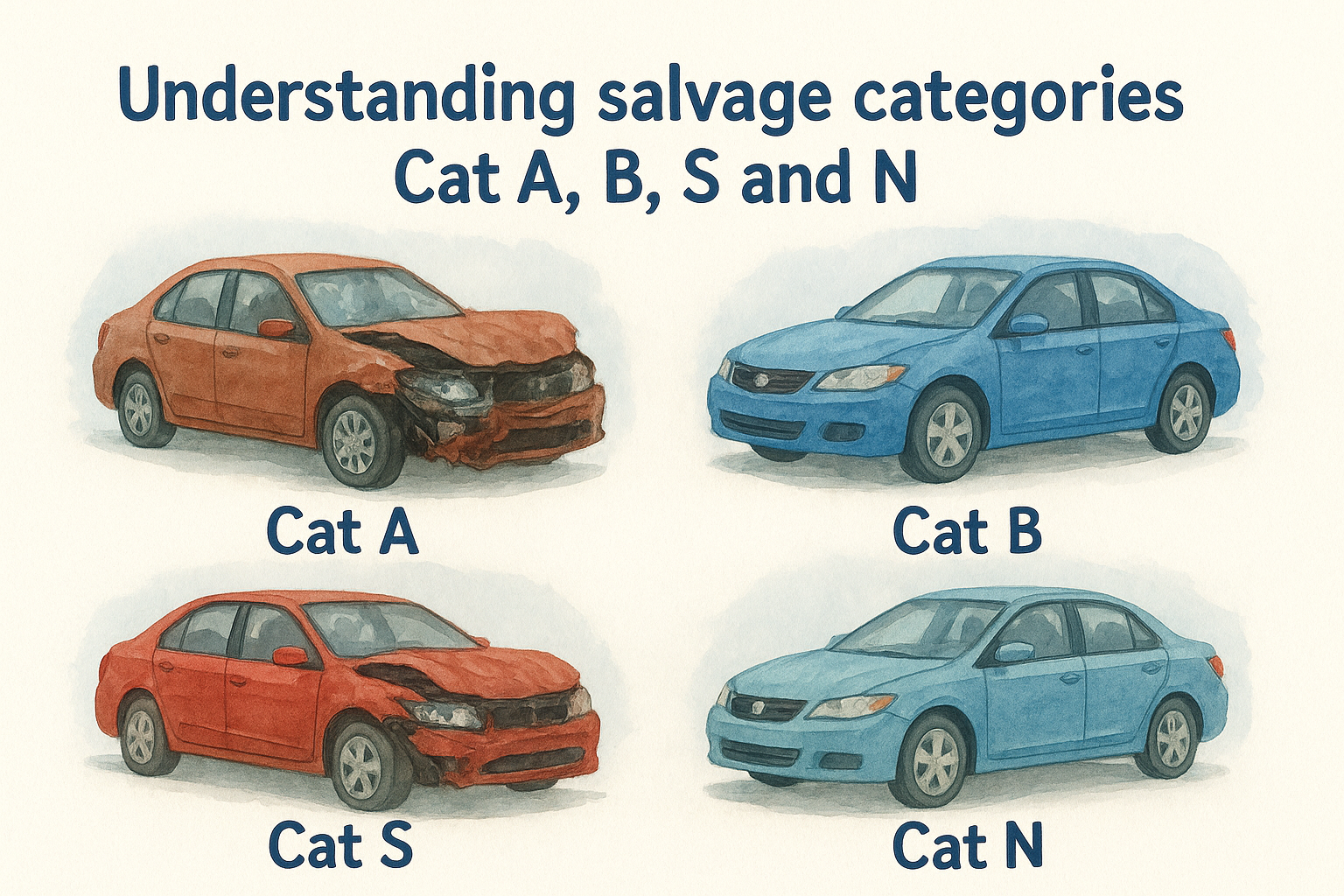
| Category | Meaning | Can it be driven again? |
|---|---|---|
| Cat A | Scrap only, no parts reusable | Never |
| Cat B | Body shell must be destroyed, parts may be salvaged | Never as a whole car |
| Cat S | Structurally damaged, repairable | Yes, once repaired properly |
| Cat N | Non-structural damage, repairable | Yes, usually cheaper to fix |
Getting these mixed up matters. Cat N vehicles had no structural damage, so a well-repaired example can be a genuine bargain once you understand the risks of buying a Cat N car. Cat S vehicles are riskier, since chassis or crash structure was affected, and poor repairs can leave hidden faults.
Knowing the difference between Cat S and Cat N is the single most useful thing you can learn before buying a written-off car.
Always ask for repair invoices and an independent inspection report alongside any salvage category confirmation.
Free vs paid salvage checks: which one do you need
A salvage car check free search will tell you whether a car carries a write-off marker at all, and for many buyers that's enough to walk away from a bad deal on the spot. Vehiclepedia's free write-off check by reg pulls straight from DVLA-linked records and flags Cat A, B, S or N status without you paying a penny.
When free is enough
If you're still comparing several cars and just want a quick filter, free data does the job. It answers the basic question of how to check a salvage car before you waste time viewing it in person, and it costs nothing to run on every reg plate you're considering.
When you need the paid report
Once you're serious about one specific car, a paid report earns its keep. It adds auction photos, mileage history, and finance or stolen checks that free lookups simply don't cover, and you can see what a paid salvage report costs up front.
Free checks tell you if there's a problem, paid checks tell you exactly what that problem was.
For a car you're about to buy, that extra detail is worth far more than the small fee attached to it.
Buying with confidence
A salvage car check takes minutes but can save you thousands, and it settles the one question that matters most before you buy: has this car ever been written off? Skip it, and you're trusting a stranger's word over official DVLA-linked records and insurance registers that don't lie.
Running the reg plate costs nothing, but knowing exactly what a Cat S or Cat N marker means for that specific car is what actually protects your money. Once you understand the categories, spotting a genuine bargain versus a hidden risk becomes far easier, and you'll walk into any negotiation with proper leverage instead of guesswork.
Before you commit to any used car, run the check, read the report properly, and ask the seller to explain anything it flags. If you want to see exactly what a full salvage report includes before paying, take a look first.