Is It Safe To Buy A Cat N Car? Risks, Checks & Insurance
Is it safe to buy a Cat N car? Discover the risks, how to verify repair quality, and what to expect with insurance and resale before buying a write-off.
Is It Safe To Buy A Cat N Car? Risks, Checks & Insurance
A Category N car, written off because of damage that didn't touch the structure, can sell for thousands less than its market value. That gap is hard to ignore when money's tight. But is it safe to buy a Cat N car, or are you buying yourself an expensive headache?
Honestly, it depends. A Cat N car that's been professionally repaired to a high standard can be a sound purchase. One that's been botched and pushed back onto the market cheaply is a different story, and a genuine safety risk. What separates the two usually comes down to how thoroughly you check the vehicle before you pay for it.
That's where Vehiclepedia comes in. Our vehicle history checks pull data from official UK sources, including the DVLA and insurance registers, so you can find out instantly whether a car carries a write-off marker. In this guide, we'll cover the real risks of buying a Cat N car, what checks you need to run, and how it affects your insurance, so you can make the call with confidence instead of guesswork.
Why Cat N matters for safety and value
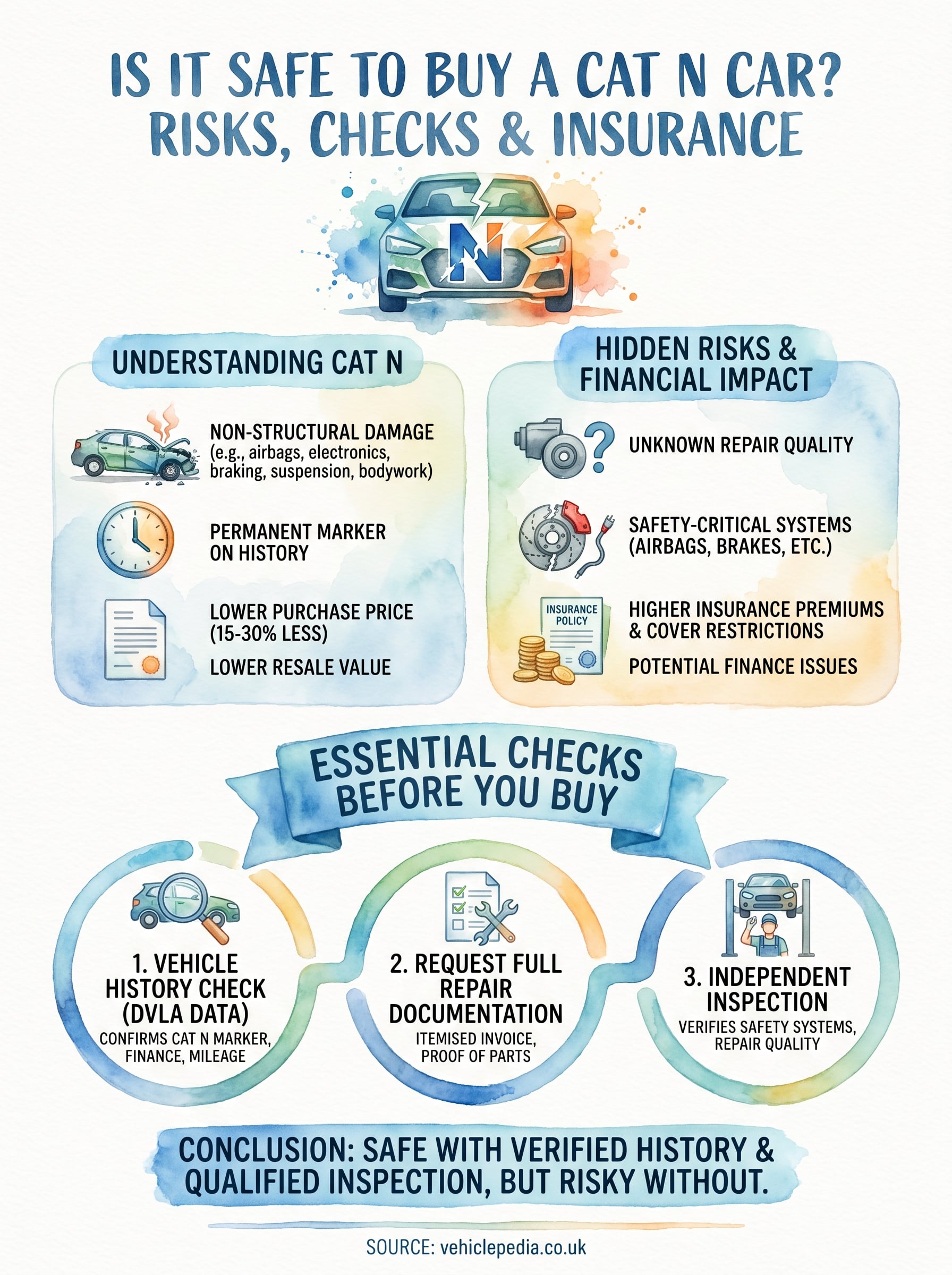
When you're weighing up whether it's safe to buy a Cat N car, physical condition is only part of the question. It also shapes what you pay, what you can insure it for, and what you'll get back when you sell. Category N is a permanent marker on a vehicle's history, and it touches all three of those things at once, which is why it deserves more than a quick once-over before you hand over any money.
A Cat N marker does not disappear over time. It stays on the vehicle's record indefinitely, even after all repairs are completed.
How the safety risk actually works
Non-structural damage sounds minor on paper, but it covers a wide range of components. Airbags, braking systems, electronics, and suspension parts can all take damage in an incident without the chassis being touched. These are the systems your safety depends on every time you get behind the wheel. If whoever repaired the car cut corners or fitted substandard parts, those faults might not surface until something goes wrong on the road.
Repair quality is what really decides this. A professional repair carried out by a reputable bodyshop using manufacturer-approved parts is worlds apart from a quick, cheap fix. Without a detailed repair invoice and clear proof of the work done, you have no reliable way to tell the difference between a vehicle that's been properly restored and one that's simply been rushed back onto the road.
Why the price discount cuts both ways
The lower purchase price is the main draw for buyers looking at Cat N cars. You can typically expect to pay 15 to 30 percent less than the equivalent clean-history vehicle, which is a meaningful saving. For buyers working with a tighter budget, that gap can put a higher-spec model within reach that would otherwise be out of the question.
That discount comes at a cost elsewhere, though. Resale value stays suppressed because the Cat N marker shows up for any future buyer who runs a history check. You gain from the discount when you buy, but you take the same hit to value when you come to sell. Add in that some insurers charge higher premiums for write-off vehicles, and the overall saving across your period of ownership can shrink considerably.
What Cat N means and what it does not
Category N replaced the old Category D classification in October 2017, when the UK's write-off categories were overhauled. An insurer assigns it when a vehicle has been in an incident and the cost of repair exceeds what the insurer is willing to pay, but the damage is confined to non-structural components. The car can legally return to the road after repair, unlike Category S or the more severe categories where the frame itself is compromised.
What the classification actually covers
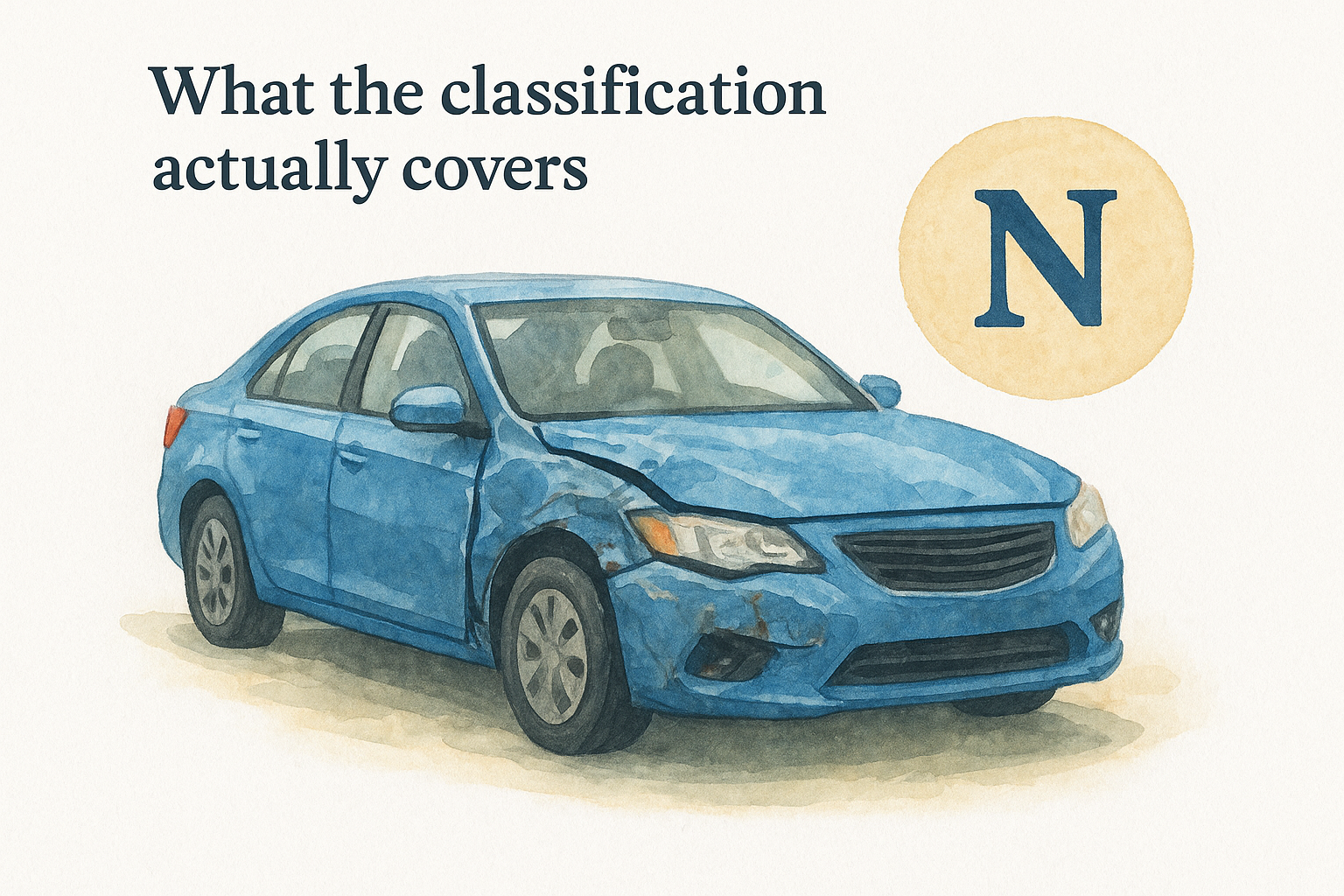
Cat N covers damage to parts that are not part of the vehicle's core chassis or frame. The key distinction is that none of the damage affects the structural shell of the car, which is why it sits below Cat S in severity. Common examples of Cat N damage include:
- Airbags and seatbelt pre-tensioners
- Electrical and electronic systems
- Braking components and suspension parts
- Bodywork, trim, and cosmetic damage
What Cat N does not mean
It's just as important to grasp what Cat N doesn't mean when you're asking is it safe to buy a cat n car. A Cat N marker doesn't automatically make a car unroadworthy, and it doesn't mean the repairs were skipped. Plenty of Cat N vehicles have been fully and professionally put right before going back on sale. What it does mean is that you can't take repair quality on trust, since no mandatory inspection stands between a Cat N car and the used market. Checking the work falls squarely on you as the buyer.
No government body certifies that a Cat N car has been repaired to an acceptable standard before it returns to the road.
Risks to watch for with Cat N cars
When you're weighing up is it safe to buy a cat n car, understanding the specific risks helps you target your checks instead of crossing your fingers. Not every risk shows itself straight away, and that's exactly what turns some Cat N purchases sour long after you've driven off.
Hidden repair quality issues
The biggest risk with a Cat N car is that the repair work may have been rushed or done badly. No mandatory inspection sits between a repaired write-off and the road, so a seller can list a car with zero independent sign-off on the work carried out. Safety-critical systems like airbags, ABS, and suspension components could be faulty without giving anything away on a short test drive.
Poor repairs to braking or suspension systems can take time to surface, often revealing themselves only under emergency conditions.
Watch for mismatched paint and uneven panel gaps, plus any hesitation from the seller when you ask for full repair documentation or a pre-purchase inspection.
Financial risks you carry as the buyer
Safety aside, the money side is just as real. Some insurers won't touch Cat N vehicles at all, and others whack on noticeably higher premiums. Finance the car and write it off again later, and the payout may not clear your outstanding balance, leaving you to cover the gap yourself. Resale is harder too: any buyer who runs a history check will spot the marker and either walk away or haggle the price down.
How to check a Cat N car before buying
Running the right checks before you commit is the surest way to answer is it safe to buy a cat n car for the specific vehicle in front of you. No visual once-over beats verified data from official sources, so get your due diligence started before you even book a viewing.
Start with a vehicle history check
A vehicle history check tells you instantly whether the car carries a Cat N marker, along with when it was logged. Run this check on any used car you're seriously considering, not just the ones where the seller happens to mention an incident. Plenty of sellers either withhold the full history or genuinely don't know it themselves.
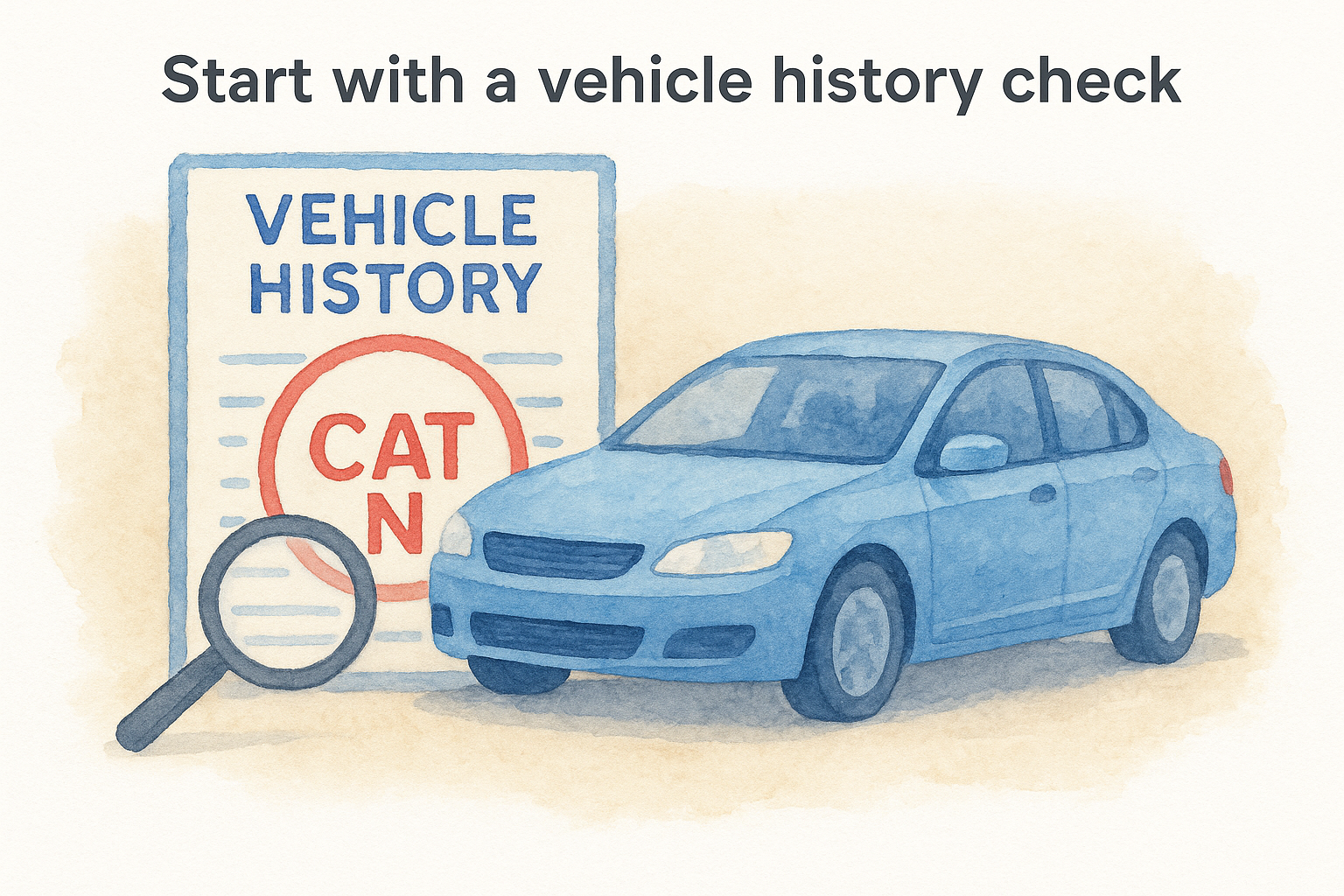
A vehicle history check also reveals other red flags such as outstanding finance, stolen status, and mileage discrepancies.
Request full repair documentation
Once you've confirmed a Cat N marker exists, ask the seller for a full repair invoice that lists every component replaced, the parts fitted, and the workshop that carried out the work. If the seller can't produce clear paperwork, take that as a serious warning sign. Documents worth asking for include:
- An itemised repair invoice from the bodyshop
- Evidence of the parts used, ideally manufacturer-approved components
- Any post-repair inspection or sign-off certificate
Get an independent inspection
Book a pre-purchase inspection with a qualified independent mechanic before you go any further. An inspector can physically examine safety-critical systems such as brakes, suspension, and airbags in ways a short test drive simply can't match.
A few hours of inspection work costs a fraction of what you'd pay if hidden faults surfaced after the sale went through. If the seller won't allow an independent inspection, treat that refusal as a major red flag.
Insurance, finance and resale implications
When you're asking is it safe to buy a cat n car, the purchase price is only one piece of the puzzle. Insurance, any finance deal, and the price you'll eventually sell for all shift once a Cat N marker sits on the vehicle's record, so it pays to weigh up each of these before you commit.
Insurance costs and cover restrictions
Some insurers class Cat N vehicles as higher risk and charge higher premiums as a result. Others won't cover write-off vehicles at all, which shrinks your list of providers. Speak to your insurer before you buy to check they'll cover the specific car and get a written quote.
If you buy a Cat N car without telling your insurer about the write-off marker, you risk voiding your policy altogether.
Finance and resale value
If you're funding the purchase with a loan or finance agreement, check with the lender before you sign anything. Some finance companies won't lend against a Cat N vehicle, and others attach stricter conditions. If the car is written off a second time while you're still paying it off, the payout could fall short of what you owe, leaving you to cover the shortfall.
Resale is the other side of the equation. The Cat N marker never comes off the vehicle's record, and any buyer down the line will find it the moment they run a history check. Expect a lower sale price than a comparable car with a clean history, and build that into your budget from the outset rather than being caught out by it later.
Next steps
Is it safe to buy a Cat N car? Yes, but only if you do the groundwork first. A Cat N vehicle with solid repair documentation and a clean bill of health from an independent mechanic can represent genuine value for money. Skip those steps, and you risk paying for someone else's costly problem.
Before you view any Cat N vehicle, run a history check to confirm the marker and look for additional red flags such as outstanding finance or a stolen status record. Then request the full repair paperwork, book an independent inspection, and speak to your insurer before you sign anything.
Vehiclepedia makes the first step quick and straightforward. You can run a full vehicle history check in minutes, pulling data from official UK sources to give you a clear picture of exactly what you are buying. Check a vehicle's full history before you commit any money.