VIN Number Explained: How to Decode All 17 Characters
VIN number explained: decode all 17 characters, find your VIN on a UK car, and spot cloned vehicles before you buy.
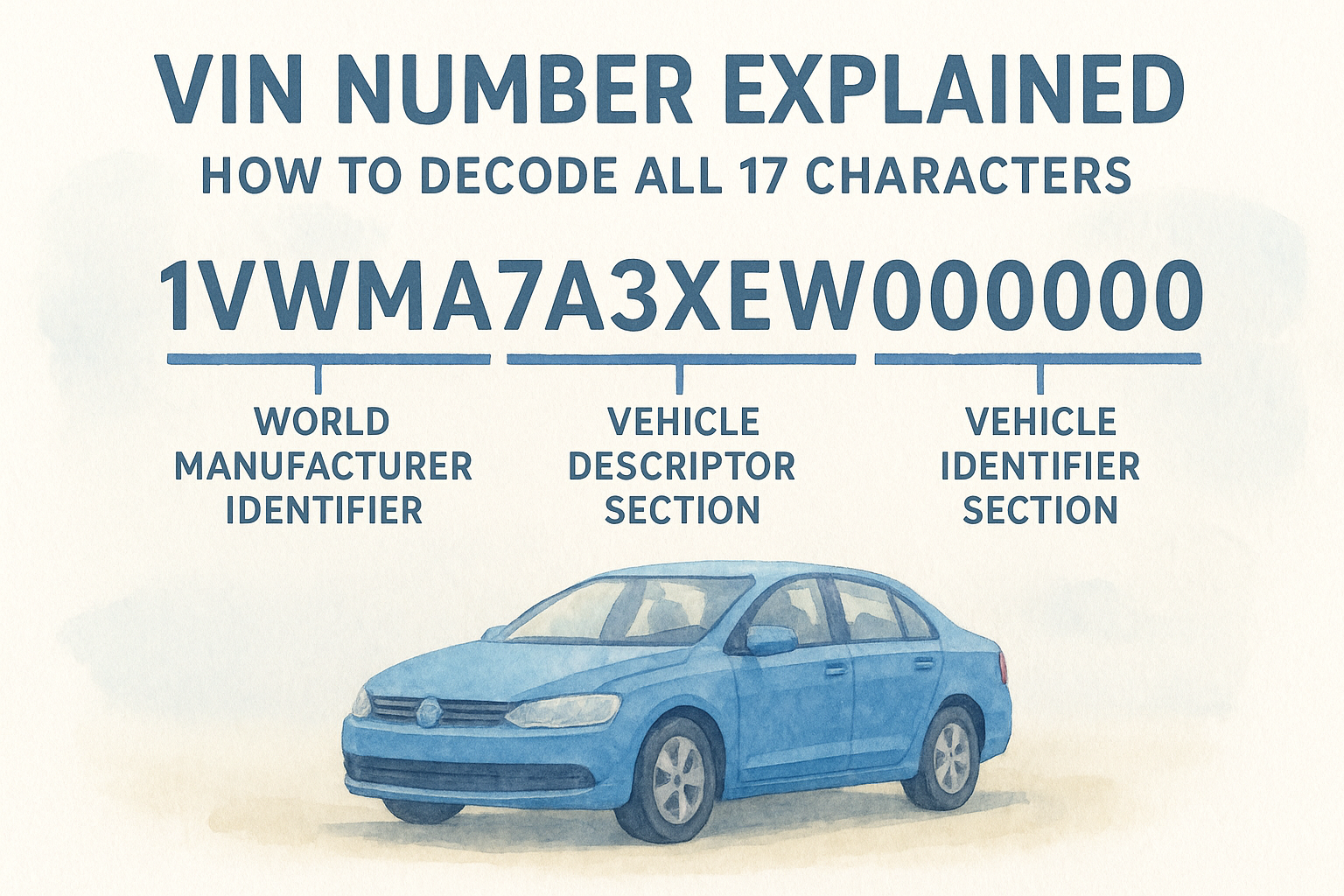
VIN Number Explained: How to Decode All 17 Characters
Every car has a 17-character code stamped somewhere on its body, printed on the logbook, and buried in DVLA records. That code is the VIN number explained properly, and once you know how to read it, you stop guessing about a vehicle's real background. Most buyers glance at it, assume it's just a random serial, and move on. That's a mistake, because those 17 characters encode the manufacturer, the factory, the model year, and a unique production sequence.
If you're asking what a VIN actually tells you, the short answer is: quite a lot, once you break it into sections. The first three characters identify the manufacturer and country of assembly, the middle block covers vehicle attributes like engine size and body type, and the final digits pin down the exact production year and serial number. Decoding it properly turns a meaningless string into a mini history report.
This article walks through each section of the VIN, character by character, so you can decode any plate yourself. We'll also cover where to find the VIN on your car, common formatting mistakes to watch for, and how it connects to the wider vehicle history check you should run before handing over any money.
Why the VIN matters when buying or selling a car
Buyers who skip the VIN check are gambling with their own money. The vehicle identification number is the single fixed point of reference that ties a car to every official record about it, from DVLA registration data to insurance claims and MOT test results. Unlike a number plate, which can be swapped, transferred, or cloned, the VIN is stamped into the chassis and etched onto the windscreen and door frame. That permanence makes it the anchor for any serious history check.
Sellers benefit too, though many don't realise it. A clean, verifiable VIN speeds up a sale because it lets a buyer confirm the car matches its advert without waiting on paperwork. If the engine size, model, or year on your listing don't line up with what the VIN decodes to, expect awkward questions or a buyer who walks away. Getting the details right upfront, including a plain VIN check, builds trust before a viewing even happens.
A mismatched VIN is the fastest way to spot a car that isn't what the seller claims it is.
The stakes go beyond convenience. Criminals use cloned VINs to disguise stolen vehicles, and insurers rely on the VIN to flag cars that have been written off after serious accidents. Cross-referencing the VIN against DVLA and police databases before you buy tells you whether the car has a hidden past, something a visual inspection will never reveal. Finance companies also register outstanding loans against the VIN, so a car that looks debt-free on the surface might still belong, legally, to a lender until the previous owner clears the balance.
For private sales especially, where there's no dealer warranty to fall back on, the VIN is often your only real safeguard. Treat it as the starting point of due diligence, not a formality to skip past on your way to the test drive.
How to decode all 17 characters of a VIN
Every VIN splits into three blocks, and each one answers a different question about the car. Learn the pattern once and you can decode any vehicle, not just your own. The 17-character code never repeats across manufacturers within the same period, which is exactly why regulators adopted it as the global standard.
The three blocks explained
The first block, positions 1 to 3, is the World Manufacturer Identifier, telling you who built the car and where. Positions 4 to 9 form the Vehicle Descriptor Section, covering body style, engine type, and transmission. The final eight characters, positions 10 to 17, make up the Vehicle Identifier Section, which pins down the model year, assembly plant, and a unique serial number.
Once you know which block you're looking at, a random string of letters and numbers turns into a readable record.
| Position | Section | What it tells you |
|---|---|---|
| 1-3 | WMI | Manufacturer and country |
| 4-8 | VDS | Model, body, engine |
| 9 | Check digit | Validates the VIN |
| 10 | Model year | Year of manufacture |
| 11 | Plant code | Assembly factory |
| 12-17 | Serial number | Unique production sequence |
Where to find the VIN on your vehicle
Finding the VIN takes seconds once you know where manufacturers hide it. Every UK car carries the number in at least three places, and checking more than one location helps you spot a cloned VIN before it costs you money. Look for a plate or stamp that matches exactly across all locations, since any mismatch is a red flag worth walking away from.
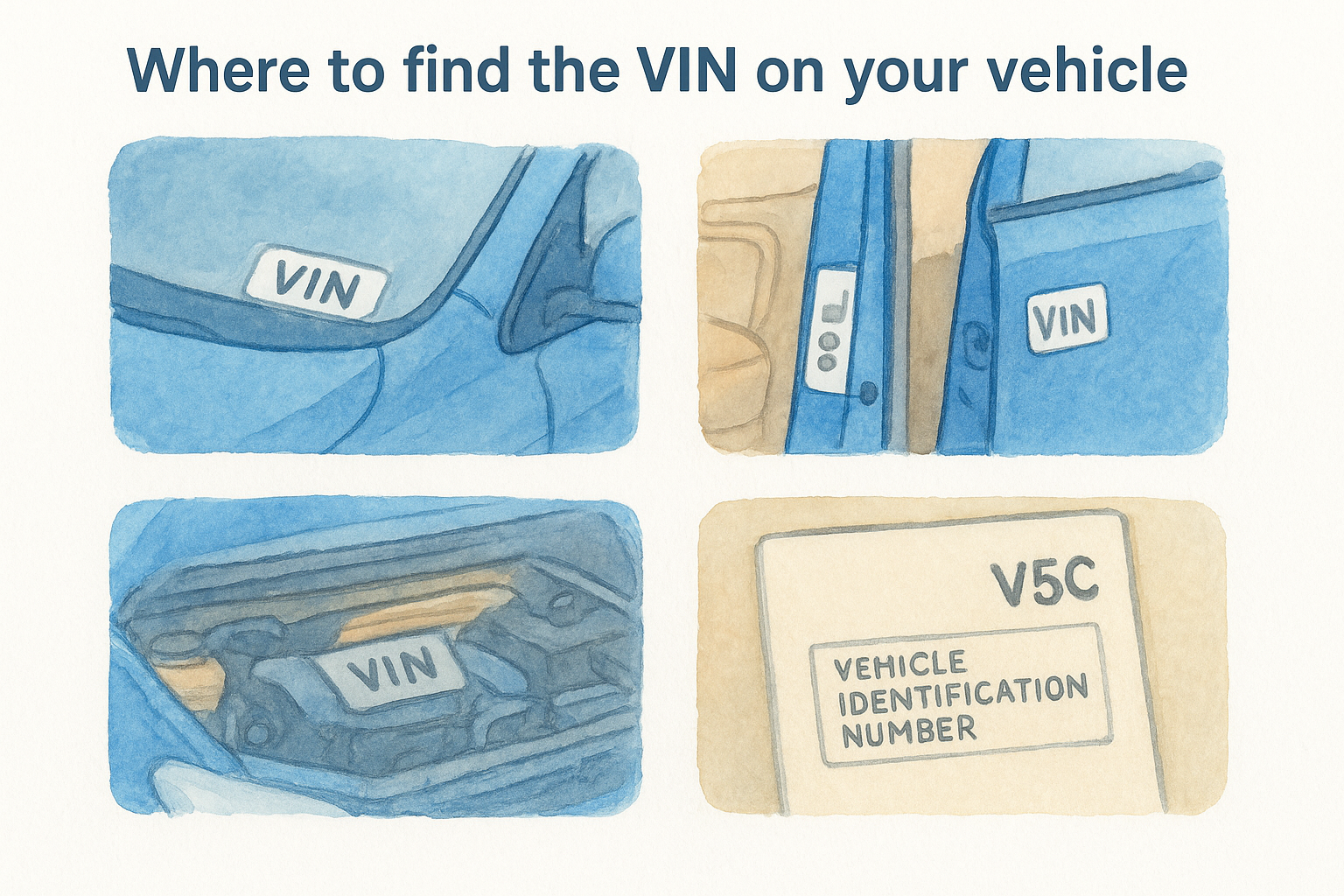
Common VIN locations
Manufacturers place the VIN where it's visible without dismantling the car, but the exact spot varies by make and model year.
- Windscreen: bottom corner, driver's side, visible from outside
- Door frame: driver's side, often on a sticker near the hinge
- Engine bay: stamped into the bulkhead or near the chassis rail
- V5C logbook: printed under the vehicle identification number field
- MOT certificate: listed alongside the registration plate
If the VIN on the windscreen doesn't match the one on the logbook, stop the sale immediately.
Cross-checking these locations against DVLA records, which you can access through GOV.UK's vehicle information service, confirms the car in front of you is the car on paper.
VIN number example broken down
Take a real-world VIN like WVWZZZ1KZAM123456 and it stops looking like gibberish once you slot it into the pattern from earlier. Splitting this Volkswagen example into its three blocks shows exactly how much information is packed into 17 characters, and gives you a template to apply to any car you're checking.
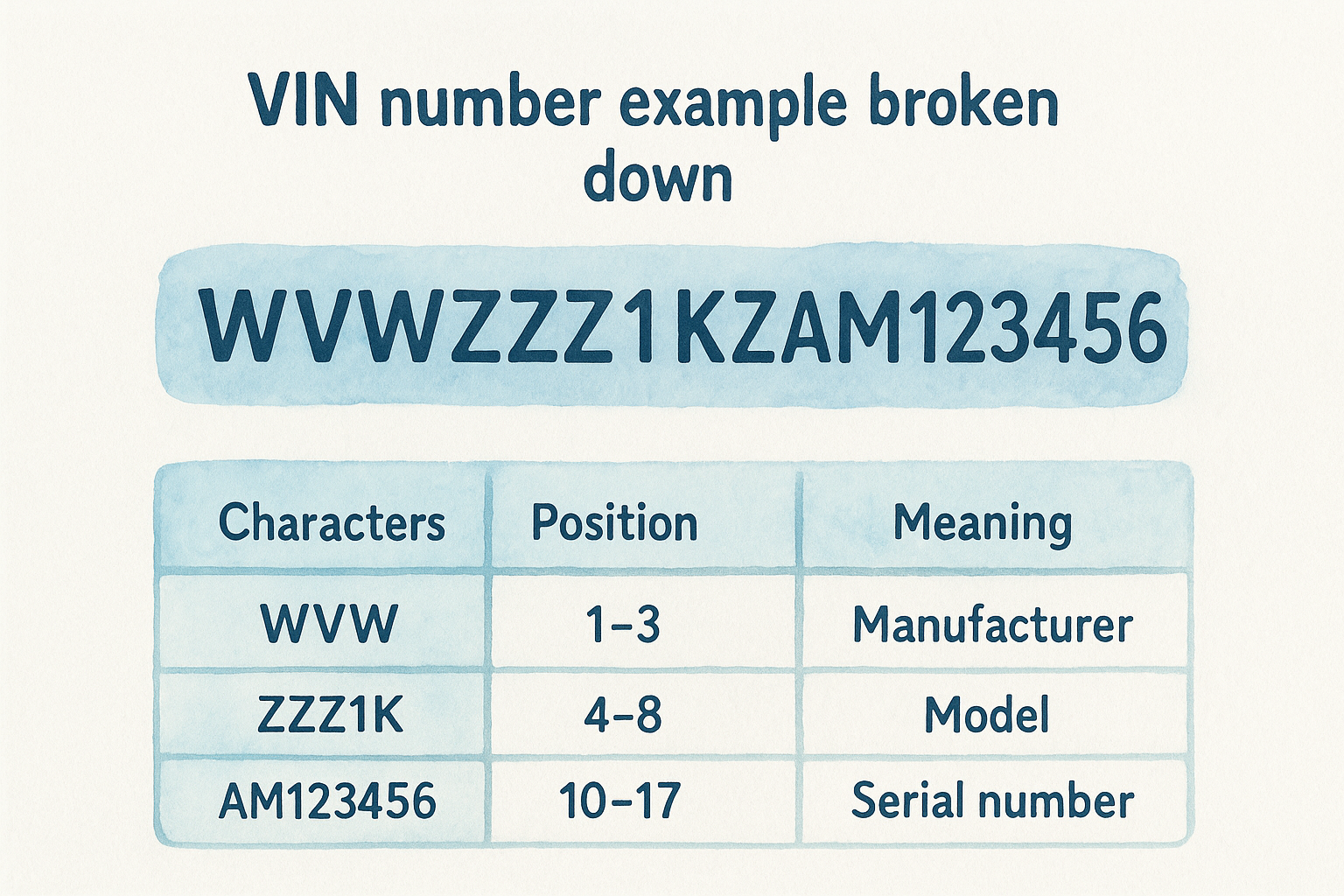
Character-by-character breakdown
Grouping the code this way makes the pattern obvious rather than abstract.
| Characters | Position | Meaning |
|---|---|---|
| WVW | 1-3 | Volkswagen, manufactured in Germany |
| ZZZ1K | 4-8 | Body style and engine configuration |
| Z | 9 | Check digit, confirms the VIN is valid |
| A | 10 | Model year code |
| M | 11 | Assembly plant identifier |
| 123456 | 12-17 | Unique production serial number |
Notice how the manufacturer code sits fixed at the front, while the serial number at the end is what actually makes each car unique on the production line. Two Golfs built the same week at the same plant will share every character except those final six digits.
Once you've decoded one VIN properly, every other 17-character code becomes readable in seconds.
Running this same logic against a car you're viewing tells you whether the advert's claimed year and model actually match what the VIN says, before you've even opened the bonnet.
How to check a VIN before buying a used car
Knowing how to decode a VIN is only half the job. You still need to check it against real records before you hand over a deposit. Start by writing down the VIN from the windscreen, door frame, and V5C, then compare all three. Any difference between them is a warning sign that the car may have been cloned or the paperwork tampered with.
A practical checklist
Work through these steps in order, and don't skip any of them just because the seller seems trustworthy.
- Confirm the VIN matches on the windscreen, door frame, and logbook
- Check the MOT history for mileage discrepancies or gaps in testing
- Verify road tax status is current and matches the vehicle's tax band
- Run a full history check to reveal write-offs, finance, and theft records
- Compare the decoded VIN against the advertised year, model, and engine size
A VIN that matches three separate sources gives you far more confidence than any verbal reassurance from a seller.
A free check covers the basics like MOT and tax, but it won't reveal write-offs, outstanding finance, or a stolen record. For that, you need a premium report pulling directly from police and insurance databases.
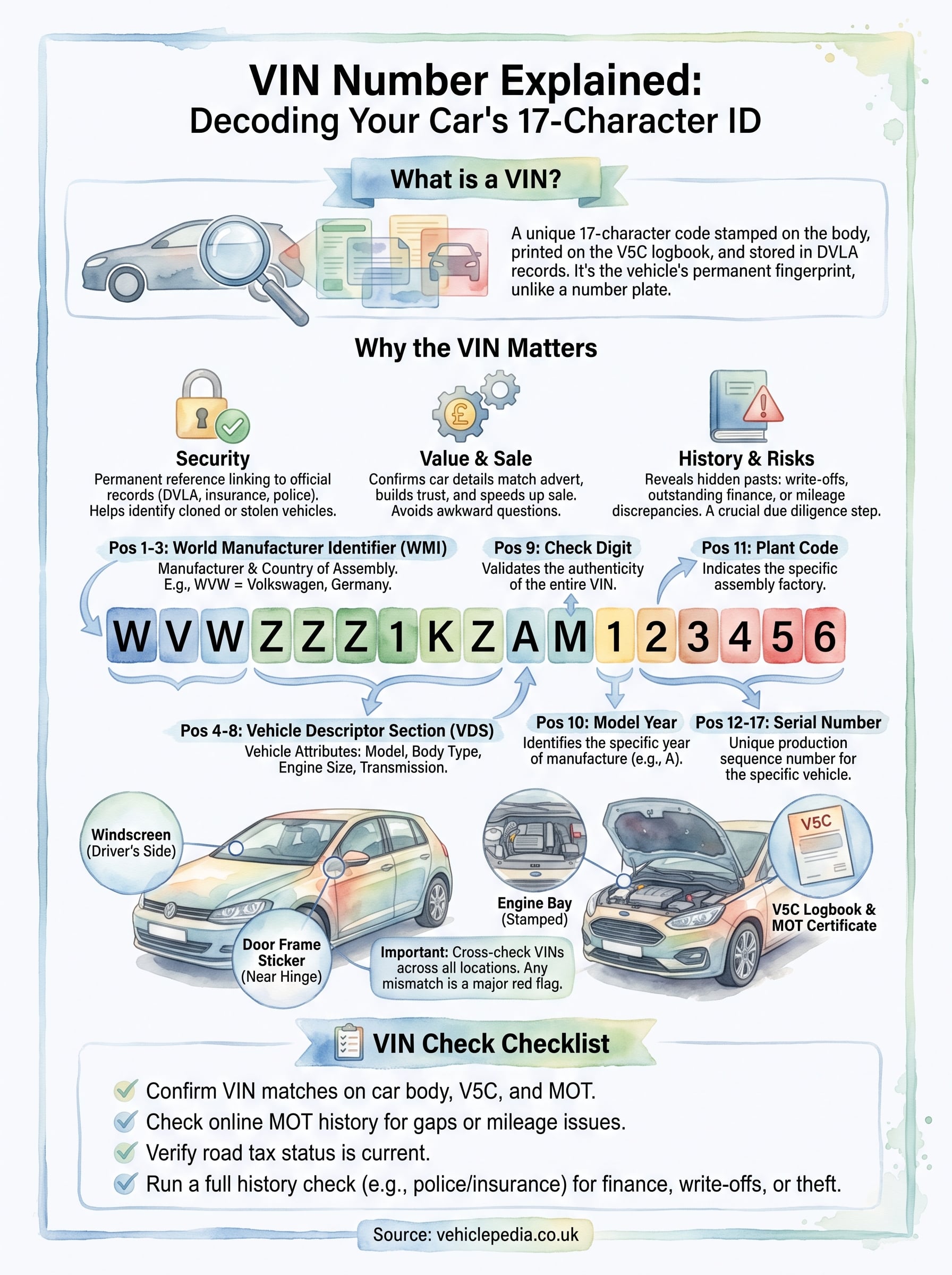
Getting the full picture beyond the VIN
Decoding a VIN tells you where a car was built, what year it rolled off the production line, and whether the number stamped on the windscreen actually matches the paperwork. That's a solid start, but it's not the whole story. A clean-looking VIN says nothing about whether the car's been written off, still carries outstanding finance, or turns up on a stolen vehicle register. Those details live in separate databases that a manual decode simply can't reach.
Getting the full picture means pairing your VIN decode with a proper history check that pulls from DVLA, police, and insurance records in one go. That's exactly what a premium report does, and you can see what one actually looks like before paying for it. Take a look at a sample report and judge for yourself whether it covers everything your next used car purchase needs.