What Does A VIN Number Tell You? Why It Matters In The UK
What does a vin number tell you? Learn to decode factory specs, spot vehicle tampering, and verify the V5C logbook to avoid buying a cloned car in the UK.
What Does A VIN Number Tell You? Why It Matters In The UK
Every car on UK roads carries a unique 17-character code stamped into its bodywork, and knowing what does a VIN number tell you can be the difference between a smart purchase and an expensive mistake. This string of letters and digits acts as a vehicle's fingerprint, encoding everything from where it was built to its exact engine specification and trim level. It's not just a serial number; it's a detailed record of a car's identity.
For anyone buying a used car, the VIN is your first line of defence against clocked mileage, hidden write-offs, and identity fraud. Each section of the code reveals specific details, the manufacturer, the country of origin, the model year, and a unique production sequence. Understanding how to decode these digits gives you real, verifiable facts before you hand over any money.
At Vehiclepedia, we use official UK data sources including the DVLA to help you check a vehicle's history through a simple registration lookup. But grasping what the VIN itself contains puts you in an even stronger position. This guide breaks down every section of the VIN, explains what each part means, and shows you exactly how to use it when buying a car in the UK.
What a VIN can and cannot tell you
The VIN packs a substantial amount of factory-level information into its 17 characters. Each position in the sequence holds a specific meaning, covering everything from the country of manufacture to the engine type and model year. Knowing what does a VIN number tell you means understanding both its strengths and its clear limits before you rely on it during a purchase.
What the VIN reveals
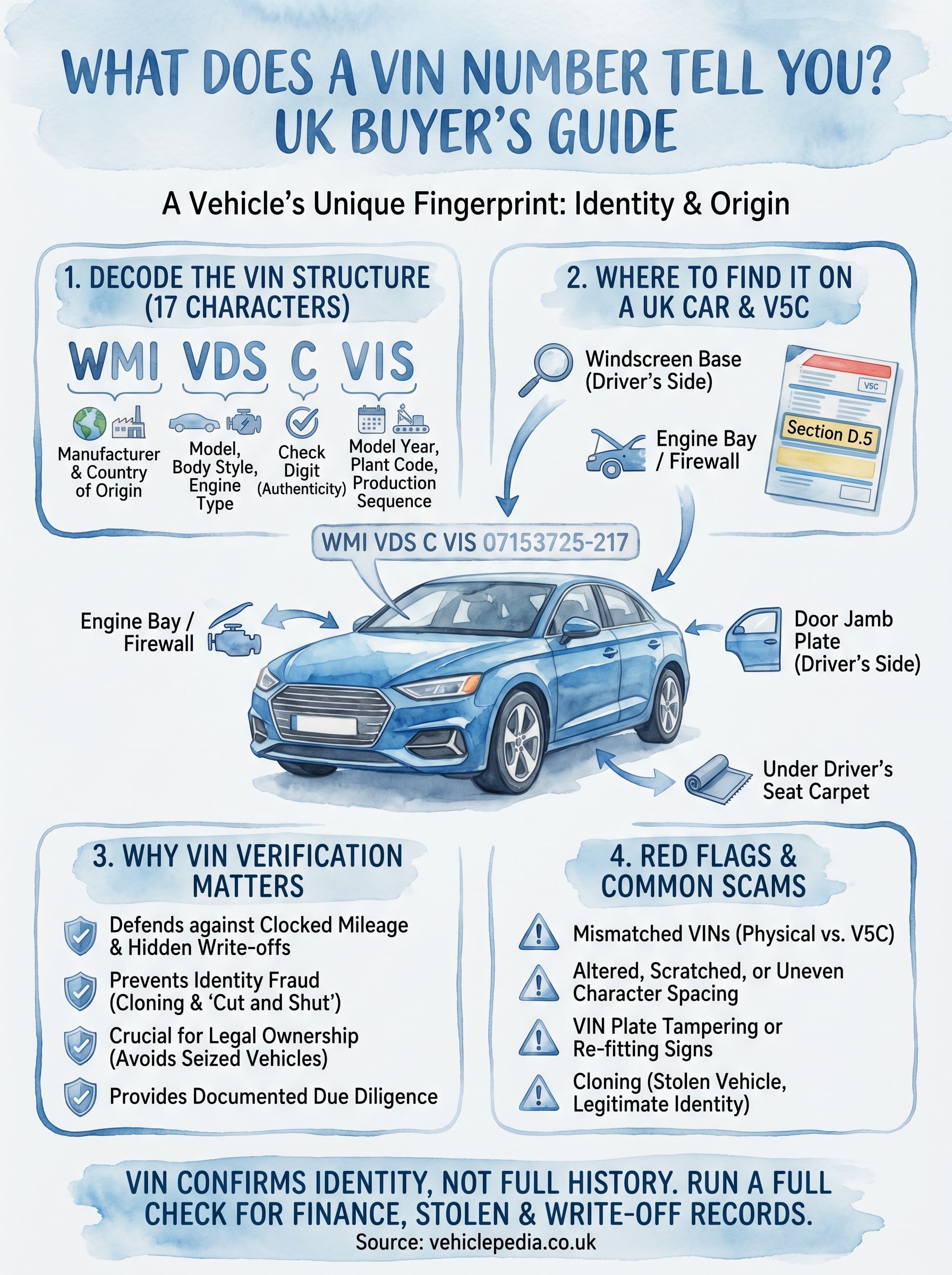
The first three characters form the World Manufacturer Identifier (WMI), which tells you where the car was built and who made it. Characters four through eight, known as the Vehicle Descriptor Section (VDS), describe the model, body style, engine size, and restraint systems. The ninth character is a check digit used to validate the VIN's authenticity. Characters ten through seventeen make up the Vehicle Identifier Section (VIS), which includes the model year, the production plant, and the unique sequence number assigned on the assembly line.
The model year character at position ten uses a coded letter or number, so always cross-reference it against the V5C logbook to confirm the registration year matches.
Together, these positions give you verifiable, manufacturer-assigned facts about the car's original specification, making it significantly harder for a seller to misrepresent the vehicle's make, model, or build details.
What the VIN won't show you
The VIN alone does not reveal the car's full service history, any accident damage it has sustained, or whether outstanding finance is secured against it. It cannot confirm if the vehicle has been clocked, stolen, or written off after it left the factory. Those details live in separate databases held by insurers, lenders, and the police, none of which the VIN itself connects to directly.
Running a full vehicle history check alongside your VIN inspection fills that gap. The VIN confirms the car's identity; a proper history check tells you what happened to it once the manufacturer handed it over to the world.
Why the VIN matters when buying in the UK
In the UK used car market, VIN verification is one of the most reliable steps you can take to protect yourself from deliberate misrepresentation. Sellers occasionally change badges, swap panels, or merge two damaged vehicles into one, a practice known as 'cut and shut'. The VIN, stamped in multiple locations across the bodywork, makes these fraudulent builds far harder to disguise and gives you a concrete reference point to challenge any inconsistencies.
Protecting yourself from cloned vehicles
Vehicle cloning is a serious problem in the UK, where criminals apply the identity of a legitimate car to a stolen one. When you understand what does a vin number tell you, you can cross-check the VIN against the V5C logbook and the physical plates fitted to the car. Any mismatch between these sources is an immediate red flag that warrants walking away.
If the VIN stamped on the windscreen does not match the one recorded in the V5C, treat that as a dealbreaker.
VINs and your legal standing
Buying a car with a mismatched or altered VIN can leave you without legal ownership, since the vehicle may be linked to unpaid finance or outstanding insurance claims. UK consumer protection law offers limited recourse when a buyer ignores clear warning signs. Verifying the VIN before purchase gives you documented proof that you carried out reasonable due diligence, which matters if a dispute arises later.
Where to find the VIN on a UK car and V5C
Knowing what does a vin number tell you is only useful if you can locate the code in the first place. Manufacturers stamp the VIN in several fixed positions across the vehicle, and each location should display the identical 17-character sequence. Checking more than one location is the quickest way to confirm nothing has been tampered with.
Physical locations on the car
The most common place to find the VIN is at the base of the windscreen on the driver's side, visible from outside the car. You will also find it stamped into the metal of the engine bay, typically on the firewall or strut tower, and on a plate attached to the door jamb on the driver's side. Some manufacturers also press the VIN into the floor beneath the driver's seat carpet.
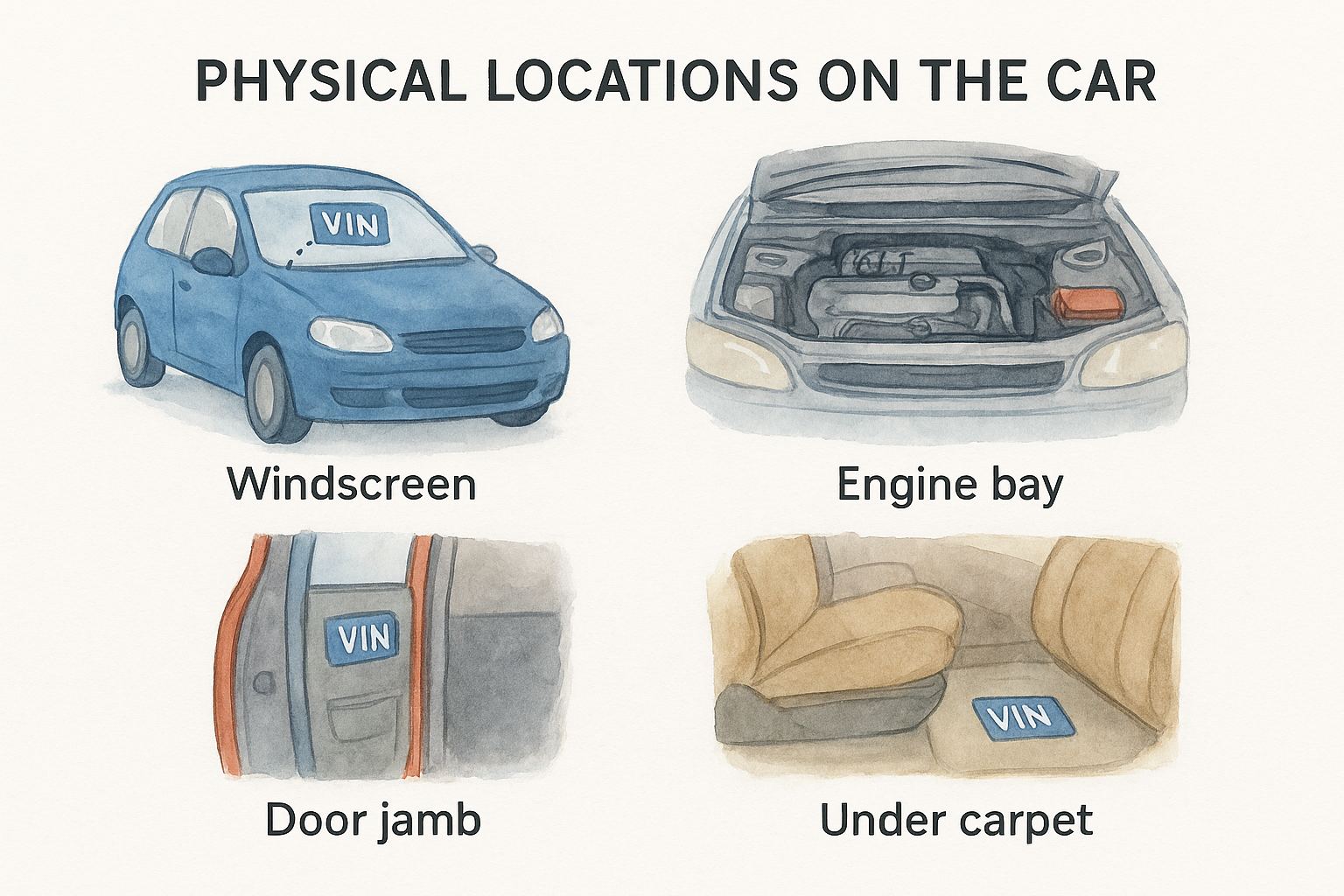
Always check at least two physical locations and confirm both sequences match before continuing your inspection.
- Windscreen: visible from outside, lower driver's corner
- Engine bay: firewall or chassis rail
- Door jamb: metal plate, driver's side
- Under carpet: floor pan near the driver's seat
Finding the VIN on your V5C
The V5C logbook records the VIN in section D.5 on the front page of the document. Cross-reference this against every physical stamp you find on the car. Any discrepancy between the logbook and the vehicle should stop the purchase immediately.
How to decode a 17-character VIN
Once you know what does a VIN number tell you at a structural level, decoding it becomes straightforward. The 17-character sequence divides into three sections, each carrying a distinct category of information about the vehicle. Reading it from left to right in groups makes the process quicker and less likely to produce errors.
Breaking down each position
Each character group serves a specific, manufacturer-assigned purpose. The table below maps each position to the information it holds, so you can read any VIN systematically.
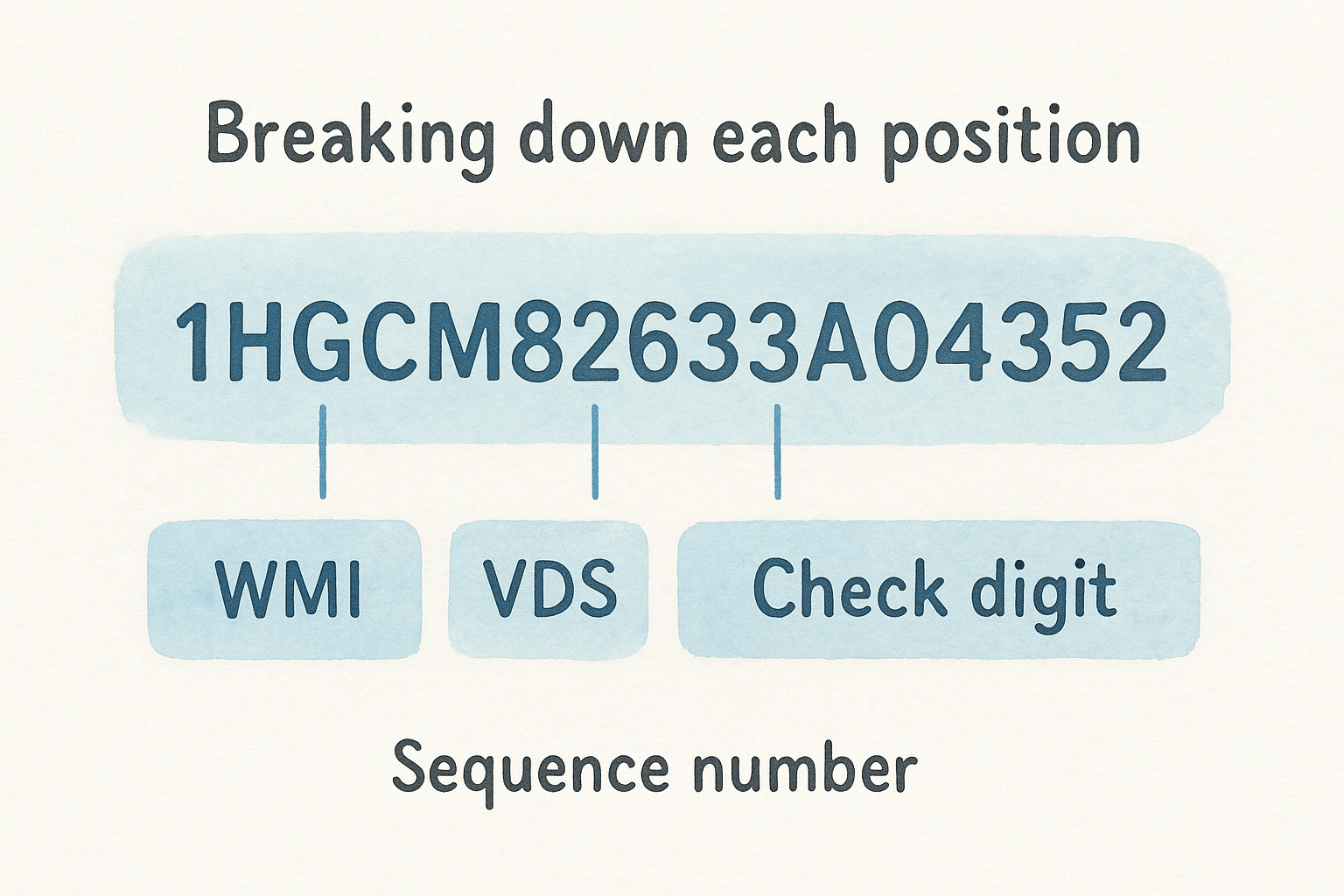
| Position | Characters | Information |
|---|---|---|
| 1 to 3 | WMI | Country of origin and manufacturer |
| 4 to 8 | VDS | Model, body style, engine type |
| 9 | Check digit | Validates the VIN is genuine |
| 10 | Model year | Coded letter or number for the build year |
| 11 | Plant code | Assembly plant where the car was built |
| 12 to 17 | Sequence number | Unique production number assigned at the factory |
Position nine is the check digit, calculated from the other characters using a fixed formula, so any alteration to the VIN will cause this digit to fail validation.
Reading the model year character
The model year character at position ten uses a specific alphanumeric code rather than the calendar year written in full. For example, the letter K represents 2019. Always cross-reference this against the V5C to confirm both sources agree before trusting the seller's stated registration year.
Red flags and common VIN scams
Understanding what does a VIN number tell you is only half the picture. Knowing how fraudsters manipulate or misuse VINs protects you from the most common deceptions in the UK used car market. Sellers with something to hide will often try to obscure, alter, or duplicate a VIN to prevent you from connecting the vehicle to its true recorded history on official databases.
Signs the VIN has been tampered with
Inspect every physical VIN stamp carefully before you make any decision. Uneven character spacing, scratched-out digits, or stamps that look pressed rather than factory-etched are immediate warning signs. Legitimate manufacturer stamps have a consistent depth and font throughout the entire sequence. Any character that looks shallower, different in style, or re-stamped suggests someone has altered the VIN after the car left the factory.
If the VIN plate on the windscreen appears to have been removed and refitted, walk away from the vehicle without hesitation.
Common VIN fraud patterns in the UK
Two scams appear most frequently in the UK used car market. VIN cloning involves copying a legitimate VIN onto a stolen or unroadworthy car to make it appear legal and roadworthy. VIN ringing replaces all identifying information on a stolen vehicle with details taken from a legitimately registered car. Both schemes leave physical inconsistencies across the vehicle's stamp locations, which is exactly why checking multiple VIN positions matters before you commit to any purchase.
Next steps before you buy
Now that you understand what does a vin number tell you, you have the foundation to approach any used car purchase with real confidence. Start by locating the VIN in at least two physical positions on the vehicle and cross-referencing both against the V5C logbook. Any discrepancy stops the process immediately.
The VIN confirms the car's identity, but it cannot reveal everything you need to know before handing over your money. Outstanding finance, stolen vehicle records, and write-off history all sit in separate databases that require a dedicated history check to access. Running a full check through Vehiclepedia takes minutes and pulls data directly from official UK sources including the DVLA and the UK Police Database.
Before you commit to any purchase, run a free car history check on Vehiclepedia to see exactly what a car's full record holds. A few minutes of checking now can save you thousands later.