Free VIN Number Check UK: Verify DVLA Details in Minutes
Run a free VIN car check UK buyers can trust: match the VIN to DVLA records, spot clocking in MOT history and know when a paid report is worth it.
Free VIN Number Check UK: Verify DVLA Details in Minutes
Every used car on UK roads carries a 17-character code that acts as its fingerprint. A free VIN number check UK search lets you decode that fingerprint and pull up a vehicle's real history, from its manufacture date and engine specs to its MOT record and DVLA registration details. Whether you're buying privately or from a dealer, checking the VIN before you hand over any money is one of the simplest ways to avoid costly surprises.
The problem? Many buyers don't realise how much information is available to them at no cost, or they confuse a VIN check with a basic registration plate lookup. A VIN check goes deeper. It's tied to the vehicle itself, not the plate, which means it can reveal details that a plate swap or re-registration might otherwise hide, including whether the car was previously written off or imported from abroad.
At Vehiclepedia, we help UK car buyers access official DVLA data quickly and without fuss. Our free vehicle check tools pull from trusted sources including government databases, so you're working with accurate, up-to-date information rather than guesswork. For anything beyond the basics, stolen vehicle checks, outstanding finance, write-off history, our premium reports offer added protection, backed by a £30,000 data guarantee for non-trade users.
This guide walks you through exactly how to run a free VIN check in the UK, what each result means, and when it's worth upgrading to a full vehicle history report. By the end, you'll know how to verify any vehicle's identity and background in minutes, before you commit to a purchase.
What a free UK VIN check can and can't do
A free VIN number check UK service gives you access to a meaningful slice of a vehicle's recorded history, but it does not give you everything. Understanding what's included at no cost, and what sits behind a paywall, helps you decide how much due diligence you actually need before viewing or buying a car. Knowing the limits up front also stops you from walking away from a check thinking the vehicle is clean when there are still unanswered questions worth investigating.
What the free check gives you
Running a free check on a VIN connects you to official UK government databases, including records held by the DVLA and the Driver and Vehicle Standards Agency (DVSA). These records are updated regularly and cover the core details that matter most when you're verifying a vehicle's identity. Here's what a free check typically returns:
- Make, model, and colour as officially registered
- Engine size and fuel type
- Year of manufacture and date of first registration
- Current MOT status including the expiry date
- Full MOT test history with mileage readings at each test, which helps you spot odometer irregularities
- Road tax (VED) status and renewal date
- Whether the vehicle has been imported or exported
- Colour change history, which can flag cosmetic fraud
MOT mileage records are one of the most reliable free tools available to spot clocked vehicles, since each test logs the odometer reading and that data sits permanently on the official DVSA database.
These results give you a solid starting point for any vehicle assessment. If the MOT history shows a sudden drop in recorded mileage between two tests, or the registered colour doesn't match the car you're looking at, those are immediate red flags you can act on without spending a penny.
Where the free check stops
Free checks do not pull data from insurance registers, police databases, or finance lenders. That means three of the most financially damaging problems a car can carry, being stolen, written off, or tied to outstanding finance, remain hidden unless you run a paid report. A car can have a perfectly clean MOT history and still carry a finance agreement that transfers liability directly to you the moment you complete the purchase.
Similarly, free services rarely include category write-off records from the insurance industry. A Cat S or Cat N write-off can significantly affect resale value and future insurance premiums, but that information sits with insurers rather than the DVLA. You won't find it through a standard government database check, no matter how carefully you look.
The distinction matters in practical terms. If you're buying a low-value vehicle and the free check comes back clean, the remaining risk may be acceptable given what you're spending. If you're handing over several thousand pounds to a private seller, skipping the paid check is a false economy. A full history report costs a fraction of what you could lose if the vehicle turns out to be stolen, a write-off, or encumbered by finance you didn't know existed.
Step 1. Find your VIN and spot a fake
Before you run a free VIN number check UK search, you need the correct 17-character number in front of you. This sounds straightforward, but many buyers either write it down incorrectly or, more seriously, don't notice when the VIN they've been given doesn't match what's physically stamped on the car. Getting this step right protects everything that follows.
Where to find the VIN on the vehicle
The VIN appears in several locations on any UK car, and checking more than one of them is good practice. Each stamping should be identical. If the numbers differ between locations, walk away from the vehicle immediately.
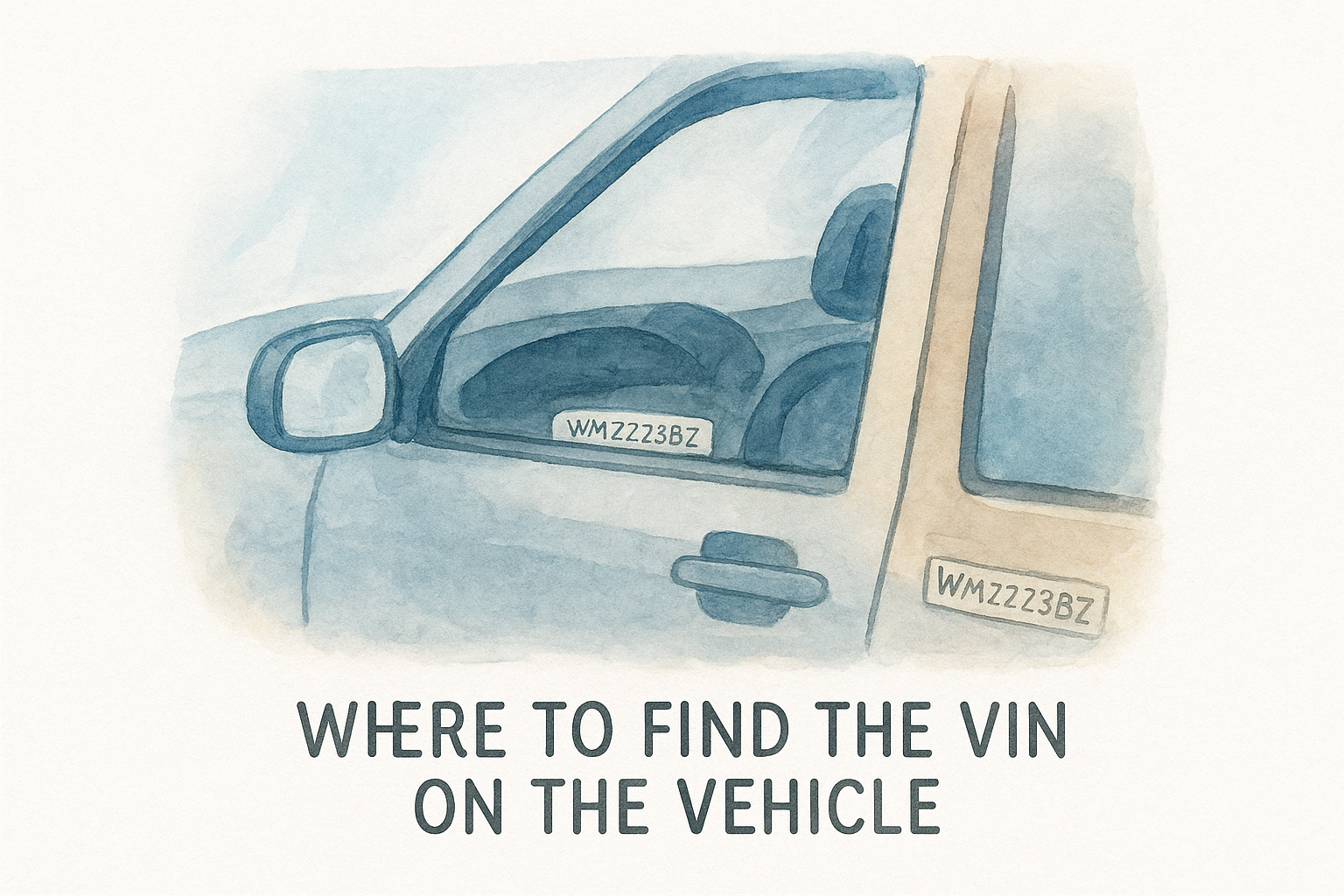
Common VIN locations include:
- The driver's side dashboard, visible through the windscreen at the base, near the A-pillar
- The driver's door jamb, on a sticker or metal plate inside the door frame
- Under the bonnet, stamped directly onto the engine bay or on a plate riveted to the chassis
- The vehicle registration document (V5C), listed in field E as the "Vehicle identification number"
How to spot a tampered or fake VIN
A genuine VIN follows a strict format defined by ISO standard 3779, introduced in 1981. Each character has a specific meaning, and no legitimate VIN contains the letters I, O, or Q, because they're too easily confused with the numbers 1, 0, and 9. If you spot any of those letters in a VIN, the number is not genuine.
A VIN that has been partially ground down, re-stamped, or covered with a replacement plate is one of the strongest indicators of a stolen or cloned vehicle.
Here's what a valid UK VIN structure looks like:
| Position | Characters | Meaning |
|---|---|---|
| 1-3 | e.g. WVW | World Manufacturer Identifier (WMI) |
| 4-8 | e.g. ZZZ3B | Vehicle Descriptor Section (VDS) |
| 9 | Check digit or filler | Varies by country |
| 10-17 | e.g. Z5123456 | Vehicle Identifier Section (VIS) |
A free VIN decoder reads these sections for you and tells you the manufacturer, the model year and where the car was built. That is useful for a quick sanity check, but a decoder only tells you what the number says the car should be. It does not show MOT history, mileage or registration status, so treat it as a first filter and follow it with the steps below.
Check that the font and character spacing are consistent across the full 17-character string. Uneven depth, mixed fonts, or characters that look freshly stamped on an older vehicle are all physical signs of tampering worth taking seriously before you proceed.
Step 2. Use the VIN to get the registration
Once you've confirmed the VIN is genuine and consistent across all physical locations on the car, the next step is to use it to pull up the associated registration plate from official DVLA records. This matters because plates can be changed, swapped, or cloned, but the VIN stays permanently tied to the vehicle itself, regardless of what plate it currently carries. Connecting the two gives you a clear picture of whether the car's identity is consistent across every source.
How the VIN links to a registration plate
The DVLA maintains a direct link between every vehicle's VIN and its registered plate. When a car gets a personalised plate transferred or a standard plate re-issued, the VIN remains unchanged in the background. You can use the VIN to confirm the plate on the vehicle matches what the DVLA actually has on record for that chassis. If the plate doesn't match the DVLA record for that VIN, that's a serious warning worth acting on before you go any further with the purchase.
A mismatched VIN and registration plate is one of the clearest indicators that a vehicle has been cloned or its plate fraudulently altered.
The free GOV.UK service works from the registration number and does not display the VIN in its results. So if you want to find a VIN from a registration plate for free, the reliable sources are the car itself, the V5C and the seller's paperwork. Run the plate through a free lookup to confirm the make, model, colour and engine size, then compare those details with the VIN you have recorded.
Running the VIN-to-registration lookup
To match a VIN to a registration plate and begin a free VIN number check UK, follow these steps in order:
- Note the full 17-character VIN from the vehicle's dashboard, door jamb, or V5C document.
- Visit the GOV.UK vehicle enquiry service or use Vehiclepedia's free check. Both work from the registration plate, so enter the plate shown on the car.
- Cross-reference the VIN you physically recorded from the car and the V5C against the vehicle details in the results.
- Confirm that the make, model, colour, and engine size in the returned record match the vehicle you are inspecting.
- Check the V5C document and verify the registration number printed there matches the plate currently on the car.
If the VIN you recorded from the vehicle doesn't match the paperwork, or the returned record shows a different manufacturer or body type from what's parked in front of you, stop the process immediately. Treat the vehicle as suspect until the seller provides a clear, documented explanation for the discrepancy.
Step 3. Verify DVLA and MOT details in minutes
With the VIN confirmed and the registration plate matched, you're ready to pull the full DVLA and MOT record for the vehicle. This is where a free VIN number check UK search delivers its most actionable results. The data returned at this stage comes directly from official government databases, which means it's the same information a dealer or insurer would rely on when assessing the car. Work through each field methodically rather than scanning the results quickly and moving on.
What the DVLA record shows you
The DVLA record gives you a snapshot of the vehicle's current registered status and key technical details. Cross-reference every field against the V5C document and the physical car in front of you. Discrepancies in any of these areas should prompt you to ask the seller for a clear, documented explanation before you proceed further.
People who search for a DVLA VIN check or a VIN check on GOV.UK usually end up at the same place, the DVLA's vehicle enquiry service. It is free and official, but it looks vehicles up by registration number, not by VIN. In practice, you enter the plate, then check the VIN on the V5C and on the car against the vehicle details returned.
| Field | What to check |
|---|---|
| Make and model | Matches the physical vehicle exactly |
| Colour | Matches the car's current paintwork |
| Engine size | Consistent with the V5C logbook |
| Date of first registration | Aligns with the seller's claimed age and asking price |
| Exported or scrapped status | Should show as neither for any car currently offered for sale |
How to read the MOT history
The MOT history record sits inside the DVSA database and logs every test the vehicle has passed or failed since records went digital in 2005. Each entry includes the exact mileage recorded at the time of the test, which makes this section the most reliable free tool for spotting a clocked car. You don't need specialist knowledge to use it. Simply work down the list of test dates in order and confirm the mileage increases consistently from one entry to the next.
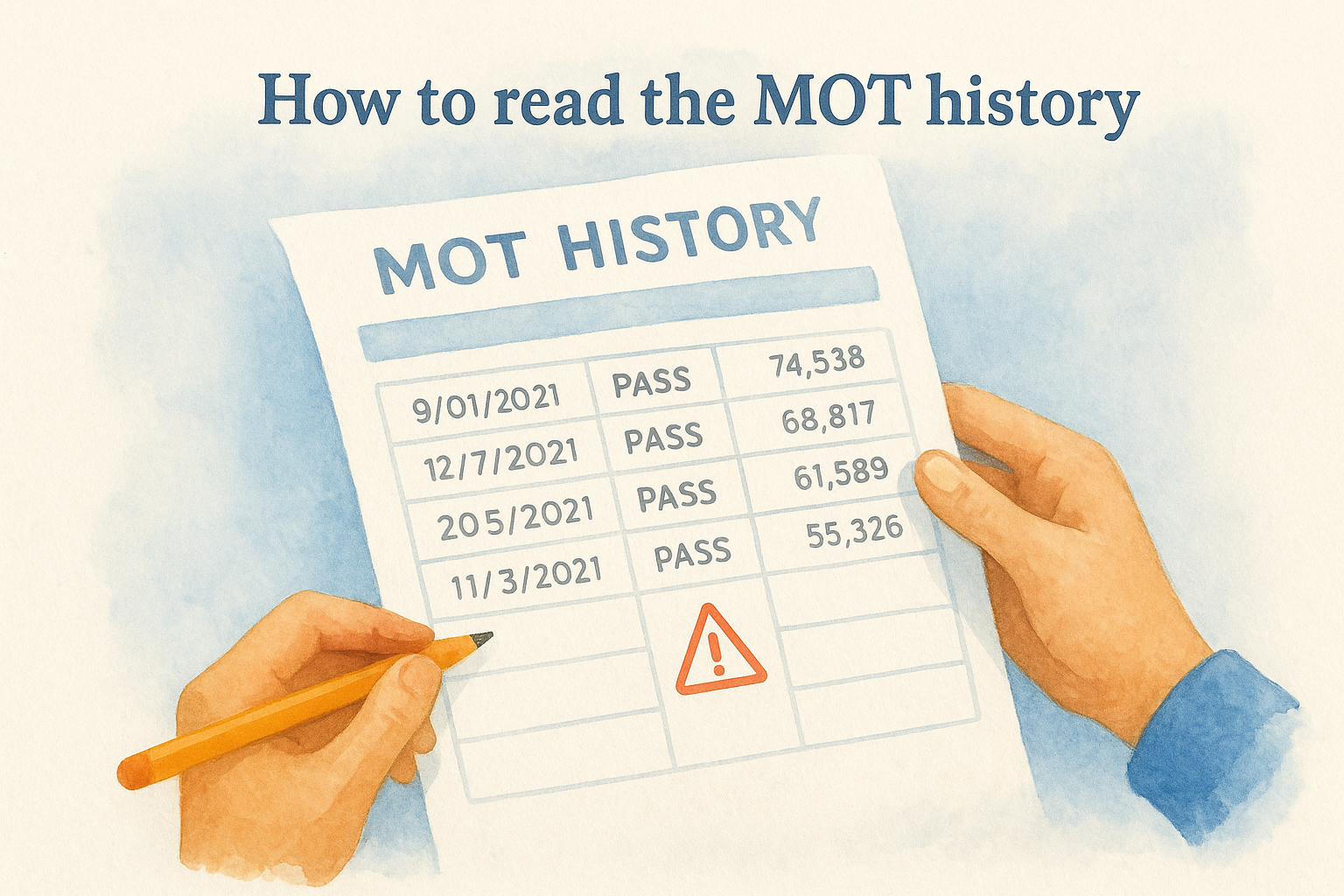
A drop in recorded mileage between two consecutive MOT tests is a near-certain indicator that the odometer has been tampered with.
Pay close attention to advisory notices attached to each test result. Advisories flag components that were borderline at the point of testing and may have worsened since. A string of repeated advisories for the same part across multiple tests tells you the seller has been deferring a repair, and that bill may now land with you.
Step 4. Decide if you need a paid history check
At this point you've confirmed the VIN is genuine, matched it to the registration, and worked through the DVLA and MOT records. Now you need to make a practical decision about whether the free data you have is sufficient, or whether the specific vehicle in front of you warrants a full paid report. That decision comes down to three factors: the asking price, who you're buying from, and what the free check has already surfaced.
When the free check is enough
A free VIN number check UK search gives you enough to make a confident decision in a narrow set of circumstances. If the car is low value, the MOT history is long and consistent, the mileage increases make sense across every recorded test, and the seller is a VAT-registered dealer (who carries legal obligations around disclosure), the risk profile is lower. Dealers are also subject to consumer protection legislation that gives you recourse if a vehicle turns out to be misrepresented, which reduces, though does not eliminate, the need for a paid check.
When to upgrade to a full report
Private sales carry significantly more risk, and that's where a paid report earns its cost many times over. There is no legal obligation for a private seller to disclose outstanding finance, insurance write-off status, or theft records, which means the three most financially damaging problems a car can carry remain completely invisible to you without a paid check.
If you are spending more than £1,000 on a vehicle from a private seller, the cost of a full history report is negligible compared to what you could lose.
Use the checklist below to decide quickly:
| Situation | Recommendation |
|---|---|
| Private sale, any price | Run a full paid report |
| Price above £3,000 from any source | Run a full paid report |
| Free check shows mileage inconsistency | Run a full paid report immediately |
| Free check shows colour change or import | Investigate further with a paid report |
| Low-value car from a VAT-registered dealer | Free check may be sufficient |
Whatever you decide, document your results by saving or screenshotting every record you've checked before you exchange any money.
Next steps
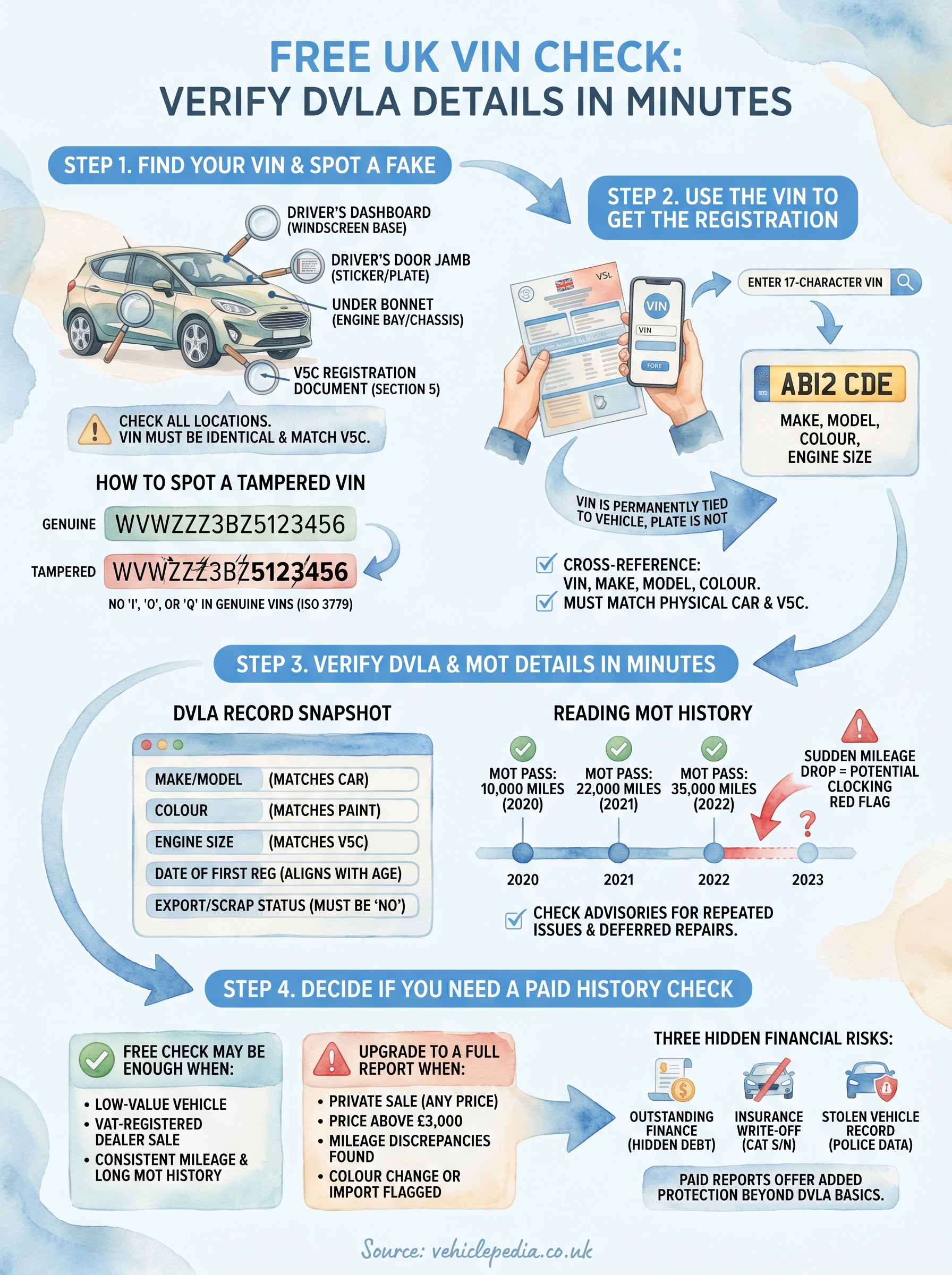
You now have a complete process for running a free VIN number check UK search from start to finish. You know how to locate and verify a VIN physically, cross-reference it with DVLA records, read an MOT history for mileage tampering, and judge whether a paid report is the right call for your situation. That sequence, done in order, takes most buyers under 15 minutes and puts you in a far stronger position before any money changes hands.
Before you view your next vehicle, save the steps in this guide so you can work through them on the spot. If the free check surfaces anything unexpected, such as a mileage drop, a colour change, or an import flag, do not let a seller's reassurances substitute for documented evidence. Take a look at our premium report sample to see exactly what a full history check includes, then decide whether you need one before you commit.