VIN Decoder UK: Decode VIN Online And Check Car History
Our VIN decoder UK guide shows where to find your 17-character VIN, what it reveals about factory spec, and what only a full history check can uncover.
VIN Decoder UK: Decode VIN Online And Check Car History
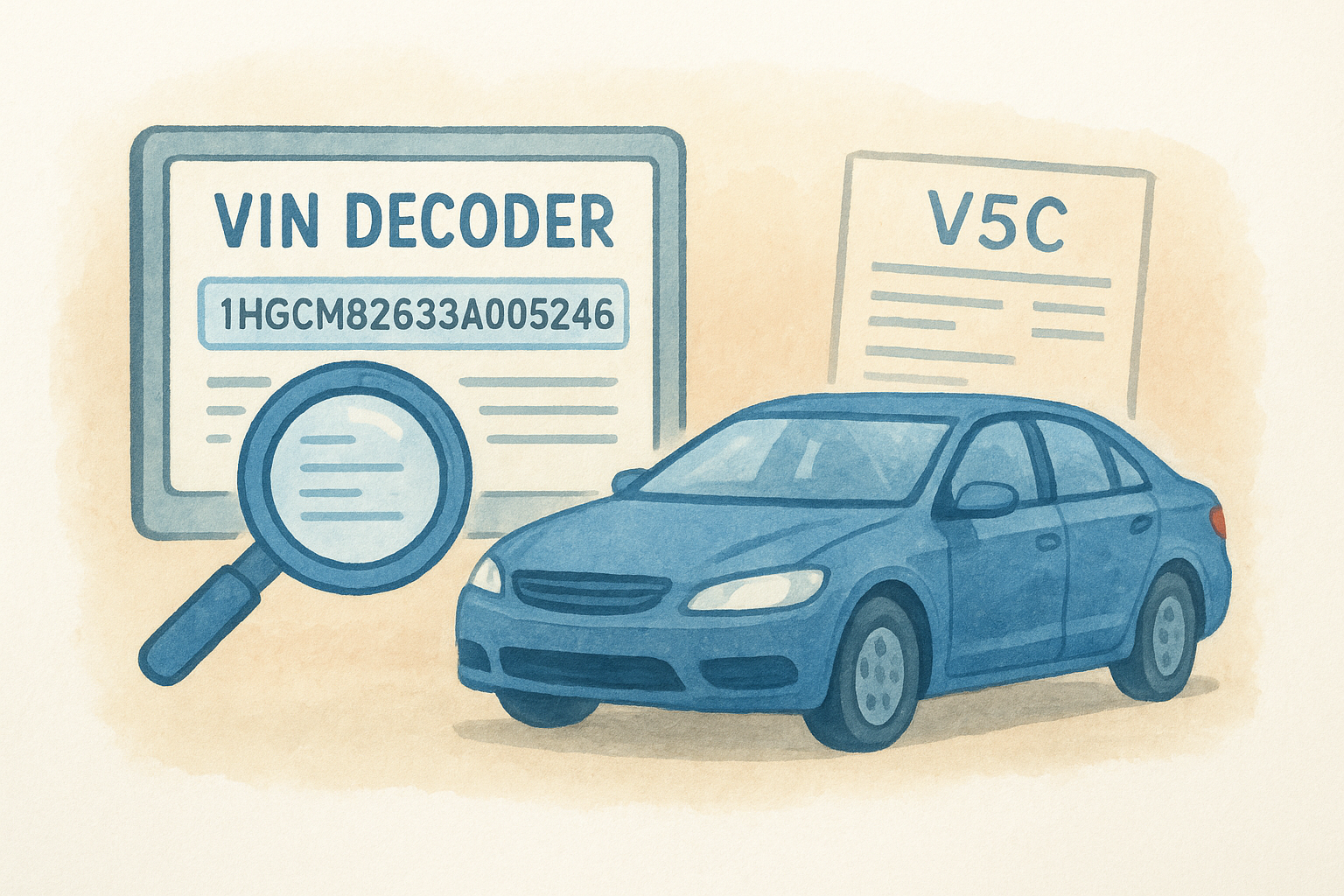
Every vehicle sold in the UK carries a unique 17-character code stamped into its bodywork, the Vehicle Identification Number. A VIN decoder UK tool reads that code and translates it into plain facts: where the car was built, its engine type, model year, trim level, and more. It's one of the quickest ways to verify that a car matches its listing before you hand over any money.
But a VIN check goes further than just confirming specs. Cross-referenced against official databases, it can flag mileage discrepancies, outstanding finance, write-off records, and whether a vehicle has been reported stolen. For anyone buying a used car, that information can be the difference between a sound purchase and an expensive mistake.
At Vehiclepedia, we pull data from trusted sources including the DVLA, UK police databases, and insurance registers to give you a clear picture of any UK-registered vehicle. In this guide, we'll explain exactly how VIN decoding works, what each section of the number means, and how to use it alongside a full vehicle history check to buy with confidence.
Why a VIN decoder matters in the UK
The UK used car market involves millions of transactions every year, and a significant number of vehicles on sale carry hidden problems. Clocked mileage, undisclosed accident damage, and outstanding finance are common issues that buyers discover only after completing a purchase. A vin decoder uk tool gives you an independent way to verify a car's identity and cross-check the seller's claims against official records before you hand over any money.
If the VIN stamped on the bodywork does not match the one recorded on the V5C logbook, treat that as an immediate red flag and stop the sale.
Vehicle identity fraud and theft
Car theft and identity fraud are persistent problems in the UK used car market. Criminals alter or replace VIN plates to disguise stolen vehicles and make them appear legitimate to unsuspecting buyers. Checking the VIN against police and DVLA records is one of the most reliable steps you can take to confirm a vehicle's true identity. Any mismatch between the chassis stamp, the windscreen plate, and the registered details is a serious warning sign.
Your VIN check also helps you confirm that the vehicle has not been written off and re-registered under a different identity, a practice sometimes known as "ringing".
Finance and write-off risks
In the UK, outstanding finance stays with the vehicle, not the seller. If you purchase a car with an unpaid loan attached, the lender retains a legal right to recover that asset regardless of what you paid. Write-offs carry separate risks, and insurers classify them into categories that indicate the severity of the damage involved.
| Category | Damage type | Can it return to the road? |
|---|---|---|
| A | Scrap only | No |
| B | Body shell must be crushed | No |
| S | Structural damage, repairable | Yes, if properly repaired |
| N | Non-structural damage | Yes, but may have hidden issues |
Running a VIN check alongside a full history report surfaces both finance and write-off records in one place, before you commit to anything.
Where to find the VIN on a UK vehicle
Before you run a vin decoder uk check, you need the actual number. UK vehicles carry the VIN in several standard locations, and manufacturers stamp it directly into the metal rather than just fixing a plate, making it far harder to alter without leaving visible signs of tampering.
If a VIN stamp looks uneven, re-stamped, or recently disturbed, treat that as a serious red flag and do not proceed with the purchase.
Common locations on the vehicle
Most UK cars display the VIN in at least three physical spots. Checking all three and confirming they match is a simple but effective way to catch fraud before you commit any further time or money.
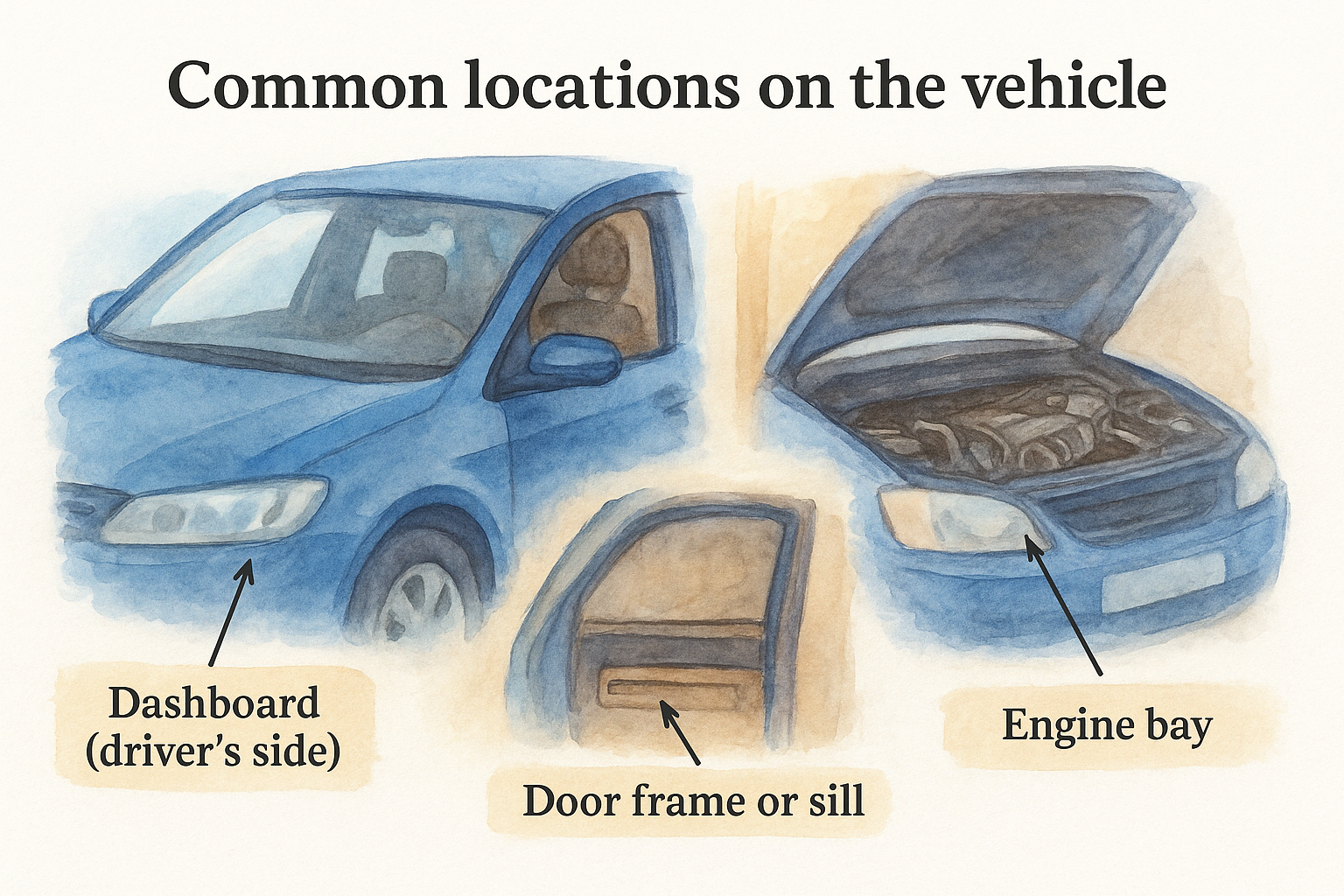
- Dashboard (driver's side): Visible through the windscreen near the base of the glass
- Door frame or sill: Stamped on a plate inside the driver's door
- Engine bay: Stamped directly onto the chassis or firewall
On your documents
Your V5C registration certificate lists the VIN in field E. Insurance documents and service records often carry it too, so it is worth checking any paperwork the seller provides.
On UK paperwork you may see the VIN called the chassis number or frame number. They mean the same thing. The engine number is different. It is a separate serial stamped on the engine block, and it will not decode like a VIN.
Always cross-reference the number on your documents against every physical stamp on the car itself. Any discrepancy between what the paperwork shows and what is stamped into the bodywork is a clear signal that something is wrong.
How to decode a VIN number online
Using a vin decoder uk tool takes less than a minute. You enter the 17-character code into the search field, and the tool breaks it down position by position, returning details such as the country of manufacture, make, model year, engine type, and production sequence. Most tools display results instantly, so you get a full breakdown of the vehicle's specification without needing any technical knowledge.
Always double-check the VIN you enter character by character, since a single digit error will return results for a completely different vehicle.
What each section of the VIN means
Your VIN is not a random string. It follows a fixed international standard (ISO 3779), and each group of characters in the VIN carries specific information about the vehicle.
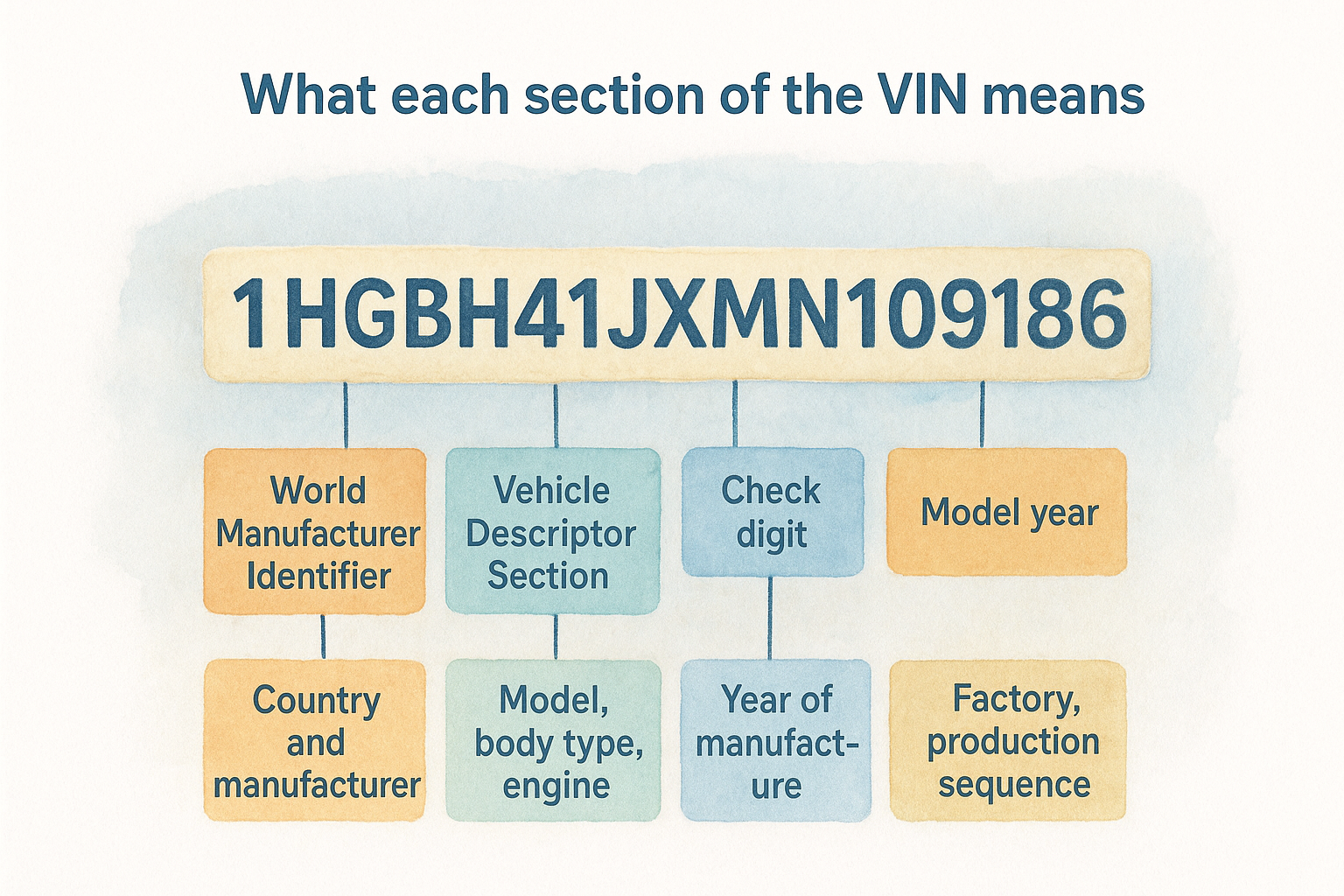
| Position | Characters | Information |
|---|---|---|
| 1-3 | World Manufacturer Identifier | Country and manufacturer |
| 4-8 | Vehicle Descriptor Section | Model, body type, engine |
| 9 | Check digit | Fraud detection |
| 10 | Model year | Year of manufacture |
| 11-17 | Vehicle Identifier Section | Factory, production sequence |
One caveat on position 9. The check digit is only mandatory in North America, so many European and UK-market VINs will not validate against it. Do not treat a failed check digit on a European car as proof of fraud.
Cross-referencing the decoded data
Once you have the decoded specification, compare every detail against the seller's listing and the V5C. Pay close attention to the model year and engine code, as these are the most commonly falsified details on clocked or rebuilt vehicles. Any discrepancy between the decoded VIN data and the physical car in front of you is a clear reason to walk away.
What a VIN decoder can and cannot tell you
A vin decoder uk tool is genuinely useful, but it works within clear boundaries. Understanding what the decoder covers and where it stops helps you decide what additional checks you still need before buying.
What a VIN decoder reveals
Decoding the VIN gives you factory-level specification data directly from the manufacturer's records. You can confirm the exact model, engine size, transmission type, country of manufacture, and production year for any vehicle.
- Make, model, and trim level
- Engine type and displacement
- Country and plant of manufacture
- Model year
- Body style and drive type
Where VIN decoding has limits
The VIN itself only tells you what the vehicle was when it left the factory. It cannot tell you what has happened to that car since, and that gap is where most buying risks actually sit. A decoded VIN will not show mileage history, accident records, outstanding finance agreements, or whether a vehicle has been reported stolen.
Treat a VIN decode as your starting point, not your final check, before committing to any used car purchase.
For the information that matters most to a buyer, you need a full history check that queries live databases, including DVLA records and UK police registers, to surface the issues a factory code simply cannot contain.
How to check car history using the VIN
A vin decoder uk tool gives you the specification, but a full history check is what surfaces the real risks. To run one, you enter the VIN or the vehicle's registration plate into a history check service that queries live databases, including DVLA records, insurance registers, and UK police systems. The process takes seconds and returns a report covering the information that a factory code alone will never show.
Always use the VIN rather than the registration plate alone when running a history check, since plates can be changed while the VIN stays fixed to the vehicle.
People often ask about a DVLA VIN check. The DVLA's free online vehicle checker looks cars up by registration number, and it shows tax and MOT status rather than a full VIN decode. For a free VIN number check that also covers specification, use a service that accepts either the VIN or the plate. Then add a premium history report for finance, write-off, and stolen records.
What to look for in the results
Your history report pulls together several categories of data that carry the most risk for used car buyers. Review each section carefully rather than skimming the headline results, because a single hidden issue can cost you far more than the price of the check itself.
- MOT history: Look for mileage inconsistencies between test dates
- Write-off status: Confirm the vehicle has not been categorised as Category A, B, S, or N
- Outstanding finance: Check the car's finance history to verify no active loan agreements are attached to the vehicle
- Stolen status: Check whether the car is stolen by VIN and confirm it is clear on UK police records
- Keeper changes: Unusual ownership patterns can indicate problems worth investigating further
Next steps
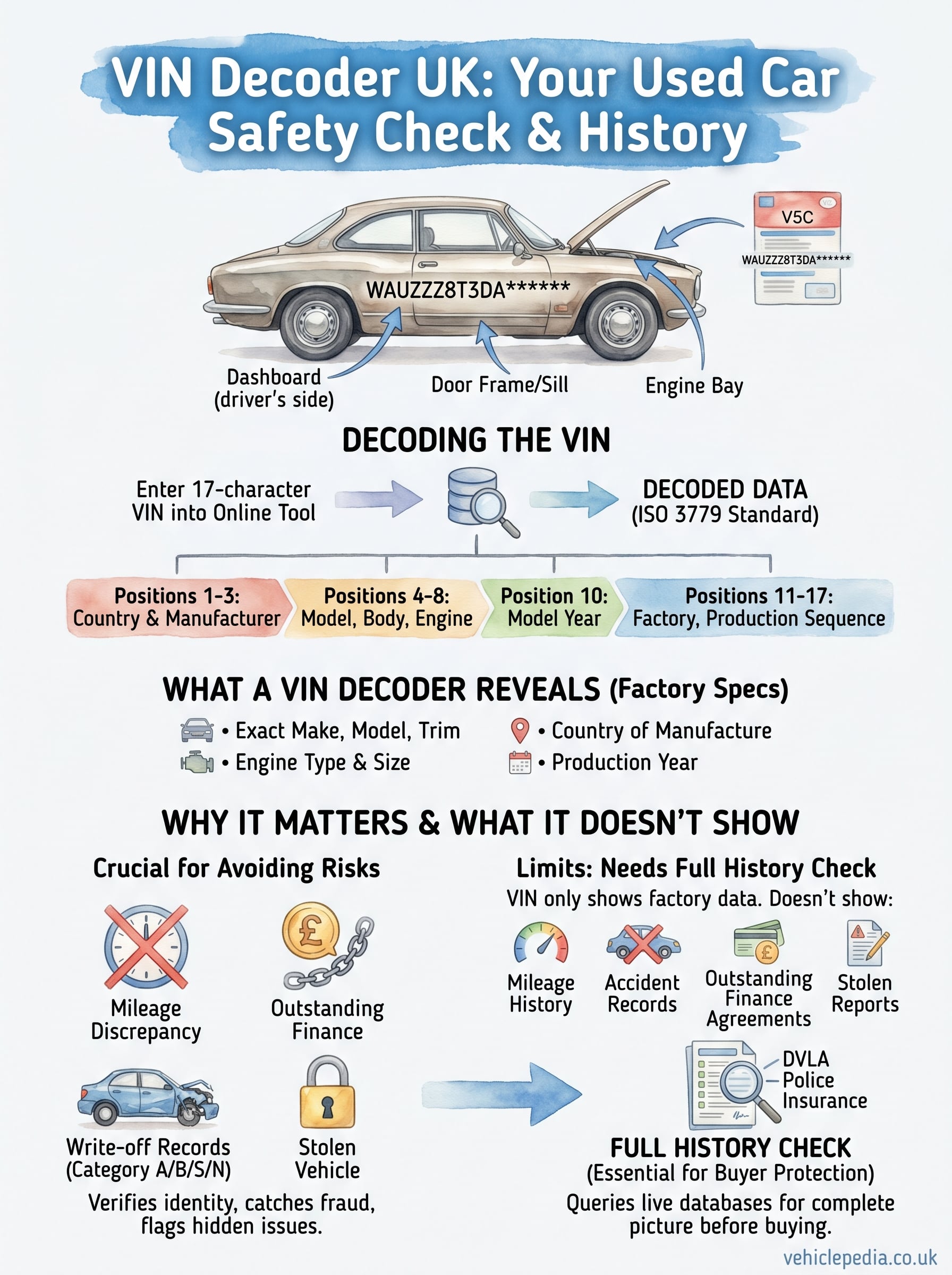
A vin decoder uk check is the right place to start, but it covers only the factory specification. To get the full picture before you buy, you need a history report that queries live DVLA records, insurance registers, and UK police databases alongside the decoded VIN data. Together, those two checks give you a complete view of what the car was when it left the factory and what has happened to it since.
Before you view any used car in person, run both checks. Mileage discrepancies, outstanding finance, and write-off records all appear in the history report, and knowing about them in advance saves you time and protects your money. If anything in the report does not match what the seller has told you, walk away.
To see exactly what a full report includes before you commit, take a look at our sample vehicle report and check our pricing options.