What Does Cat D Mean on a Car? Cat N, Value & Insurance
What does cat d mean on a car? Learn how it impacts resale value, why insurance costs might rise, and how to spot the difference between Cat D and Cat N.
What Does Cat D Mean on a Car? Cat N, Value & Insurance
If you've spotted a used car at a bargain price only to find it listed as a Cat D vehicle, you're right to pause and ask questions. What does Cat D mean on a car, exactly? In short, it's an older insurance write-off category indicating the vehicle was damaged and deemed uneconomical to repair by an insurer, but it wasn't scrapped. It's since been replaced by the newer Cat N classification, though the Cat D label still appears on thousands of cars across the UK.
Understanding what this means matters because it directly affects a car's resale value, insurance costs, and potentially its safety. A Cat D or Cat N marker doesn't automatically make a car dangerous, but buying one without checking its full history is a risk you don't need to take.
That's where Vehiclepedia comes in. Our vehicle history checks pull data from official UK sources including the DVLA and insurance registers, so you can see whether a car has been written off, how it was categorised, and what else might be lurking in its past. Below, we'll break down exactly what Cat D means, how it compares to Cat N, and what to watch for before you buy.
Why Cat D matters for used car buyers
A Cat D marker on a vehicle's history tells you that an insurance company once decided the car wasn't worth repairing relative to its market value at the time. That doesn't always mean the car is dangerous, but it does mean significant decisions were made about this vehicle that you deserve to know before handing over any money. When people ask what does cat d mean on a car, the answer goes beyond a simple label. The damage could have been minor cosmetic work, or it could have involved more substantial structural repairs. Without checking, you simply can't know which.
A Cat D write-off is a financial red flag, not just a mechanical one. It affects what you can sell the car for, how much you'll pay to insure it, and whether lenders will finance it.
The financial risks of buying Cat D
Buying a Cat D vehicle without fully understanding its history means you take on financial exposure that the seller no longer carries. These cars often appear attractive because they're priced below market rate, but that discount rarely offsets the hidden costs. Repair standards vary enormously between garages, and if the original repairs were done cheaply or to a poor standard, you could face further bills shortly after purchase.
Beyond repair costs, resale value takes a consistent hit on Cat D vehicles. When you come to sell, most buyers will negotiate hard once they see the write-off marker, and they're right to do so. You may find the gap between what you paid and what you can recover is larger than the original discount suggested.
What sellers must disclose
Sellers in the UK are legally required to disclose a vehicle's write-off status, but enforcement in private sales is inconsistent. Some sellers genuinely don't know the vehicle's full history if they bought it second or third hand. Others may choose not to volunteer the information upfront. Either way, the responsibility to verify falls on you as the buyer. You cannot rely on a seller's word alone, particularly when a car has changed hands multiple times and paperwork has become patchy.
Running a vehicle history check before you buy is the only reliable way to confirm what a car's records actually show.
Cat D vs Cat N and other write-off categories
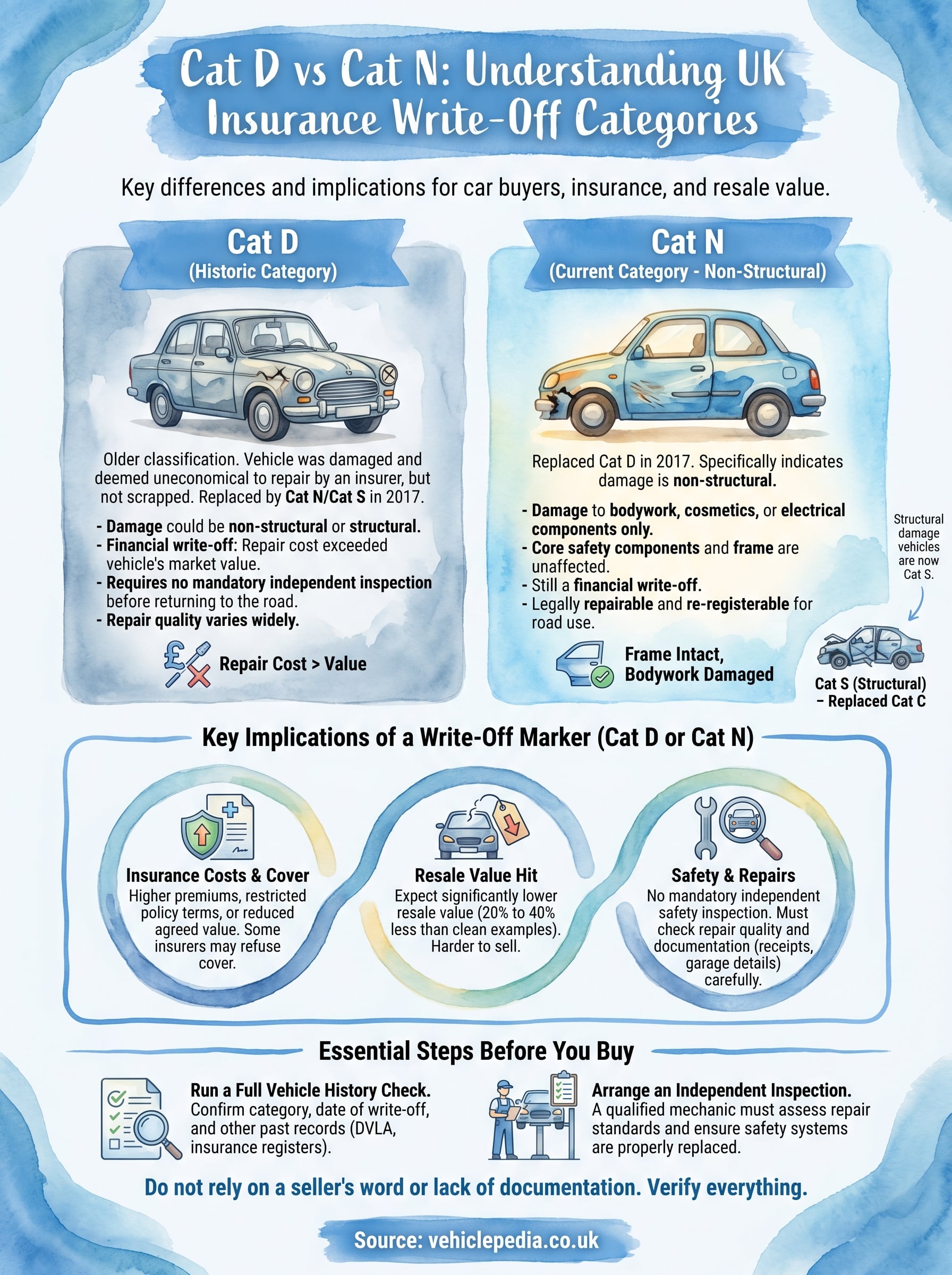
In 2017, the insurance industry overhauled write-off categories across the UK. Cat D was replaced by Cat N, which stands for "non-structural damage." This change was designed to give buyers a far more specific description of what kind of damage a vehicle sustained. If you're still unclear on what does cat d mean on a car, understanding how it maps onto the current system helps you read any history check result accurately.
How Cat N replaced Cat D
The core difference between Cat D and Cat N comes down to specificity. Cat D simply meant the repair cost outweighed the vehicle's value, without clarifying whether that damage was cosmetic or structural. Cat N narrows this to non-structural damage only, meaning the car's frame and core safety components were not involved. Vehicles that suffered structural damage under the new system are now categorised as Cat S instead.
A car showing Cat D on its history was written off before the new system existed, so you should treat it with the same scrutiny you'd apply to a Cat N vehicle until you can confirm exactly what was repaired.
The four write-off categories explained
All four categories, both old and current, follow a clear structure. Cat A and Cat B are the most severe, covering vehicles that must be scrapped and never returned to the road. Cat S and Cat N sit below these, and both can legally be repaired and re-registered for road use after the necessary work is completed.
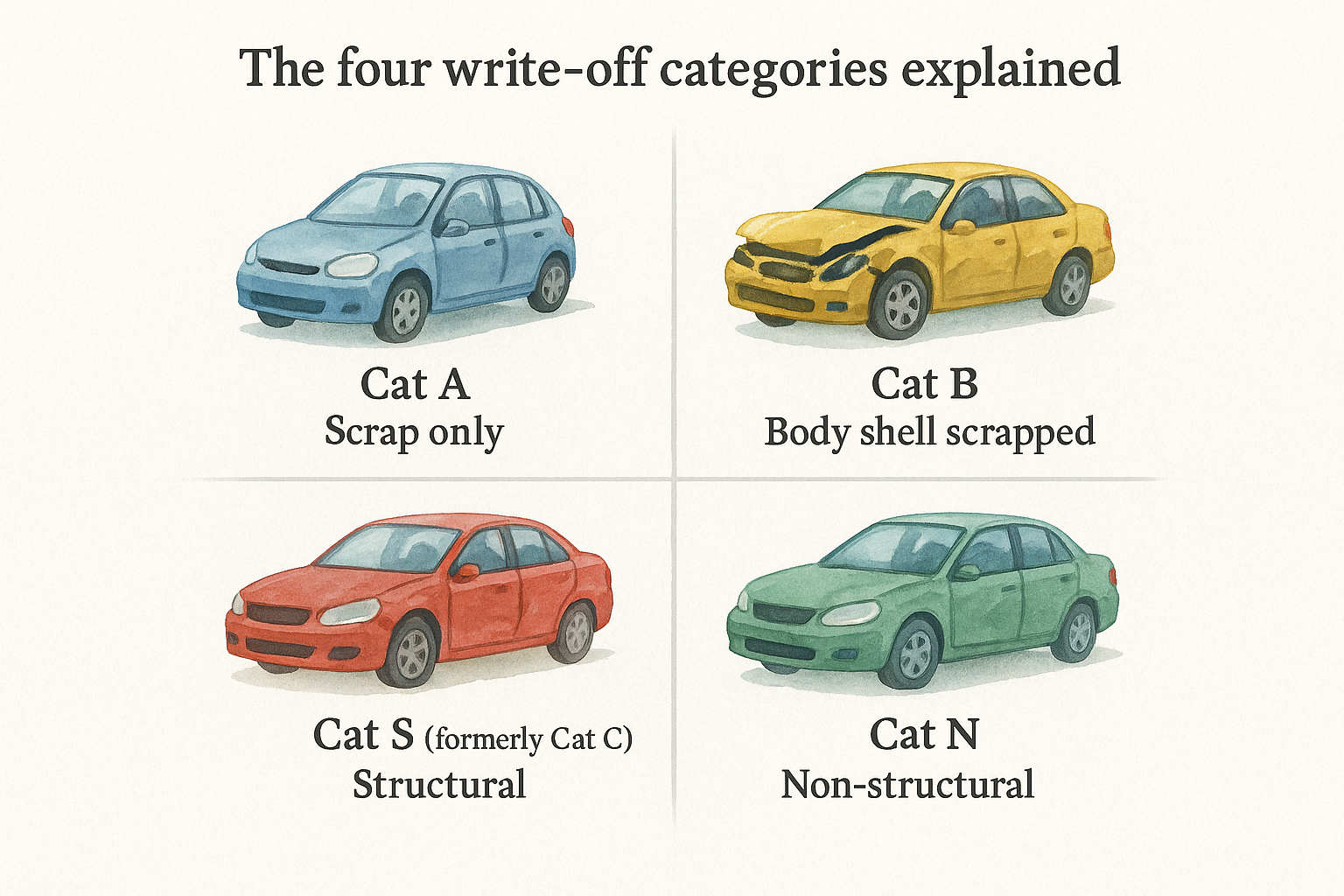
| Category | Damage type | Structural damage? | Can be re-registered? |
|---|---|---|---|
| Cat A | Scrap only | Yes | No |
| Cat B | Body shell scrapped | Yes | No |
| Cat S (formerly Cat C) | Structural | Yes | Yes, after inspection |
| Cat N (formerly Cat D) | Non-structural | No | Yes |
Can you repair and drive a Cat D car safely?
The short answer is yes, but with conditions. Understanding what does cat d mean on a car includes recognising that the category doesn't automatically bar a vehicle from the road. A Cat D car can be repaired and legally re-registered for use in the UK, provided the work meets the required standard. The issue is that no mandatory independent inspection is required before a Cat D vehicle returns to the road, which means the quality of repairs varies widely from one car to the next.
What proper repairs should include
A Cat D vehicle that was repaired correctly should have full documentation of the work carried out, including receipts, garage details, and any parts replaced. Without this paperwork, you have no way to verify the repair quality. You're relying entirely on the word of whoever sold the car, which is not a reliable position to be in.
If a seller cannot produce repair documentation for a Cat D vehicle, treat that as a serious warning sign and walk away.
What to check before you drive one
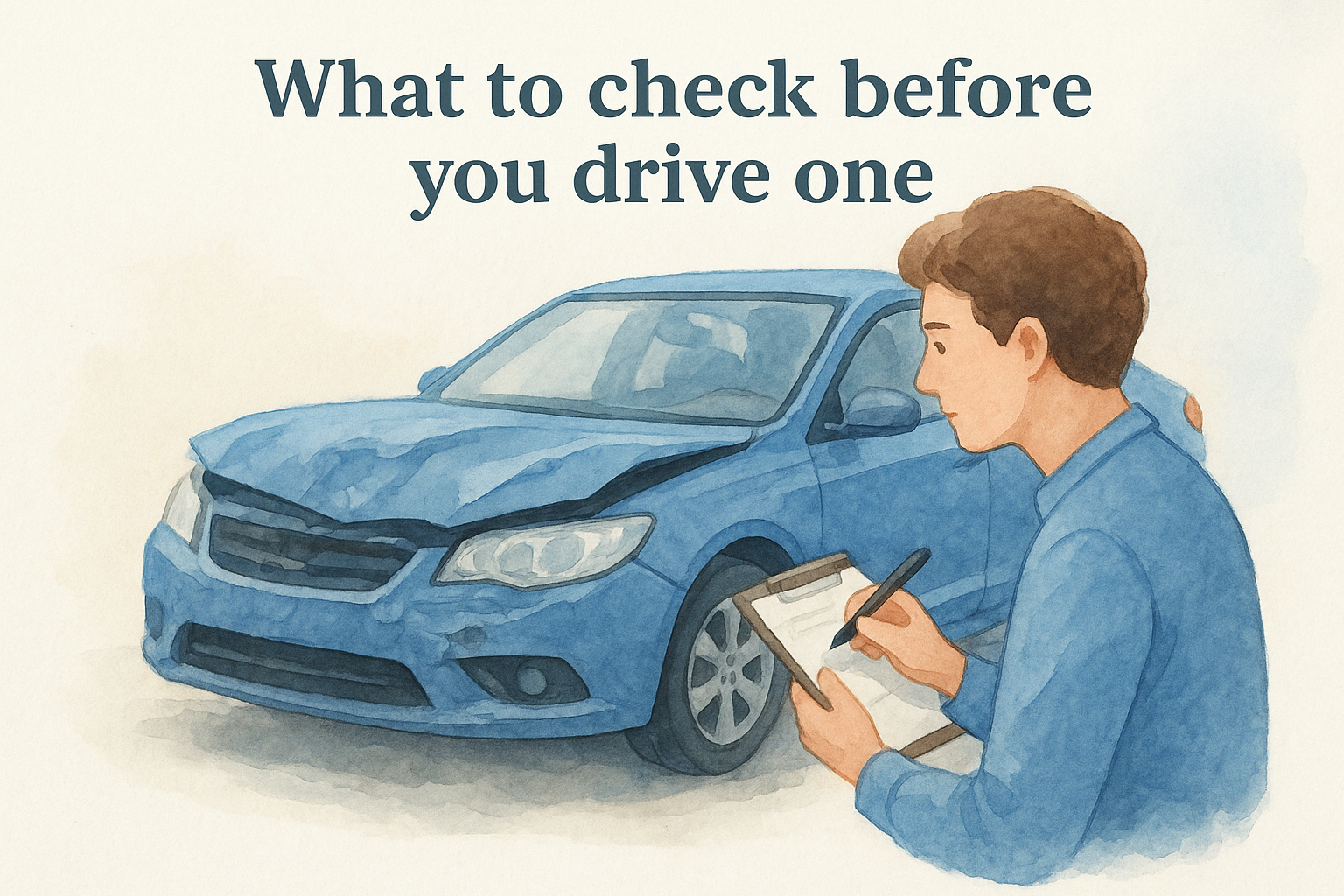
Before committing to a Cat D car, arrange an independent inspection from a qualified mechanic who can assess whether the repairs were completed to a safe standard. Pay particular attention to panel alignment, paint consistency, and whether safety systems such as airbags or sensors were properly replaced rather than simply reset. Skipping this inspection risks your safety and your money, and no bargain price justifies that trade-off.
How Cat D affects insurance and resale value
Understanding what does cat d mean on a car requires looking at the financial consequences that follow you long after purchase. A Cat D marker sits permanently on a vehicle's history record, and both insurers and future buyers can see it instantly. That single marker changes how the market treats the car in two significant ways: the cost to insure it and the price you can realistically sell it for.
What insurers think about Cat D vehicles
Insurers treat Cat D vehicles as higher risk, which typically means higher premiums or restricted policy terms. Some insurers will refuse to cover a Cat D car outright, while others will offer cover but only up to a reduced agreed value that reflects the write-off marker rather than standard market price. You should contact your insurer before buying, not after, to confirm exactly what cover they will offer and at what cost.
Getting an insurance quote before you commit to buying a Cat D vehicle can save you from a situation where the car is uninsurable or unaffordable to insure.
The resale value hit you should expect
When you come to sell a Cat D vehicle, expect to receive significantly less than the equivalent clean-history model. Buyers negotiating on a Cat D car have every right to reduce their offer, and most will. Research from industry sources suggests write-off vehicles can sell for 20% to 40% below comparable clean examples, depending on the severity of the original damage and the quality of repair documentation available.
How to check if a car is Cat D before you buy
Knowing what does cat d mean on a car is only useful if you can actually verify whether the car in front of you carries that marker. The most reliable way to find out is by running a vehicle history check before you agree to any purchase. This retrieves data directly from official UK sources, including insurance registers, and tells you whether the vehicle was written off and how it was categorised.
Never rely on a seller's assurance alone when you can verify the history independently using registered data sources.
What a vehicle history check covers
A full history check gives you far more than just a write-off status. The report typically includes MOT history, mileage records, road tax status, and ownership changes, all of which help you build a complete picture of how the car has been used. For a Cat D vehicle specifically, the report will confirm the category recorded and the date it was registered as a write-off, giving you a clear timeline to question the seller about.
Check the physical car too
Once you know a vehicle shows a Cat D marker, combine your history check with a hands-on physical inspection carried out by an independent mechanic. Look for inconsistencies in panel gaps, mismatched paint, and signs that bodywork has been replaced rather than repaired to the original standard.
You should also ask the seller to produce full repair documentation covering what was fixed, who carried out the work, and which parts were replaced. If that paperwork is missing, walk away.
Next steps
Now you know what does cat d mean on a car, the most important thing you can do is verify any vehicle's history before you commit to a purchase. A Cat D marker affects resale value, insurance costs, and your peace of mind as a buyer. The category doesn't automatically rule a car out, but buying one without checking the full record is an unnecessary risk when reliable information is readily available to you.
Running a vehicle history check before you agree to a price or hand over a deposit gives you the facts you need to negotiate with confidence and avoid costly surprises. Vehiclepedia pulls data from official UK sources including the DVLA and insurance registers, so you get an accurate, up-to-date picture of what a car has been through. View a sample report to see exactly what our checks cover and what you'll know before committing to any vehicle.