Cut and Shut Car: What It Is and How to Spot One
Learn what is a cut and shut car, spot warning signs during inspection, and run a Vehiclepedia history check before buying used.

Cut and Shut Car: What It Is and How to Spot One
You've spotted a used car that looks fine, drives fine, and seems like a solid deal. But somewhere in its past, two written-off vehicles might have been welded together into one. That's a cut and shut car, and it's one of the most dangerous things you can unknowingly buy on the UK used car market.
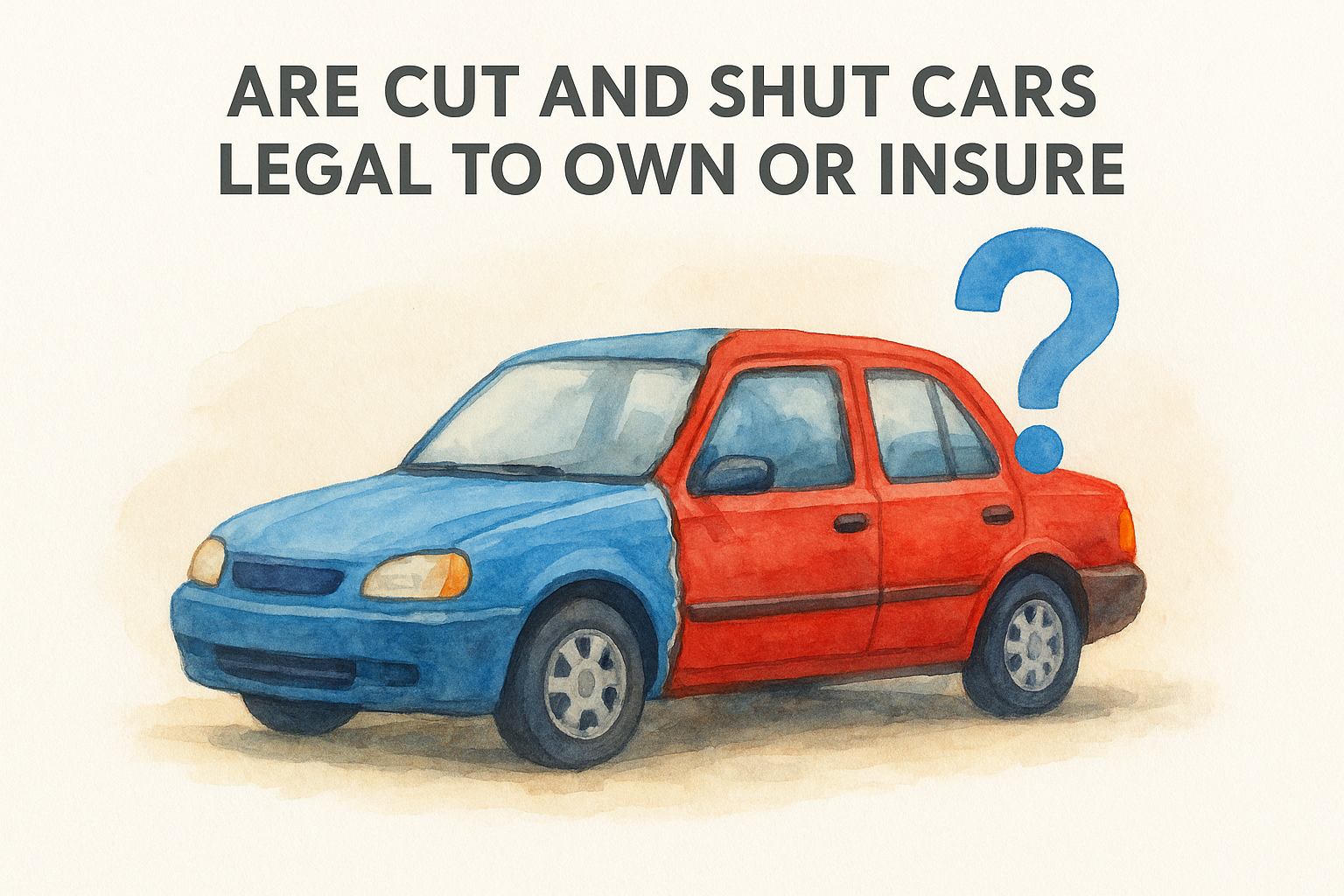
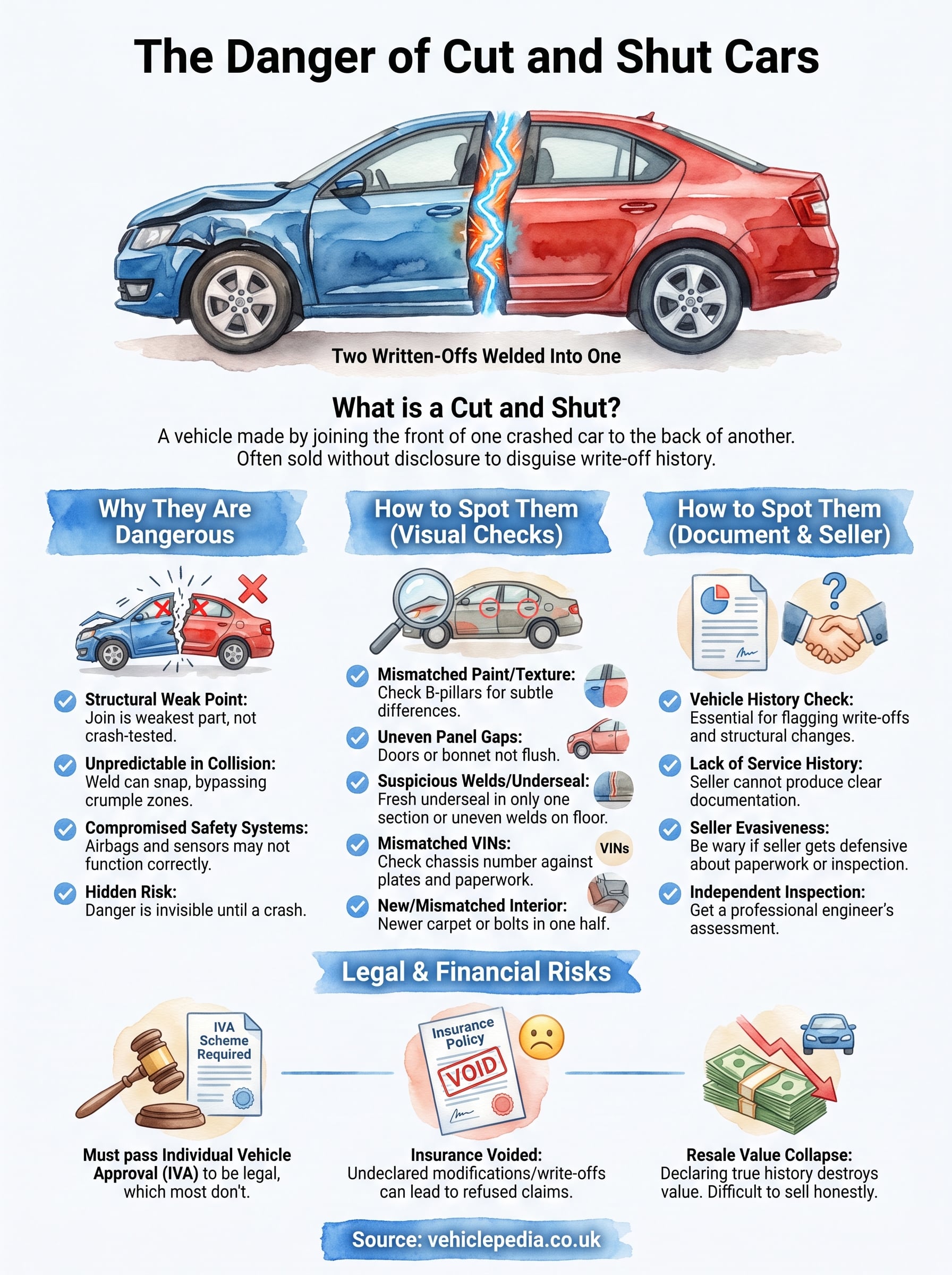
A cut and shut is exactly what it sounds like: the front half of one crashed car joined to the back half of another, then sold as a single, roadworthy vehicle. The welds can hide serious structural weaknesses, and in a collision, the car may fold in ways it was never designed to. Spotting one isn't always obvious from a quick look or a test drive, which is exactly why these cars keep ending up on driveways across the country.
In this guide, we'll explain how cut and shut cars are made, why sellers create them, and the warning signs you can check yourself before handing over any money. We'll also cover how a proper vehicle history check can flag structural changes and past write-offs long before you're standing in front of the car.
Why cut and shut cars are dangerous
The join point is the weakest part of the car
Every car built by a manufacturer is designed as a single continuous structure, engineered so that stresses spread evenly through the chassis and body panels in a crash. When you weld two vehicle halves together, that engineering logic disappears. The join, usually somewhere around the A-pillars, B-pillars, or floor pan, becomes a structural weak point that was never crash-tested and never designed to bear load the way the surrounding metal does. Under normal driving, you might never notice it. Under the stress of an impact, that weld can be the first thing to give way.
A cut and shut car might drive perfectly fine for years, right up until the moment it needs to protect you in a crash.
Crash safety systems assume one continuous structure
Modern crash safety systems, from crumple zones to airbag triggers, rely on the car behaving exactly as the manufacturer designed it. Crumple zones are engineered to collapse in a specific, predictable pattern, absorbing energy before it reaches the cabin. Airbags deploy based on sensors that expect a certain deceleration curve through a known structure. A cut and shut car breaks all of these assumptions, because the two halves may have come from different production runs or even slightly different specifications, meaning the metal thickness and reinforcement points don't match on either side of the weld.
Real-world consequences in a collision
Because of this mismatch, a cut and shut car can behave unpredictably in even a moderate collision. Instead of the front crumpling gradually to absorb energy, the weld point can snap or fold suddenly, sending the full force of the impact straight into the passenger cabin. Testing and insurance industry analysis, including work published by [Thatcham Research](https://www.thatcham.org/), which studies vehicle repair and safety standards in the UK, has shown that welded joins can fail at speeds far lower than a genuine chassis would withstand, effectively splitting the car in two. That's a catastrophic failure mode a factory-built car was never meant to experience.Why sellers don't disclose it
None of this gets disclosed to buyers, because a cut and shut only exists in the first place to disguise two write-offs as one usable car. Sellers who assemble or knowingly pass on these vehicles are betting that a buyer won't look closely enough to notice, and given how well a good repair job can be finished cosmetically, that bet often pays off. This is precisely why understanding what a cut and shut car actually is matters so much before you buy: the danger isn't visible until it's too late to matter, and by then you're relying on a structure that was never designed to keep you safe.
How to spot a cut and shut car
Finding a cut and shut car takes patience and a proper look under the surface, not just a glance at the paintwork. Most buyers rush the viewing, but a thorough inspection takes twenty minutes and can save you from a car that's structurally two vehicles pretending to be one. Start with the panel gaps, the door shuts, and anywhere two sections of bodywork meet, because mismatched welding almost always leaves a trace somewhere.
Physical checks you can do yourself
Walk around the car slowly and check these areas before you even think about a test drive:
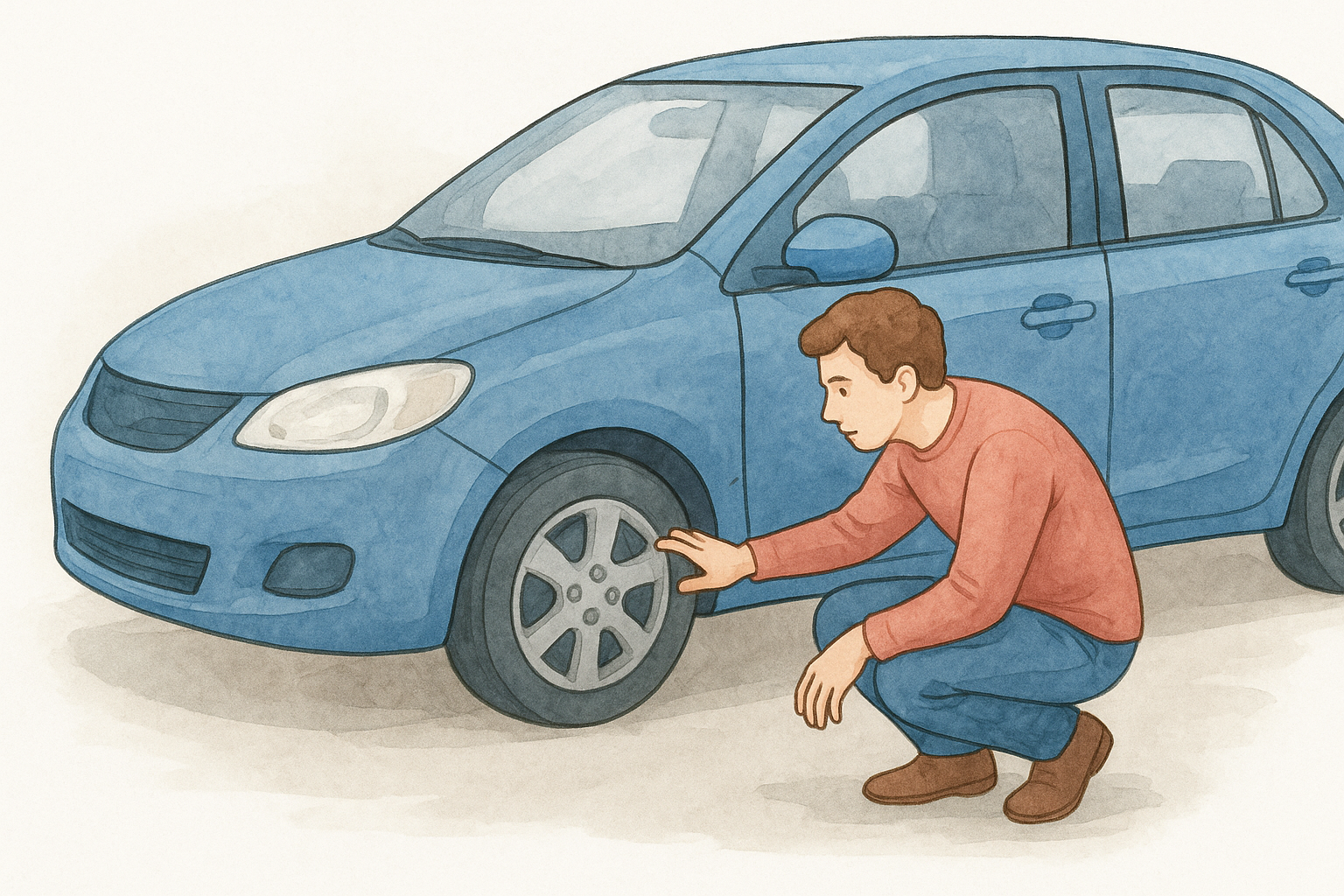
- Carpet and underseal: fresh underseal or new carpet in only one section of the car often hides a weld
- Seatbelt mounts and floor pan: look for uneven welding, mismatched paint, or bolts that look newer than the rest of the car
- Panel gaps and door alignment: doors that don't close flush, or a bonnet that sits slightly off centre, can point to a rejoined shell
- VIN plates: check the chassis number by VIN matches on the plate, the door frame, and the paperwork, since a spliced vehicle sometimes carries two different identities
- Colour and texture mismatches: subtle differences in paint shade or texture around the middle of the car, particularly near the B-pillar
If a car has two different paint textures either side of the B-pillar, walk away before you ask a single question about price.
Why a document check matters just as much
Even a careful visual inspection won't always catch a well-hidden cut and shut vehicle, which is why pairing it with paperwork is essential. A full vehicle history check cross-references the registration against DVLA records, insurance write-off registers, and previous keeper data, flagging any mismatch between the car in front of you and its official history. Running a free car check before you view the car gives you a head start, and it's worth doing before you agree to see it in person at all.
Are cut and shut cars legal to own or insure
Owning a cut and shut car isn't automatically illegal, but selling or driving one without declaring its history is where the law gets involved. Under DVLA rules, any vehicle that's been radically altered, including one built from two separate donor cars, must go through the Individual Vehicle Approval (IVA) scheme before it can be legally registered and driven on UK roads. This process checks the rebuilt structure meets minimum safety standards, something most cut and shut cars never go through because doing so would expose exactly what's been done to them. You can read more about the IVA scheme directly from the government.
Insurance is where things fall apart fastest for an unsuspecting buyer. Every UK insurer requires you to declare known modifications and any history of the vehicle being written off, and a cut and shut is both. If you buy one without knowing, then have an accident and the insurer later discovers the structural history during their assessment, they can refuse to pay out entirely, leaving you to cover repairs or a replacement car yourself.
A cut and shut car isn't just a safety risk, it's an insurance policy waiting to be voided the moment you need it most.
Registering or insuring one honestly is possible in theory, but almost nobody does it, because declaring the true history collapses the resale value the seller was trying to protect in the first place. Passing MOT testing doesn't help either, since testers check specific safety points rather than searching for hidden welds, so a cut and shut can sail through year after year while still carrying an undeclared, unapproved structure underneath.
What to do if you suspect a cut and shut car
Spotting a warning sign doesn't mean you're certain, but it does mean you need to stop and dig deeper before any money changes hands. Trust your instincts here: if something about the panel gaps, the welding, or the paperwork feels off, that unease is worth acting on rather than talking yourself out of.
Steps to take before you buy
Gather evidence calmly and methodically rather than confronting the seller straight away, since a genuine seller will welcome the scrutiny and a dishonest one will show it in their reaction.
- Take clear photos of any suspicious welding, paint mismatch, or VIN discrepancies
- Run a full vehicle history check against the registration plate to confirm write-off status and structural changes
- Ask the seller directly for the car's full service and repair history in writing
- Get an independent engineer's inspection if the car has already passed your initial checks but something still nags at you
- Walk away if the seller can't or won't produce clear documentation
The moment a seller gets defensive about paperwork is the moment you should get more suspicious, not less.
A premium check that includes written-off vehicle detection will confirm in minutes what might take hours to spot by eye, and it's far cheaper than discovering the truth after you've paid for the car.
If you've already bought the car
Contacting a solicitor becomes necessary if you've already completed the purchase and later confirm the car is a spliced vehicle, since you may have grounds to pursue the seller for misrepresentation under the Consumer Rights Act. Reporting the vehicle to the DVLA is also worth doing, particularly if it was never put through the IVA scheme, because driving an unapproved rebuild on public roads is a legal problem, not just a moral one. Informing your insurer immediately, even before you've decided on legal action, protects you if anything happens to the car while the situation gets resolved, since driving it uninsured knowingly would only compound the risk you're already carrying.
Staying safe when buying a used car
Knowing what a cut and shut car is puts you ahead of most buyers browsing listings this weekend. The panel gaps, the mismatched welds, the paint texture around the B-pillar, these are all things you can check yourself in twenty minutes flat. But a visual inspection only catches what's visible, and the sellers behind these cars are counting on you not looking any further than the bodywork.
Pairing your own eyes with an official vehicle history check closes that gap. It confirms write-off status, structural changes, and previous keeper records against DVLA data, rather than leaving you to guess based on a hunch. Before you view any car, see what a full vehicle history report actually includes, so you know exactly what you're checking for and what peace of mind actually looks like on paper.