Private Number Plate: What It Is and How to Buy One
Discover what is a private number plate, how to buy one via DVLA or dealers, and why checking vehicle history matters before purchase.

Private Number Plate: What It Is and How to Buy One
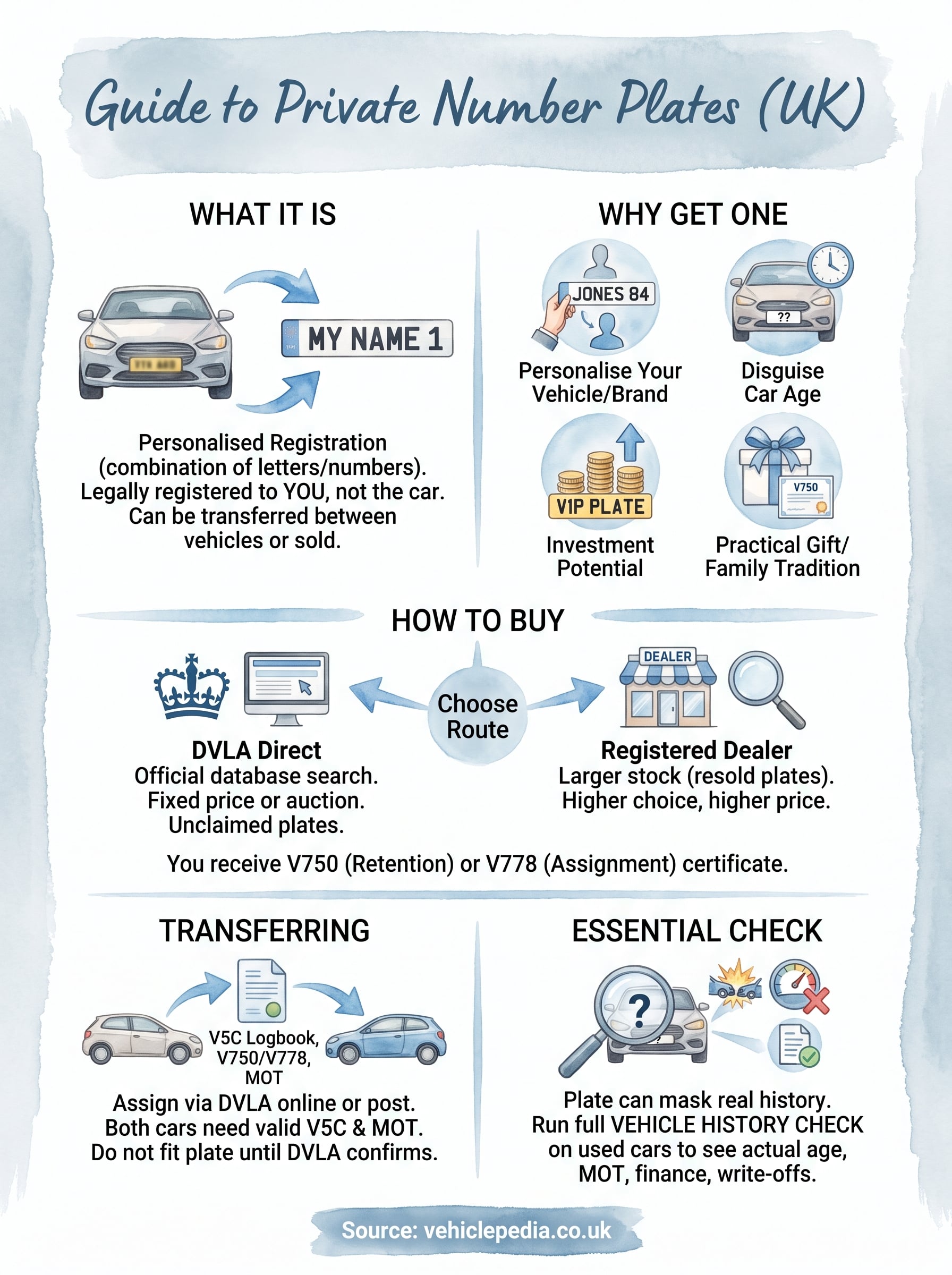
You've spotted a car with a registration that spells out a name or a word, and you're wondering how that works and whether you could get one yourself. A private number plate, also called a personalised registration, is a combination of letters and numbers you choose and assign to a vehicle, instead of the random plate the DVLA issues automatically.
In short, a private plate is legally registered to you, not your car, so you can move it between vehicles or sell it on later. Buying one usually means searching the DVLA's official registrations database, checking that the combination is genuinely available, then either applying it straight away or holding it on a retention certificate until you're ready.
This guide walks through what makes a plate private rather than standard, the rules around formats and DVLA approval, and the practical steps for buying, assigning, or transferring a plate without falling foul of DVLA regulations. We'll also flag where a vehicle history check matters once a plate changes hands, since a personalised registration can sometimes mask a car's real background if you're not careful.
Why get a private number plate
People choose a personalised registration for reasons that go well beyond vanity, though a bit of vanity is usually part of it. A plate that spells your name, your initials, a nickname, or a nod to your business can turn a car into something that feels genuinely yours, rather than just another vehicle with a random string of characters bolted on the front and back.
Personalise your vehicle or brand
Many buyers want a plate that reflects who they are or what they do. Tradespeople put their initials or a word related to their trade on a van, so the registration doubles as free advertising every time the vehicle is parked outside a job. Others mark a milestone, a wedding, a retirement, a business launch, by choosing a combination tied to a date or a name. Because the plate stays registered to you rather than the car, you can carry that identity across several vehicles over the years instead of losing it every time you change cars.
Disguise the age of your car
A standard UK plate gives away the exact age of a vehicle through its year identifier, which updates twice a year. Swapping in a private plate removes that visual cue, so a five-year-old car doesn't broadcast its age to everyone who glances at the bumper. This matters more to some owners than others, but if you'd rather people judged the car on its condition rather than its registration year, a personalised plate solves that quietly.
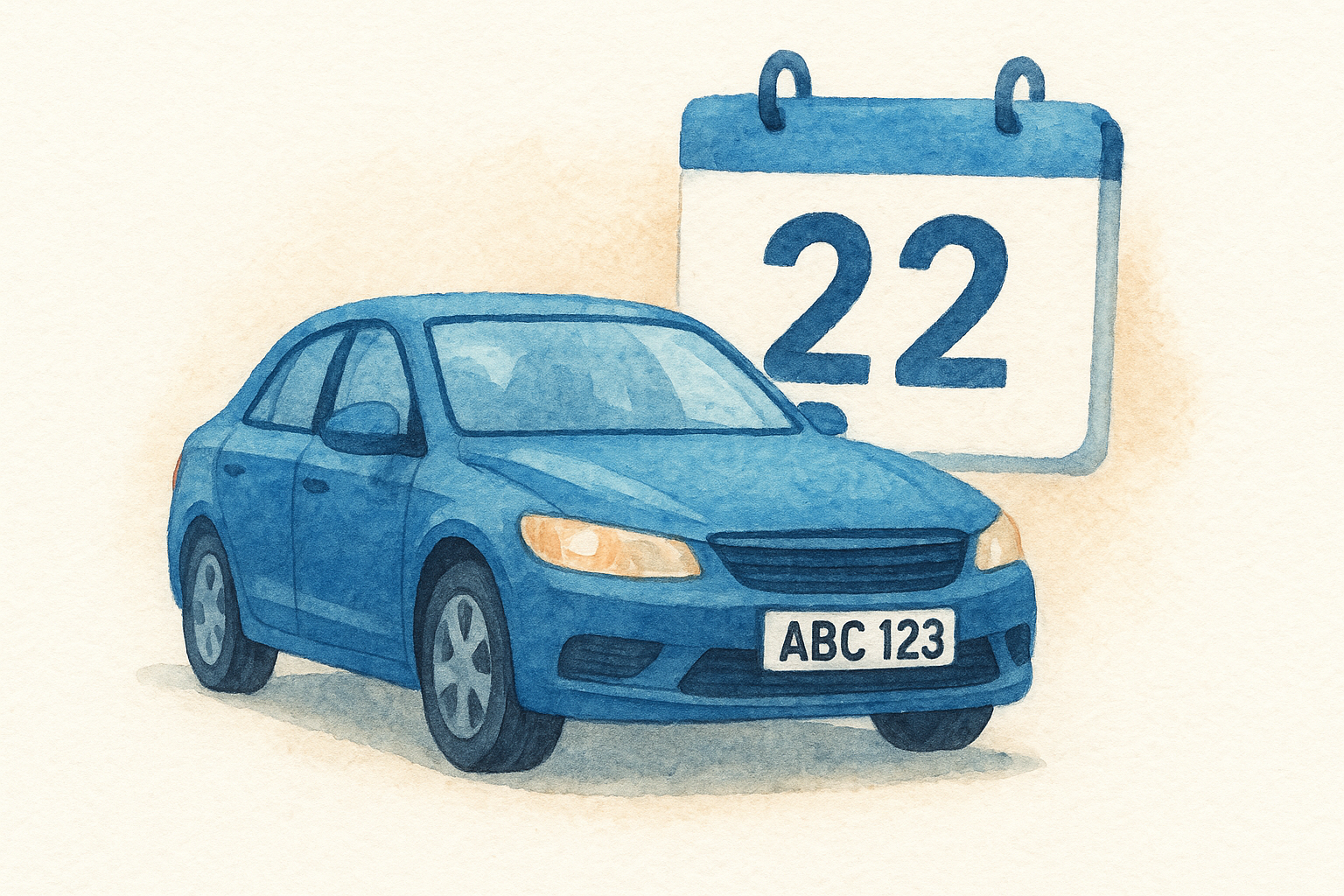
A private plate lets you control what your car's registration says about you, instead of leaving it to a random DVLA sequence.
An investment that can hold or grow in value
Short, simple combinations, especially ones matching common names or single words, tend to hold their value well and sometimes appreciate. Some registrations have sold for six-figure sums at auction, though those are the rare exceptions rather than the rule. Most everyday personalised plates sit at prices from under a hundred pounds to a few thousand, depending on how closely they match a recognisable word or name. If you buy sensibly and hold the retention certificate, you're not locked into using the plate straight away, and you can sell it on later if you no longer want it.
A practical gift or family tradition
Some families pass a plate down through generations, moving it from parent to child as each new car arrives. Others buy one as a genuinely memorable birthday or anniversary present, since a physical certificate or a plate change is harder to forget than most gifts. Whatever the motivation, the appeal comes down to the same thing: a private number plate gives you a level of control over your car's identity that the standard DVLA allocation simply doesn't offer.
How to buy a private number plate in the UK
Buying a private number plate comes down to two main routes: going straight through the DVLA, or buying via a registered plate dealer. Both routes ultimately register the plate against your name on the DVLA database, so the choice mainly affects price, choice, and how much legwork you do yourself.
Buying directly from the DVLA
The DVLA runs its own personalised registrations service, where you search available combinations and buy at a fixed price or through an online auction. Searching is free, and you only pay once you've selected and confirmed a plate. This route works well if you already know exactly which combination you want and it's still unclaimed.
Buying through a registered dealer
Dealers hold huge stocks of plates already released from the DVLA, including combinations that have been resold multiple times. They often have far more choice than the DVLA's own database, since they include plates originally bought years ago and never used. Expect to pay a bit more for convenience and access to popular names or words.
Whichever route you choose, the plate only becomes legally yours once the DVLA confirms the registration against your name.
Steps to follow
- Decide whether you want a plate for immediate use or to hold on a retention certificate.
- Search the DVLA database or a dealer's stock for available combinations.
- Check the price and confirm the format meets DVLA rules.
- Pay and receive either a V750 (retention document) or V778 (assignment) certificate.
- Assign the registration to your vehicle through the DVLA if you're ready to use it straight away.
Once you've paid, keep the paperwork safe. You'll need it for any future assignment, sale, or transfer.
How to transfer a private number plate to your car
Transferring a personalised registration onto a vehicle you already own, or onto one you've just bought, works differently depending on whether you're assigning a plate you hold on retention or moving it from another car. Either way, the DVLA needs to update its records before you're legally allowed to display the new plate, so don't fit it to the car until the paperwork clears.
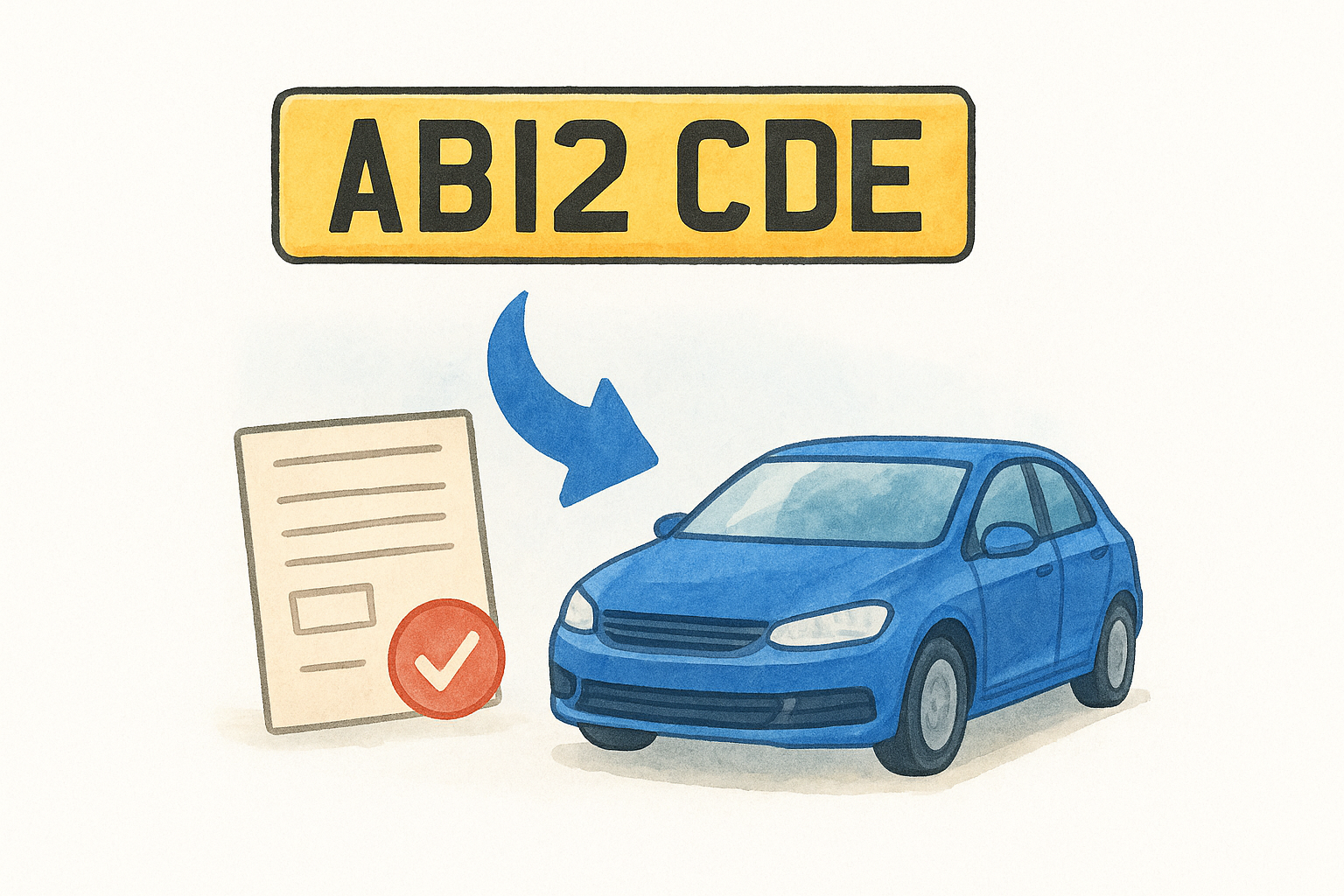
Moving a plate you already hold
If you're holding a registration on a V750 retention certificate, you assign it to your vehicle through the DVLA's online service or by post. You'll need the vehicle's logbook (V5C), the retention certificate, and the vehicle to have a valid MOT if it's due one, so it helps to know what the V5C logbook is and which sections matter. The DVLA typically processes online applications within a few hours, though postal applications take longer.
Swapping a plate between two vehicles
Moving a plate directly from one car to another, rather than via retention first, follows a similar process but involves both vehicles' V5C documents. Both cars must be taxed, and the one losing the plate needs to revert to its original registration or a retention certificate before the transfer completes.
Never drive with a private plate fitted until the DVLA confirms the transfer, since displaying an unregistered combination is a driving offence.
What you'll need on hand
- Vehicle logbook (V5C) for each car involved
- Retention certificate (V750) or assignment certificate (V778), if applicable
- Valid MOT certificate, where required
- DVLA account for online applications, or the correct postal forms
Once the DVLA processes the transfer, you'll receive an updated V5C showing the new registration, and only then should you have physical plates made up by a registered number plate supplier.
How to check a private number plate before you buy
Buying a personalised registration, whether from a dealer or from a private seller reselling one, means you're often also buying a car that's changed hands more than once. A registration on retention has no history of its own, but the moment it's assigned to a vehicle, that car's background, its MOT record, mileage, and any finance or write-off markers, becomes part of what you're actually paying for. Skipping a private car registration check here is how buyers end up overpaying for a car hiding behind an attractive plate.
Why the plate can mask the car's real history
A private plate removes the year identifier that a standard registration carries, so you lose that quick visual cue about the vehicle's age. That's fine when you know the seller and the car's full history, but it becomes a problem when a private plate is used, deliberately or not, to make an older or previously damaged car look less obviously worn. Running the registration through a full vehicle history check strips that ambiguity away and shows you the car's actual age, MOT record, and any past registration changes.
A private plate can dress up a car's front, but it can't change what's on the DVLA and insurance records behind it.
What to check before you commit
- Confirm the plate's assignment date matches what the seller told you
- Run a free car check before buying to see MOT history, tax status, and any colour changes
- Check for hidden finance on a used car, write-off markers, or a stolen flag using a premium report
- Verify the V5C logbook details match the seller and the vehicle
A few minutes spent here costs far less than discovering problems after the money's changed hands.
What to do next
A private number plate is simply a registration you own and control, rather than one tied permanently to a single car. Whether you're after a personalised statement, a bit of privacy around your car's age, or something to pass down the family, the process is straightforward once you know the DVLA's rules: search, buy or hold on retention, then assign or transfer when you're ready.
If you're buying a car that already carries a personalised registration, don't let the plate distract you from the vehicle underneath it. Check the MOT history, mileage, and ownership record before you agree a price, since a smart plate can sit on a car with a messy past just as easily as a clean one. Before you commit to anything, see what's inside a full premium report for yourself, so you know exactly what you're getting before you pay for peace of mind.