Private Car Registration Check: How to Verify a UK Plate
Learn how to run a private car registration check with DVLA and Vehiclepedia data before buying, avoiding scams, disputes and wasted money.
Private Car Registration Check: How to Verify a UK Plate
Buying or selling a private plate isn't the same as checking a standard registration. You need to know whether it's actually registered to a vehicle, held on retention, or free to transfer, and mistakes here can cost you money or leave you unable to complete a DVLA transfer. Running a proper private car registration check before you commit tells you exactly what you're dealing with, whether that's a cherished plate you've spotted for sale or one you already own.
This guide answers the question directly: how do you verify a UK private plate is genuine, correctly assigned, and legally transferable before any cash changes hands. A thorough private number plate check UK buyers can trust means confirming the plate's status with DVLA, checking it isn't tied to a written-off or stolen vehicle, and understanding what documents you'll need to complete a transfer safely.
Below, we'll walk through each step in order: how to search a plate's current status, what a retention certificate actually confirms, how to spot warning signs before buying from a private seller, and where official records fit alongside services like Vehiclepedia's checks. By the end, you'll know exactly how to verify any UK plate with confidence.
Why check a private car registration before you buy
A private car registration check matters because cherished plates don't move through the same paper trail as a standard vehicle sale. Someone can list a plate for sale on a forum or through a dealer without ever proving they actually hold it, and if you hand over money before confirming that, you've got no legal claim to the registration at all. This isn't a rare edge case either; DVLA handles thousands of retention and assignment disputes every year, many of which start with a buyer who skipped the verification step.
The financial and legal risks
Getting this wrong isn't just inconvenient, it can be expensive. A plate that turns out to be held under a different retention document, still assigned to a scrapped vehicle, or subject to a family dispute can leave you with a registration you can't legally put on your car.
Skip the check, and you're not buying a plate, you're buying someone else's paperwork problem.
Before you commit, know what you're actually risking:
- Wasted money on a plate you can't transfer
- Delayed registration while DVLA investigates ownership
- Legal disputes with a seller who oversold their rights
- Compliance issues if the plate is still linked to another vehicle's MOT or tax record
Common mistakes buyers make
Most problems trace back to buyers trusting a seller's word instead of DVLA's records. A proper private number plate check UK process removes that guesswork by confirming who legally holds the registration right now, not who claims to. Running this check first, before any conversation about price, puts you in a much stronger position and stops you from chasing a plate that was never really available in the first place.
Step 1. Search the registration online
Start with a straightforward online plate search before you contact anyone or agree a price. Type the registration into a reputable lookup tool and you'll immediately see whether it's currently assigned to a vehicle, sitting on a retention certificate, or not recognised at all. This single step filters out a surprising number of listings that turn out to be fake, mistyped, or already sold elsewhere, and it's worth pairing with a stolen vehicle check if anything about the plate feels off.
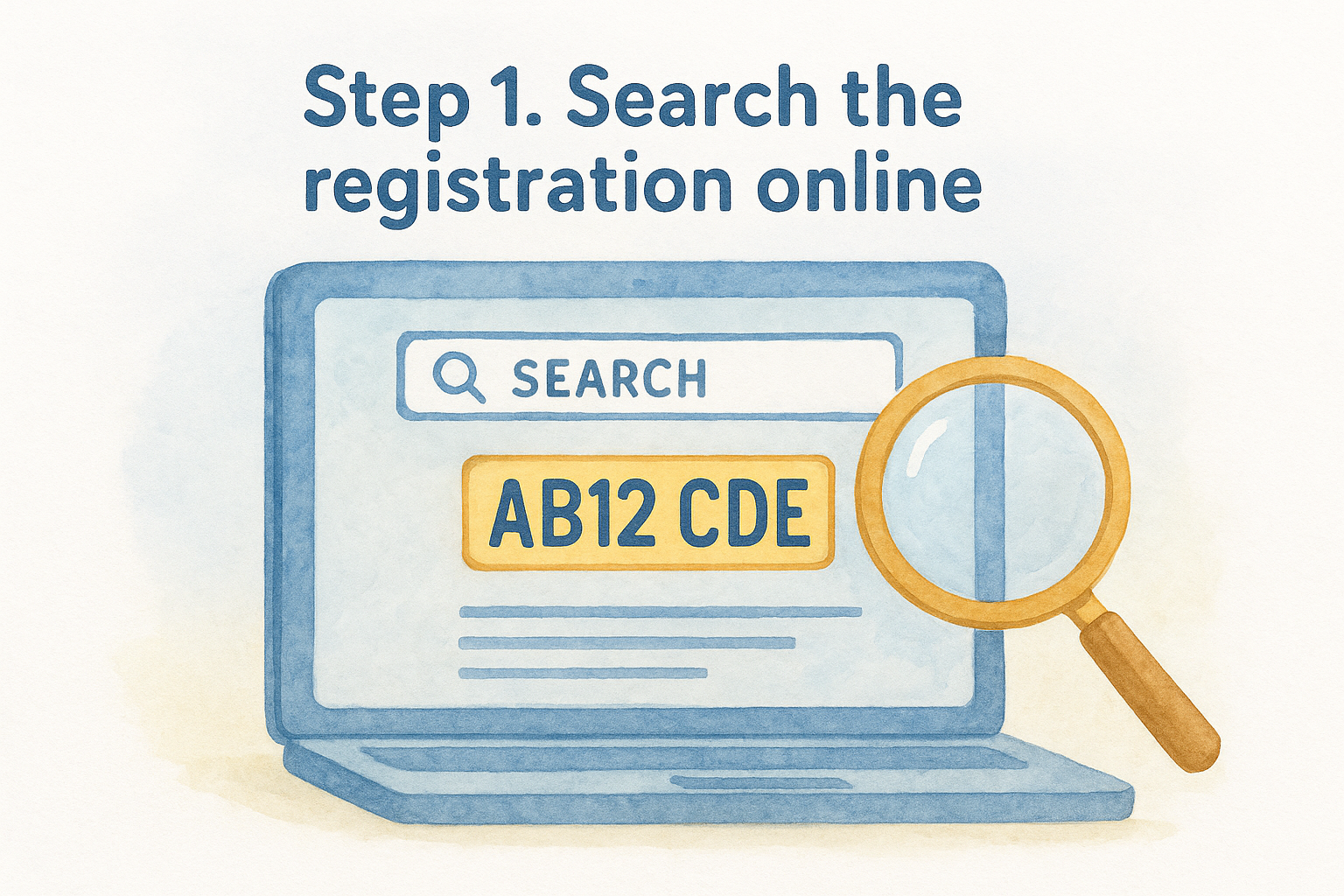
Where to run the search
Use Vehiclepedia's free car check tool to pull the plate's current status straight from official records, or go directly to the GOV.UK vehicle enquiry service for a bare-bones DVLA lookup. Both routes draw on the same underlying data, but a dedicated check gives you more context in one place.
A five-minute search saves you from chasing a plate that was never genuinely for sale.
What a first search tells you
- Whether the registration exists and is correctly formatted
- If it's currently on a vehicle or held on retention
- The vehicle's basic details, if assigned
- Any obvious mismatch with what the seller told you
This initial pass won't confirm ownership or transfer eligibility, but it flags anything that doesn't add up before you go further.
Step 2. Review the DVLA and MOT data
Once you know the plate exists, dig into the DVLA record it's tied to. If the registration is currently assigned to a vehicle, that car's MOT history, tax status, and technical details tell you a lot about whether the plate is genuinely available or still doing active duty on the road. A plate attached to a taxed, MOT'd vehicle usually means the current keeper isn't in a rush to sell, which should prompt a direct question rather than an assumption, so it's worth checking car tax and MOT online before you go any further.
Cross-checking the vehicle behind the plate
Pull the full history through Vehiclepedia's MOT history check or the government's own MOT history service to see test dates, mileage, and advisories. Compare what you find against anything the seller has told you about the vehicle.
If the seller's story doesn't match the DVLA and MOT record, walk away before you pay anything.
What mismatches to watch for
- The vehicle's MOT expired months ago with no recent activity
- Mileage figures that don't line up with the seller's description
- A tax status showing SORN when they claim it's daily-driven
- Vehicle make or model details that contradict the listing
These inconsistencies don't automatically mean fraud, but they're reason enough to ask harder questions before moving to the next step.
Step 3. Check the plate's history and ownership status
Once the basic record checks out, dig deeper into who actually holds the plate. A retention certificate proves the registration is legally set aside for transfer, and DVLA will only process a change of hands if the seller can produce that document or the vehicle it's currently assigned to. Ask for a copy before you agree anything.
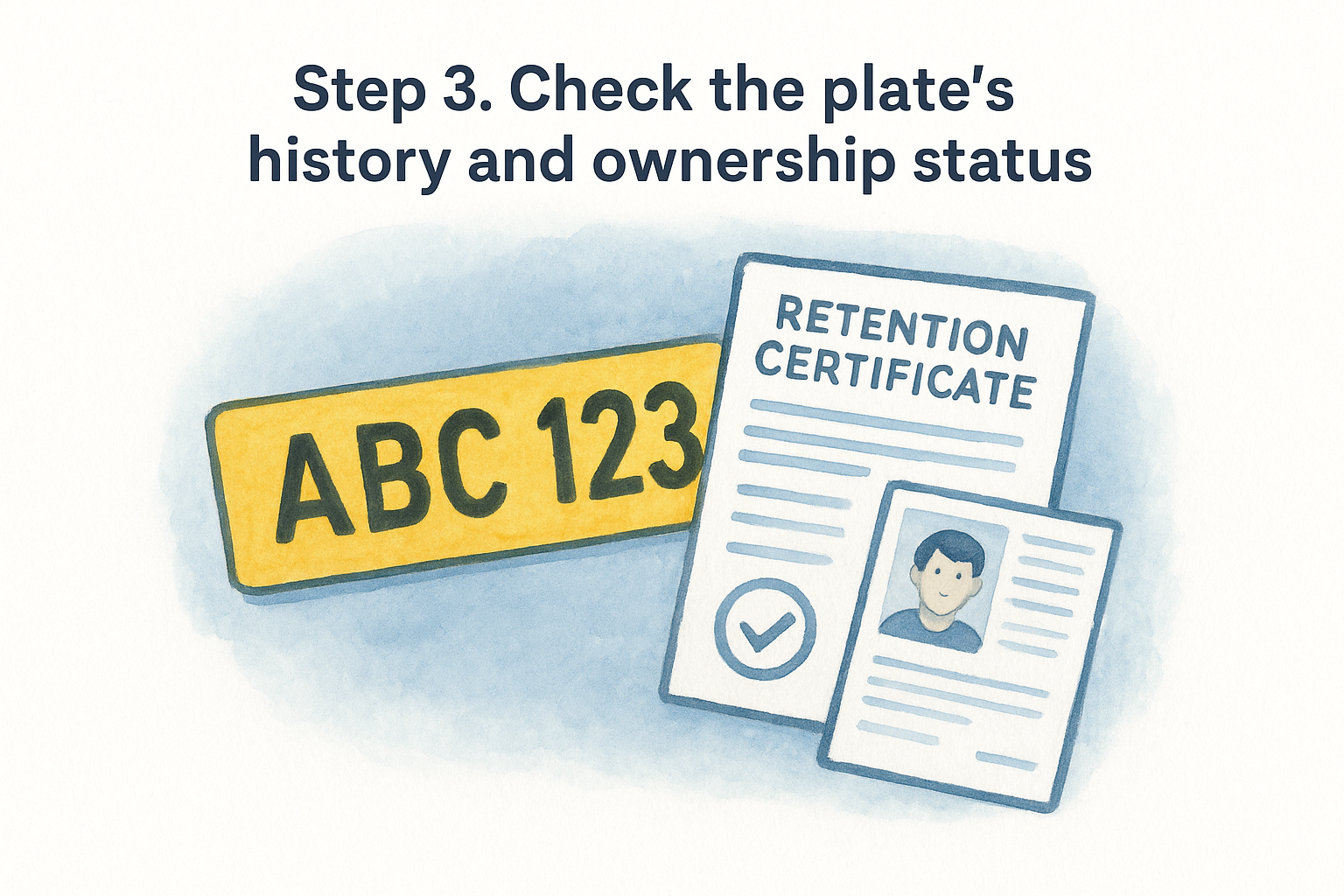
Verifying who legally holds the plate
Check that the name on the retention certificate or V5C matches the person you're dealing with. Mismatches here are one of the most common reasons private plate deals fall through after money has already changed hands.
- Ask to see the original V5C logbook check online or retention document
- Confirm the name matches the seller's ID
- Check the certificate hasn't expired (they're valid for 10 years)
Checking for written-off, stolen, or financed links
If the plate sits on a vehicle rather than a certificate, run a full background check to see how to check if a car is written off, as well as outstanding finance or a police marker, before you pay a deposit. Vehiclepedia's premium vehicle check pulls all three from official registers in one report, so you can check if a car has outstanding finance alongside the write-off and theft data.
A genuine seller will never hesitate to share ownership documents; a reluctant one usually has something to hide.
Step 4. Buy or transfer the plate through an official source
Once you've confirmed the plate is genuine and free of any hidden issues, complete the deal through DVLA's official channels rather than relying on a handshake and a receipt. This is the step that turns a verbal agreement into a legal transfer, and skipping it leaves you exposed even after all your earlier checks came back clean.
Completing the transfer correctly
The seller needs to either assign the registration directly to your vehicle or transfer it onto a retention certificate in your name. You'll need your vehicle's V5C, the seller's retention document or V5C, and DVLA's V317 form if you're assigning to a car rather than retaining it.
- Confirm the seller applies for the transfer through DVLA or a DVLA-registered dealer
- Get written confirmation once the transfer is submitted
- Keep copies of every document exchanged
- Wait for your new V5C before treating the plate as fully yours
A plate isn't legally yours until DVLA confirms the transfer, not the moment money changes hands.
Buying through a registered dealer or DVLA's own personalised registrations service adds a layer of protection a private sale can't match, particularly if something goes wrong after payment.
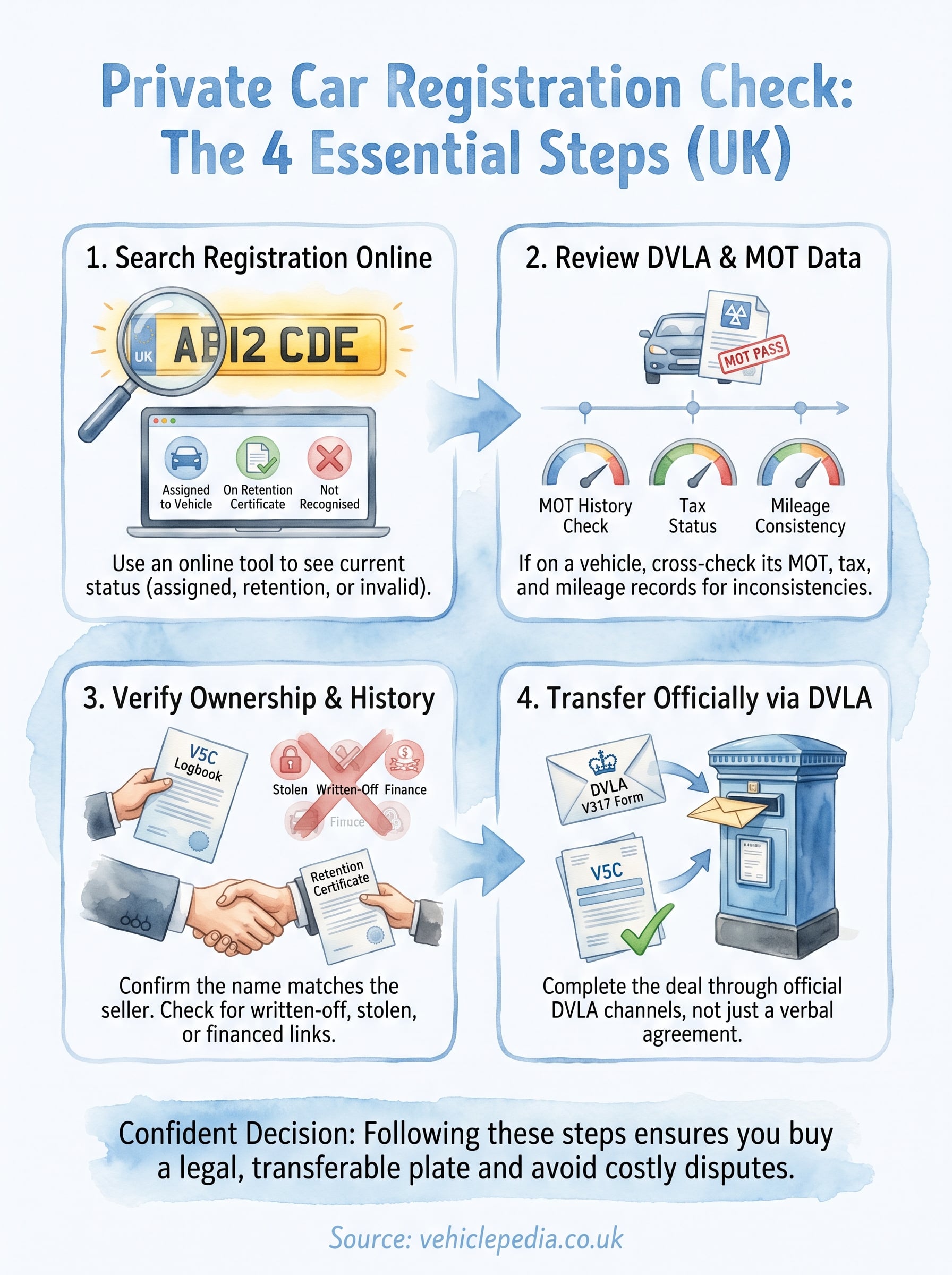
Making a confident decision
A private car registration check isn't a formality, it's the difference between owning a legitimate plate and inheriting someone else's dispute. Work through the four steps in order: search the registration, verify the DVLA and MOT data behind it, confirm the retention certificate or ownership history, then complete the transfer through official channels only. Skip any one of them and you're trusting a stranger's word over documented fact.
Getting this right doesn't take long, but it does take discipline. Don't let enthusiasm for a good-looking plate push you past the checks that protect your money. A genuine seller will welcome the scrutiny; anyone who resists it has already told you what you need to know.
Before you commit to a plate or a purchase, see exactly what a full check covers by browsing our sample report, then decide with the facts in hand rather than a hunch.